
A pellet stove that actually makes sense in Corona's mild winters.
Corona rarely gets cold enough to justify a full pellet heating system, but some homes still have a real case for one. We'll help you figure out if yours does, and match you with a local dealer who won't oversell you.
Every Project Starts From One of These Five Situations
Corona's climate rarely calls for pellet heat.
Corona sits at 841 feet in the Inland Empire, in climate zone 3B, where winter lows average 42°F and the city logs only about 1,387 heating degree days a year. Compare that to a place like Buffalo, NY, which racks up more than 6,500 HDD in a typical winter, and it's clear why pellet stoves—designed as a primary or near-primary heat source—aren't a common install here. Most Corona homes get through winter fine with a gas furnace or a mini-split, and a dedicated pellet-fed heating appliance sits well outside what the climate demands.
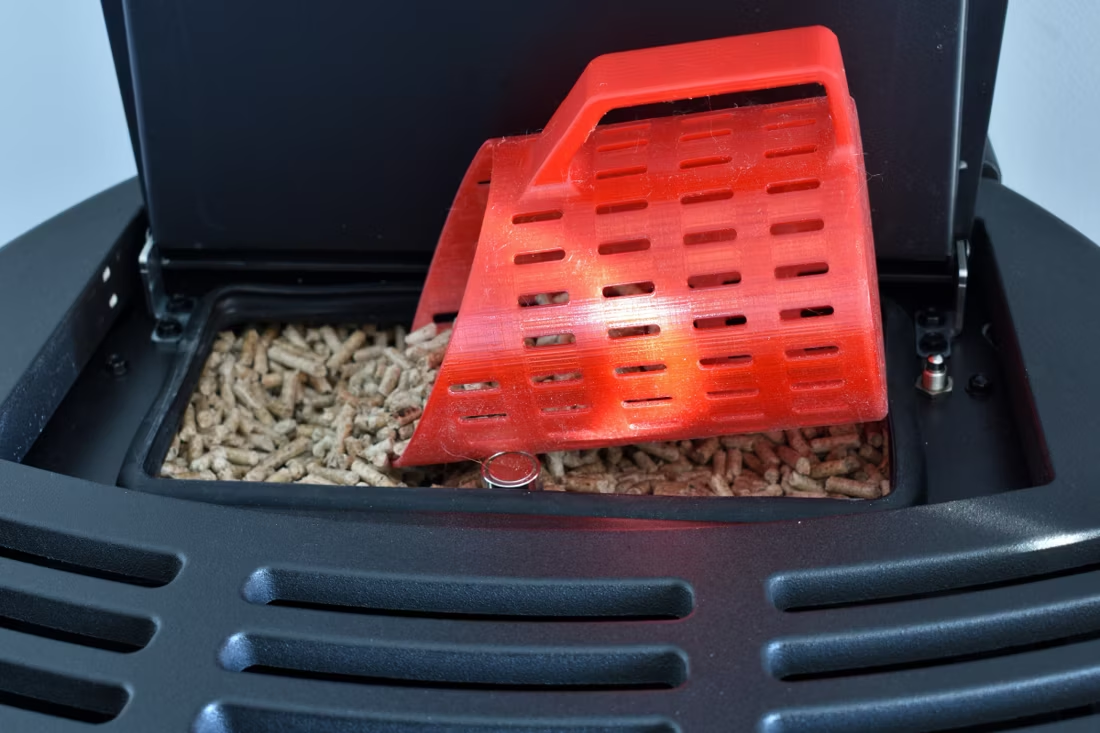
That said, pellet stoves aren't unheard of in Corona. A handful of homeowners install them for the ambiance of a real flame in a family room, as supplemental heat for a north-facing room that stays chilly on the rare 30-degree night, or because they split time between Corona and a mountain property near Big Bear or Idyllwild and want the same appliance in both places. Riverside County falls under the South Coast Air Quality Management District, which regulates wood-burning appliances closely because of persistent non-attainment status and wildfire smoke—pellet stoves burn cleaner than cordwood and are typically treated more favorably under those rules, which is part of why a small number of local dealers still carry brands like Bear Mountain, Lignetics, and Pacific Pellet.
Three steps. No salesperson until you're ready.
Tell us about your project
Your zip code, your situation, and the fuel you're leaning toward—or let the answers point you to one.
See what's actually available
The brands dealers within 100 miles genuinely carry—real options, never a catalog mirage.
Get your dealer & Project Guide
A trusted local dealer, plus the free Project Guide & Parts List that names every component of the job.
Frequently Asked Questions
How much does a pellet stove installation cost in Corona?
Because pellet stoves are a niche install here, expect to pay somewhere in the $4,000 to $7,500 range for a freestanding unit or insert, including the appliance, a dedicated 120V electrical outlet, and pellet venting through an exterior wall. That's a wider range than you'd see in a colder market, mostly because fewer Inland Empire dealers stock pellet units regularly, so pricing depends more on which retailer you reach and whether the job is a straightforward wall-vent install or requires additional electrical work.
Why don't more homes in Corona have pellet stoves?
Mostly climate. With a winter low average of 42°F and only about 1,387 heating degree days a year, Corona simply doesn't generate the sustained cold that makes a pellet-fed heating appliance worth the investment for most households. Central air and a standard gas furnace handle the handful of chilly nights just fine. Pellet stoves earn their keep in places with long, hard winters—think Duluth or Fargo—where they run for months at a stretch. In Corona, a pellet stove tends to be a lifestyle or ambiance choice rather than a heating necessity.
Are pellet stoves exempt from South Coast AQMD no-burn day restrictions?
Generally yes. The South Coast Air Quality Management District's wood-burning rules, which apply throughout Riverside County including Corona, are aimed primarily at cordwood-burning fireplaces and stoves on high-pollution days. EPA-certified pellet appliances burn more completely and produce far less particulate matter than an open wood fire, and they're commonly treated as exempt or lower-priority under local curtailment rules. Confirm the exact status with SCAQMD or your installer before burning on a declared no-burn day, since enforcement details can shift.
Do pellet stoves need electricity, and what does that cost in Corona?
Yes—pellet stoves rely on an electric auger to feed pellets and a blower to circulate heat, so they won't run during a power outage without a battery backup. Southern California Edison serves Corona at a residential rate around $0.2825 per kWh, which is on the higher side nationally, but a pellet stove's actual draw is modest—most units use roughly 100 to 400 watts, similar to a couple of light bulbs. Even at SCE's rate, the electric cost of running a pellet stove for supplemental heat is usually a minor line item compared to the pellets themselves or a whole-home HVAC bill.
Who actually benefits from a pellet stove in Corona?
The clearest cases are homeowners who want real flame and radiant warmth in a family room without the mess of cordwood, people with a second property in the nearby mountains (Big Bear Lake, Idyllwild, Lake Arrowhead) who want a matching appliance at both homes, and anyone in an older Corona house with a chilly, poorly insulated room that central air doesn't reach well. If your goal is whole-home winter heating, a gas furnace upgrade or a mini-split typically makes more sense given how mild the local climate actually is.
Is a pellet stove a good choice given Corona's wildfire smoke and air quality issues?
It's one of the better combustion options if you want a real fire. Corona sits in a persistent non-attainment area and deals with wildfire smoke seasonally, and pellet appliances burn hotter and more completely than an open wood fire, producing significantly less particulate output. They won't add meaningfully to bad-air days the way an old uncertified wood stove could. If air quality is your main concern, though, a direct-vent gas fireplace or an electric unit produces zero combustion particulates at all—worth weighing against the ambiance a pellet stove offers.
Where can I buy pellets in the Corona area, and what do they cost?
Regional brands like Bear Mountain, Lignetics, and Pacific Pellet are carried by a limited number of Inland Empire hearth retailers and some big-box stores in the Riverside/San Bernardino area, typically running around $280 to $380 per ton depending on the retailer and time of year. Because pellet stoves are uncommon locally, stock can be seasonal—many retailers bring pellets in ahead of the cooler months and sell through their supply, so buying early in fall is smarter than waiting for a cold spell in January.
Do I need a permit to install a pellet stove in Corona?
Yes—the City of Corona Building Division requires a permit for a new pellet stove installation, covering the appliance placement, wall venting, and the dedicated electrical circuit. It's a simpler process than a masonry wood chimney project since there's no flue liner or hearth extension typically required, but the electrical work still needs to meet code. Most of the handful of dealers who install pellet units in this market handle the permit filing as part of the job.
Pellet vs. gas vs. electric—what actually makes sense for a Corona home?
For most Corona households, a direct-vent gas fireplace or a modern electric unit is the more practical choice: gas gives instant, adjustable heat with no fuel storage, and electric units need only a standard or dedicated outlet with zero venting or combustion byproducts. Pellet sits in a narrower lane—it's the right call if you specifically want a real flame and the character of a burning appliance, and you're comfortable buying fuel a bag at a time and keeping the hopper fed. Given the area's mild 1,387 HDD climate, pellet is rarely the answer for whole-home heating here, but it's a legitimate choice for ambiance or a mountain-home match-up.
What's the difference between an insert and a zero-clearance fireplace?
An insert is a fireplace that slides into a pre-existing wood-burning fireplace—if you don't have one, there's nothing to insert it into. A zero-clearance fireplace is built into a framed wall, which makes it the answer for remodels and new construction. Simple test: existing masonry fireplace means insert; blank or framed wall means zero-clearance.
Why is my open fireplace making my house colder?
Open fireplaces suck—literally. As the fire burns, it consumes air your furnace already paid to heat and pulls it out through the chimney, so the house is actually colder after the fire goes out than before you lit it. An insert fixes this: it seals the chimney, puts fixed glass across the front, and turns that hole in your house into a real heat source.
Can I install a fireplace myself?
If you're putting a fire in your house on purpose, it's best to work with an expert. Unless you're genuinely experienced in framing, gas line, vent pipe, and the national code on clearances to combustibles, have a professional do it—and ideally the same company that sells you the fireplace, so warranty, service, and liability all live under one roof.
Can a fireplace actually lower my heating bill?
Yes—by creating a comfort zone. A furnace heats every square foot of the house just to warm the one room you're in; a gas fireplace on low burns roughly a sixth of the gas a typical furnace does. Set the furnace around 55–60 degrees as a baseline, then heat the rooms your family actually uses. Families who heat this way commonly save $20–$60 a month.
Nearby Dealers
Hearth shops serving Corona and the surrounding area.
Palm Springs True Value Hardware & Patio
Pellet Brands Stocked Around Corona
Manufacturers will point you to the nearest stocking dealer.
Find your pellet stove option in Corona.
Tell us about your home and how you'd use it, and we'll help you decide honestly whether a pellet stove fits—then match you with a trusted local dealer and send over your free Project Guide & Parts List, including the exact vent kit for your install. ,
Find Your Fireplace →