
Keep Your Family Warm and Safe—No Matter What
With a 41°F average winter low and strict Valley Air District burn rules, wood rarely serves as primary heat inside city limits. For Sierra foothill cabins nearby, it's a different story—and we can point you to a dealer who knows the difference.
Every Project Starts From One of These Five Situations
Mild valley winters, strict air rules—and a mountain exception.
Clovis sits at 371 feet in the San Joaquin Valley, with an average winter low of 41°F and just 2,186 heating degree days a year—roughly a quarter of what a genuinely cold-climate city like Duluth, Minnesota logs in a single season. At that elevation and with winters this mild, a wood stove almost never functions as anyone's primary heat source inside Clovis city limits, and local hearth dealers see far more demand for gas inserts than wood-burning units in Fresno County's incorporated areas.
The bigger factor is air quality. Clovis sits inside the San Joaquin Valley Air Basin, a federal nonattainment area for fine particulates, and the Valley Air District's Check Before You Burn program imposes mandatory no-burn days through the winter whenever inversions trap smoke against the valley floor—sometimes for weeks at a stretch. Where wood heat still makes real sense is up the hill: many Clovis and Fresno County residents keep a second home or cabin in the Sierra National Forest or Sequoia National Forest foothills—around Shaver Lake, Huntington Lake, or the Kings River corridor—where cutting permits run $5 to $20 per cord through the May–October season and a wood stove is legitimate, code-legal primary heat for a mountain property, not a valley one.
Firewood Cutting Permits Near Clovis
Three steps. No salesperson until you're ready.
Tell us about your project
Your zip code, your situation, and the fuel you're leaning toward—or let the answers point you to one.
See what's actually available
The brands dealers within 100 miles genuinely carry—real options, never a catalog mirage.
Get your dealer & Project Guide
A trusted local dealer, plus the free Project Guide & Parts List that names every component of the job.
Frequently Asked Questions
Is it even legal to install a wood stove in Clovis?
It's legal, but restricted. The San Joaquin Valley Air Pollution Control District's Rule 4901 generally limits new construction to one EPA-certified wood heater per dwelling, and many Clovis production builders skip wood entirely and build gas-ready instead. If you're retrofitting an existing masonry fireplace in an established Clovis neighborhood, a certified insert is usually allowed with a standard building permit, but you'll also be subject to Check Before You Burn no-burn days each winter regardless of how new or clean your stove is. A local dealer who works both the valley and foothill markets can tell you exactly what applies to your address.
How much does a wood stove installation cost in Clovis?
Because so few Clovis-based dealers stock wood-burning inserts—demand simply isn't there the way it is in colder markets—installed pricing is less standardized locally than for gas. Nationally, a comparable EPA-certified wood stove or insert with proper Class A venting typically runs $4,000 to $8,000 installed. If your project is actually for a Sierra foothill cabin near Shaver Lake or Huntington Lake rather than a Clovis-proper home, a dealer serving that corridor can give you a firmer number based on your chimney and roofline.
What is Check Before You Burn, and does it affect me?
Check Before You Burn is the Valley Air District's winter wood-smoke program, active roughly November through February across the eight-county San Joaquin Valley air basin, including Fresno County. On days when the district forecasts poor air quality—common during winter temperature inversions that trap smoke against the valley floor—burning is restricted or banned outright, even for EPA-certified stoves, unless wood is your sole source of heat and you've registered for that exemption. Homes in Clovis with a gas furnace or central HVAC as backup don't qualify for the sole-source exemption, which is a big part of why wood heat has fallen out of favor here.
Where does wood heat actually make sense if I live in the Clovis area?
The honest answer for most people is: not at your Clovis address, but possibly at a second property. A large share of the wood-stove interest we see from the Clovis and Fresno area comes from homeowners with a cabin or vacation property in the Sierra National Forest or Sequoia National Forest foothills, where elevation, snow load, and distance from utility gas make wood a genuinely practical primary or backup heat source rather than a valley novelty.
What wood species are available if I do go this route?
Oak, madrone, and Douglas fir are the common species available through Sierra and Sequoia National Forest cutting permits in the foothills east of Clovis. Oak is the standout for heat output and burns down to a long-lasting coal bed; madrone burns hot and relatively clean when well-seasoned; Douglas fir is plentiful and easy to source but runs sappier and lower in BTU output per cord than oak. None of these are typically sold as standing timber inside Clovis city limits—cutting permits apply to national forest land, not valley residential lots.
Do I need a cutting permit to gather firewood near Clovis?
If you're sourcing your own wood rather than buying split cordwood, yes. Both the Sierra National Forest and Sequoia National Forest issue personal-use cutting permits for $5 to $20 per cord, valid during the May-through-October season. These permits apply to forest land in the foothills and higher country east of Clovis, not to any land within city limits, so this route is really only relevant if you're heating a cabin or rural property up the hill.
Wouldn't gas make more sense for a Clovis home?
For almost anyone heating a primary residence inside Clovis, yes. Gas fireplaces and inserts aren't subject to Check Before You Burn restrictions, don't require a cutting permit or wood storage, and pair well with the PG&E natural gas infrastructure already serving most valley neighborhoods. Given that PG&E's residential electric rate in this service territory runs around $0.317 per kWh—well above the national average—a gas fireplace also tends to beat electric resistance heat on running cost for zone heating in a Clovis home.
Could a wood stove serve as backup heat during a PG&E power shutoff?
It's one of the few scenarios where wood heat gets a real look in Clovis. PG&E's Public Safety Power Shutoffs (PSPS) during fire season can leave homes without power for a day or more, and a wood stove doesn't need electricity to produce heat. The wrinkle is timing: PSPS events cluster in fall fire-weather conditions, while Check Before You Burn restrictions cluster in winter inversions, so the two don't overlap as often as you'd think—but if backup heat during an outage is your actual goal, a properly vented, EPA-certified stove installed by a licensed local pro is a legitimate option worth discussing.
What about a pellet stove instead of wood?
Pellet stoves face the same low-demand reality in Clovis as wood stoves—Bear Mountain, Lignetics, and Pacific Pellet all distribute regionally, but few Clovis retailers keep pellet appliances in regular stock given how mild local winters are. Pellet units do burn more consistently and cleanly than cordwood, and many air districts around the state exempt certified pellet stoves from wood-burning curtailment days, so it's worth asking a local dealer whether that exemption applies under current Valley Air District rules if you're set on a real-flame appliance for a Clovis home rather than gas.
What's the difference between an insert and a zero-clearance fireplace?
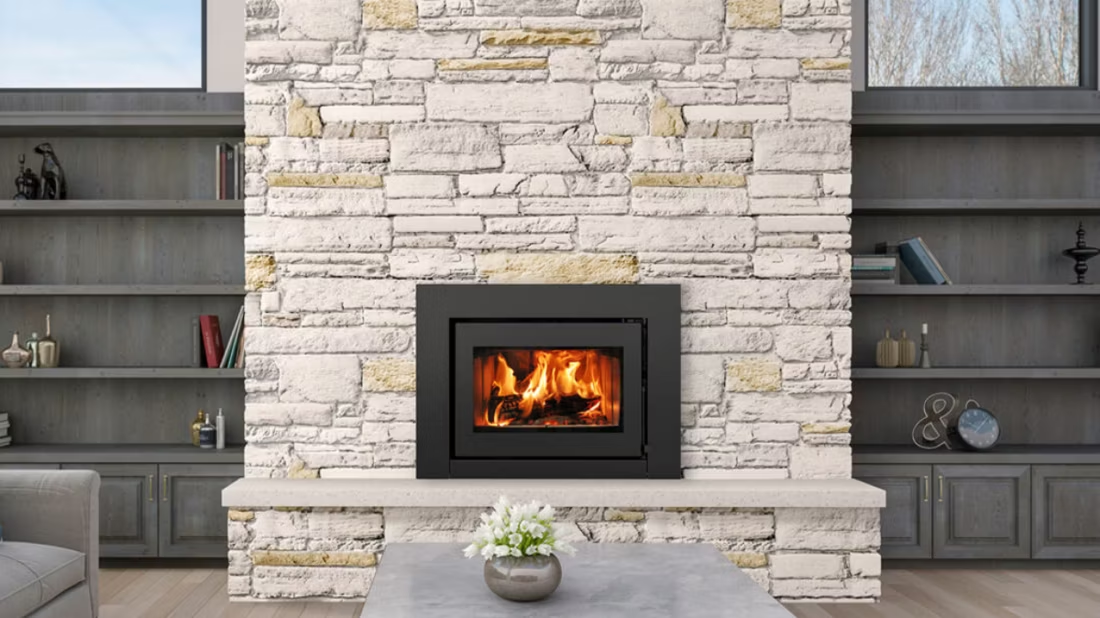
An insert is a fireplace that slides into a pre-existing wood-burning fireplace—if you don't have one, there's nothing to insert it into. A zero-clearance fireplace is built into a framed wall, which makes it the answer for remodels and new construction. Simple test: existing masonry fireplace means insert; blank or framed wall means zero-clearance.
Why is my open fireplace making my house colder?
Open fireplaces suck—literally. As the fire burns, it consumes air your furnace already paid to heat and pulls it out through the chimney, so the house is actually colder after the fire goes out than before you lit it. An insert fixes this: it seals the chimney, puts fixed glass across the front, and turns that hole in your house into a real heat source.
Does a fireplace add value to my home?
On average, a fireplace adds back to the home about the same amount you spent installing it. Add the monthly savings from heating the rooms you actually use instead of the whole house—often hundreds of dollars a year—and the value case is strong before you even count what a fire does for how your family uses the room.
How much should I budget for a fireplace?
For an average home—covering the fireplace, the vent pipe, and basic installation—a budget between $3,900 and $5,500 gives you a lot of options across wood, gas, and pellet. By the time you add finish work, gas line, and electrical, the average complete installation lands between $5,000 and $12,000 all-in. In a remodel or new build, a good rule is to put about 2.5% of the total project cost toward the fireplace.
Nearby Dealers
Hearth shops serving Clovis and the surrounding area.
Find what actually works for your Clovis property.
Whether you're weighing a rare in-town wood install or planning heat for a Sierra foothill cabin, tell us about your project and we'll match you with a trusted local dealer and send over a free Project Guide & Parts List—the exact parts, venting, and recommended installer for your situation.
Find Your Fireplace →