
Pellet stoves are rare in Claremont's mild climate—but not unheard of.
With winter lows averaging 43°F and only about 1,457 heating degree days a year, most Claremont homes don't need a dedicated solid-fuel heater. For the households that still want one, here's what's actually available and who installs it.
Every Project Starts From One of These Five Situations
Claremont's foothill winters rarely call for it.
Claremont sits at about 1,471 feet against the base of the San Gabriel Mountains, in climate zone 3B—one of the mildest heating climates in the country. With roughly 1,457 heating degree days per year (compare that to Bozeman, MT, which sees over 7,500), most homes here get by on a heat pump or a gas furnace running a handful of weeks a year. That's the honest reason pellet stoves show up so rarely on local installers' work orders: the economics of a hopper-fed appliance and a ton of fuel don't pencil out when the furnace barely runs.
Where pellet heat does show up locally is mostly ambiance and backup—a fireplace-adjacent feature in a remodel, or a unit installed at a family cabin up in Wrightwood or near Lake Arrowhead rather than the primary Claremont residence. It's also worth knowing that the South Coast Air Quality Management District, which governs this non-attainment area, treats EPA-certified pellet stoves more leniently than wood stoves on wildfire-smoke and winter no-burn days—a detail that matters if you're weighing pellet against wood for the rare cold night here.
Three steps. No salesperson until you're ready.
Tell us about your project
Your zip code, your situation, and the fuel you're leaning toward—or let the answers point you to one.
See what's actually available
The brands dealers within 100 miles genuinely carry—real options, never a catalog mirage.
Get your dealer & Project Guide
A trusted local dealer, plus the free Project Guide & Parts List that names every component of the job.
Frequently Asked Questions
Does a pellet stove even make sense in Claremont's climate?
For most homes, not really—and we'll say that plainly rather than talk you into one. With winter lows averaging 43°F and about 1,457 heating degree days a year, Claremont's heating season is short and mild, which is why pellet fuel is flagged as not applicable for this area rather than standard. Where it does make sense: a secondary living space that wants supplemental radiant heat, a design feature paired with an existing fireplace, or a mountain property near Wrightwood or Big Bear where winters actually get cold. If your goal is whole-home heat in Claremont proper, a heat pump or gas furnace will do more for less money.
How much does a pellet stove installation cost in Claremont?
Because demand is low, there are fewer local dealers stocking pellet units, which can push pricing slightly above what you'd see in a colder market—expect roughly $3,500 to $7,500 installed for a freestanding stove with a direct-vent kit, and toward the lower end for a pellet insert going into an existing masonry fireplace. Get a firm number from a dealer who actually installs these regularly rather than a big-box quote, since venting and hearth clearance work varies by home.
Are pellet stoves exempt from Claremont's wood-burning restrictions?
Generally, yes. The South Coast Air Quality Management District (SCAQMD) enforces Rule 445 across this non-attainment area, which restricts wood-burning devices on mandatory no-burn days during winter inversions and wildfire-smoke episodes. EPA-certified pellet stoves are typically exempt from those same curtailment days because their emissions profile is lower and more consistent than an open wood fire. If air quality compliance is part of why you're considering pellet over wood, confirm exemption status for your specific model with your installer—SCAQMD periodically updates device-specific rules.
Where can I buy pellets in Claremont?
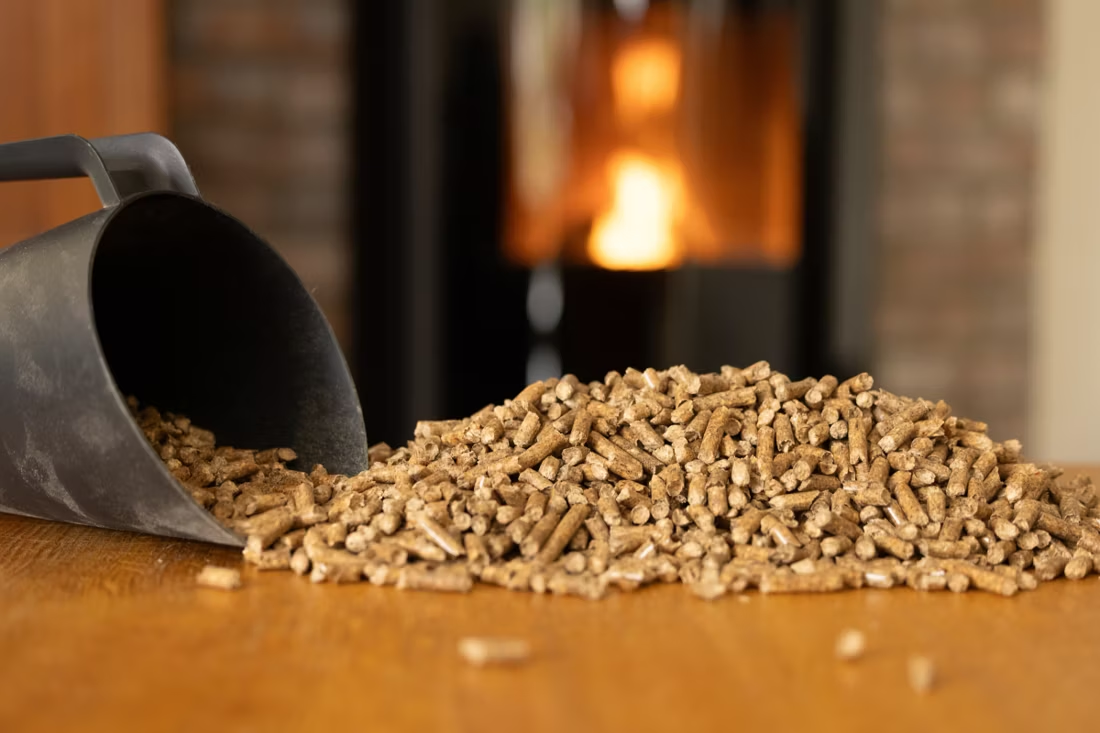
Regional brands like Bear Mountain, Lignetics, and Pacific Pellet show up at feed stores, farm-supply retailers, and big-box hardware stores across the Inland Empire and San Gabriel Valley, typically running $280 to $380 per ton. Because Claremont has so few pellet stoves in daily use, don't expect a dedicated pellet-fuel retailer downtown—most owners either stock up seasonally at a Southern California supplier or have a hearth dealer set up a standing delivery.
What's the difference between a pellet stove and a pellet insert?
A pellet stove is a freestanding, hopper-fed appliance that vents through a small-diameter pipe, often run straight through an exterior wall—no chimney required. A pellet insert is built to slide into an existing masonry fireplace opening, using a liner run up your existing chimney. For a Claremont home with an old wood-burning fireplace that never gets used, an insert converts it into a functioning heat source without new venting. For a room with no fireplace at all, a freestanding stove is simpler to install.
Do I need a permit to install a pellet stove in Claremont?
Yes—solid-fuel and pellet-burning appliances require a permit through the City of Claremont's Building & Safety Division, covering the appliance installation and the through-wall or through-roof vent termination. Most hearth dealers that actually carry pellet stoves locally will pull this permit as part of the installation quote. Given how few pellet installs happen in Claremont in a given year, it's worth confirming your installer has handled one before, rather than assuming standard familiarity the way you would with a gas insert.
Wouldn't electric heat make more sense than pellet in Claremont?
For most homes, yes, and it's why electric is flagged as a standard fuel option here while pellet isn't. Southern California Edison serves the area at roughly $0.2825 per kWh, which is high by national standards, but Claremont's mild winters mean you're not running a heater hard enough for that rate to matter much. A ductless heat pump or electric fireplace insert covers the occasional cold snap without the fuel storage, hopper-loading, and venting a pellet stove requires. Pellet still wins on backup heat during a power outage—electric units, including most heat pumps, stop working the moment the grid does.
Pellet vs. gas—which is the better fit for a Claremont home?
Gas is the more common answer here, and it's why gas is rated a standard fuel for this area. A direct-vent gas fireplace or insert gives instant, thermostat-controlled heat with none of the fuel storage or hopper-loading a pellet stove requires, and gas service is widely available across Claremont. Pellet's real advantage is operating without a gas line and burning a renewable, often locally-sourced fuel—relevant if you're off the gas grid or specifically want a solid-fuel appliance for a cabin property. For the typical in-town Claremont remodel, most homeowners land on gas.
Where can I find someone to service a pellet stove near Claremont?
Because pellet stoves are uncommon in the immediate area, your best bet is a hearth dealer that services a wider Inland Empire or San Gabriel Valley territory rather than a Claremont-only shop. Annual service should include cleaning the burn pot, exhaust venting, and auger mechanism, plus a check of the igniter and combustion blower—pellet stoves have more moving parts than a wood stove and need that mechanical upkeep to run reliably. A dealer who regularly stocks Bear Mountain or Lignetics fuel is a good sign they also service the appliances that burn it.
Why is my open fireplace making my house colder?
Open fireplaces suck—literally. As the fire burns, it consumes air your furnace already paid to heat and pulls it out through the chimney, so the house is actually colder after the fire goes out than before you lit it. An insert fixes this: it seals the chimney, puts fixed glass across the front, and turns that hole in your house into a real heat source.
Why is a fireplace insert so efficient?
An insert does two things: it seals the chimney completely, so you stop losing air you already paid to heat, and it radiates warmth into the room through the firebox and glass. Most add a heat-exchange fan that pulls cool room air underneath, wraps it around the hot firebox, and pushes it back out warm. Your home is more efficient before you've even lit the first fire.
Can I install a fireplace myself?
If you're putting a fire in your house on purpose, it's best to work with an expert. Unless you're genuinely experienced in framing, gas line, vent pipe, and the national code on clearances to combustibles, have a professional do it—and ideally the same company that sells you the fireplace, so warranty, service, and liability all live under one roof.
Can a fireplace actually lower my heating bill?
Yes—by creating a comfort zone. A furnace heats every square foot of the house just to warm the one room you're in; a gas fireplace on low burns roughly a sixth of the gas a typical furnace does. Set the furnace around 55–60 degrees as a baseline, then heat the rooms your family actually uses. Families who heat this way commonly save $20–$60 a month.
Nearby Dealers
Hearth shops serving Claremont and the surrounding area.
All Valley Distrib. Dba Marco Distrib
The Heat Source (Burrico) - Lancaster
Tropicana Outdoor Living
Pellet Brands Stocked Around Claremont
Manufacturers will point you to the nearest stocking dealer.
Find your pellet stove in Claremont.
Tell us about your home, whether it's in Claremont or a mountain property nearby, and we'll match you with a local dealer who actually installs pellet appliances—plus a free Project Guide & Parts List with the vent kit and parts your project needs.
Find Your Fireplace →