
Keep Your Family Warm and Safe—No Matter What
Mild Sacramento Valley winters and strict local air rules mean wood isn't the default heat source here—but for the right home, a compliant, well-installed stove or insert can still make sense. We'll connect you with a local dealer who knows the rules.
Every Project Starts From One of These Five Situations
Mild winters and strict air rules make wood the exception, not the rule.
Citrus Heights sits in the Sacramento Valley at just 159 feet of elevation, where winter lows average a mild 41°F and the area sees a fairly light winter heating season overall. Compare that to a genuine cold-climate market like Fargo, ND or Duluth, MN, where homes routinely face a heating season several times longer and more intense—the kind of climate that makes a wood stove a household necessity rather than a lifestyle choice. In Citrus Heights, most homes are heated with central gas furnaces or heat pumps, and a wood-burning appliance is more often a supplemental or occasional-use feature than a primary heat source.
There's also a regulatory layer that matters here: Citrus Heights falls under the Sacramento Metropolitan Air Quality Management District, and the region is a designated non-attainment area subject to winter inversion and wildfire smoke concerns. Sac Metro Air District's "Check Before You Burn" program restricts wood burning on declared no-burn days between November and the end of February, and any new wood stove or insert must meet current EPA certification standards to be installed at all. Between the mild climate and these restrictions, wood is genuinely uncommon in Citrus Heights—but homeowners with Sierra foothill property, a taste for radiant wood heat, or a need for non-electric backup heat during a PG&E or SMUD outage still install them. If that's you, working with a local dealer who understands Sac Metro's rules is essential.
Firewood Cutting Permits Near Citrus Heights
Three steps. No salesperson until you're ready.
Tell us about your project
Your zip code, your situation, and the fuel you're leaning toward—or let the answers point you to one.
See what's actually available
The brands dealers within 100 miles genuinely carry—real options, never a catalog mirage.
Get your dealer & Project Guide
A trusted local dealer, plus the free Project Guide & Parts List that names every component of the job.
Frequently Asked Questions
Is it legal to install a wood stove in Citrus Heights?
Yes, but the unit has to meet current EPA New Source Performance Standards, and the installation needs a Sacramento County building permit. Because Citrus Heights sits in a Sac Metro Air Quality Management District non-attainment area, new wood-burning appliances are held to a higher bar than in many parts of the state. An uncertified or older secondhand stove generally can't be installed as a new unit. A local hearth dealer familiar with Sac Metro's requirements will confirm the model you're considering is compliant before you buy.
Why don't more homes in Citrus Heights use wood heat?
Two reasons: climate and air quality rules. Winter lows here average 41°F and the area has a fairly light winter heating season overall—mild compared to Sierra foothill towns or genuinely cold-climate cities like Bozeman, MT. Most Citrus Heights homes rely on central gas or electric heat, and a wood stove is more of an occasional-use or backup appliance than a daily necessity. On top of that, the Sacramento Metro Air District's "Check Before You Burn" program restricts wood burning on declared no-burn days each winter, which discourages some homeowners from relying on wood at all.
Can I still install a wood stove if I want one for ambiance or backup heat?
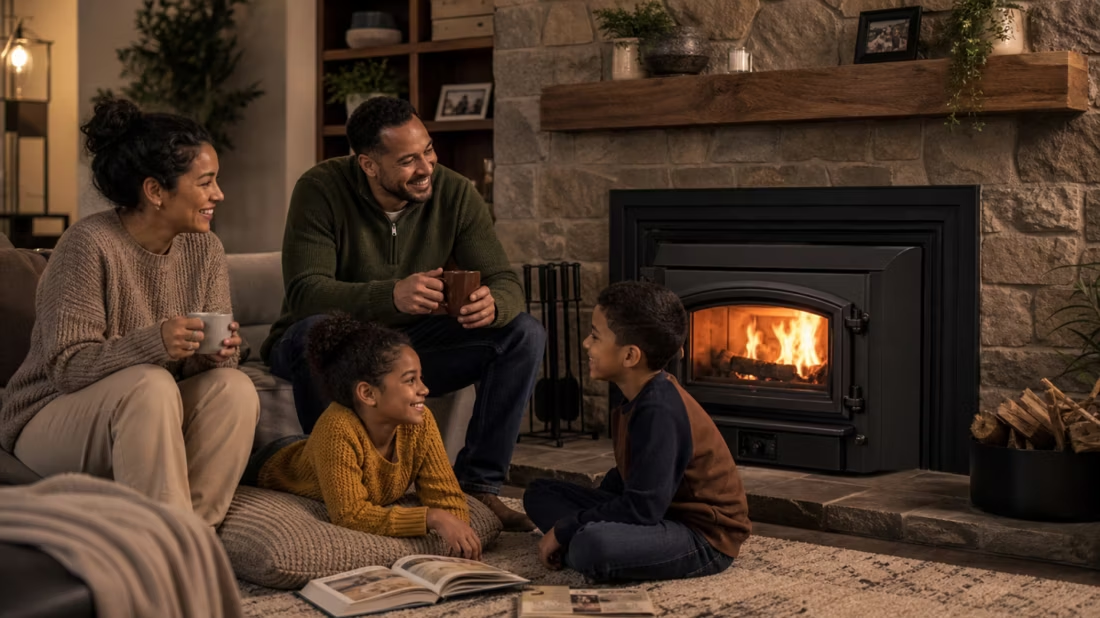
Yes. Plenty of Citrus Heights homeowners install a wood stove or insert for the atmosphere of a real fire, or as heat that doesn't depend on the grid during a PG&E or SMUD outage. The requirements are the same as anywhere in Sac Metro's jurisdiction: an EPA-certified unit, a Sacramento County building permit, and an understanding that you may need to skip burning on declared no-burn days in November through February. A local dealer can walk you through which certified models are available and what installation looks like for your home.
What is a "no-burn day" and how does it affect my wood stove?
Sac Metro Air District calls it "Check Before You Burn." On days when winter inversion traps particulate pollution close to the ground—a real issue in the Sacramento Valley—the district can declare a mandatory no-burn day, and residents are asked or required not to use wood-burning devices, including fireplaces and stoves, until air quality improves. Wildfire smoke season can trigger similar advisories. It's worth checking the district's daily status during winter if wood heat is part of your routine, since this is one of the more active air-quality enforcement programs in California.
What wood species are actually available to burn near Citrus Heights?
Oak, madrone, and Douglas fir are the common species in the region, with oak being the preferred choice for its density and clean, hot burn. If you're sourcing wood locally rather than buying delivered cords, most of what's available in the Sacramento area comes from private tree services or foothill suppliers rather than backyard cutting, since Citrus Heights itself isn't near public timber land.
Where can I get a firewood cutting permit if I have Sierra property?
If you own or visit property up toward the foothills, permits are available through Eldorado National Forest and Tahoe National Forest, both running roughly $5 to $20 per cord during their May-through-October cutting season, and through the BLM California State Office at about $10 per cord from April through October. None of these permit areas are within Citrus Heights itself—they're mountain-country options for households with a cabin or second property, not a source for day-to-day firewood in the valley.
Is a wood stove a good backup option during a PG&E or SMUD power outage?
It can be one of the few heat sources in your home that keeps working when the grid doesn't. Both PG&E and SMUD serve parts of Citrus Heights, and PG&E in particular has used Public Safety Power Shutoffs during high fire-risk conditions in recent years. Unlike a pellet stove or an electric fireplace, a wood stove needs no power to produce heat, which is the main reason some Citrus Heights homeowners install one despite the mild climate. Just keep in mind that a declared no-burn day is a separate issue from a power outage—check current air district status even during an outage if conditions allow.
Should I choose wood or gas for my Citrus Heights home?
For most homes here, gas wins on convenience: it's not subject to no-burn day restrictions, lights instantly, and fits the mild-winter, central-heat-dominant pattern of the Sacramento Valley. Wood makes sense mainly for homeowners who specifically want the ambiance and radiant feel of a real fire, or who want heat that survives a power outage without depending on the grid. If you're weighing the two, it's worth having a local dealer walk you through both options for your specific home and use case before deciding.
How do I find a local dealer who can install a compliant wood stove in Citrus Heights?
That's exactly what Find My Fireplace does—we're not a manufacturer or a retailer, we're a neutral matchmaker. Tell us about your home and what you're trying to accomplish, and we'll connect you with a trusted local dealer who knows Sac Metro's EPA certification and permitting requirements, can size a unit correctly for your space, and will hand you a free Project Guide & Parts List with the exact parts—including the vent kit—for your project.
Why is my open fireplace making my house colder?
Open fireplaces suck—literally. As the fire burns, it consumes air your furnace already paid to heat and pulls it out through the chimney, so the house is actually colder after the fire goes out than before you lit it. An insert fixes this: it seals the chimney, puts fixed glass across the front, and turns that hole in your house into a real heat source.
Why won't my new wood stove get going like my old one?
New wood stoves are 70%+ efficient, so far less heat goes up the flue—which also means less draft to get a fire established. The rule: build a genuinely hot fire for about 45 minutes before you choke it down. Skip that and you get smoke in the room, creosote in the chimney, and a fire that never takes off. Most performance complaints trace straight back to this.
Can I install a fireplace myself?
If you're putting a fire in your house on purpose, it's best to work with an expert. Unless you're genuinely experienced in framing, gas line, vent pipe, and the national code on clearances to combustibles, have a professional do it—and ideally the same company that sells you the fireplace, so warranty, service, and liability all live under one roof.
Can a fireplace actually lower my heating bill?
Yes—by creating a comfort zone. A furnace heats every square foot of the house just to warm the one room you're in; a gas fireplace on low burns roughly a sixth of the gas a typical furnace does. Set the furnace around 55–60 degrees as a baseline, then heat the rooms your family actually uses. Families who heat this way commonly save $20–$60 a month.
Nearby Dealers
Hearth shops serving Citrus Heights and the surrounding area.
Furnitalia / European Kitchen & Bath
Mike's Mobile Screen & Chimney Service
Find your wood fireplace in Citrus Heights.
Tell us about your home and how you plan to use a wood stove or insert, and we'll match you with a local dealer who understands Sac Metro's air rules—plus a free Project Guide & Parts List for your project.
Find Your Fireplace →