
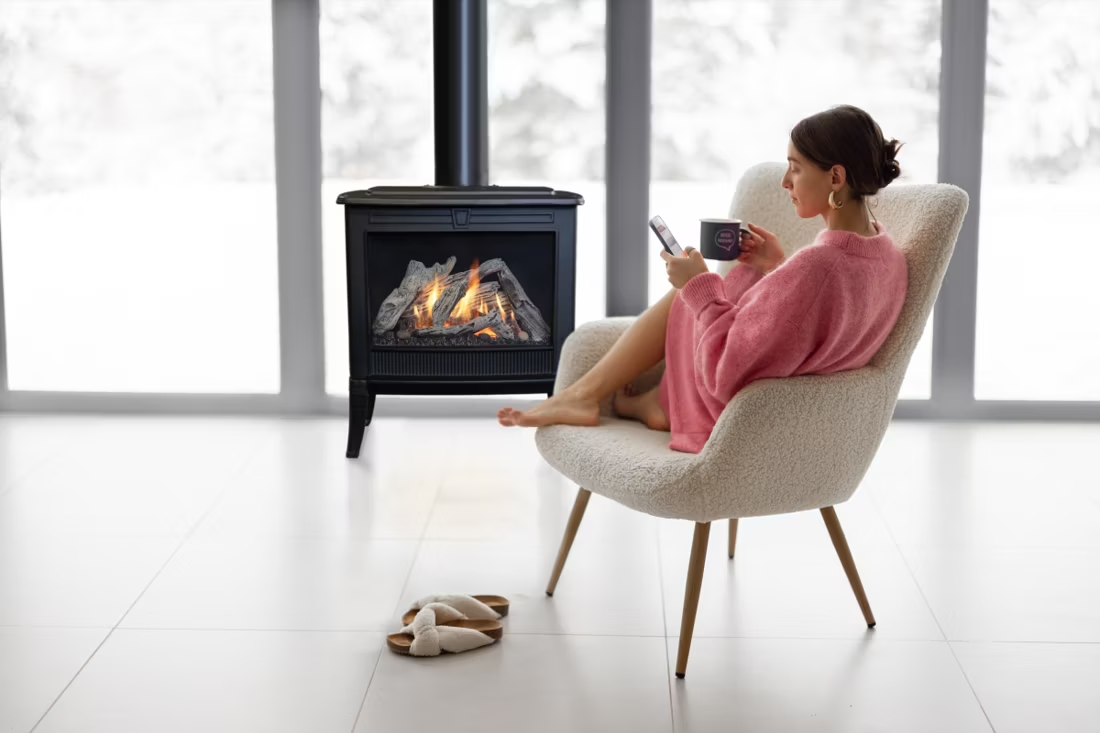
Real flame, no wood smoke, in Chino's mild winters.
Chino's winters rarely demand serious heat, but a gas fireplace still delivers instant ambiance and warmth on the season's cooler evenings—cleanly, and without a chimney to maintain. Find the right unit and connect with a trusted local dealer.
Every Project Starts From One of These Five Situations
The default hearth choice in the South Coast air basin.
At 627 feet in the San Bernardino County flatlands, Chino sees a mild Mediterranean climate—winter lows average 42°F and the city has a short, light heating season, a fraction of what a place like Bozeman, Montana racks up in a single hard January. Heat here is rarely a survival issue; it's about comfort on the handful of genuinely cold nights and the visual warmth of a real flame during the rest of the season.
That mild climate is only part of the story. Chino sits inside the South Coast Air Quality Management District's non-attainment area, and SCAQMD Rule 445 has prohibited new wood-burning fireplaces and stoves in new construction since 2008. Combine that with periodic wildfire smoke advisories and Check Before You Burn restrictions, and gas has become the practical, code-compliant default for anyone wanting real flame in a new build, remodel, or fireplace upgrade. Southern California Edison serves electric service here at a relatively high residential rate near 28 cents per kWh, which is part of why gas—cheaper to run and unaffected by SCAQMD's wood rules—remains the go-to choice for most Chino homeowners.
Three steps. No salesperson until you're ready.
Tell us about your project
Your zip code, your situation, and the fuel you're leaning toward—or let the answers point you to one.
See what's actually available
The brands dealers within 100 miles genuinely carry—real options, never a catalog mirage.
Get your dealer & Project Guide
A trusted local dealer, plus the free Project Guide & Parts List that names every component of the job.
Frequently Asked Questions
How much does a gas fireplace installation cost in Chino?
Most gas fireplace and insert installations in the Chino area run roughly $3,500 to $9,000, depending on the unit, the venting path, and whether new gas line work is required. A direct-vent insert going into an existing masonry fireplace that already has a gas stub is on the lower end. A new direct-vent fireplace built into a wall during a remodel—with framing, venting, and a fresh gas line run from the meter—lands in the middle to upper range. Homes needing a longer gas line extension or specialty venting through a two-story wall can push past $10,000. A local dealer will give you a firm number after seeing your space.
Can I convert my existing wood fireplace to gas in Chino?
Yes, and because of South Coast AQMD Rule 445 prohibiting new wood-burning appliances, a gas insert conversion is often the only legal way to upgrade an older masonry fireplace to a usable, real-flame heat source. The insert typically uses your existing chimney as the vent path with a stainless liner, preserving the look of the fireplace while eliminating ash, smoke, and the SCAQMD burn restrictions that can sideline a wood unit on poor air quality days. Expect $3,500 to $8,500 depending on the insert and whether gas line work is needed.
Do I need natural gas service, or can I use propane in Chino?
Nearly every home in Chino's 91708 and 91710 zip codes already has natural gas service through the regional utility serving the Inland Empire, so if you have a gas water heater, range, or furnace, adding a fireplace is usually a straightforward tie-in. Propane is uncommon within Chino city limits and mostly shows up on rural properties at the edges of San Bernardino County that lack natural gas mains. Most fireplace models can be configured for either fuel, but your installer will confirm the correct orifice and regulator setup before install.
Will my gas fireplace still work if the power goes out?
Most modern gas fireplaces with intermittent pilot ignition (IPI) include a battery backup that keeps the unit lighting normally during an outage. Southern California Edison territory does see occasional Public Safety Power Shutoff events during high fire-danger periods, and while Chino's flat, urban footprint puts it at lower PSPS risk than the foothill communities nearby, outages still happen. Valor fireplaces take a different approach—their pilot's thermocouple generates the small amount of electricity the unit needs, so there's no battery to remember at all. Ask your local dealer which ignition system a given model uses.
What's the difference between a gas fireplace, gas insert, and gas stove?
A gas fireplace is a fully built-in unit framed into a wall—the standard choice for new construction, which in Chino generally means gas rather than wood under SCAQMD Rule 445. A gas insert slides into an existing masonry firebox, converting an old wood-burning fireplace into a sealed, high-efficiency gas unit that vents through the existing chimney. A gas stove is a freestanding unit, similar in footprint to a wood stove, that can go almost anywhere with the right clearances and venting. For Chino homes with an existing fireplace, an insert is the most common upgrade; new rooms or additions usually call for a built-in fireplace.
Do I need a permit to install a gas fireplace in Chino?
Yes—the City of Chino Building & Safety Division requires a permit for new gas fireplace installations, and any new or modified gas line needs to be run and inspected by a licensed gas-fitter. Most established hearth dealers handle the permitting and inspection scheduling as part of the installation, which is one of the practical reasons to avoid a big-box or handyman install: a certified installer coordinates the gas line, venting, and code sign-off as one job instead of leaving you to juggle separate trades.
What's the difference between vented and vent-free gas fireplaces, and are vent-free units allowed in Chino?
Vented (direct-vent) gas fireplaces draw combustion air from outside and exhaust it back outside through a sealed pipe—they're the cleanest and most universally code-compliant option. Vent-free units burn gas directly into the room without external venting; California is one of the states that restricts vent-free gas appliances, so most Chino dealers will steer you toward direct-vent models regardless of the manufacturer's national listing. Given the region's existing air quality concerns as a non-attainment area, direct-vent is also simply the better fit for indoor air quality in a Chino home.
How often should a gas fireplace be serviced?
Plan on an annual inspection, ideally in early fall before the fireplace sees regular use through Chino's cooler months. A certified technician checks the burner, pilot assembly, venting, and gas connections, and cleans the glass and interior—a much smaller job than chimney sweeping but still important, since a fireplace that only runs a few months a year can develop dust buildup or a weak pilot flame between seasons. Local gas appliance service providers typically charge $150 to $250 for this visit.
Gas vs. electric fireplace—which makes more sense for a Chino home?
Wood-burning units are essentially off the table for new installs here under SCAQMD Rule 445, so the real decision for most Chino homeowners is gas versus electric. Gas delivers genuine heat output and real flame, and with SCE's residential rate running close to 28 cents per kWh, it's meaningfully cheaper to operate for regular use than an electric unit pulling power at that rate. Electric fireplaces install almost anywhere with no venting or gas line at all, which makes them attractive for apartments, rentals, or rooms where running a gas line isn't practical. For a primary living space where you want a fireplace people actually gather around, gas is usually the stronger long-term choice; for supplemental ambiance in a bedroom or den, electric can make sense.
Why is a fireplace insert so efficient?
An insert does two things: it seals the chimney completely, so you stop losing air you already paid to heat, and it radiates warmth into the room through the firebox and glass. Most add a heat-exchange fan that pulls cool room air underneath, wraps it around the hot firebox, and pushes it back out warm. Your home is more efficient before you've even lit the first fire.
What's the difference between an insert and a zero-clearance fireplace?
An insert is a fireplace that slides into a pre-existing wood-burning fireplace—if you don't have one, there's nothing to insert it into. A zero-clearance fireplace is built into a framed wall, which makes it the answer for remodels and new construction. Simple test: existing masonry fireplace means insert; blank or framed wall means zero-clearance.
What is an in-home preview and do I need one?
It's a visit where a hearth professional measures your space, confirms the model you picked actually works in your home, and walks the specs—framing, gas line, venting, finish work—before anything is ordered. Some details you just can't know until you see the house. Never make a down payment without one; it's the single most-skipped step that burns buyers.
How much should I budget for a fireplace?
For an average home—covering the fireplace, the vent pipe, and basic installation—a budget between $3,900 and $5,500 gives you a lot of options across wood, gas, and pellet. By the time you add finish work, gas line, and electrical, the average complete installation lands between $5,000 and $12,000 all-in. In a remodel or new build, a good rule is to put about 2.5% of the total project cost toward the fireplace.
Nearby Dealers
Hearth shops serving Chino and the surrounding area.
Find your gas fireplace in Chino.
Tell us a bit about your home and we'll match you with a trusted local dealer and a free Project Guide & Parts List—the right gas fireplace or insert, sized and vented correctly, with no big-box guesswork.
Find Your Fireplace →