
Real fireplace ambiance, zero smoke, zero permits.
Chino Hills winters rarely dip below the low 40s, so an electric fireplace covers what most homes here actually need: instant ambiance and the occasional supplemental warmth, without a chimney or a flame.
Every Project Starts From One of These Five Situations
Mild winters, strict air rules, an easy fit for electric heat.
Chino Hills sits at just under 1,000 feet in the eastern edge of the Los Angeles basin, with an average winter low around 42°F and a short, mild heating season—just a fraction of the winter heating load a place like Duluth, MN or Bozeman, MT racks up in a single winter. That's why wood stoves and pellet stoves barely register here: there's simply not enough sustained cold to justify cutting, hauling, and storing fuel for daily heat. Electric, on the other hand, fits the local reality well—it delivers real flame appearance and real warmth on the rare cold snap without asking a homeowner to build a heating system around a mild climate.
Chino Hills also falls inside a South Coast Air Quality Management District non-attainment area, and wildfire smoke drifting down from the San Bernardino and Angeles National Forests is a real seasonal concern most years. An electric fireplace adds zero combustion byproducts and zero particulate to a household already dealing with smoky air days—no venting, no flue, no gas line, and for plug-in units, often no permit at all. Southern California Edison serves nearly every home in Chino Hills, and while the residential rate here runs on the higher side, an electric fireplace draws a small fraction of what central heat or a space heater pulls, which keeps the ambiance affordable even at SCE's pricing.
Three steps. No salesperson until you're ready.
Tell us about your project
Your zip code, your situation, and the fuel you're leaning toward—or let the answers point you to one.
See what's actually available
The brands dealers within 100 miles genuinely carry—real options, never a catalog mirage.
Get your dealer & Project Guide
A trusted local dealer, plus the free Project Guide & Parts List that names every component of the job.
Frequently Asked Questions
How much does it cost to install an electric fireplace in Chino Hills?
Plug-in electric fireplace inserts and mantel units typically run $300 to $1,500 installed, since most operate on a standard 120V household outlet with no venting, no gas line, and usually no permit required. Built-in linear electric fireplaces or larger units that need a dedicated 240V circuit run higher—typically $2,000 to $5,000—once a licensed electrician runs new wiring and a finish carpenter builds or updates the surround. Because Chino Hills sits inside an SCAQMD non-attainment area, homeowners who want a fireplace without adding another combustion source in the house often land on electric specifically because of this simpler, permit-light install.
Will an electric fireplace actually keep a room warm in Chino Hills?
For most Chino Hills homes, yes, but it's worth setting expectations correctly. With winter lows averaging around 42°F and a heating season that's short and mild, a typical 1,500-watt electric fireplace heater is enough to comfortably warm a living room or family room on the coldest nights of the year. It's not designed to be a whole-home heat source the way a wood stove is built for a place like Buffalo, NY—it's built to supplement central heat on the handful of nights each winter when temperatures actually dip into the 30s or low 40s, and to run flame-only, no-heat mode the rest of the year for ambiance.
What does it cost to run an electric fireplace on Southern California Edison rates?
SCE's residential rate in the Chino Hills service area runs about $0.28 per kWh, which is higher than the national average. A typical 1,500-watt heater setting draws 1.5 kWh, so running the heat function costs roughly $0.42 an hour. Flame-only ambiance mode, which most homeowners actually use most of the time, draws closer to 50 to 100 watts and costs only a few cents an hour. That gap is worth knowing before you buy—if you plan to lean on the heater function daily through what passes for a Chino Hills winter, factor SCE's rate into the decision; if you mostly want the visual, the running cost is negligible.
What's the difference between an electric insert, a mantel package, and a built-in linear unit?
An electric insert is sized to slide into an existing fireplace opening (masonry or zero-clearance) and is the most common retrofit for homes with an old, unused wood-burning firebox. A mantel package pairs a smaller electric unit with a surrounding cabinet or mantel shelf and works anywhere with an outlet—no existing fireplace needed. A built-in linear electric fireplace is a wider, frameless unit designed to be recessed into new wall framing during a remodel, often the choice for a modern great room. For a Chino Hills home with an existing but rarely used masonry fireplace, an insert is usually the fastest and most cost-effective upgrade.
Do I need a permit to install an electric fireplace in Chino Hills?
A plug-in electric fireplace or insert that uses an existing 120V outlet typically does not require a permit. If you're adding a built-in unit that needs a new dedicated 240V circuit, that electrical work requires a permit through the City of Chino Hills Building & Safety Division, and it should be pulled by your licensed electrician as part of the install. Unlike wood or gas appliances, there's no venting inspection or gas-fitter sign-off involved, which is part of why electric installs move faster than the alternatives.
Why don't wood stoves or pellet stoves show up much in Chino Hills?
Chino Hills sits in a South Coast Air Quality Management District non-attainment area, and wildfire smoke from the nearby San Bernardino and Angeles National Forests already affects local air quality several weeks a year. Combined with a heating climate this mild—a short, light winter heating season overall—there's little practical case for daily wood or pellet heat here, and local building departments don't see much demand for new wood-burning installs. Forest Service cutting permits do exist through San Bernardino National Forest and Angeles National Forest ($5 to $20 per cord, May through October), but those are mostly used for recreational campfires on public land, not home heating systems. If you're set on a wood-burning appliance for a rural property near the forest edge, a local dealer can walk you through what's realistic, but for the vast majority of Chino Hills homes, electric or gas covers the need.
Does an electric fireplace add to local air quality or wildfire smoke problems?
No. Electric fireplaces produce no combustion, no exhaust, and no particulate matter—there's nothing to vent and nothing added to indoor or outdoor air. For a household in Chino Hills that already deals with wildfire smoke drifting in from the surrounding national forests during fire season, that's a genuine advantage over any flame-based heating appliance, and it's one of the more common reasons local homeowners choose electric over wood or gas when air quality is a personal concern.
What features actually matter when choosing an electric fireplace?
Flame realism varies a lot between brands—look at units with layered LED flame beds and mirrored glass (Dimplex's Opti-myst line and comparable models from Amantii and Touchstone are common choices carried by Southern California dealers) rather than a single flat flame projection, which tends to look noticeably artificial in a bright room. Beyond that, check the heater's real BTU output if you want supplemental heat, whether the flame effect runs independently of the heater (useful for year-round ambiance in a climate this mild), and whether it has app or remote control. A local dealer can show you the flame effect in person, which matters more than any spec sheet.
Electric vs. gas—which is right for my Chino Hills home?
Gas fireplaces are common in Chino Hills too and deliver more real heat output along with the look of an actual flame fed by fuel rather than LEDs—a good fit if you want a fireplace that can meaningfully warm a room during a rare cold snap or run during a power outage with a battery-backup ignition system. Electric wins on simplicity: no gas line, no venting, no annual inspection, and installation that's often done in an afternoon. Given how mild the local climate is, a lot of Chino Hills homeowners choose electric specifically because they want the look and occasional warmth without taking on a gas line or venting project for a fireplace that would rarely need to work hard anyway. A local dealer can walk through both options against your specific room and budget.
Does an electric fireplace need a vent or chimney?
No—that's its superpower. An electric fireplace needs a wall and an outlet, period. No vent pipe, no gas line, no clearances to design around, which is why it works in bedrooms, offices, apartments, and walls where venting a gas or wood unit would be impractical or impossible. Installation is typically the simplest and least expensive of any fireplace type.
Can I put a TV above my fireplace?
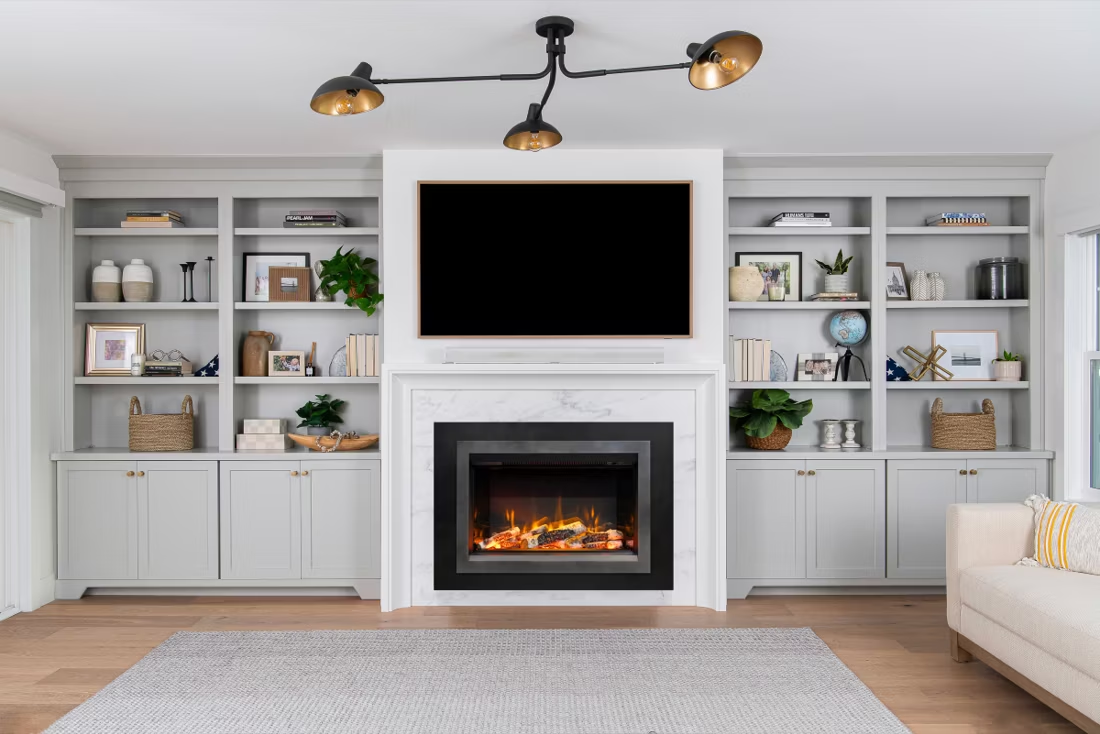
Yes—with an asterisk. Fireplaces are hot and TVs don't like heat. Either put a mantel between them to deflect rising warmth, or choose a fireplace with heat-management technology that creates a cool zone on the wall above—the wall stays around 125 degrees, barely warm, while the room still gets full heat. If you like clean lines and don't want a mantel, heat management is the answer.
Can I install a fireplace myself?
If you're putting a fire in your house on purpose, it's best to work with an expert. Unless you're genuinely experienced in framing, gas line, vent pipe, and the national code on clearances to combustibles, have a professional do it—and ideally the same company that sells you the fireplace, so warranty, service, and liability all live under one roof.
Does a fireplace add value to my home?
On average, a fireplace adds back to the home about the same amount you spent installing it. Add the monthly savings from heating the rooms you actually use instead of the whole house—often hundreds of dollars a year—and the value case is strong before you even count what a fire does for how your family uses the room.
Nearby Dealers
Hearth shops serving Chino Hills and the surrounding area.
Electric Service in Chino Hills
An electric fireplace's heater draws about 1,500 watts—pennies per hour at local rates.
Southern California Edison Co
Colorado River Indian Irr Proj
Find your electric fireplace in Chino Hills.
Tell us about your room and your goals, and we'll match you with a trusted local Chino Hills dealer and send over a free Project Guide & Parts List—the exact unit, mounting or insert kit, and electrical requirements for your space.
Find Your Fireplace →