
Gas fireplaces that burn clean on every Spare the Air Day.
Brentwood winters are mild, but a gas fireplace still delivers real zone heat and ambiance on a switch—and it stays legal to run when the Bay Area calls a burn curtailment. Find the right unit and get matched with a trusted local dealer.
Every Project Starts From One of These Five Situations
Why gas fits Brentwood better than wood.
Brentwood sits at just 88 feet in eastern Contra Costa County, with average winter lows around 40°F and roughly 2,230 heating degree days a year—a fraction of what a colder climate like Bismarck, ND sees in a single winter. That mild profile means most homes here don't need wood as a serious heat source, and Contra Costa's status as a non-attainment air quality area, combined with Bay Area Air Quality Management District Spare the Air winter alerts, makes wood-burning devices genuinely uncommon and often restricted on the coldest, stillest nights when curtailments actually get called. A small number of homeowners still keep a wood-burning unit for occasional use, but it's the exception here, not the rule.
Gas is the standard choice instead. PG&E serves Brentwood for both natural gas and electric service, and at a residential rate of roughly $0.317 per kWh, running a gas fireplace is typically far cheaper per BTU than electric resistance heat. A direct-vent gas fireplace or insert gives you instant, adjustable heat for a family room or bonus room, real flame ambiance without smoke or ash, and—unlike a wood-burning appliance—no exposure to Spare the Air burn bans. For most Brentwood homes, that combination of low operating cost and year-round legality is the whole case for gas.
Three steps. No salesperson until you're ready.
Tell us about your project
Your zip code, your situation, and the fuel you're leaning toward—or let the answers point you to one.
See what's actually available
The brands dealers within 100 miles genuinely carry—real options, never a catalog mirage.
Get your dealer & Project Guide
A trusted local dealer, plus the free Project Guide & Parts List that names every component of the job.
Frequently Asked Questions
How much does a gas fireplace installation cost in Brentwood?
Most gas fireplace and insert installations in Brentwood run in the $4,000 to $9,000 range, with the low end covering a direct-vent insert into an existing masonry fireplace that already has a gas line nearby, and the high end covering a new built-in gas fireplace in a remodel or addition where framing, venting, and a fresh gas line run are all needed. Freestanding gas stoves and simple gas log conversions tend to land toward the lower end of that range. A local dealer will give you a firm number after seeing your specific fireplace opening and gas line routing.
Can I install a wood-burning fireplace in Brentwood instead of gas?
You can, but it's uncommon, and there's a real regulatory reason why. Contra Costa County falls under the Bay Area Air Quality Management District, which is a federal non-attainment area for particulate matter and calls Spare the Air winter alerts that prohibit burning in any wood-burning device—fireplace, stove, or insert—on the days when air quality is worst. Because of that, most of the hearth dealers who serve Brentwood carry very limited wood-burning inventory and steer new customers toward gas or electric, which stay usable every day regardless of air quality advisories. If you specifically want wood, a dealer can tell you what's still available, but expect it to be a smaller and pricier slice of their showroom than gas.
Do I need natural gas to install a gas fireplace, or can I use propane?
Most of Brentwood is built out with natural gas service through PG&E, so if your home already has a gas water heater, range, or furnace, adding a gas fireplace is usually a straightforward tie-in to your existing line. Propane is more of a fallback for outlying properties toward the Delta or unincorporated county land where natural gas mains haven't been run. Nearly every gas fireplace model can be set up for either fuel—your installer swaps the orifice and regulator for propane—so fuel type rarely limits which unit you can choose.
Will my gas fireplace still work if the power goes out?
Most direct-vent gas fireplaces sold today use intermittent pilot ignition (IPI) with a small battery backup—typically AA batteries inside the unit—so the fireplace lights and runs normally even with the power out, as long as those batteries are fresh. Some Valor models take it a step further and generate their own power from the pilot's thermocouple, so there's no battery to remember at all. Given how much Brentwood's East County power grid can see planned PG&E outages during fire-weather season, that battery-free option is worth asking your local dealer about if backup heat matters to you.
What's the difference between a gas fireplace, gas insert, and gas stove?
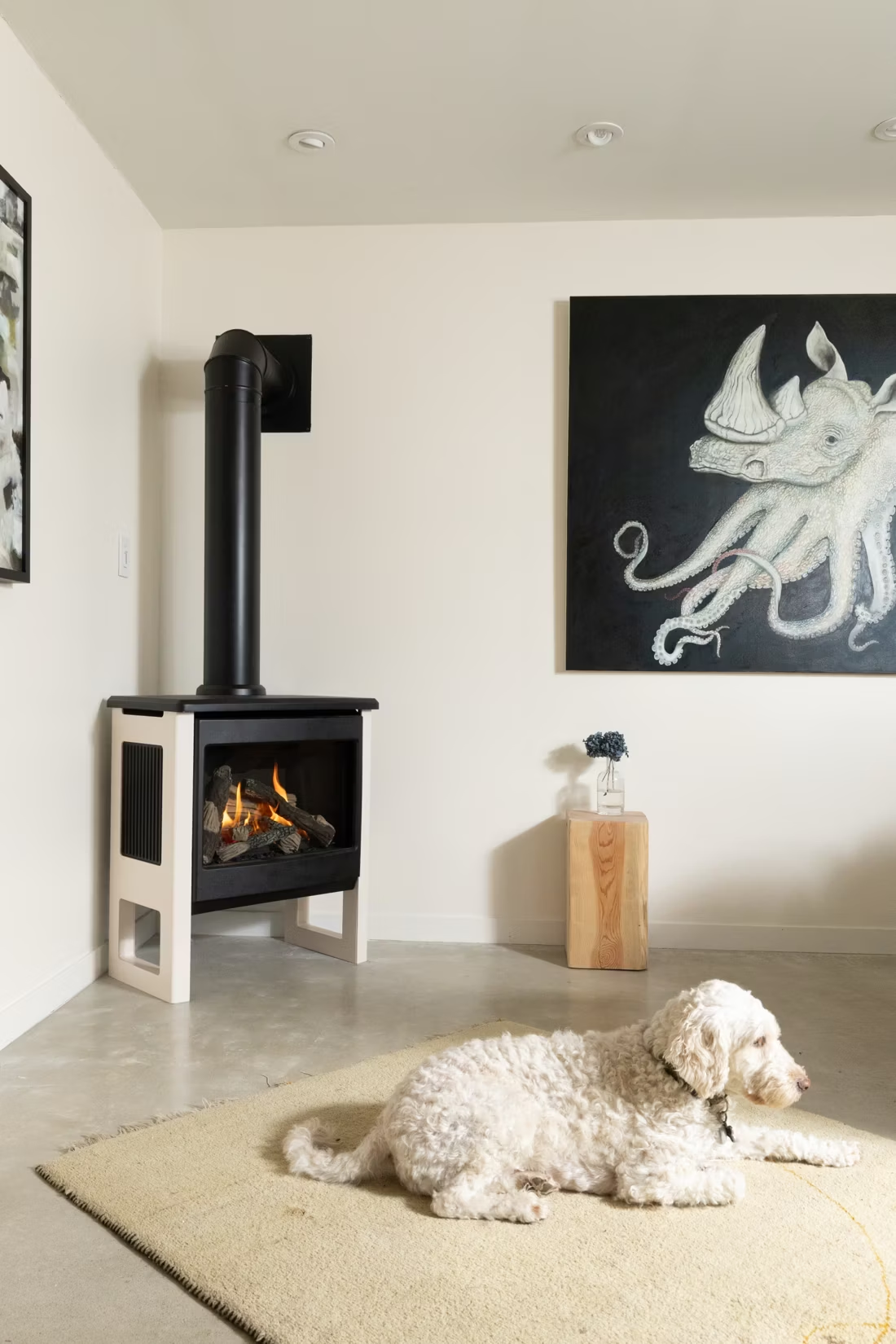
A gas fireplace is a fully built-in unit framed into a wall—the right call for new construction or a remodel where you're building the opening from scratch. A gas insert drops into an existing masonry fireplace opening and uses the existing chimney as a chase for its direct-vent pipe, which is the common route for older Brentwood homes with a wood-burning fireplace they want to convert. A gas stove is a freestanding cabinet unit that sits on the floor and vents through a wall or roof, useful in rooms with no existing fireplace opening at all. A local dealer can tell you within a few minutes which of the three fits your actual opening.
Do I need a permit to install a gas fireplace in Brentwood?
Yes. New gas fireplace and insert installations go through the City of Brentwood Building Division, and any new or extended gas line requires work by a licensed gas fitter as part of that permit. Most established hearth dealers handle the permit application and inspection scheduling as part of the installation quote, so you're not coordinating the gas line, venting, and inspection separately yourself.
Should I get a vented or vent-free gas fireplace in Brentwood?
Vented, direct-vent units pull combustion air from outside and exhaust it back outside through sealed pipe—they're the standard recommendation almost everywhere, including Brentwood, because they don't put combustion byproducts into the room. Vent-free (ventless) units are legal in California but come with strict room-size and ventilation requirements, and they're less common in newer Bay Area construction as builders lean toward sealed, direct-vent appliances for indoor air quality reasons. For most Brentwood homes, a direct-vent insert or fireplace is the simpler, more broadly recommended choice—ask your local dealer if a vent-free unit still makes sense for your specific room.
How often does a gas fireplace need to be serviced?
Plan on an annual inspection, ideally before the cooler months when you'll actually be running it. A technician checks the burner, pilot assembly, venting, and gas connections, and cleans the glass and interior—a much lighter job than chimney sweeping on a wood unit, but still important, since a dirty pilot or degraded venting is the most common cause of a gas fireplace failing to light reliably. Local gas appliance service providers typically charge $150 to $250 for this visit.
Gas vs. electric fireplace—which is right for my Brentwood home?
Gas gives you a real flame, higher heat output, and—at PG&E's residential rate of about $0.317 per kWh—meaningfully lower operating cost per hour of heat than electric resistance. It does require a gas line and venting, so the install is more involved. Electric fireplaces skip the gas line and venting entirely, plug into a standard outlet in most cases, and can go almost anywhere in the house, but they cost more to run continuously at that electric rate and the flame is simulated rather than real. For a primary living space you'll use often through the mild Brentwood winter, gas usually pencils out better long-term; for a bedroom, office, or rental unit where low install cost and flexibility matter more than realism, electric can be the smarter fit.
Why is my open fireplace making my house colder?
Open fireplaces suck—literally. As the fire burns, it consumes air your furnace already paid to heat and pulls it out through the chimney, so the house is actually colder after the fire goes out than before you lit it. An insert fixes this: it seals the chimney, puts fixed glass across the front, and turns that hole in your house into a real heat source.
Is my gas fireplace wasting gas?
If it was installed more than 15 years ago, probably. Older gas fireplaces keep a standing pilot light burning all the time, and that little flame can cost a couple hundred dollars a year. Newer models use pilot-on-demand ignition—the pilot lights only when you use the fireplace and goes out when you turn it off.
What is an in-home preview and do I need one?
It's a visit where a hearth professional measures your space, confirms the model you picked actually works in your home, and walks the specs—framing, gas line, venting, finish work—before anything is ordered. Some details you just can't know until you see the house. Never make a down payment without one; it's the single most-skipped step that burns buyers.
Does a fireplace add value to my home?
On average, a fireplace adds back to the home about the same amount you spent installing it. Add the monthly savings from heating the rooms you actually use instead of the whole house—often hundreds of dollars a year—and the value case is strong before you even count what a fire does for how your family uses the room.
Nearby Dealers
Hearth shops serving Brentwood and the surrounding area.
Find your gas fireplace in Brentwood.
Tell us a bit about your home and we'll match you with a trusted local Brentwood dealer and send over a free Project Guide & Parts List—the exact parts, including the vent kit, for your gas fireplace project.
Find Your Fireplace →