
Take the Chill Out of Mojave Desert Nights.
Barstow days run hot and dry, but High Desert nights drop fast once the sun goes down. A gas fireplace gives you instant, clean heat on your schedule—matched with a trusted local dealer who knows the Mojave.
Every Project Starts From One of These Five Situations
Instant heat for a climate of extremes.
Barstow sits at 2,667 feet in the Mojave Desert, where the diurnal swing is the defining feature of the climate—triple-digit summer afternoons giving way to nights in the 50s, and winter days that feel mild until the average low drops to around 35°F after dark. With just a light winter heating load each year, Barstow's heating season is a fraction of what a place like Bismarck, ND or Duluth, MN sees, but the cold does show up, especially on clear desert nights when there's no cloud cover to hold in the day's heat.
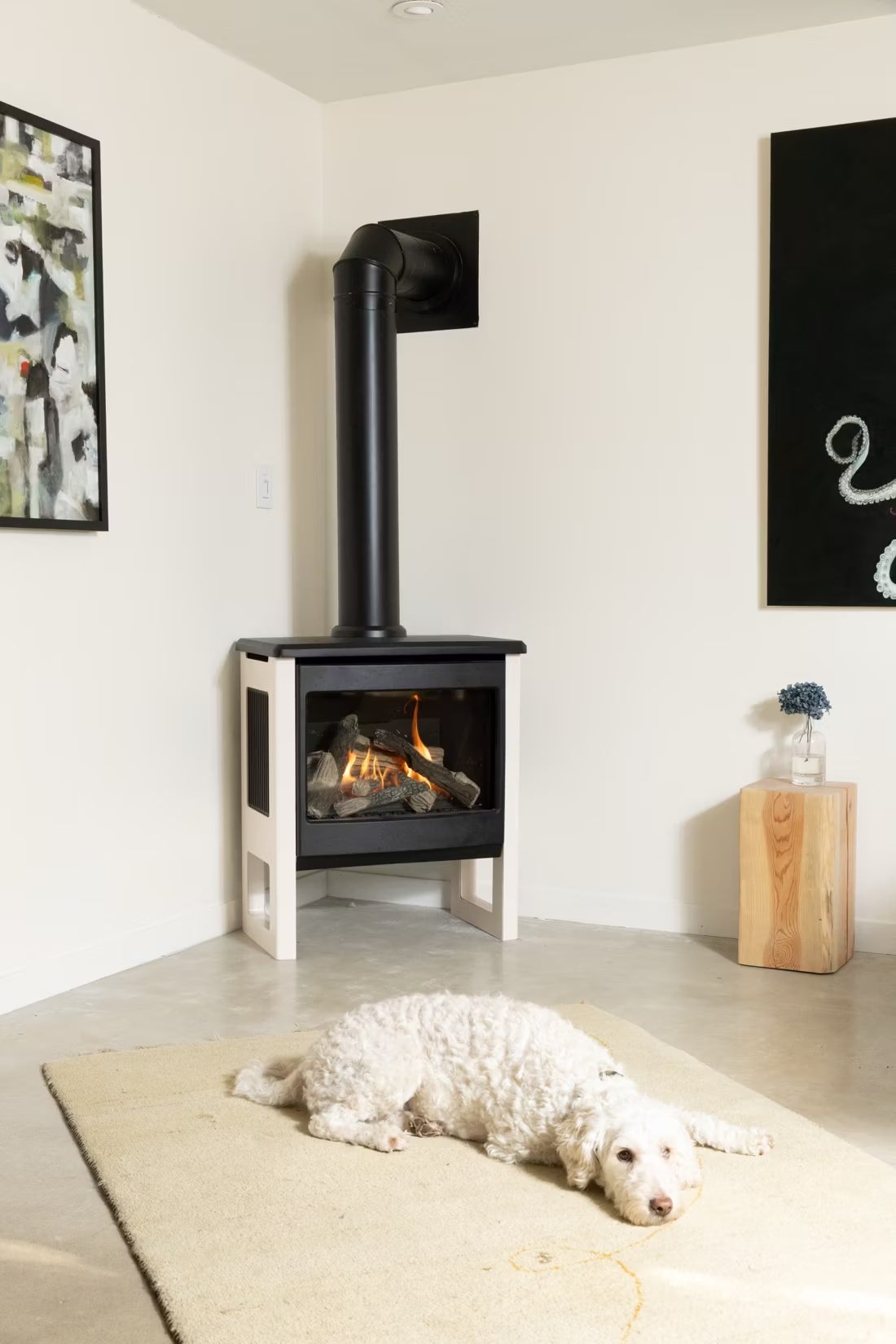
That's exactly the kind of heating load a gas fireplace is built for: fast, on-demand warmth for a chilly evening or a cold snap, without the smoke output that draws scrutiny in a region already classified as a non-attainment area by the Mojave Desert Air Quality Management District. Southwest Gas serves natural gas within the Barstow city grid, while propane remains common in outlying unincorporated communities like Hinkley, Yermo, and Lenwood. Either fuel path works well with a properly sized direct-vent gas fireplace, insert, or stove—and with Southern California Edison's residential rate running around $0.2825/kWh, gas heat is also the more economical way to take the edge off a cold room without running electric resistance heaters.
Three steps. No salesperson until you're ready.
Tell us about your project
Your zip code, your situation, and the fuel you're leaning toward—or let the answers point you to one.
See what's actually available
The brands dealers within 100 miles genuinely carry—real options, never a catalog mirage.
Get your dealer & Project Guide
A trusted local dealer, plus the free Project Guide & Parts List that names every component of the job.
Frequently Asked Questions
How much does a gas fireplace installation cost in Barstow?
Most gas fireplace installations in Barstow run between $4,000 and $10,000, depending on the unit and the venting path. A direct-vent gas insert going into an existing masonry fireplace with a gas line already run to the room sits toward the lower end. New construction or a built-in gas fireplace in a room without existing gas service costs more once framing, venting, and a new gas line are factored in. If you're outside the Southwest Gas service area and need a propane tank installed, add roughly $1,500 to $3,000 depending on tank size and whether it's buried or above ground. A local dealer will give you a firm number after seeing the room and your existing gas or propane setup.
Should I use natural gas or propane for my fireplace in Barstow?
It depends on where your property sits. Homes within the core Barstow city grid are typically served by Southwest Gas, so if you already run a gas water heater or range, adding a fireplace usually means tying into existing service. Properties in surrounding unincorporated areas—Hinkley, Yermo, Newberry Springs, parts of Lenwood—often rely on propane, either from an existing tank or a new one installed by a local propane supplier. Nearly every gas fireplace on the market can be configured for either fuel; your installer sets the correct orifice and regulator. There's no meaningful performance difference for heat output, just a difference in fuel logistics.
Can I convert my existing wood-burning fireplace to gas?
Yes, and it's a common upgrade in Barstow's older homes, including many of the mid-century houses along the Route 66 and Main Street corridors that were originally built with open masonry fireplaces. A gas insert typically drops into that existing firebox, using a stainless liner run through your current chimney, and runs $4,000 to $8,500 depending on the insert and whether new gas line work is needed. It's also a practical move given the Mojave Desert Air Quality Management District's non-attainment status—a sealed, direct-vent gas insert doesn't add to wildfire-smoke season particulate loads the way an open wood fire can.
Do I need a permit to install a gas fireplace in Barstow?
Yes. Properties within city limits go through the City of Barstow Building and Safety Division, while homes in unincorporated San Bernardino County—including most of the outlying High Desert communities around Barstow—go through San Bernardino County Land Use Services. Both require a building permit and gas line permit for new installations, and the gas line work has to be done by a licensed gas-fitter. Most hearth dealers who sell and install gas fireplaces in the area handle this paperwork as part of the job, so you're not coordinating separate trades and inspections yourself.
Will my gas fireplace still work if the power goes out?
Most modern gas fireplaces will. Units with intermittent pilot ignition (IPI) run on a battery backup that automatically kicks in when the power drops, so the fireplace lights the same way it always does. In the Barstow area, power interruptions are more likely tied to summer heat load on the grid than winter storms, but the same battery backup covers you either way—just remember to swap the batteries periodically. Valor's gas fireplaces skip batteries entirely, generating their own power from the pilot's thermocouple, which is worth asking about if you want one less thing to maintain.
Vented or vent-free—which makes sense for a Barstow home?
Vented (direct-vent) gas fireplaces draw combustion air from outside and exhaust it back outside, keeping the appliance fully sealed from your living space. Vent-free units burn directly into the room and are legal in California within strict room-size and ventilation limits, but they release some combustion byproducts indoors. Given that Barstow already deals with periodic wildfire smoke and windblown dust events tied to its non-attainment status, most local installers steer homeowners toward direct-vent units—you get real heat output without adding anything to indoor air quality on days when outdoor air is already compromised.
What size gas fireplace do I need for my home?
Because Barstow's heating load is light—a fraction of what a place like Duluth, MN sees—most homeowners here aren't trying to heat an entire house with one appliance. A smaller to mid-size direct-vent unit (typically 20,000–30,000 BTU) is usually plenty to knock the chill off a living room or den on a cold desert evening. The exception is homes using gas as genuine supplemental heat for an older, poorly insulated house; in that case a local dealer can size a larger unit based on the room's square footage and window exposure.
How often does a gas fireplace need to be serviced in Barstow?
Plan on an annual inspection, same as anywhere—a technician checks the burner, pilot, gas connections, and venting, and cleans the glass and interior. One thing that's more of an issue in the Mojave than in wetter climates: fine desert dust and windblown sand can work into vent terminations and screens faster here, especially on homes near open desert lots. If your fireplace sits on an exterior wall facing prevailing wind, it's worth having the vent termination checked during the annual service. Most local providers charge in the $150–$225 range for a standard inspection and cleaning.
Gas or wood—which fits a Barstow home better?
Wood is workable here—oak, madrone, and Douglas fir are available through Forest Service cutting permits from the San Bernardino and Angeles National Forests for around $5 to $20 per cord during the May-to-October season—but Barstow's non-attainment air quality status and regular wildfire-smoke events during fire season make wood smoke a bigger local concern than in a wetter climate. Gas produces no visible smoke and doesn't add to particulate load on days when the Mojave Desert Air Quality Management District is already flagging poor air quality. For a mild-winter climate where the goal is comfort on cold evenings rather than whole-house survival heat, most Barstow homeowners find gas is the lower-maintenance, cleaner-burning choice, with wood reserved as a backup or ambiance option for those who already have the setup.
Is my gas fireplace wasting gas?
If it was installed more than 15 years ago, probably. Older gas fireplaces keep a standing pilot light burning all the time, and that little flame can cost a couple hundred dollars a year. Newer models use pilot-on-demand ignition—the pilot lights only when you use the fireplace and goes out when you turn it off.
Can I put a TV above my fireplace?
Yes—with an asterisk. Fireplaces are hot and TVs don't like heat. Either put a mantel between them to deflect rising warmth, or choose a fireplace with heat-management technology that creates a cool zone on the wall above—the wall stays around 125 degrees, barely warm, while the room still gets full heat. If you like clean lines and don't want a mantel, heat management is the answer.
Can I install a fireplace myself?
If you're putting a fire in your house on purpose, it's best to work with an expert. Unless you're genuinely experienced in framing, gas line, vent pipe, and the national code on clearances to combustibles, have a professional do it—and ideally the same company that sells you the fireplace, so warranty, service, and liability all live under one roof.
Can a fireplace actually lower my heating bill?
Yes—by creating a comfort zone. A furnace heats every square foot of the house just to warm the one room you're in; a gas fireplace on low burns roughly a sixth of the gas a typical furnace does. Set the furnace around 55–60 degrees as a baseline, then heat the rooms your family actually uses. Families who heat this way commonly save $20–$60 a month.
Nearby Dealers
Hearth shops serving Barstow and the surrounding area.
Find your gas fireplace in Barstow.
Tell us about your home and your existing gas or propane setup, and we'll match you with a trusted local dealer plus a free Project Guide & Parts List—the exact parts, vent kit, and installer recommendation for your Barstow home.
Find Your Fireplace →