
Keep Your Family Warm and Safe—No Matter What
Banning sits at nearly 3,000 feet in the San Gorgonio Pass, where winters are mild—an average low of 40°F and just 1,801 heating degree days—but the same pass winds that spin the Cabazon turbines also trigger multi-day power shutoffs. I'll match you with a trusted local dealer who can size a stove for backup, not brutal cold.
Every Project Starts From One of These Five Situations
A mild climate, but a real reason to have backup.
Banning's numbers don't read like a classic wood-heat town—1,801 heating degree days is a fraction of what a place like Bismarck or Duluth racks up, and a 40°F average winter low means most homes here aren't fighting for survival heat the way a mountain town would. What Banning does have is the San Gorgonio Pass's notorious wind, the same corridor that powers the wind farms around Cabazon, and it regularly pushes Southern California Edison into Public Safety Power Shutoffs during Santa Ana events and fire weather. For a lot of local homeowners, a wood stove or insert isn't the primary heat source—it's the thing that still works when SCE cuts the grid and everyone else is cold and in the dark.
Oak, madrone, and Douglas fir are the species most local burners work with, and cutting permits through San Bernardino National Forest or Angeles National Forest run $5 to $20 a cord on a May-through-October season—both forests are a reasonable drive from Banning up into the San Bernardino and San Gabriel ranges. The tradeoff to manage is air quality: Banning sits in a non-attainment area under South Coast AQMD jurisdiction, and wildfire smoke is a real seasonal concern on top of everyday wood smoke rules, so an EPA-certified stove and attention to no-burn day advisories matter here as much as anywhere in the state.
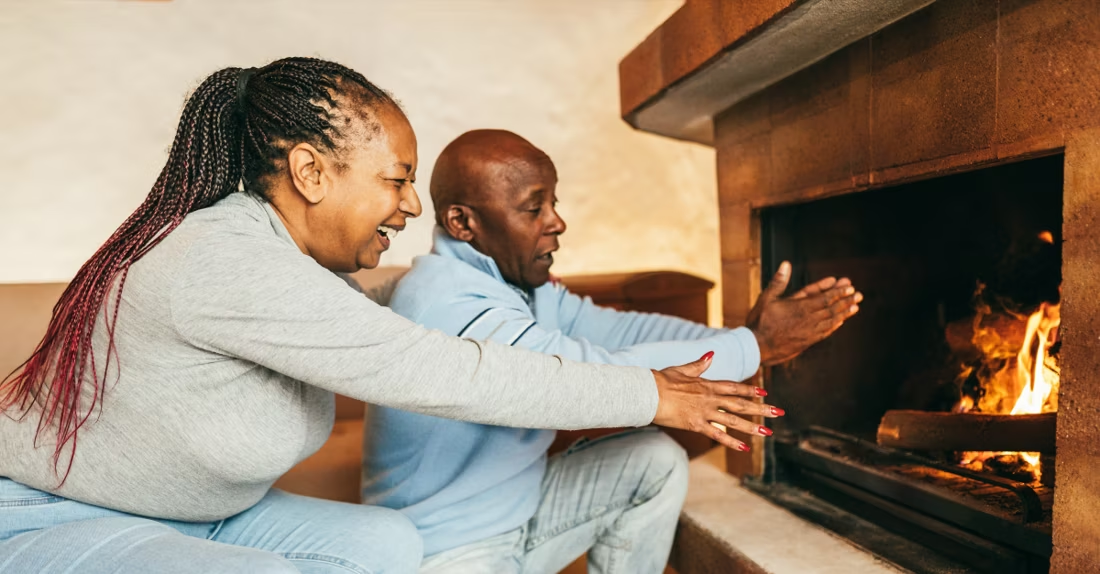
Firewood Cutting Permits Near Banning
Three steps. No salesperson until you're ready.
Tell us about your project
Your zip code, your situation, and the fuel you're leaning toward—or let the answers point you to one.
See what's actually available
The brands dealers within 100 miles genuinely carry—real options, never a catalog mirage.
Get your dealer & Project Guide
A trusted local dealer, plus the free Project Guide & Parts List that names every component of the job.
Frequently Asked Questions
How much does a wood stove installation cost in Banning?
Local dealers quoting Banning jobs typically price a wood stove or insert somewhere between $3,500 and $8,000 installed, with the spread coming down to venting. An insert going into an existing masonry firebox—common in the older homes near downtown Banning and Highland Springs—usually lands toward the low end. A freestanding stove in a newer home without a chimney needs full Class A pipe run through the roof, which pushes the job toward the top of that range. Get a firm number from a local installer who can see your actual chimney or roofline before you budget.
What size wood stove do I need for a Banning home?
Because winter lows here average 40°F rather than the single digits a true cold-climate stove is designed around, most Banning homes don't need the largest catalytic units built for 20-hour overnight burns in Montana or North Dakota. A small to medium stove rated for 1,000 to 1,800 square feet handles a typical Banning living area comfortably, especially since the stove is often supplementing central heat or standing in during a power outage rather than running as the sole heat source all winter. A local dealer should still size against your actual square footage and ceiling height rather than going off a chart alone.
Do I need a permit to install a wood stove in Banning?
Yes—a building permit is required for any new wood-burning appliance, and the unit itself needs to meet EPA 2020 NSPS emissions standards to be installed legally anywhere in the South Coast Air Basin, Banning included. Beyond the permit, South Coast AQMD's Rule 445 and its Check Before You Burn program restrict wood burning on declared no-burn days during periods of poor air quality—common during winter inversions and wildfire smoke events in the surrounding foothills. EPA-certified stoves generally have more flexibility on marginal air days than older uncertified units, which is one more reason to buy new and certified rather than a used stove off a classifieds site.
Where can I get a firewood cutting permit near Banning?
San Bernardino National Forest, up the grade toward Idyllwild and Big Bear, and Angeles National Forest to the northwest both issue personal-use cutting permits for $5 to $20 a cord, with a season running May through October. Oak is the species most permit-holders bring home for its heat output and long burn time; Douglas fir splits easier and is good for a hotter, faster fire; madrone, less common but present in the local mix, burns dense and hot similar to oak. Permits typically require you to pick up a map at the ranger district office showing which units are open to cutting that season.
Wood stove vs. pellet stove—which makes more sense in Banning?
Wood keeps working without electricity, which is the deciding factor for a lot of Banning households given how often SCE shuts power off during Santa Ana wind events in the Pass. Pellet stoves burning regional brands like Bear Mountain, Lignetics, or Pacific Pellet run cleaner and are generally treated more favorably on South Coast AQMD no-burn days, but the auger and blower need power, so a pellet stove alone won't help during a multi-day PSPS outage unless it's paired with a battery backup or generator. Households here who prioritize outage resilience tend to lean wood; those focused on daily convenience and cleaner burns during smoke advisories often go pellet.
How does Banning's wind and outage risk affect the choice of heating fuel?
The San Gorgonio Pass is windy enough to host one of the largest wind farms in California, and that same wind—combined with fire-weather conditions—is exactly what triggers Southern California Edison's Public Safety Power Shutoffs, sometimes for two or three days at a stretch. With SCE's residential rate running around $0.28 per kWh, already among the higher rates in the country, a wood stove offers a heat source that's both cheaper to run day-to-day and immune to the outages that hit this corridor more often than most of inland Southern California.
How often should my chimney be swept in Banning?
An annual inspection before the fall, ideally by September, is the standard the Chimney Safety Institute of America recommends, and it applies in Banning even though the burn season is shorter and lighter than a true cold-climate town. Because many local stoves get used intermittently—heavy during a cold spell or an outage, quiet the rest of the season—creosote can build up unevenly, and a pre-season sweep catches that before dry Santa Ana wind conditions raise the stakes on any chimney spark risk near the foothills.
Does wildfire smoke or defensible space affect my wood stove setup in Banning?
Wildfire smoke is a recognized air quality concern for the area independent of wood stove smoke, and on heavy smoke days South Coast AQMD's advisories may ask residents to curtail wood burning even if your stove is certified. Separately, if your property backs up to open brush toward the foothills, a spark arrestor on the chimney cap is a sensible addition on top of code minimums, and it's worth asking your installer about ember-resistant venting details given how fire-prone the surrounding hillsides get in late summer and fall.
What wood should I burn, and is there a rebate for upgrading my old stove?
Oak is the workhorse—dense, long-burning, and available through both San Bernardino and Angeles National Forest permits. Madrone burns comparably hot when you can get it, and Douglas fir is a good choice for kindling and quicker fires rather than overnight burns. On rebates: South Coast AQMD has periodically run wood stove and fireplace changeout programs offering incentives to replace older uncertified units with EPA-certified stoves or inserts—funding cycles change, so ask a local dealer what's currently available before you buy.
Why won't my new wood stove get going like my old one?
New wood stoves are 70%+ efficient, so far less heat goes up the flue—which also means less draft to get a fire established. The rule: build a genuinely hot fire for about 45 minutes before you choke it down. Skip that and you get smoke in the room, creosote in the chimney, and a fire that never takes off. Most performance complaints trace straight back to this.
Why is my open fireplace making my house colder?
Open fireplaces suck—literally. As the fire burns, it consumes air your furnace already paid to heat and pulls it out through the chimney, so the house is actually colder after the fire goes out than before you lit it. An insert fixes this: it seals the chimney, puts fixed glass across the front, and turns that hole in your house into a real heat source.
Can a fireplace actually lower my heating bill?
Yes—by creating a comfort zone. A furnace heats every square foot of the house just to warm the one room you're in; a gas fireplace on low burns roughly a sixth of the gas a typical furnace does. Set the furnace around 55–60 degrees as a baseline, then heat the rooms your family actually uses. Families who heat this way commonly save $20–$60 a month.
What is an in-home preview and do I need one?
It's a visit where a hearth professional measures your space, confirms the model you picked actually works in your home, and walks the specs—framing, gas line, venting, finish work—before anything is ordered. Some details you just can't know until you see the house. Never make a down payment without one; it's the single most-skipped step that burns buyers.
Nearby Dealers
Hearth shops serving Banning and the surrounding area.
Palm Springs True Value Hardware & Patio
Get your free Project Guide & Parts List for a Banning wood heat project.
Tell me about your home and what you're hoping the stove will handle—daily supplemental heat, outage backup, or both—and I'll match you with a trusted local dealer and send a free Project Guide & Parts List with the exact vent kit and parts your project needs.
Find Your Fireplace →