
The Cleanest Way to Heat Through a Valley Winter.
Efficient, low-smoke heat for Merced County's mild winters and tough air days. Find the right pellet stove and connect with a trusted local dealer.
Every Project Starts From One of These Five Situations
Built for a Valley That Watches Its Air.
Atwater sits at just 158 feet in the Central Valley, in a mild climate zone 3B where winter lows average around 37°F and the city sees a light overall winter heating load—a fraction of what a cold-climate city like Duluth, MN racks up in a single season. Most Atwater homes don't need a stove running around the clock; they need efficient supplemental heat for foggy December and January mornings, and a backup source that doesn't strain the budget on the coldest nights.
Merced County sits inside the San Joaquin Valley air basin, a designated non-attainment area for particulate pollution, and the region deals with wildfire smoke in late summer and fall on top of that. The San Joaquin Valley Air Pollution Control District runs a "Check Before You Burn" program each winter that restricts wood-burning devices on high-pollution days—but EPA-certified pellet stoves are generally exempt from those curtailment days because they burn so much cleaner than open fireplaces or older wood stoves. Pair that with regional pellet supply from brands like Bear Mountain, Lignetics, and Pacific Pellet, and it's easy to see why pellet has become a go-to choice for Atwater homeowners who want reliable heat without worrying about a burn-ban notice.
Three steps. No salesperson until you're ready.
Tell us about your project
Your zip code, your situation, and the fuel you're leaning toward—or let the answers point you to one.
See what's actually available
The brands dealers within 100 miles genuinely carry—real options, never a catalog mirage.
Get your dealer & Project Guide
A trusted local dealer, plus the free Project Guide & Parts List that names every component of the job.
Frequently Asked Questions
How much does a pellet stove installation cost in Atwater?
A typical pellet stove installation in Atwater runs roughly $3,000 to $6,500, depending on whether you're installing a freestanding stove or a pellet insert into an existing fireplace, and whether the vent run through an exterior wall requires extra framing or masonry work. Pellet installs are generally simpler and cheaper than wood or gas because venting uses a small-diameter PL pipe rather than a full masonry chimney. Local dealers will walk your home and give you a firm number before any work starts.
Are pellet stoves exempt from winter burn bans in Merced County?
In most cases, yes. The San Joaquin Valley Air Pollution Control District's "Check Before You Burn" program restricts wood-burning fireplaces and older wood stoves on days when the Valley's air quality is poor—a real concern given the basin's non-attainment status. EPA-certified pellet stoves are typically exempt from these no-burn day restrictions because their combustion is cleaner and more controlled than an open hearth or uncertified wood stove. That exemption is one of the main reasons pellet appliances have caught on in Atwater and across Merced County, especially for households that want reliable heat without checking an air quality alert every winter morning.
What size pellet stove do I need for my Atwater home?
Because Atwater's winters are mild—averaging lows in the high 30s rather than the single digits you'd see in Fargo, ND or Bozeman, MT—most homes here do fine with a small to mid-size pellet stove rated for 1,000 to 1,800 square feet, used as zone heat for a living room or family room rather than whole-house heat. Larger or older farmhouses in Merced County with less insulation sometimes step up to a bigger unit, but oversizing is rarely necessary here the way it is in colder climates. A local dealer can size the unit to your actual square footage and insulation level during an in-home visit.
Where can I buy pellets locally, and which brands are common?
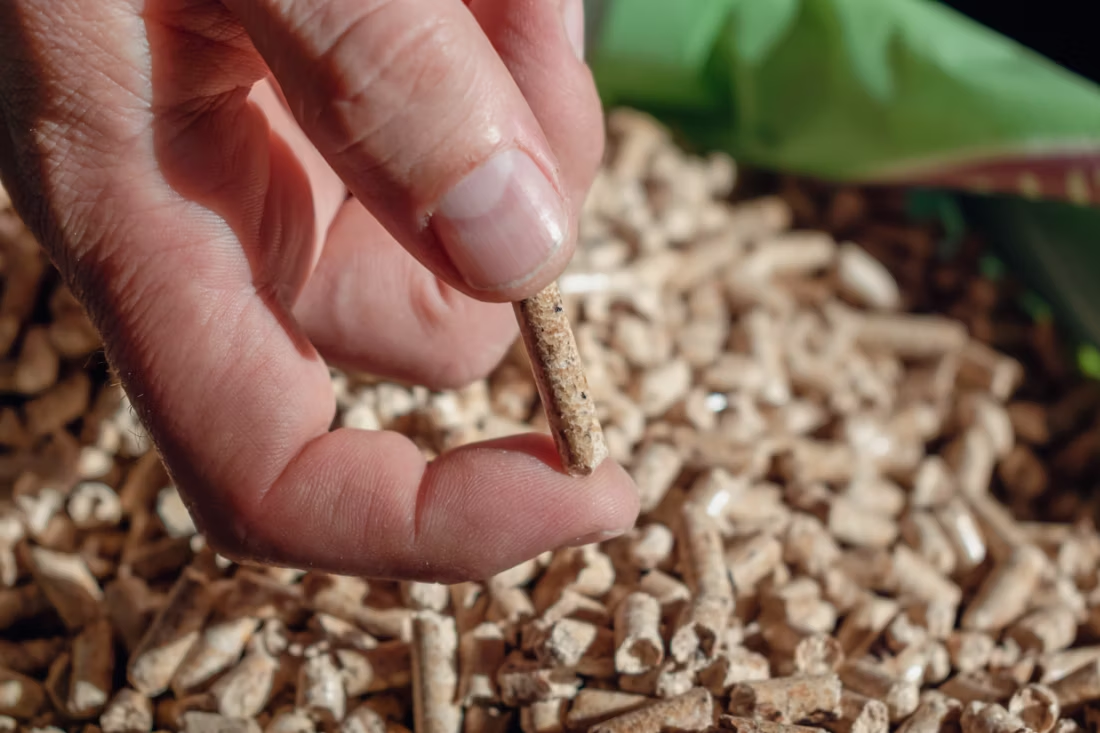
Bear Mountain, Lignetics, and Pacific Pellet are the regional brands most commonly stocked by hearth retailers and farm supply stores serving the Atwater and Merced area, all produced from West Coast timber byproducts. Pellet availability is generally reliable in the Central Valley since supply chains run through California and the Pacific Northwest, though it's worth buying your first few bags early in fall before the seasonal rush. Ask your local dealer which brand burns cleanest in the specific stove model you choose—ash content varies between brands and affects how often you'll need to clean the burn pot.
Will my pellet stove work during a power outage?
No—pellet stoves rely on an electric auger to feed fuel and a blower to distribute heat, so they shut down when the power goes out, unlike a standard wood stove. This matters in Atwater because PG&E, one of the two utilities serving the area, conducts Public Safety Power Shutoffs during high fire-risk conditions, and outages can last anywhere from a few hours to a couple of days. Homeowners who want backup heat that survives an outage sometimes pair a pellet stove with a small battery backup unit made for this purpose, or keep a wood-burning option as a secondary source.
Pellet vs. wood—which makes more sense in Atwater?
Wood is available locally—oak, madrone, and Douglas fir are common species, and cutting permits through Stanislaus National Forest or Sierra National Forest run $5 to $20 per cord during the May-to-October season—but wood-burning fireplaces and uncertified stoves are the first appliances restricted on Valley no-burn days. Pellet stoves sidestep that issue almost entirely, plus they load easier, produce far less ash, and don't require splitting or stacking cordwood. For Atwater's mild winters, where heat is mostly supplemental, pellet's convenience and cleaner-burn exemption from curtailment usually wins out over wood—unless you specifically want a fuel source that works without electricity.
Is a pellet stove cheaper to run than electric heat in Atwater?
Often, yes. Residential electricity in the area runs about $0.317 per kWh through Pacific Gas & Electric and roughly $0.2425 per kWh through Merced Irrigation District—both well above the national average—which makes running electric space heaters or resistance heat strips expensive for anything beyond occasional use. A pellet stove burning a few bags a week for supplemental zone heat typically costs less per BTU than leaning on electric heat through a Valley winter, though the exact savings depend on your pellet source and how many hours a day you run the stove.
Do I need a permit to install a pellet stove in Atwater?
Yes—a building permit is standard for installing a pellet stove or insert, since it involves running vent pipe through an exterior wall and, in some cases, a dedicated electrical circuit for the appliance. Most local installers pull the permit through the city or Merced County as part of the job, so you typically won't need to handle the paperwork yourself. Because pellet stoves vent through a smaller PL-pipe system rather than a full chimney, the inspection process is usually quicker than it is for a wood-burning installation.
How often does a pellet stove need cleaning and service?
Plan on cleaning the burn pot and ash pan every few days to weekly during regular use, and a full professional service once a year—typically in late summer before the fall burning season starts, which also happens to be when Merced County's wildfire smoke season is winding down. Annual service includes cleaning the exhaust venting, checking the auger and blower motors, and inspecting the gaskets. Skipping this maintenance is the most common cause of poor pellet feed and error codes, especially in stoves that run daily through a Valley winter.
Why is a fireplace insert so efficient?
An insert does two things: it seals the chimney completely, so you stop losing air you already paid to heat, and it radiates warmth into the room through the firebox and glass. Most add a heat-exchange fan that pulls cool room air underneath, wraps it around the hot firebox, and pushes it back out warm. Your home is more efficient before you've even lit the first fire.
What do I measure to size a fireplace insert?
Four numbers tell you what fits: the front width, the front height, the back width, and the overall depth of your existing fireplace opening. Grab a tape measure, jot those down, and snap a photo of the wall—those two things do more to move your project forward than anything else you can do today.
Can a fireplace actually lower my heating bill?
Yes—by creating a comfort zone. A furnace heats every square foot of the house just to warm the one room you're in; a gas fireplace on low burns roughly a sixth of the gas a typical furnace does. Set the furnace around 55–60 degrees as a baseline, then heat the rooms your family actually uses. Families who heat this way commonly save $20–$60 a month.
What is an in-home preview and do I need one?
It's a visit where a hearth professional measures your space, confirms the model you picked actually works in your home, and walks the specs—framing, gas line, venting, finish work—before anything is ordered. Some details you just can't know until you see the house. Never make a down payment without one; it's the single most-skipped step that burns buyers.
Pellet Brands Stocked Around Atwater
Manufacturers will point you to the nearest stocking dealer.
Find your pellet stove in Atwater.
Tell us a bit about your home and we'll match you with the right pellet stove or insert for Merced County's climate and air rules—plus a free Project Guide & Parts List with the exact vent kit and parts your local dealer will need.
Find Your Fireplace →