
Keep Your Family Warm and Safe—No Matter What
With winter lows averaging 46°F and strict South Coast air rules, wood-burning fireplaces are the exception here, not the norm. If you still want one—for ambiance, backup heat, or a cabin near the San Gabriels—we'll connect you with a dealer who knows exactly what's legal to install.
Every Project Starts From One of These Five Situations
A mild climate and strict air rules keep wood heat rare here.
Alhambra sits in the San Gabriel Valley at 453 feet, with an average winter low of 46°F and only a light winter heating workload each year. Compare that to a genuinely cold-climate city like Duluth, MN, which faces a winter heating load nearly nine times heavier—Alhambra's heating season is short and mild by any national standard. Most homes here get through winter on a furnace or a few space heaters, and a roaring wood fire is more often a lifestyle choice than a necessity.
Alhambra also falls within the South Coast Air Quality Management District's non-attainment area, which has restricted new wood-burning device installations under Rule 445 since 2008—any unit installed today must meet EPA 2020 NSPS certification, and SCAQMD's "Check Before You Burn" program issues no-burn alerts on many winter days regardless. Add regular wildfire smoke drifting in from the foothills, and it's easy to see why most Alhambra homeowners lean toward gas or electric instead. Still, a small number of buyers move forward with wood—often for a mountain cabin near the Angeles National Forest, a backup heat source, or simply the appeal of a real fire—and for them, doing it within code matters even more than usual.
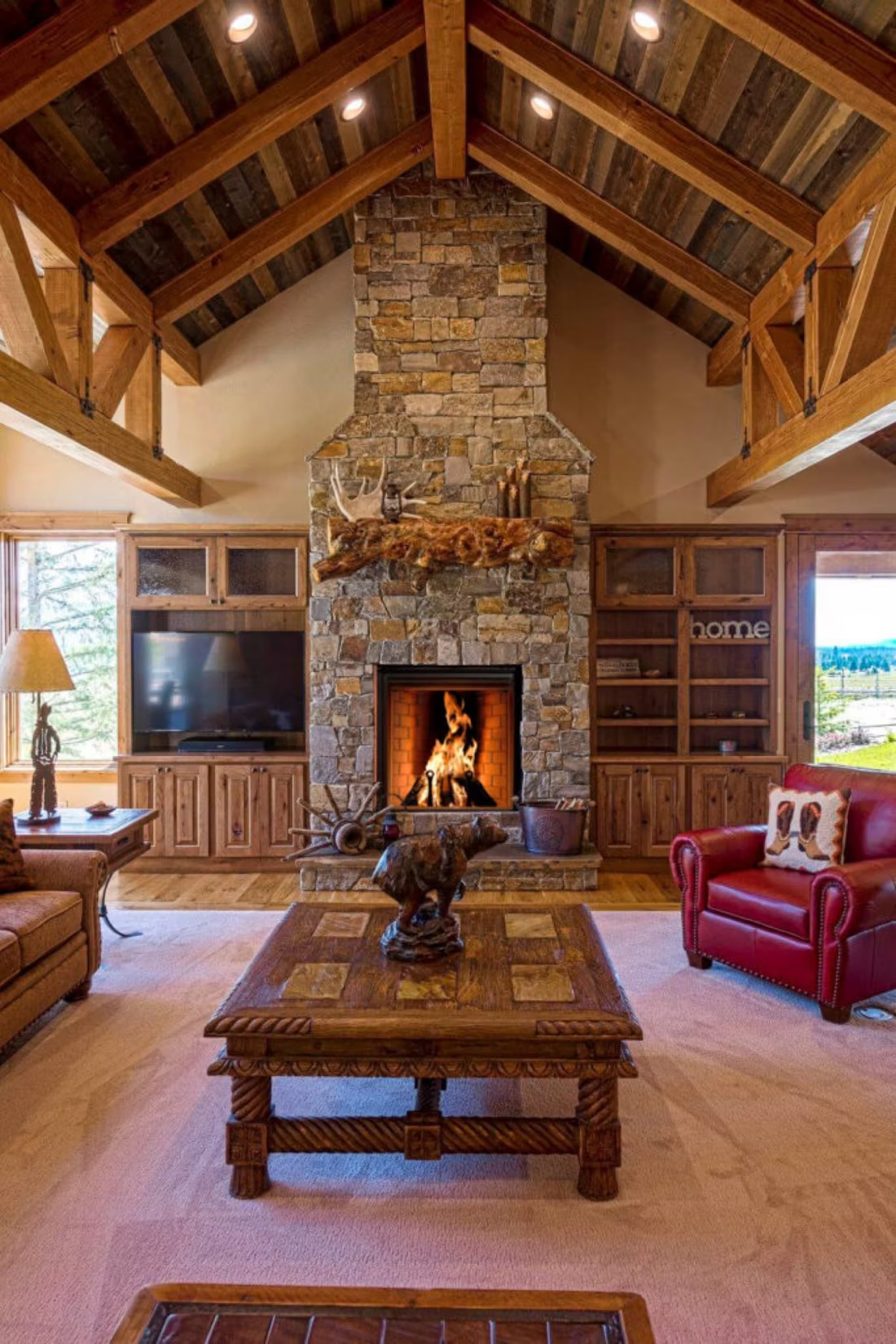
Firewood Cutting Permits Near Alhambra
Three steps. No salesperson until you're ready.
Tell us about your project
Your zip code, your situation, and the fuel you're leaning toward—or let the answers point you to one.
See what's actually available
The brands dealers within 100 miles genuinely carry—real options, never a catalog mirage.
Get your dealer & Project Guide
A trusted local dealer, plus the free Project Guide & Parts List that names every component of the job.
Frequently Asked Questions
Can I even install a wood stove or fireplace in Alhambra?
Yes, but with real restrictions. The South Coast Air Quality Management District's Rule 445 requires any new wood-burning device to be EPA Phase II or 2020 NSPS certified—older uncertified stoves and open masonry fireboxes generally can't be newly installed. On top of that, SCAQMD's "Check Before You Burn" program issues mandatory no-burn days throughout winter when regional air quality dips, which can apply even to certified units in some conditions. It's legal, but it's a narrower path than in most of the country, and it's worth talking to a dealer who installs within SCAQMD jurisdiction regularly rather than a big-box crew unfamiliar with the rule.
What does a wood stove installation cost in Alhambra?
Because wood installs are uncommon here, there isn't a deep local pricing history the way there is for gas or electric units in the San Gabriel Valley. As a general industry range, a certified freestanding wood stove with venting typically runs $4,000 to $8,000, and converting an existing masonry fireplace to a certified wood insert usually lands in a similar range depending on chimney condition. Because so few Alhambra dealers stock wood units at all, expect a longer lead time and get a firm, in-home quote before committing—pricing varies more here than in markets where wood heat is standard.
Why does Alhambra restrict wood-burning fireplaces?
Alhambra sits inside the South Coast Air Basin, a federal non-attainment area for particulate matter, and the region already deals with wildfire smoke drifting down from the foothills most falls. Wood smoke adds fine particulates on top of that load, which is why SCAQMD adopted Rule 445 and why the "Check Before You Burn" program can call no-burn days even on nights that feel plenty cold. It's less about any single fireplace and more about basin-wide air quality that gets monitored closely.
What wood species are available locally if I do install a wood stove?
Oak, madrone, and Douglas fir are the species most commonly available in this part of Southern California, mostly sourced from the foothill and mountain forests rather than the valley floor itself. Oak in particular burns long and hot and is well suited to a stove that only gets occasional use. If you're planning a cabin install near the San Gabriels rather than in Alhambra proper, these same species are what you'll be buying or cutting locally.
Can I get a permit to cut my own firewood near Alhambra?
Yes—the Angeles National Forest and San Bernardino National Forest both issue personal-use cutting permits, typically running $5 to $20 per cord, with a cutting season that generally runs May through October. Both forests are within reasonable driving distance of Alhambra and are the closest public land where residents legally source their own wood, since there's no cutting available within the city or county's developed areas.
If wood isn't practical, what do most Alhambra homeowners install instead?
Gas and electric fireplaces are both standard, widely installed options here and don't carry the same SCAQMD burn-day restrictions. Gas gives you instant, controllable heat without wood smoke concerns. Electric units are simpler to install—often $400 to $1,200 versus thousands for a vented wood or gas unit—though Southern California Edison's residential rate of roughly $0.28/kWh means running one as primary heat costs more per hour than gas. Most Alhambra homeowners choosing between the two are weighing install simplicity against ongoing operating cost, not chasing the ambiance of a wood fire.
I have an old wood-burning fireplace already—what are my options?
Many older homes in Alhambra, especially the mid-century tract houses common in the area, were built with open masonry wood fireplaces before Rule 445 existed. If yours is uncertified, you're generally allowed to keep using it, but you can't replace it in kind—any retrofit has to meet current EPA certification. Most homeowners in this position convert to a certified wood insert (less common) or, more frequently, a gas insert that reuses the existing chimney as a vent path. A gas conversion sidesteps the burn-day restrictions entirely, which is a big part of why it's the more popular route locally.
Are there wildfire smoke concerns specific to wood heat here?
Yes. Alhambra and the broader San Gabriel Valley already deal with periods of dense wildfire smoke drifting down from the foothills and mountains during fire season, and regional air agencies track particulate levels closely as a result. Adding routine wood smoke on top of an already smoke-affected airshed is one of the practical reasons SCAQMD limits new wood-burning installs—it's not just a paperwork rule, it reflects a real air quality tradeoff specific to this part of the Los Angeles basin.
Is a wood fireplace worth pursuing in Alhambra, or should I look at other fuels?
For most Alhambra homes, no—the combination of a short, mild heating season, Rule 445 restrictions, and periodic no-burn days makes gas or electric the more practical everyday choice. Where wood still makes sense is a genuine backup-heat scenario or a secondary property, like a cabin near the Angeles National Forest, where cutting permits and cooler elevations make it a natural fit. If you fall into that smaller group, we'll match you with a dealer who installs certified units correctly within SCAQMD rules rather than one who treats Alhambra like anywhere else in the country.
Why won't my new wood stove get going like my old one?
New wood stoves are 70%+ efficient, so far less heat goes up the flue—which also means less draft to get a fire established. The rule: build a genuinely hot fire for about 45 minutes before you choke it down. Skip that and you get smoke in the room, creosote in the chimney, and a fire that never takes off. Most performance complaints trace straight back to this.
Why is a fireplace insert so efficient?
An insert does two things: it seals the chimney completely, so you stop losing air you already paid to heat, and it radiates warmth into the room through the firebox and glass. Most add a heat-exchange fan that pulls cool room air underneath, wraps it around the hot firebox, and pushes it back out warm. Your home is more efficient before you've even lit the first fire.
Does a fireplace add value to my home?
On average, a fireplace adds back to the home about the same amount you spent installing it. Add the monthly savings from heating the rooms you actually use instead of the whole house—often hundreds of dollars a year—and the value case is strong before you even count what a fire does for how your family uses the room.
How much should I budget for a fireplace?
For an average home—covering the fireplace, the vent pipe, and basic installation—a budget between $3,900 and $5,500 gives you a lot of options across wood, gas, and pellet. By the time you add finish work, gas line, and electrical, the average complete installation lands between $5,000 and $12,000 all-in. In a remodel or new build, a good rule is to put about 2.5% of the total project cost toward the fireplace.
Nearby Dealers
Hearth shops serving Alhambra and the surrounding area.
All Valley Distrib. Dba Marco Distrib
The Heat Source (Burrico) - Lancaster
Tropicana Outdoor Living
Find your wood fireplace in Alhambra.
Tell us about your home and how you plan to use a wood stove or insert, and we'll send a free Project Guide & Parts List—the exact parts, venting needs, and a trusted local dealer who installs within SCAQMD rules correctly.
Find Your Fireplace →