
Find your fireplace across the Kootenay-Boundary region.
Wood, gas, pellet, and electric fireplace resources for every community from Trail and Rossland to Grand Forks and Christina Lake. Tell us your fuel and we'll match you with a local dealer who actually installs it in your valley.
Every Project Starts From One of These Five Situations
Valley inversions, moderate winters, and a region built around wood, gas, and pellet heat.
The Kootenay-Boundary region stretches along the Columbia and Kettle river valleys, with roughly 22,700 people spread across Trail, Rossland, Grand Forks, Christina Lake, Midway, Greenwood, Fruitvale, and Warfield. Winters here are milder than the prairie cold of Regina or Edmonton—average lows sit around -4°C—but climate zone 5B still means a real heating season that runs from October through April, with cold air settling into the narrow valleys overnight. Douglas fir, paper birch, lodgepole pine, and western larch are the wood species most households burn, much of it cut under permits from FrontCounter BC and the BC Ministry of Forests, which keeps wood heat both affordable and deeply rooted in how people here have always heated their homes.
What shapes hearth choices in this region is the valley geography itself: cold, still air pools between the mountains in winter and traps smoke, which is why several communities here run wood-stove exchange programs and require CSA or EPA-certified appliances for anything new. FortisBC's natural gas network reaches most of the larger towns along the valley floor, which is why gas fireplaces and inserts are a common upgrade path in Trail and Grand Forks, while pellet stoves burning regional brands like Pinnacle Premium and Princeton Fuel Pellets fill in where a cleaner-burning, easy-to-load option makes more sense than splitting cordwood. This hub rolls up hearth retailers, service technicians, and fuel suppliers across the whole region. Pick your fuel below for local dealers, install costs, and unit recommendations specific to your town.
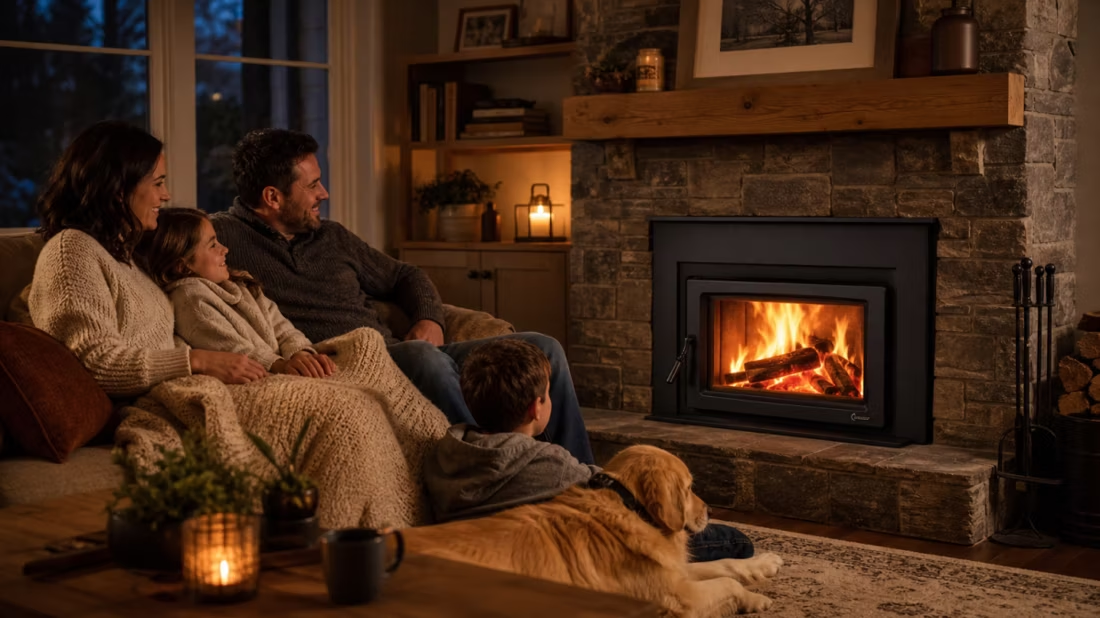
Four fuels. One honest answer for Regional District of Kootenay-Boundary.
Wood
69 models available near Regional District of Kootenay-Boundary.
Find your wood stove →Gas
111 models available near Regional District of Kootenay-Boundary.
Find your gas fireplace →Pellet
See what's available near Regional District of Kootenay-Boundary.
Find your pellet stove →Electric
See what's available near Regional District of Kootenay-Boundary.
Find your electric fireplace →Three steps. No salesperson until you're ready.
Tell us about your project
Your postal code, your situation, and the fuel you're leaning toward—or let the answers point you to one.
See what's actually available
The brands dealers within 100 miles genuinely carry—real options, never a catalog mirage.
Get your dealer & Project Guide
A trusted local dealer, plus the free Project Guide & Parts List that names every component of the job.
Frequently Asked Questions
Which fireplace fuel makes the most sense in the Kootenay-Boundary region?
All four fuels have a real foothold here, and the right pick usually comes down to which valley you're in and how much you want to manage the fire yourself. Wood remains common in Rossland, Christina Lake, and the more rural stretches of the Boundary, where a Douglas fir or western larch fire holds well through the region's moderate but persistent cold, and Crown-land permits from FrontCounter BC keep fuel costs down. Gas is the easy-maintenance choice where FortisBC's network reaches, which covers most of Trail and Grand Forks. Pellet stoves burning regional brands like Pinnacle Premium or Princeton Fuel Pellets have gained ground specifically because they burn cleaner during winter inversion events, which matters in a region where several communities actively run stove exchange programs to get older, higher-emission units out of circulation. Electric fireplaces are supplemental almost everywhere—a good option for a bedroom or basement in a home already heated by wood, gas, or pellet.
Do I need a permit to install a wood stove or gas fireplace here?
Yes. New installations go through your municipal building department, whether that's Trail, Rossland, Grand Forks, or one of the smaller Boundary municipalities, and CSA B365 is the installation code that governs clearances, venting, and hearth pad requirements for solid-fuel appliances. Gas fireplaces and inserts need a licensed gas fitter and a separate gas-line permit if you're extending service. If you plan to harvest your own firewood from Crown land, that's a separate permit through FrontCounter BC and the BC Ministry of Forests, not something your building department handles. Most local retailers we match homeowners with take care of the building permit paperwork as part of the project, so it's rarely something you're navigating alone.
What is a WETT inspection and do I actually need one?
WETT stands for Wood Energy Technology Transfer, and it's the inspection standard most home insurers in this region require before they'll cover a wood stove, insert, or fireplace—either at installation or when you're buying or refinancing a home with an existing wood appliance. A WETT-certified inspector checks clearances, chimney condition, and that the installation actually meets CSA B365, and without a current WETT certificate some insurers will decline coverage outright or exclude the appliance from a claim. If you're installing new, ask your dealer whether they handle the WETT inspection directly or can refer you to a qualified inspector—it's a routine step, not a red flag, and it protects you either way.
Why do some communities here run wood-stove exchange programs?
The valley geography is the reason. Cold air settles along the Columbia and Kettle river valleys on still winter days and traps smoke close to the ground, so several communities in this region see periodic smoke advisories and have run exchange programs that offer a rebate toward a new CSA or EPA-certified stove when you retire an old, uncertified one. A modern certified stove burns Douglas fir or lodgepole pine far more completely than an older unit, which means less smoke for the same amount of heat—a real difference on the still, cold mornings this region gets several times most winters. If you're replacing an older stove, it's worth checking whether your municipality currently has an exchange incentive running before you buy.
What does a fireplace or stove installation typically cost in this region?
Costs vary by fuel and by how much venting or gas-line work your home needs. A wood stove or insert, including a CSA-certified unit and any chimney work, typically runs $4,000-$9,000 CAD installed, with a full new chimney pushing that higher. Gas fireplaces and inserts generally land between $4,500-$10,000 CAD, depending on whether you're extending FortisBC service or converting an existing hearth. Pellet stove installs usually run $4,500-$7,500 CAD. Electric fireplaces are the exception—often $300-$3,500 CAD for the unit, plus modest labor unless you're wiring in a new circuit for a built-in. The region and fuel pages above break these numbers down further with local retailer pricing.
How does service work for homes outside Trail and Grand Forks?
Installation crews and service technicians are concentrated around Trail and Grand Forks but regularly travel out to Rossland, Christina Lake, Midway, Greenwood, Fruitvale, and Warfield. Expect a modest travel charge for the farthest calls, and expect scheduling to fill up quickly once the first cold snap hits and everyone remembers their chimney sweep or gas inspection at once—booking that annual service in late summer, before the valley cools off, keeps you ahead of the rush. If your property sits well up a mountain road or off the main valley floor, it's worth asking your installer about access in winter conditions and whether a spring or fall service window makes more sense than midwinter.
How many BTUs do I need in a fireplace?
Wrong question—and the industry's favorite way to confuse you. More BTUs isn't better if the fireplace cooks you out of the room you spent thousands to enjoy. Think in terms you can verify: how many square feet the unit heats, whether it's primary or backup heat, and whether you want it running overnight. Those three answers size a fireplace correctly every time.
Will we actually use a fireplace once we have one?
In my own home, the room with the fireplace has never been the same—it became the social hub. Game nights, holidays, date nights after the kids are down: the fire is where the house gathers. There's a reason people in this industry joke that we're really in the romance and entertainment business. You won't wonder whether you'll use it; you'll wonder how the room worked before.
I know I want a fireplace—where do I actually start?
Do two things today: snap a photo of the wall or fireplace you want to transform, and take a tape measure to the space—width, height, depth. Those two artifacts answer most of a hearth professional's first questions. Then settle fuel (wood, gas, pellet, or electric) and set a realistic budget: $3,900–$5,500 covers fireplace, vent, and basic install for most homes.
How much should I budget for a fireplace?
For an average home—covering the fireplace, the vent pipe, and basic installation—a budget between $3,900 and $5,500 gives you a lot of options across wood, gas, and pellet. By the time you add finish work, gas line, and electrical, the average complete installation lands between $5,000 and $12,000 all-in. In a remodel or new build, a good rule is to put about 2.5% of the total project cost toward the fireplace.
Stove and Fireplace Dealers in Regional District of Kootenay-Boundary
Listings include WhyFire partner dealers, dealers we have verified as authorized for the brands we recommend, and established local businesses that carry hearth products. Every listing shows which one it is. The ones marked Preferred run on WhyFire's software, so they can show you real pricing and book your appointment right here. No manufacturer pays for placement. How we verify dealers →
Oak And Clay Interiors
Flush Away Plumbing
Wd Sheet Metal
Get matched with a trusted dealer in the Kootenay-Boundary region.
Pick your fuel below and we'll put together a free Project Guide & Parts List—the right unit, the vent kit it needs, and the local dealer we recommend for your project.
Find Your Fireplace →