
Clean, steady heat for the Sea-to-Sky corridor's inversion-prone valleys.
From Squamish's damp coastal air to the colder, drier valley floors around Pemberton and Lillooet, a pellet stove gives you thermostat-controlled heat and a clean burn that holds up during smoke advisories. I match you with a trusted local dealer who knows the vent path, the venting code, and what actually works at your elevation.
Every Project Starts From One of These Five Situations
A region split between coastal rainforest and dry interior plateau.
Squamish-Lillooet runs the length of Highway 99, from tidewater at Squamish through Whistler's alpine terrain, down into the Pemberton Valley, and north into the dry interior plateau around Lillooet. The region-wide average winter low hovers just below freezing, but that number hides a real split: Squamish and Whistler sit in a milder, wetter coastal air mass with heavy mountain snowfall, while Lillooet and the Pemberton Valley run colder and drier, with sharper overnight drops once a high-pressure system settles in. Homes here mix full-time residents with a large seasonal and vacation-property population, which matters for pellet heat specifically, since a hopper-fed stove holds a steady burn without anyone tending it and restarts easily after a cabin has sat empty for weeks.
Those same interior valleys are prone to winter inversions and smoke advisories, and several regional districts here run wood-stove exchange programs and require CSA or EPA-certified appliances as a result, similar to the pattern you see around Prince George. Pellet appliances burn cleaner and more consistently than an open wood fire, which is why they're often the appliance of choice in Pemberton and Lillooet during advisory periods. Regional pellet brands like Pinnacle Premium and Princeton Fuel Pellets are both produced in BC and commonly stocked by local dealers, with pellets typically running $400-$575 CAD per tonne depending on supply and season.
Three steps. No salesperson until you're ready.
Tell us about your project
Your postal code, your situation, and the fuel you're leaning toward—or let the answers point you to one.
See what's actually available
The brands dealers within 100 miles genuinely carry—real options, never a catalog mirage.
Get your dealer & Project Guide
A trusted local dealer, plus the free Project Guide & Parts List that names every component of the job.
Frequently Asked Questions
How much does a pellet stove installation cost in Squamish-Lillooet?
Most installations across the region run $6,000-$10,000 CAD, depending on the stove, whether you're venting through an existing chimney chase or running a new horizontal vent through an exterior wall, and how much electrical work is needed for the auger and blower circuit. A straightforward insert into an existing masonry fireplace in Squamish or Whistler tends to land toward the lower end. Cabins and second homes in Pemberton or up toward Lillooet without existing venting, or where a dealer has to travel further along Highway 99, can run closer to the top of that range once framing and a dedicated circuit are added.
Is a pellet stove a good fit given the smoke advisories in this region?
Yes, and it's one of the main reasons pellet appliances have grown popular here. Interior valleys like Pemberton and Lillooet see winter inversions that trap smoke close to the ground, which is why several regional districts run wood-stove exchange programs and require CSA or EPA-certified appliances. A pellet stove burns denser, more consistent fuel with a controlled air feed, which typically means less visible smoke and fewer restrictions during an advisory compared to an open wood fire. If you're weighing wood against pellet for a home in Pemberton or the Lillooet area, air quality is usually the deciding factor.
What size pellet stove do I need for my home?
Sizing depends on both square footage and where you sit along the corridor. A coastal home in Squamish with milder winters and good insulation often does fine with a smaller unit rated for a single large living area. Move up toward Whistler's alpine elevations or into the colder, drier air around Pemberton and Lillooet, and the same square footage usually calls for a stove one size up to handle sharper overnight drops. An undersized stove will run at full output and still fall short on the coldest nights; an oversized one cycles on and off more than it should. A local dealer sizes this properly after seeing the room, the ceiling height, and how the home is insulated.
Where do I buy pellets, and how much fuel should I store?
Pinnacle Premium and Princeton Fuel Pellets are the two regional brands most local dealers and hardware suppliers carry, typically running $400-$575 CAD per tonne depending on the season and how far the delivery has to travel up the corridor. A typical heating season for a primary residence runs one to two tonnes; a seasonal cabin in Whistler or Pemberton used mainly on weekends will use less. Pellets need to stay dry, so plan for covered, off-ground storage, whether that's a garage, a shed, or a dedicated bin, especially given how much precipitation the coastal end of the region gets.
Do I need a permit to install a pellet stove in Squamish-Lillooet?
Yes. Installations go through your local municipal building department, whether that's Squamish, Whistler, Pemberton, or Lillooet, and the installation itself has to meet CSA B365 code. Most local dealers pull the permit and handle the inspection as part of the job. It's also worth checking with your home insurer, since a WETT inspection is commonly required for insurance purposes on solid-fuel appliances, pellet stoves included, particularly if you're insuring a seasonal property that sits empty for stretches of the winter.
Will my pellet stove still work during a power outage?
Not on its own. Pellet stoves rely on an electric auger to feed fuel and a blower to circulate heat, so a standard unit shuts down when the power drops, which matters given how winter storms along Highway 99 and up toward Whistler can take out lines for hours at a time. Some homeowners pair a pellet stove with a small battery backup or a portable generator sized for the stove's low wattage draw, which keeps it running through a typical outage. If reliable off-grid heat during storms is your top priority, that's worth discussing with your dealer alongside the pellet stove itself.
How much maintenance does a pellet stove need?
Plan on emptying the ash pan every few days during regular use and doing a deeper clean of the burn pot, hopper, and exhaust vent every one to two weeks, depending on how many hours a day the stove runs. An annual professional service, ideally before the season starts, checks the auger, gaskets, and venting for wear. For a seasonal cabin in Pemberton or Lillooet that only runs on weekends, that schedule stretches out accordingly, but the stove should still get a full clean and inspection before each winter, since a stove that's sat idle for months is more likely to have a stuck auger or a clogged vent on the first cold start.
Natural gas is available here. Why would I choose pellet instead?
Natural gas service runs along much of the Highway 99 corridor through Squamish, Whistler, and Pemberton, and for homes already on the line, a gas fireplace is a genuine option worth comparing. Pellet still makes sense for homes off the gas main, for anyone who wants a solid-fuel appliance without the smoke and creosote of an open wood fire, and for households in Pemberton or Lillooet where air quality advisories favour cleaner-burning appliances. Pellet fuel also gives you a stored, on-site supply rather than a utility hookup, which some homeowners in this region value for a seasonal property. It's less useful as an outage backup than wood, since it needs power to run, so which one wins usually comes down to whether you already have gas service and how much you value hands-off convenience versus fuel independence.
What pellet stove brands are available through local dealers in Squamish-Lillooet?
Local hearth dealers along the corridor typically carry established pellet stove lines such as Enviro and Harman alongside the regionally produced Pinnacle Premium and Princeton Fuel Pellets fuel itself. Availability shifts by dealer and by season, since some models sell out ahead of the coldest months, which is exactly why matching with a local dealer who knows current stock and can source the right vent kit matters more than picking a brand off a spec sheet online.
Why do fireplace quotes vary so much?
Because a fireplace is an iceberg—there's more behind the wall than in front of it. A low quote often covers only the unit; the full scope includes vent pipe, gas line or electrical, framing, and the tile or stone that has to come off and go back on. Make every bidder price the whole job. If a dealer can't speak to the full scope with confidence, that's your signal to keep looking.
Is it worth replacing an old fireplace that still sort of works?
Ask three questions: Is it ugly? Is it drafty? Does it actually work? Most old fireplaces fail at least two. Beyond looks, an old unit leaks air around the damper year-round and—if it's gas with a standing pilot—quietly burns a couple hundred dollars a year. A modern replacement seals the wall, heats the room, and changes how the whole space gets used.
How often does a pellet stove need cleaning?
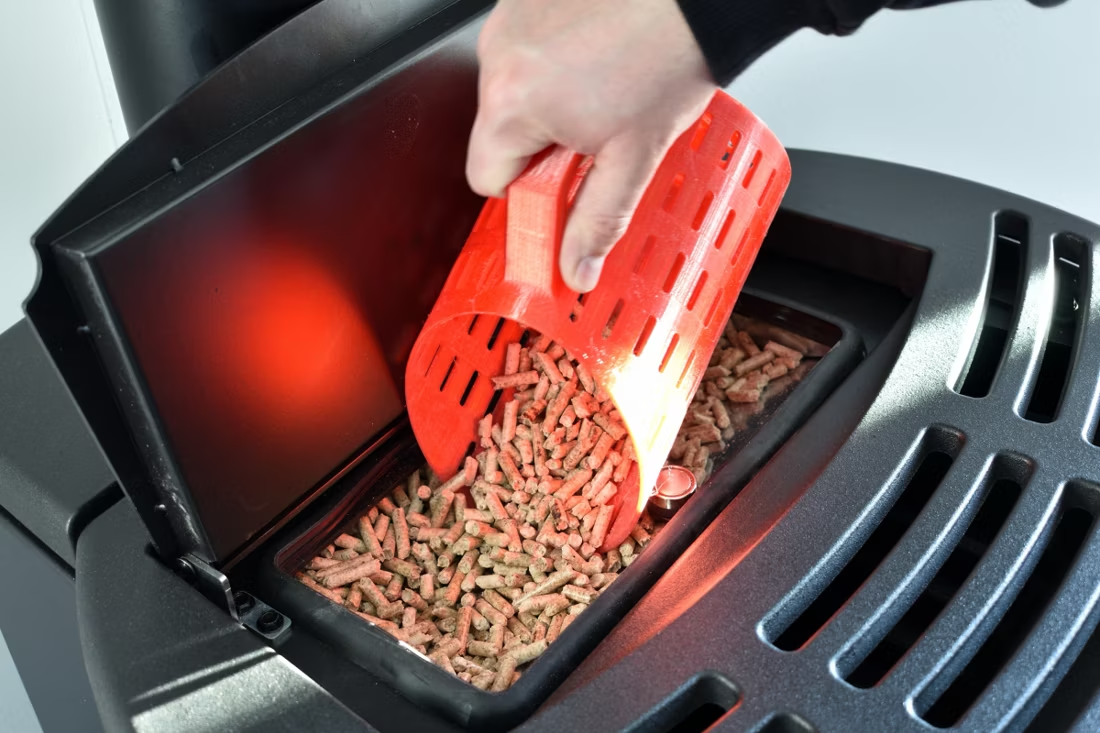
A clean pellet stove is a happy pellet stove. Plan on cleaning the burn pot about once a week when you're burning regularly—ash and clinkers gum up the air holes just like a pellet barbecue. Most pellet stove problems trace back to skipped cleaning that nobody explained up front. Some designs make it easy with a trapdoor burn pot: pull a lever and the gunk drops into the ash pan.
Why is a fireplace insert so efficient?
An insert does two things: it seals the chimney completely, so you stop losing air you already paid to heat, and it radiates warmth into the room through the firebox and glass. Most add a heat-exchange fan that pulls cool room air underneath, wraps it around the hot firebox, and pushes it back out warm. Your home is more efficient before you've even lit the first fire.
Stove and Fireplace Dealers in Squamish-Lillooet
Listings include WhyFire partner dealers, dealers we have verified as authorized for the brands we recommend, and established local businesses that carry hearth products. Every listing shows which one it is. The ones marked Preferred run on WhyFire's software, so they can show you real pricing and book your appointment right here. No manufacturer pays for placement. How we verify dealers →
Lillooet Builders World
Pellet Brands Stocked Around Squamish-Lillooet
Typical price runs $400-$575 per ton—buy early-season for the best rates. Manufacturers will point you to the nearest stocking dealer.
Pinnacle Premium
Princeton Fuel Pellets
Get your free Project Guide & Parts List for a pellet stove in Squamish-Lillooet.
Tell me a bit about your home, whether it's a full-time residence or a seasonal cabin, and I'll match you with a trusted local dealer and send over a free Project Guide & Parts List, with the exact parts, including the vent kit, for your pellet heat project.
Find Your Fireplace →