
Steady heat from the coast to the Lillooet dry belt.
Whether you're in Squamish, Whistler, Pemberton, or up in Lillooet's drier interior, a gas fireplace gives you heat at the flip of a switch. I'll match you with a trusted local dealer who knows which venting setup actually works for your home.
Every Project Starts From One of These Five Situations
One region, three microclimates.
Squamish-Lillooet stretches from tidewater at the head of Howe Sound up through Whistler's alpine bowl and over to the dry interior around Pemberton and Lillooet—three distinct microclimates in one region. Squamish itself sits in classic coastal zone 5C territory, with a winter low average hovering around -0.1°C and damp, mild fronts rolling in off the Pacific. Push north past Pemberton and the picture changes: Lillooet's dry-belt valley routinely drops colder and drier overnight than the coastal towns, closer to what you'd expect in Prince George than in Vancouver. That range is exactly why gas fireplaces do well here—a direct-vent unit performs the same whether it's mounted in a damp Squamish rancher or a Lillooet bungalow that swings several degrees colder some nights.
FortisBC runs natural gas mains through the Highway 99 corridor, so most homes in Squamish, Whistler, and Pemberton can tie a fireplace straight into an existing line. Head further into Lillooet or the smaller communities off the highway and propane becomes the more common fuel, delivered and stored on-site rather than piped. Either way, gas sidesteps two headaches wood burners face in this region: the interior valleys here see real winter inversions and smoke advisories, and several regional districts run wood-stove exchange programs pushing older uncertified stoves out of service. A gas fireplace or insert doesn't touch that conversation—no smoke, no exchange program, no advisory days where you have to let the fire go cold.
Three steps. No salesperson until you're ready.
Tell us about your project
Your postal code, your situation, and the fuel you're leaning toward—or let the answers point you to one.
See what's actually available
The brands dealers within 100 miles genuinely carry—real options, never a catalog mirage.
Get your dealer & Project Guide
A trusted local dealer, plus the free Project Guide & Parts List that names every component of the job.
Frequently Asked Questions
How much does a gas fireplace installation cost in Squamish-Lillooet?
Across the region, gas fireplace installations typically run $6,000 to $15,000 CAD. A direct-vent insert into an existing masonry firebox in an older Squamish or Pemberton home, with a gas line already run to that wall, lands toward the lower end. A full new-construction fireplace—common in Whistler chalets and newer Pemberton builds—with framing, venting through a steep alpine roofline, and a fresh gas line, sits higher. Homes in Lillooet or off-corridor communities that need a new propane tank set instead of a mains tie-in should budget toward the top of that range.
Can I convert an existing wood fireplace to gas?
Yes, and it's a common upgrade in the region's older Squamish and Pemberton homes built around a traditional masonry firebox. A gas insert drops into the existing opening and vents through a stainless liner run up your current chimney, so the fireplace keeps its footprint but gains push-button heat. Expect the lower half of the $6,000-$15,000 range if you're already on FortisBC's natural gas network; add more if the home is on propane and needs new line work from a tank to the firebox.
Is natural gas available everywhere in Squamish-Lillooet, or do I need propane?
It depends on where along the corridor you are. FortisBC supplies natural gas mains through Squamish, Whistler, and much of Pemberton, so homes there can typically tie a new fireplace into an existing service. Lillooet and the smaller communities off Highway 99 generally aren't on the mains network, so propane—delivered and stored in a tank on the property—is the standard fuel. Both fuels run the same fireplace hardware with the correct orifice kit, so the choice of appliance isn't limited; it's really a question of which utility reaches your address.
Will my gas fireplace still work if the power goes out?
Most will, with the right ignition system. Fireplaces with intermittent pilot ignition (IPI) carry a battery backup that kicks in automatically, so you can still light and run the unit with no power. Valor fireplaces go further—their pilot generates its own electricity through the thermocouple, no battery required. That distinction matters here: winter storms along the Sea-to-Sky corridor and around Pemberton and Lillooet can knock out power for hours at a time, and a fireplace that only runs on standard electronic ignition will go dark right when you need it most.
What's the difference between a gas fireplace, insert, and stove?
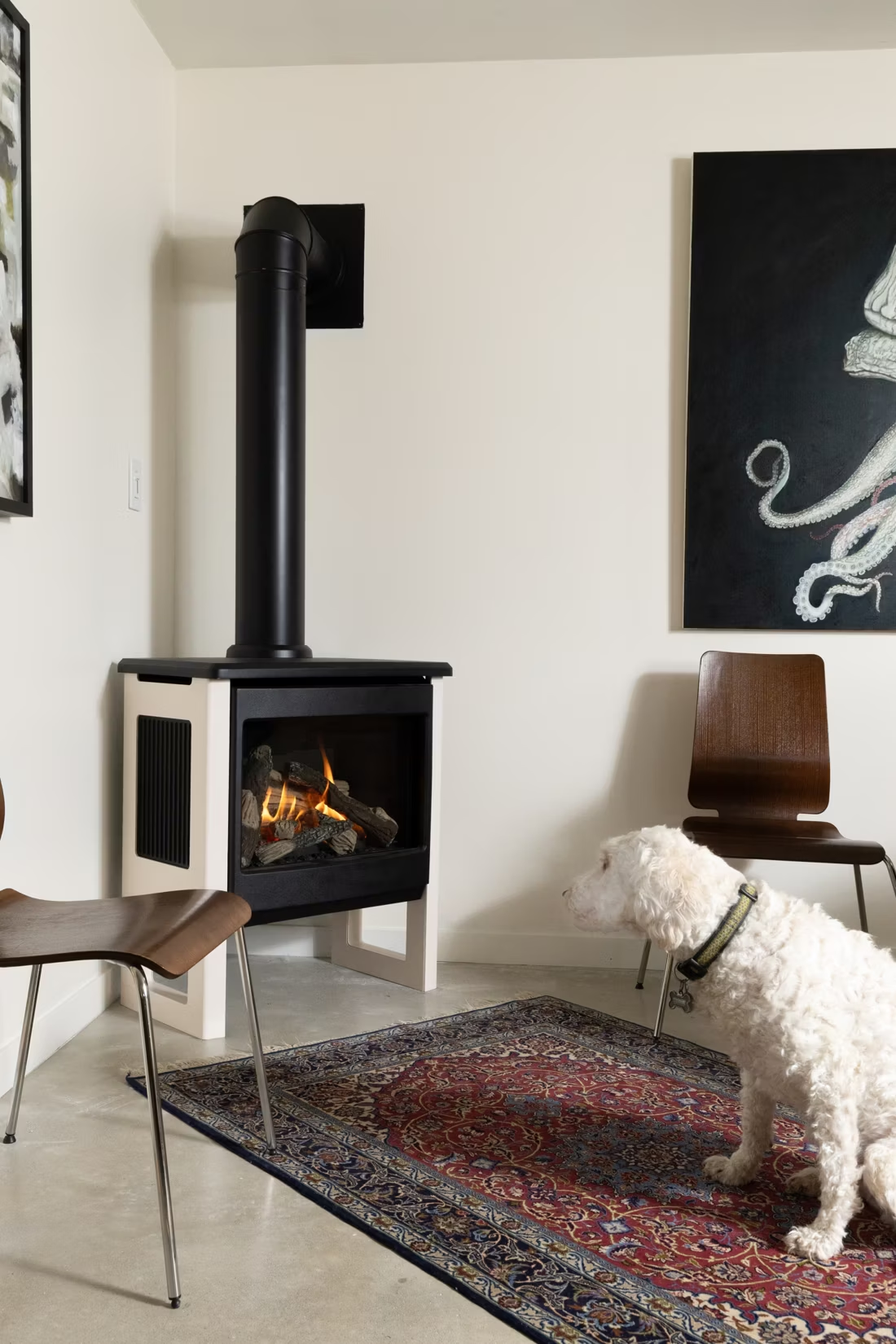
A gas fireplace is a fully framed-in unit, the right call for new builds and major remodels in places like Whistler and newer Pemberton subdivisions. A gas insert fits inside an existing masonry firebox and uses your current chimney as the vent path—common in older Squamish homes upgrading from wood. A gas stove is a freestanding cabinet unit that sits on the floor, useful where there's no existing chimney at all, including manufactured and modular homes found through Lillooet and the Pemberton Valley. A local dealer can walk the space and tell you which one actually fits.
Do I need a permit to install a gas fireplace in Squamish-Lillooet?
Yes. Permits are handled through the municipal building department for whichever community you're in—Squamish, Whistler, the Village of Pemberton, or Lillooet—and both a building permit and a gas permit are required. The gas line work has to be completed by a licensed gas fitter, which is one reason to go through a full-service dealer: they coordinate the gas fitting, the venting, and the inspection sign-off as a single job instead of leaving you to book separate trades yourself.
Should I get a vented or vent-free gas fireplace?
Direct-vent (sealed combustion) units are what most local dealers install here, and for good reason: the interior valleys around Pemberton and Lillooet see real winter inversions and smoke advisories, and a direct-vent fireplace pulls its combustion air from outside and exhausts it back outside, adding nothing to indoor air on the days when outdoor air quality is already a concern. Vent-free units are legal in BC under strict room-sizing rules, but given how often this region's air quality already gets flagged in winter, most homeowners and dealers alike lean direct-vent.
How often does a gas fireplace need servicing?
Plan on an annual check, ideally before ski season ramps up in November. A technician inspects the burner, pilot assembly, gas connections, and venting, and cleans the glass—a quick visit compared to a wood chimney sweep. Whistler and Squamish units that run daily through the winter as a supplemental heat source benefit from that yearly look, since a fireplace used every night for months will show wear faster than one used only for occasional ambiance.
Gas vs. wood—which makes more sense for a home in this region?
Wood has deep roots here—Douglas fir, paper birch, lodgepole pine, and western larch are all cut locally under free FrontCounter BC permits—and it works without any power at all, which counts for something during a Sea-to-Sky storm outage. But wood also comes with more overhead in this region specifically: insurers commonly require a WETT inspection before covering a wood appliance, the installation has to meet CSA B365 code, and several regional districts run wood-stove exchange programs aimed at retiring older uncertified units because of winter inversion and smoke advisory concerns in the interior valleys. Gas skips all of that—no smoke, no exchange program, no WETT inspection—in exchange for a fuel bill instead of a woodpile. Most homeowners here choose gas for daily-use convenience and keep wood, if at all, for backup or ambiance.
Can a gas fireplace run on a thermostat?
Most modern gas fireplaces can—turn it on and off from the couch with a remote, or set a room temperature and let the fireplace hold the comfort zone for you. If low maintenance matters to your family, this is the feature set that makes gas the convenience pick over wood and pellet.
Why do fireplace quotes vary so much?
Because a fireplace is an iceberg—there's more behind the wall than in front of it. A low quote often covers only the unit; the full scope includes vent pipe, gas line or electrical, framing, and the tile or stone that has to come off and go back on. Make every bidder price the whole job. If a dealer can't speak to the full scope with confidence, that's your signal to keep looking.
Does a gas fireplace work when the power is out?
Yes—modern gas fireplaces have a battery backup for the ignition system that lasts for weeks, so no power equals no problem. Your furnace can't say that: no electricity, no blower, no heat. It's one of the most common reasons families add a fireplace, and worth confirming on any model you're considering.
What do I measure to size a fireplace insert?
Four numbers tell you what fits: the front width, the front height, the back width, and the overall depth of your existing fireplace opening. Grab a tape measure, jot those down, and snap a photo of the wall—those two things do more to move your project forward than anything else you can do today.
Stove and Fireplace Dealers in Squamish-Lillooet
Listings include WhyFire partner dealers, dealers we have verified as authorized for the brands we recommend, and established local businesses that carry hearth products. Every listing shows which one it is. The ones marked Preferred run on WhyFire's software, so they can show you real pricing and book your appointment right here. No manufacturer pays for placement. How we verify dealers →
Lillooet Builders World
Natural Gas Service in Squamish-Lillooet
Confirm service at your address before planning a gas fireplace—a quick call settles it.
FortisBC (Gas)
Pacific Northern Gas
Get your free Project Guide & Parts List for a gas fireplace in Squamish-Lillooet.
Tell me about your home and where it sits along the corridor, and I'll match you with a trusted local dealer and send over a free Project Guide & Parts List—the exact parts, including the vent kit, and a recommended installer for your gas project.
Find Your Fireplace →