
Heat that keeps running whether you're on the hill or back in the city.
Whistler sits at 673 metres in the Squamish-Lillooet region, where winter lows average -4.9°C but Sea-to-Sky storm systems can hold the valley below freezing for days. I'll match you with a trusted local dealer who knows the strata rules, the snow-load venting, and what's actually installable on your street.
Every Project Starts From One of These Five Situations
Built for a town where half the homes sit empty most weekdays.
Whistler's climate is milder than its mountain reputation suggests: in climate zone 6C, winter lows average -4.9°C, a long way from the extremes of a place like Prince George or Fort McMurray. But the cold season here runs long, from the first November dustings on Blackcomb through spring corn snow in April, and Sea-to-Sky storm cycles can park a cold system over the valley for a week at a time. That combination—mild averages, long duration, occasional hard cold snaps—is exactly the profile pellet heat handles well: thermostat-controlled output that holds steady through a multi-day storm without anyone tending a firebox.
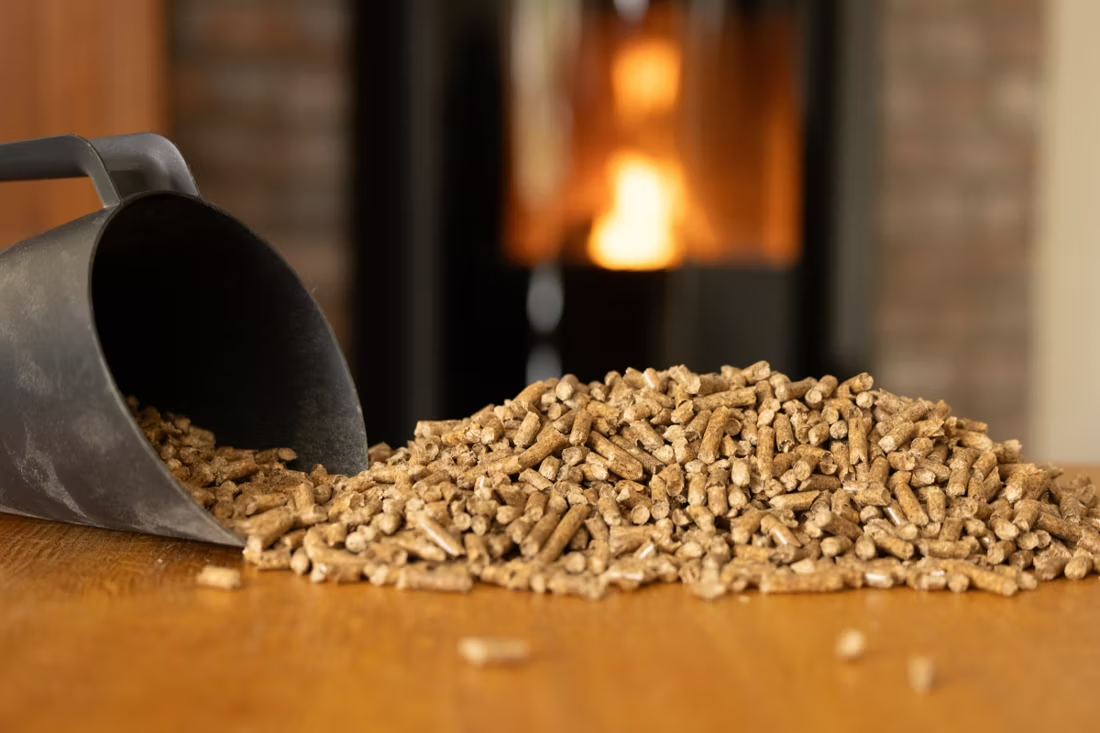
A large share of Whistler's housing stock is strata-titled condos and townhomes in the Village, Creekside, and Bayshores, where a masonry chimney retrofit is rarely practical but a direct sidewall vent often is, which is one reason pellet appliances tend to clear strata approval more easily than wood stoves. Fuel comes from BC producers: Pinnacle Premium, made largely from Interior sawmill residue including lodgepole pine from mountain pine beetle-affected stands, and Princeton Fuel Pellets out of the BC Interior, both running $400-$575 a ton locally. Every install still needs a permit through the municipal building department and has to meet the CSA B365 installation code, and because the Squamish-Lillooet region deals with its own winter inversions and smoke advisories, a clean-burning, CSA-certified pellet appliance is an easy case to make against an older wood stove.
Three steps. No salesperson until you're ready.
Tell us about your project
Your postal code, your situation, and the fuel you're leaning toward—or let the answers point you to one.
See what's actually available
The brands dealers within 100 miles genuinely carry—real options, never a catalog mirage.
Get your dealer & Project Guide
A trusted local dealer, plus the free Project Guide & Parts List that names every component of the job.
Frequently Asked Questions
How much does a pellet stove or insert cost to install in Whistler?
Typical installs run $6,000 to $10,000. A freestanding pellet stove venting straight out a sidewall, common in Whistler's strata townhomes and duplexes, tends to land toward the lower end. A pellet insert replacing an existing wood-burning fireplace in a Village or Creekside chalet, which needs a liner run and sometimes a hearth pad rebuild, pushes toward the higher end. Either way, a CSA-certified appliance and a permit through the municipal building department are part of the job, and most local dealers fold that into their quote.
Do I need a permit to install a pellet stove in Whistler?
Yes. The municipal building department requires a permit for any solid-fuel or pellet-burning appliance, and the installation has to meet the CSA B365 code. Pellet units don't always trigger the same WETT inspection that insurers ask for on wood stoves, but many Whistler insurers still want documentation that the appliance and venting were installed to CSA specification before they'll add it to a policy, which is worth confirming before you buy, not after.
Can I install a pellet stove in a Whistler condo or townhome?
Often, yes, and more easily than a wood stove. A lot of Whistler's housing stock, from Village Green to Creekside to Bayshores, is strata-titled, and strata councils that balk at a masonry chimney retrofit will frequently approve a pellet appliance venting directly out a sidewall, since it doesn't touch shared roof penetrations or common chimney chases. You'll still need strata sign-off in writing before your dealer submits the municipal permit, so start that conversation early.
Where does pellet fuel come from and what does it cost near Whistler?
Most Whistler households buying by the pallet or the ton are running Pinnacle Premium or Princeton Fuel Pellets, both BC producers using Interior sawmill residue and lodgepole pine, much of it salvaged from mountain pine beetle-affected forests, as feedstock. Local pricing runs $400 to $575 a ton. A typical Whistler home heating a main living area through the winter burns somewhere around 2 to 3 tons a season, less than you'd expect in a harder-winter Interior town, since the valley's averages are relatively mild even though the season itself runs long.
Does Whistler's snowpack affect where my pellet vent can go?
It does, and it's one of the more Whistler-specific things a dealer needs to plan for. A sidewall vent termination needs to sit above the snow line your property actually accumulates in a heavy year, not just the minimum clearance printed in the manual, or it risks getting buried and blocking exhaust. Roof-mounted terminations need flashing rated for the snow load these mountain roofs carry. A local installer who's done this on Blackcomb Way or in Alpine Meadows will size the vent run and termination height against your specific roofline and elevation, not a generic chart.
What size pellet stove or insert do I need for a Whistler home?
Because winter lows here average a relatively mild -4.9°C, most Whistler homes don't need the largest units in a dealer's lineup; sizing usually comes down more to square footage and ceiling height than raw cold-weather output. Chalet-style construction with vaulted great rooms, common throughout Whistler, often needs a mid-size unit with enough output to push heat up and across an open floor plan rather than the biggest hopper available. A dealer will size it against your actual layout and insulation rather than square footage alone.
Pellet vs. gas—which makes more sense for a Whistler home?
Natural gas through FortisBC reaches most of Whistler, so gas fireplaces are a real, common option here, not a stretch. Pellet still has a place: it's the choice for owners who want a wood-look flame and the ability to run on stored fuel rather than a utility line, and it burns cleaner than an old wood stove during the smoke advisories the Squamish-Lillooet region occasionally calls. The tradeoff is that pellet stoves need electricity for the auger and blower just like a furnace fan does, so during a Sea-to-Sky power outage, a battery-backed gas unit with a standing pilot will outlast a pellet stove that has no backup power installed.
How often does a pellet stove need maintenance in Whistler?
Plan on emptying the ash pan weekly during regular use and a full professional service once a year, ideally in October or early November before Whistler Blackcomb opens and local installers get booked solid with pre-season work. That annual visit covers the auger, burn pot, exhaust fan, and gasket, which are the parts that wear out from daily automated cycling rather than from the occasional fire a wood stove gets.
Pellet vs. wood—which is the better fit given Whistler's air quality rules?
Wood is genuinely cheap to fuel here: FrontCounter BC and the BC Ministry of Forests issue cutting permits for free, year-round outside summer fire restrictions, for species like Douglas fir, paper birch, and western larch that grow throughout the Sea-to-Sky corridor. But the Squamish-Lillooet region runs its own smoke advisories during valley inversions, and older uncertified wood stoves are exactly what regional wood-stove exchange programs are built to phase out. A CSA-certified pellet appliance sidesteps that whole conversation: it burns cleaner by design, doesn't need a WETT wood inspection, and is an easier case to make to an insurer or a strata council than a masonry wood installation.
Why do fireplace quotes vary so much?
Because a fireplace is an iceberg—there's more behind the wall than in front of it. A low quote often covers only the unit; the full scope includes vent pipe, gas line or electrical, framing, and the tile or stone that has to come off and go back on. Make every bidder price the whole job. If a dealer can't speak to the full scope with confidence, that's your signal to keep looking.
Is it worth replacing an old fireplace that still sort of works?
Ask three questions: Is it ugly? Is it drafty? Does it actually work? Most old fireplaces fail at least two. Beyond looks, an old unit leaks air around the damper year-round and—if it's gas with a standing pilot—quietly burns a couple hundred dollars a year. A modern replacement seals the wall, heats the room, and changes how the whole space gets used.
How often does a pellet stove need cleaning?
A clean pellet stove is a happy pellet stove. Plan on cleaning the burn pot about once a week when you're burning regularly—ash and clinkers gum up the air holes just like a pellet barbecue. Most pellet stove problems trace back to skipped cleaning that nobody explained up front. Some designs make it easy with a trapdoor burn pot: pull a lever and the gunk drops into the ash pan.
Why is a fireplace insert so efficient?
An insert does two things: it seals the chimney completely, so you stop losing air you already paid to heat, and it radiates warmth into the room through the firebox and glass. Most add a heat-exchange fan that pulls cool room air underneath, wraps it around the hot firebox, and pushes it back out warm. Your home is more efficient before you've even lit the first fire.
Nearby Dealers
Hearth shops serving Whistler and the surrounding area. Every listing shows whether it is a WhyFire partner, a dealer we have verified as authorized for the brands we recommend, or a local business carrying hearth products. No manufacturer pays for placement. How we verify dealers →
Lillooet Builders World
Pellet Brands Stocked Around Whistler
Typical price runs $400-$575 per ton—buy early-season for the best rates. Manufacturers will point you to the nearest stocking dealer.
Pinnacle Premium
Princeton Fuel Pellets
Get your Whistler pellet project mapped out.
Tell me about your home—condo, townhome, or chalet—and whether you're already on FortisBC gas, and I'll match you with a trusted local dealer and send a free Project Guide & Parts List sized to your place, snow-load venting included.
Find Your Fireplace →