
Steady pellet heat built for Vancouver Island's mild, wet winters.
With winter lows that average just 0.1°C, the Regional District of Nanaimo rarely sees the true deep freeze that Winnipeg or Prince George get every year—but the long, damp stretch from November through March still calls for steady, thermostatic heat. I match homeowners across the region with a trusted local dealer who knows which pellet stove or insert actually fits a coastal home, sizes the venting correctly, and can get the right parts without big-box guesswork.
Every Project Starts From One of These Five Situations
A marine climate that rewards convenience over cordwood.
The Regional District of Nanaimo runs along Vancouver Island's east coast, from Lantzville and Nanaimo south through Cedar and Ladysmith, and north to Nanoose Bay, Parksville, and Qualicum Beach—home to roughly 143,000 people. Classified climate zone 4C, this is a marine climate: winter lows average just 0.1°C, and while the heating season runs long, it's rarely severe compared to the Interior or the Prairies. Wood heat still has deep roots here—Douglas fir, paper birch, lodgepole pine, and western larch are the species most commonly split and stacked—but for homeowners who want the ambiance and steady output of a solid-fuel appliance without cutting, hauling, and seasoning cordwood, pellet is the practical middle ground. Regional brands like Pinnacle Premium and Princeton Fuel Pellets, both milled from BC forestry byproduct, run $400-$575 CAD per ton and are stocked at feed stores and hardware retailers across the region.
Natural gas is available across much of the region through FortisBC, and plenty of homes here already run a gas furnace or fireplace—so pellet is often chosen as a secondary heat source, a design centerpiece for a family room, or the answer for a rural property in Cedar or Errington where the gas main doesn't reach. The region's interior valley pockets, especially inland from the Nanaimo River and up toward Extension and South Wellington, do see winter inversions and smoke advisories, and several regional districts on Vancouver Island run wood-stove exchange programs pushing homeowners toward CSA/EPA-certified appliances. A modern pellet stove already clears that bar—it burns cleaner than almost any wood-burning option, which matters on the still, foggy days when smoke sits low over a valley floor.
Three steps. No salesperson until you're ready.
Tell us about your project
Your postal code, your situation, and the fuel you're leaning toward—or let the answers point you to one.
See what's actually available
The brands dealers within 100 miles genuinely carry—real options, never a catalog mirage.
Get your dealer & Project Guide
A trusted local dealer, plus the free Project Guide & Parts List that names every component of the job.
Frequently Asked Questions
How much does a pellet stove installation cost in the Regional District of Nanaimo?
Pellet stove and insert installations across the region typically run $6,000 to $10,000 CAD. A pellet insert dropped into an existing masonry fireplace lands on the lower end if the chimney liner and hearth pad are already in decent shape; a freestanding stove in a room with no existing venting, common in newer builds in French Creek or Nanoose Bay designed around gas or electric heat, runs toward the upper end once you add wall-through venting and a dedicated electrical circuit for the auger and blower.
Where do I buy pellets locally, and how much should I plan to store?
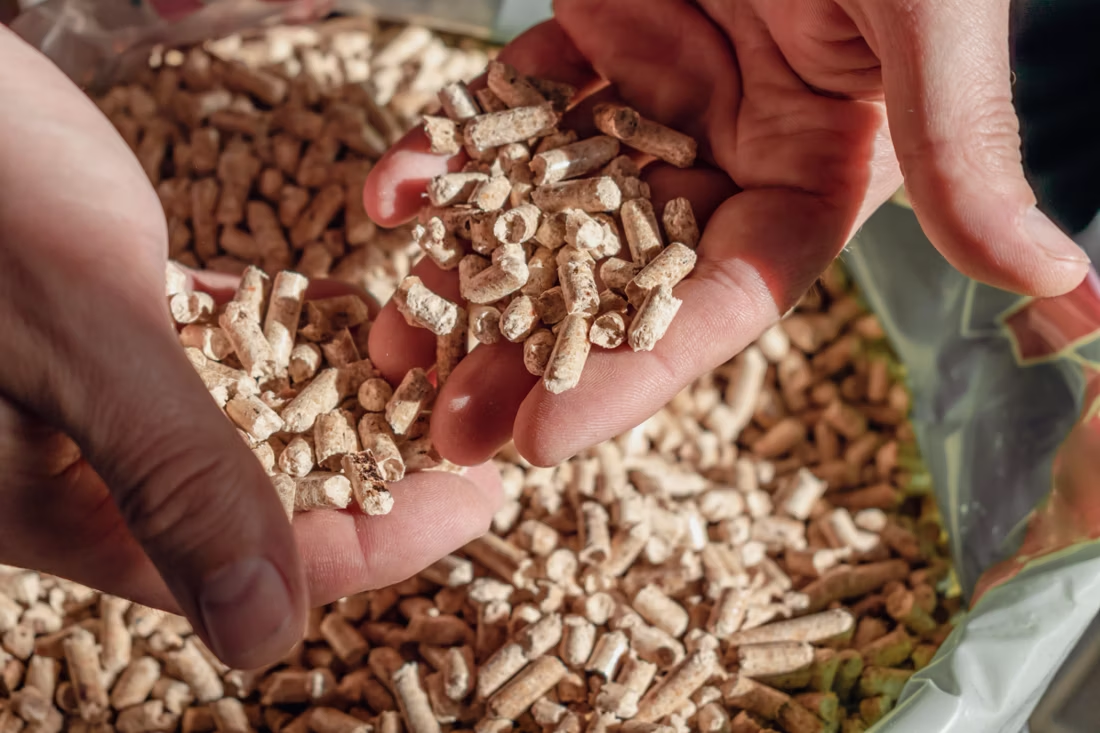
Regional brands Pinnacle Premium and Princeton Fuel Pellets are both milled in BC and widely stocked from Nanaimo to Qualicum Beach, running $400 to $575 CAD per ton. Given how mild winters are here—lows averaging just 0.1°C rather than the deep freezes Edmonton or Saskatoon see—many households burn through 2 to 3 tons a season as supplemental heat alongside a gas or electric furnace, while a home using pellet as primary heat in a rural area without natural gas might go through 4 to 6 tons. Buying a season's supply in early fall, before demand tightens, is the common local strategy.
Do I need a permit to install a pellet stove in the Regional District of Nanaimo?
Yes. New installations require a building permit through your local municipal building department—the City of Nanaimo, City of Parksville, Town of Qualicum Beach, Town of Ladysmith, or the regional district's own building division if you're in an electoral area like Cedar, Cassidy, or Nanoose Bay. Installations must meet the CSA B365 solid-fuel-burning appliance code, and most insurers will ask for a WETT inspection before covering the appliance, even though pellet stoves burn considerably cleaner than a traditional wood stove. A local dealer who pulls permits regularly can walk you through both steps as part of the job.
Will my pellet stove work during a power outage?
This is worth planning for honestly: unlike a wood stove, a pellet stove needs electricity to run its auger, igniter, and combustion blower, so it won't function during an outage unless you have a battery backup or small generator wired in. Coastal windstorms off the Strait of Georgia knock out power across the region most winters, sometimes for a day or more in rural areas like Nanoose Bay or Cedar. If off-grid heat during an outage matters more to you than pellet's convenience, a wood stove burning local Douglas fir or lodgepole pine is the more resilient choice, and many households in the region keep both.
Pellet stove vs. wood stove—which makes more sense here?
Pellet stoves skip the cutting, hauling, splitting, and seasoning that wood requires—no trip to FrontCounter BC for a cutting permit, no woodshed, no creosote buildup from green fir. You feed a hopper and set a thermostat. Wood, burned as Douglas fir, paper birch, lodgepole pine, or western larch, costs less per unit of heat if you're willing to process it yourself, and it keeps working when the power's out. Given the region's mild marine climate and widely available natural gas, most homeowners here choose pellet for convenience and clean-burning ambiance, and save wood for households genuinely committed to handling their own fuel.
How do local air quality rules affect pellet stove choice?
Winter inversions and smoke advisories are mostly an interior-valley issue, but the Regional District of Nanaimo has pockets—inland from the Nanaimo River, up toward South Wellington and Extension—where still, foggy winter days can trap smoke close to the ground. Several regional districts on Vancouver Island run wood-stove exchange programs to retire older, uncertified stoves, and any new solid-fuel appliance must be CSA or EPA-certified. A modern pellet stove already clears that bar by a wide margin, which makes it the lower-friction choice for anyone in a valley pocket weighing wood against pellet.
What size pellet stove do I need for my home?
Sizing here has more to do with room layout than surviving deep cold, since winter lows average just 0.1°C rather than the double-digit-below temperatures you'd size around in Prince George or Fort McMurray. A small to medium pellet stove comfortably heats an open-plan living area in a typical Nanaimo or Parksville home; homes using pellet as a true primary heat source, more common in rural parts of the region without a gas main, may need a larger unit or a second appliance for a detached wing. A local dealer will walk the space and size it off your actual floor plan rather than a generic chart.
How often does a pellet stove need maintenance?
Plan on cleaning the burn pot and ash pan weekly during regular use and a full professional service annually, ideally in late summer before the fall damp sets in. That visit should cover the auger, hopper, venting, and combustion blower. Pellet appliances generate far less creosote than a wood stove burning fir or pine, but the mechanical components—augers, igniters, blower motors—are what typically need attention over time, so an annual check from a technician familiar with your model, whether it's running Pinnacle Premium or Princeton Fuel Pellets, is worth the cost.
Is pellet a realistic primary heat source, or just a supplement here?
It depends where in the region you are. In Nanaimo, Parksville, and other areas served by FortisBC natural gas, pellet is usually chosen as a secondary heat source or a design feature for a specific room, since a gas furnace already covers day-to-day load. In rural electoral areas without a gas main, pellet is a genuine primary heat option that outperforms electric baseboard on comfort and running cost, provided you're comfortable with the electricity dependency and keep a season's supply of pellets on hand. Either way, a properly sized unit installed to CSA B365 code carries real heating load, not just supplemental ambiance.
Why do fireplace quotes vary so much?
Because a fireplace is an iceberg—there's more behind the wall than in front of it. A low quote often covers only the unit; the full scope includes vent pipe, gas line or electrical, framing, and the tile or stone that has to come off and go back on. Make every bidder price the whole job. If a dealer can't speak to the full scope with confidence, that's your signal to keep looking.
Is it worth replacing an old fireplace that still sort of works?
Ask three questions: Is it ugly? Is it drafty? Does it actually work? Most old fireplaces fail at least two. Beyond looks, an old unit leaks air around the damper year-round and—if it's gas with a standing pilot—quietly burns a couple hundred dollars a year. A modern replacement seals the wall, heats the room, and changes how the whole space gets used.
What do I measure to size a fireplace insert?
Four numbers tell you what fits: the front width, the front height, the back width, and the overall depth of your existing fireplace opening. Grab a tape measure, jot those down, and snap a photo of the wall—those two things do more to move your project forward than anything else you can do today.
Are pellet stoves loud?
They make some noise—there are two fans running plus an auger motor that turns as it feeds pellets. But there's a real range: premium models are engineered quiet, and the best offer a whisper-quiet mode you can comfortably watch TV next to. If noise matters in your room, ask to hear a stove running before you buy—it's a five-minute test that saves years of annoyance.
Stove and Fireplace Dealers in Regional District of Nanaimo
Listings include WhyFire partner dealers, dealers we have verified as authorized for the brands we recommend, and established local businesses that carry hearth products. Every listing shows which one it is. The ones marked Preferred run on WhyFire's software, so they can show you real pricing and book your appointment right here. No manufacturer pays for placement. How we verify dealers →
Delco Fireplaces (Vancouver Island) Ltd
Hornby Island Co-Op
Pellet Brands Stocked Around Regional District of Nanaimo
Typical price runs $400-$575 per ton—buy early-season for the best rates. Manufacturers will point you to the nearest stocking dealer.
Pinnacle Premium
Princeton Fuel Pellets
Get your free Project Guide & Parts List for pellet heat in the Regional District of Nanaimo.
Tell me about your home and how you plan to use the stove, and I'll match you with a trusted local dealer serving the region and send a free Project Guide & Parts List—the exact parts, including the vent kit, for your pellet project.
Find Your Fireplace →