
Steady heat for Vancouver Island's mild, damp winters.
East Wellington sits in the Regional District of Nanaimo at about 133 metres elevation, where winter lows average just above freezing and rain, not snow, defines the season. A pellet stove gives you a clean, thermostat-controlled burn without the wood-seasoning headaches the Island's damp climate creates. I'll match you with a trusted local dealer who knows what actually installs well on your street.
Every Project Starts From One of These Five Situations
A clean, automated burn built for winters that rarely freeze hard.
East Wellington's winters are mild by Canadian standards, with an average low around 0.1°C and a heating season that's real but nowhere near what homes in Prince George or Edmonton contend with each winter. Still, the marine air off the Strait of Georgia keeps homes damp for months at a time, and that dampness is exactly where pellet appliances earn their keep: kiln-dried bagged pellets sidestep the seasoning problems that plague firewood left stacked outside in a coastal Vancouver Island winter.
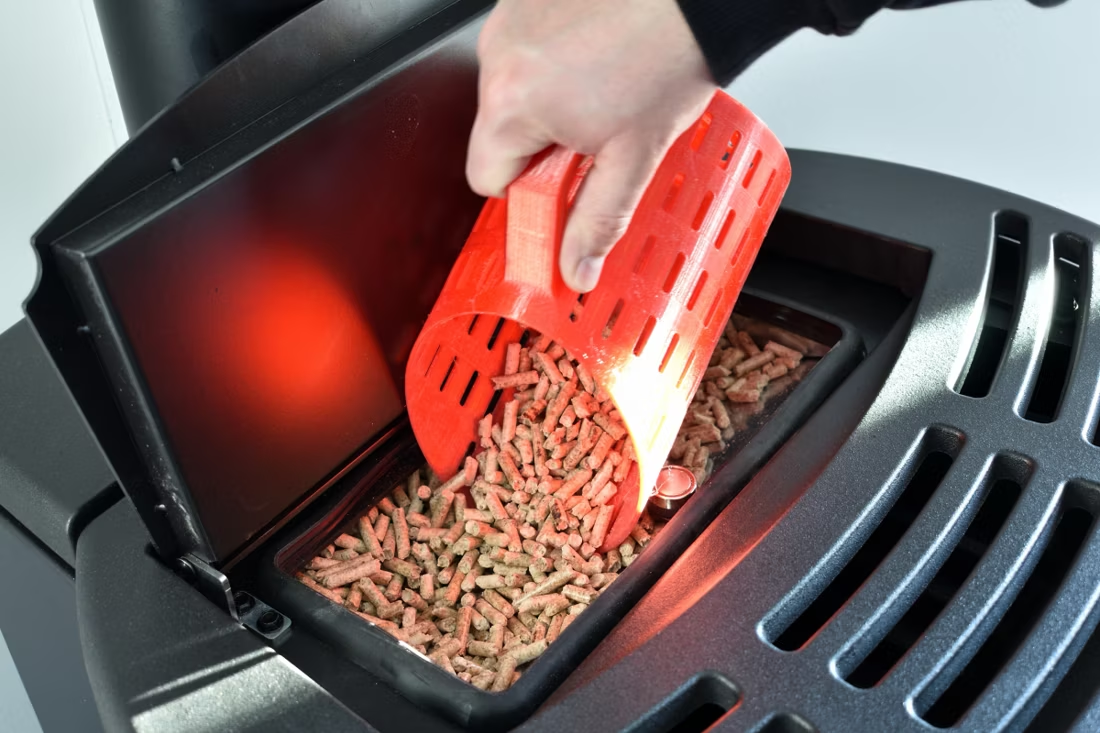
Natural gas from FortisBC reaches much of the area and wood remains common too, using species like Douglas fir and lodgepole pine cut under free, year-round FrontCounter BC permits. But a lot of East Wellington homeowners land on pellet specifically because it's a CSA/EPA-certified, low-emission burn that fits neatly with the Regional District of Nanaimo's wood-stove exchange and air-quality goals, while still giving you a visible flame and thermostat-level heat control that gas alone doesn't quite match. Regional brands Pinnacle Premium and Princeton Fuel Pellets run roughly $400-$575 a tonne and are stocked by hearth dealers around Nanaimo.
Three steps. No salesperson until you're ready.
Tell us about your project
Your postal code, your situation, and the fuel you're leaning toward—or let the answers point you to one.
See what's actually available
The brands dealers within 100 miles genuinely carry—real options, never a catalog mirage.
Get your dealer & Project Guide
A trusted local dealer, plus the free Project Guide & Parts List that names every component of the job.
Frequently Asked Questions
How much does a pellet stove installation cost in East Wellington?
Most pellet installs here run $6,000 to $10,000 CAD. A freestanding stove venting through an exterior wall with a short horizontal run lands toward the lower end, which is common in East Wellington's older rural properties without an existing masonry chimney. A pellet insert going into a working fireplace opening, or a job that needs a longer vent run through a roof, pushes toward the top of that range. Your dealer's quote should include the CSA B365-compliant venting kit, not just the appliance.
What size pellet stove do I need in a climate this mild?
With winter lows averaging just above freezing, most East Wellington homes don't need a unit sized to carry the whole house through extreme cold the way a place like Prince George would. A small to mid-size pellet stove rated for 1,000 to 1,800 square feet handles a typical living space here comfortably, running on a lower thermostat setting most of the season and stepping up during the occasional hard frost or windstorm cold snap. Oversizing just means more cycling and more ash to manage for heat you don't need.
Do I need a permit to install a pellet stove in East Wellington?
Yes. As an unincorporated community in the Regional District of Nanaimo, building permits for solid-fuel appliances go through the regional district's building department rather than a city hall, and the installation itself has to follow the CSA B365 code. Most local hearth dealers pull this permit as part of the job. It's also worth arranging a WETT inspection once the stove is in, since most home insurers in the area ask for one on any solid-fuel appliance, pellet included, before they'll add it to your policy.
Pellet vs. wood—which makes more sense for East Wellington?
Wood is genuinely cheap here: FrontCounter BC and the BC Ministry of Forests issue free cutting permits year-round (summer fire restrictions aside), and Douglas fir, paper birch, lodgepole pine, and western larch are all available on nearby Crown land. The catch is the Island's damp winters make it hard to keep a full cord properly seasoned under cover. Pellet stoves solve that with bagged, kiln-dried fuel that burns consistently regardless of how wet the fall was, plus a CSA/EPA-certified low-emission burn that fits the regional district's air-quality push. The tradeoff is pellets aren't free like a cutting permit, and the stove needs power to run.
FortisBC gas service reaches this area—why would I choose pellet instead?
Gas is genuinely convenient, and plenty of East Wellington homes on the FortisBC network use it. Pellet stoves win out for people who want an actual visible flame and the option to burn a regional, renewable fuel rather than piped gas, and they land in a similar install cost range to a gas insert, roughly $6,000-$10,000 CAD versus $6,000-$15,000 for gas. Some households also like that pellet appliances don't depend on gas pricing or supply at all, drawing instead on BC-milled brands like Pinnacle Premium and Princeton Fuel Pellets that are stocked locally through the Nanaimo area.
What happens to a pellet stove during a power outage?
It stops, and that's the honest tradeoff against a wood stove. Pellet appliances rely on an electric auger to feed fuel and a blower to push heat into the room, so when BC Hydro or FortisBC power drops during an Island windstorm, the stove shuts down until power's restored. A small battery backup unit sized for a pellet stove can bridge a short outage, and some households on the coast keep a portable generator on hand for the same reason. If outage resilience matters more to you than convenience, that's worth weighing against a wood stove using locally cut fir or pine.
Where do East Wellington homeowners buy pellets, and what do they cost?
Pinnacle Premium and Princeton Fuel Pellets are the two regional brands most local dealers stock, typically running $400 to $575 a tonne depending on the season and how early you buy. Buying a season's supply in late summer, before demand picks up around the first cold snap, usually gets the better end of that range. Plan on a dry, covered storage spot for a couple of tonnes if you're running the stove as your main heat source through the winter.
How much maintenance does a pellet stove need here?
Less than a wood stove, but it's not zero. Expect to empty the ash pan every few days during regular use and wipe the glass weekly, since pellet ash is fine and builds up steadily. An annual professional service, ideally in late summer ahead of the first damp cold stretch, should include a full cleaning of the exhaust venting and a check of the auger and igniter. Given how much Vancouver Island humidity gets into everything, that yearly check also catches any moisture-related wear on seals before it becomes a mid-winter breakdown.
Do I need a WETT inspection for insurance on a pellet appliance?
Most insurers serving the Regional District of Nanaimo ask for one, yes. Pellet stoves fall under the same solid-fuel appliance category as wood stoves for insurance purposes, even though they burn cleaner and are CSA/EPA-certified out of the box. A WETT-certified inspector checks the clearances, the venting, and the hearth pad against the CSA B365 code and issues a report your insurance company can file. It's a straightforward add-on most local dealers can arrange right after the install.
Why do fireplace quotes vary so much?
Because a fireplace is an iceberg—there's more behind the wall than in front of it. A low quote often covers only the unit; the full scope includes vent pipe, gas line or electrical, framing, and the tile or stone that has to come off and go back on. Make every bidder price the whole job. If a dealer can't speak to the full scope with confidence, that's your signal to keep looking.
Is it worth replacing an old fireplace that still sort of works?
Ask three questions: Is it ugly? Is it drafty? Does it actually work? Most old fireplaces fail at least two. Beyond looks, an old unit leaks air around the damper year-round and—if it's gas with a standing pilot—quietly burns a couple hundred dollars a year. A modern replacement seals the wall, heats the room, and changes how the whole space gets used.
What does it take to replace an existing fireplace?
Fireplaces are like icebergs—bigger behind the wall than in front of it. Replacement means removing the surrounding tile or stone (the finish material laps onto the fireplace face), pulling the old unit, setting the new one in the same enclosure, and re-finishing the wall. A hearth professional can determine what's behind your wall without demolition during an in-home preview.
Why is my open fireplace making my house colder?
Open fireplaces suck—literally. As the fire burns, it consumes air your furnace already paid to heat and pulls it out through the chimney, so the house is actually colder after the fire goes out than before you lit it. An insert fixes this: it seals the chimney, puts fixed glass across the front, and turns that hole in your house into a real heat source.
Nearby Dealers
Hearth shops serving East Wellington and the surrounding area. Every listing shows whether it is a WhyFire partner, a dealer we have verified as authorized for the brands we recommend, or a local business carrying hearth products. No manufacturer pays for placement. How we verify dealers →
Delco Fireplaces (Vancouver Island) Ltd
Hornby Island Co-Op
Pellet Brands Stocked Around East Wellington
Typical price runs $400-$575 per ton—buy early-season for the best rates. Manufacturers will point you to the nearest stocking dealer.
Pinnacle Premium
Princeton Fuel Pellets
Get your free Project Guide & Parts List for an East Wellington pellet project.
Tell me about your home and whether you're leaning pellet, gas, or wood, and I'll match you with a trusted local dealer and send a free Project Guide & Parts List sized for the Island's mild, damp winters, with the vent kit and parts specified.
Find Your Fireplace →