
Clean, flip-a-switch heat for Nanaimo's mild coastal winters.
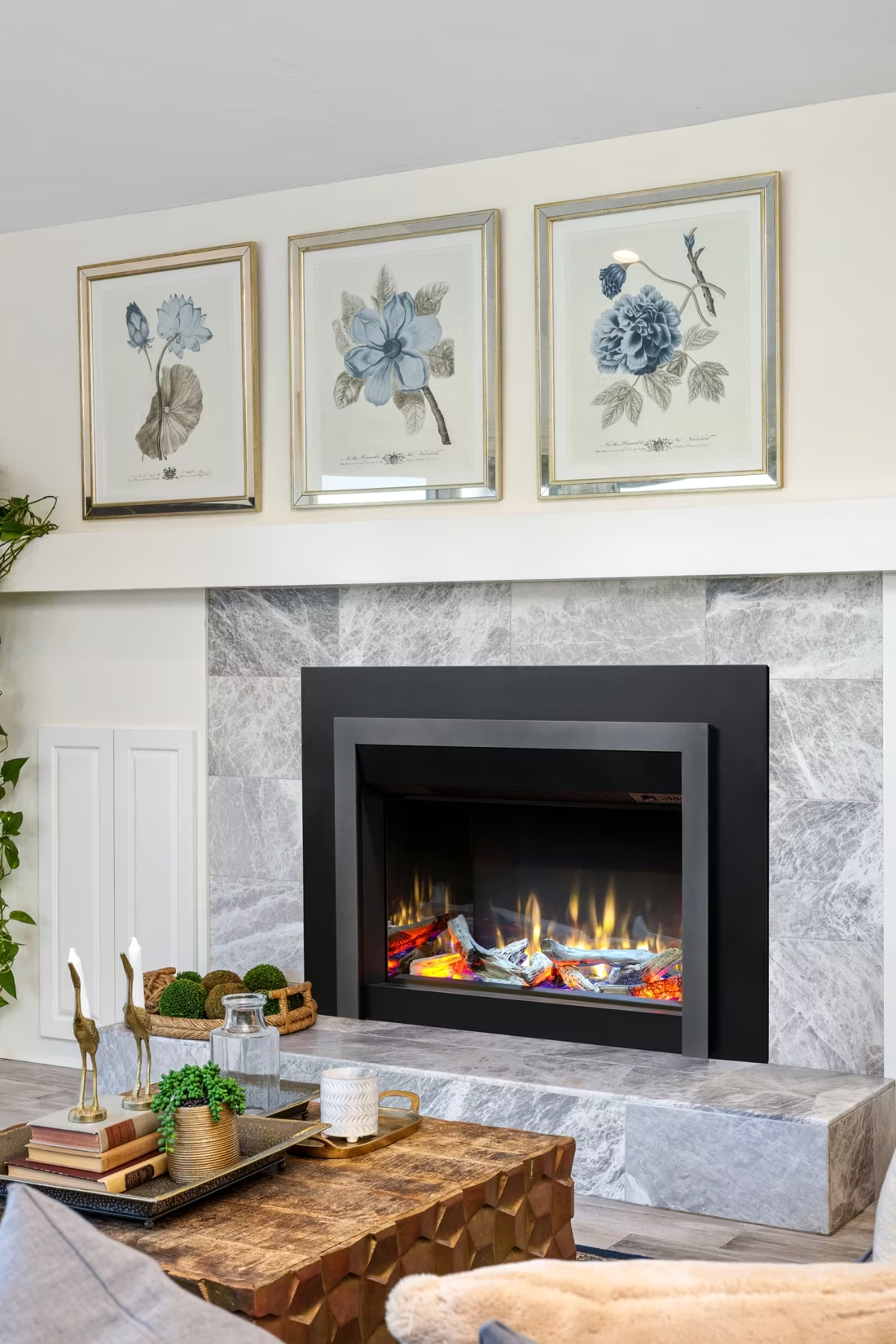
From downtown Nanaimo condos to Parksville and Qualicum Beach retirement communities, an electric fireplace gives you real ambiance and supplemental heat with no chimney, no gas line, and no venting to plan around. I'll match you with a local dealer who knows which unit fits your wall, your circuit, and your strata bylaws.
Every Project Starts From One of These Five Situations
Hydro power for the mild side of Vancouver Island.
The Regional District of Nanaimo sits in climate zone 4C along the east coast of Vancouver Island, where the average winter low hovers around 0.1°C and overnight freezes are the exception rather than the rule. That's a different world from Kamloops or Prince George a few hours inland, where wood stoves have to hold a fire through hard, sustained cold. Here, homes in Nanaimo, Parksville, Qualicum Beach, Ladysmith, and out to Gabriola Island still burn Douglas fir and paper birch on rural acreages, but the mild, marine climate means a lot of households simply don't need a high-output combustion appliance to stay comfortable. An electric fireplace covers that gap well: instant heat on the coldest damp evenings, pure ambiance the rest of the season.
Electric also sidesteps a lot of the paperwork that comes with combustion appliances. There's no WETT inspection to schedule, no CSA B365 wood-burning code to satisfy, and in most cases no venting to route through a shared wall or roof, which matters in a region with as much strata and multi-unit housing as Nanaimo and Parksville have. A built-in unit that needs a new dedicated circuit still goes through the municipal building department for an electrical permit, pulled by a licensed electrician, but that's a far shorter process than a full gas or wood install. With BC Hydro's largely hydroelectric grid supplying the region, running one is also inexpensive compared to many other parts of the country.
Three steps. No salesperson until you're ready.
Tell us about your project
Your postal code, your situation, and the fuel you're leaning toward—or let the answers point you to one.
See what's actually available
The brands dealers within 100 miles genuinely carry—real options, never a catalog mirage.
Get your dealer & Project Guide
A trusted local dealer, plus the free Project Guide & Parts List that names every component of the job.
Frequently Asked Questions
How much does an electric fireplace installation cost in the Regional District of Nanaimo?
Typical installs run $500 to $1,600 CAD. A plug-in insert that drops into an existing firebox or media wall opening sits at the low end since it just needs a standard outlet. A built-in wall unit that requires a new dedicated circuit, drywall patching, or a custom surround runs toward the top of that range once a licensed electrician is involved. Either way, you're skipping the chimney, gas line, and venting costs that come with wood or gas projects, which is a big part of why electric is the budget-friendly option across Nanaimo, Parksville, and Ladysmith alike.
Do I need a permit to install an electric fireplace here?
Usually not for a simple plug-in unit. If you're adding a built-in electric fireplace that requires a new 120V or 240V circuit, most municipal building departments in the region, including Nanaimo, Parksville, and Qualicum Beach, want an electrical permit pulled by a licensed electrician. There's no WETT inspection and no CSA B365 wood-appliance code to satisfy, since there's no combustion or venting involved. Your local dealer can tell you within minutes whether your specific unit needs one.
Is electric heat actually practical given how mild winters are around here?
It's one of the better-suited climates in Canada for it. With an average winter low around 0.1°C, the Regional District of Nanaimo rarely sees the sustained, hard cold that pushes places like Prince George or Winnipeg toward high-output wood stoves. Most homes here just need to take the edge off damp evenings and shoulder-season chill, and a properly sized electric fireplace does that comfortably while doubling as year-round ambiance without any fuel to store or fire to tend.
Can I put an electric fireplace in a strata or condo unit?
Yes, and it's often the only combustion-free option strata councils in Nanaimo and Parksville waterfront buildings will approve without a bylaw variance, since electric units don't need venting through a shared wall or roof. Most plug-in models just need a standard outlet, though it's still worth checking your strata's appliance rules and insurance requirements before you buy, especially in older buildings where electrical capacity can be limited.
What does it cost to run an electric fireplace on BC Hydro rates?
BC Hydro's largely hydroelectric grid keeps rates among the lowest in Canada, so running a typical 1,500-watt electric fireplace on heat mode generally costs a few dollars a day at most, and running it for ambiance only, with the heater switched off, costs pennies. That makes electric a low-commitment way to add a fireplace to a den, bedroom, or secondary suite without meaningfully moving the needle on your monthly hydro bill.
What size electric fireplace do I need for my room?
Sizing comes down to square footage and how much of the heating load you want the unit to carry. In a typical Nanaimo or Parksville living room, a mid-size unit rated for 1,000 to 1,500 square feet covers the space comfortably as supplemental heat. In a condo den, secondary suite, or smaller room where you mainly want visual warmth, a compact insert is plenty. A local dealer walking the room is the fastest way to get this right rather than guessing off a box label.
Do electric fireplaces work well in secondary suites and rentals?
Very well. The Regional District of Nanaimo has a large stock of basement and secondary suites, and electric fireplaces are a natural fit for them because there's no chimney, no gas line, and no combustion air intake to plan around. A plug-in or slim built-in unit can go into a small suite living area without touching the home's venting or gas infrastructure, which also keeps landlords out of separate metering or permitting headaches for the suite.
How much maintenance does an electric fireplace actually need?
Very little compared to wood or gas. There's no chimney to sweep, no WETT inspection to renew, and no annual gas technician visit. Most upkeep is occasional dusting of the vents and, on some models, replacing the LED ember bed light after many years of use. That low-maintenance profile is part of why electric is popular in the region's rental units and vacation properties around Qualicum Beach and Gabriola Island, where nobody wants to schedule seasonal service calls.
Electric vs. gas vs. wood—which fits my home in the Regional District of Nanaimo?
Gas is available through FortisBC across much of the Nanaimo and Parksville corridor and remains popular for its real heat output during a power outage, something electric can't offer since it needs the grid running. Wood still makes sense on rural acreages around Cassidy, Cedar, and other outlying parts of the region where Douglas fir and paper birch are close at hand and backup heat matters if the power goes out. Electric is the right call for condos, secondary suites, and mild-climate rooms where venting isn't possible or wanted, and where low running cost and zero maintenance matter more than raw heat output.
How much does an electric fireplace cost to run?
With the heater on, a typical unit draws about 1,500 watts—at average electric rates that's roughly 20 cents an hour. Run the flame effect alone and it costs pennies; the flames are LED-driven and use about as much power as a light bulb. There's no pilot light, no fuel delivery, and essentially no maintenance.
What fireplace styles should I know before shopping?
Four cover most of the market: screen-front traditional (mesh front, open feel, fits craftsman homes), traditional door set (the classic look you grew up with), modern linear (wide, low, the statement piece for entertaining), and clean face contemporary (no trim—your tile or stone runs right to the fire's edge). Walk in knowing those four terms and you're ahead of most buyers.
Do electric fireplaces actually produce heat?
Yes—most put out around 4,800–5,000 BTUs from a standard outlet, which comfortably warms a bedroom, office, or den as a comfort-zone heater. What they won't do is carry a whole house the way wood, gas, or pellet can. Think of electric as ambiance-first with honest supplemental heat: flames on with no heat in July, flames plus warmth in January.
Does an electric fireplace need a vent or chimney?
No—that's its superpower. An electric fireplace needs a wall and an outlet, period. No vent pipe, no gas line, no clearances to design around, which is why it works in bedrooms, offices, apartments, and walls where venting a gas or wood unit would be impractical or impossible. Installation is typically the simplest and least expensive of any fireplace type.
Stove and Fireplace Dealers in Regional District of Nanaimo
Listings include WhyFire partner dealers, dealers we have verified as authorized for the brands we recommend, and established local businesses that carry hearth products. Every listing shows which one it is. The ones marked Preferred run on WhyFire's software, so they can show you real pricing and book your appointment right here. No manufacturer pays for placement. How we verify dealers →
Delco Fireplaces (Vancouver Island) Ltd
Hornby Island Co-Op
Electric Service in Regional District of Nanaimo
An electric fireplace's heater draws about 1,500 watts—pennies per hour at local rates.
Bc Hydro
FortisBC (Electric)
Get your free Project Guide & Parts List for an electric fireplace in the Regional District of Nanaimo.
Tell me about your home, your room, and whether you're renting, in a strata, or on acreage, and I'll match you with a local dealer and send a free Project Guide & Parts List—the exact unit, circuit needs, and recommended installer for your electric fireplace project, no big-box guesswork.
Find Your Fireplace →