
Instant heat and ambiance for winters that barely dip below freezing.
Harewood's winter lows average just 0.1°C, so an electric fireplace here is about comfort and atmosphere, not survival heat. I'll match you with a local dealer who can size the right unit and get it running on a simple, code-compliant circuit.
Every Project Starts From One of These Five Situations
The easiest fireplace project on Vancouver Island.
Harewood sits within the City of Nanaimo on Vancouver Island's east coast, in a marine climate zone (4C) where the average winter low is just 0.1°C and even the coldest nights rarely challenge what Winnipeg or Prince George consider a normal Tuesday. Most homes here already lean on a heat pump or furnace for primary heat, which puts a fireplace squarely in supplemental-and-ambiance territory rather than emergency backup. That's exactly the job an electric insert or built-in unit is built for.
Wood is still common in the region—Douglas fir, paper birch, lodgepole pine, and western larch all show up in local woodsheds—but the Regional District of Nanaimo and its neighbors run wood-stove exchange programs and require CSA/EPA-certified appliances, reflecting real air quality concerns in nearby interior valleys. Electric sidesteps all of that: no chimney, no WETT inspection, no CSA B365 installation code to satisfy, and an install that typically runs $500-$1,600 through the City of Nanaimo building department, compared to $6,000-$12,000 for wood or $6,000-$15,000 for a gas unit tied into FortisBC's gas network.
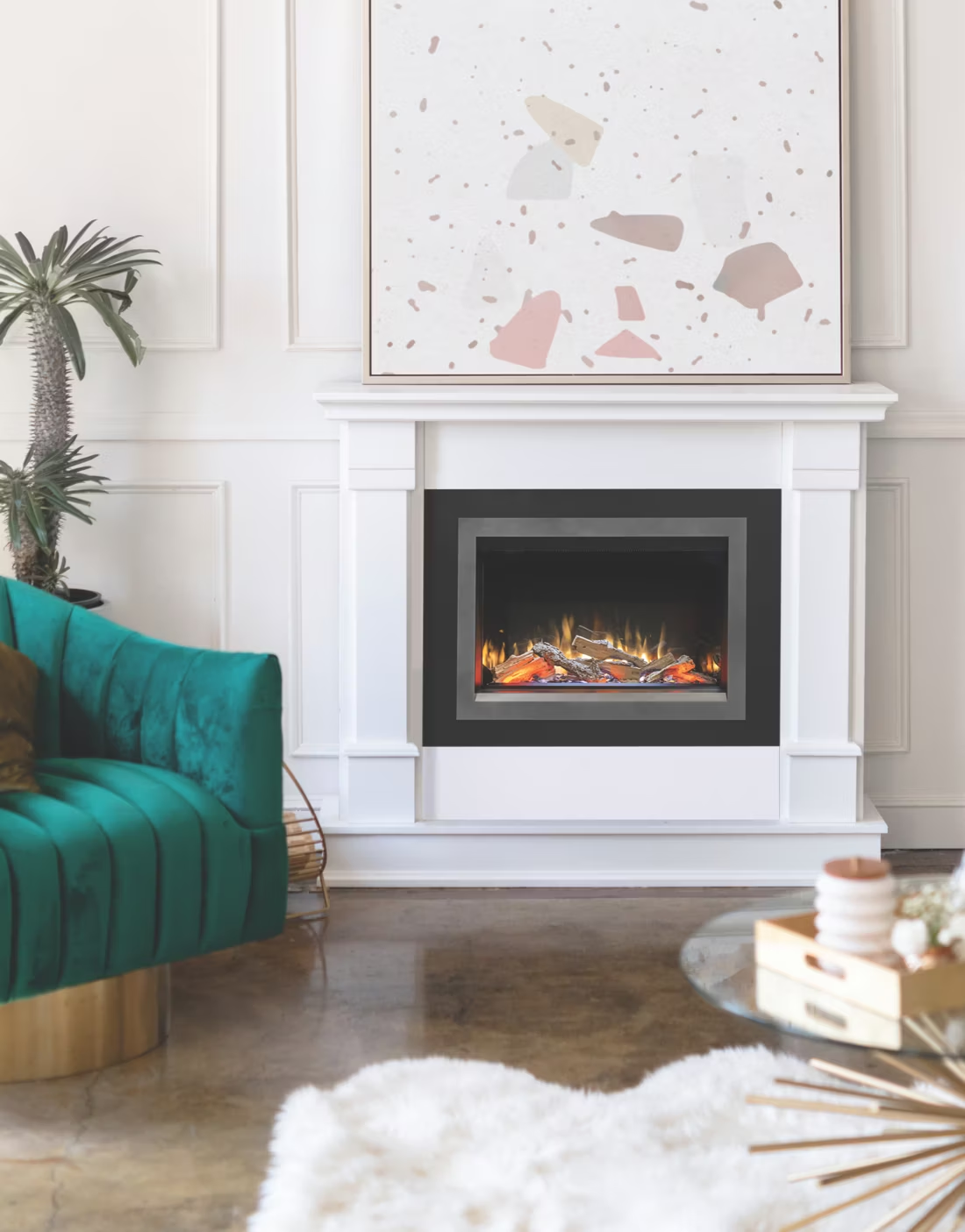
Three steps. No salesperson until you're ready.
Tell us about your project
Your postal code, your situation, and the fuel you're leaning toward—or let the answers point you to one.
See what's actually available
The brands dealers within 100 miles genuinely carry—real options, never a catalog mirage.
Get your dealer & Project Guide
A trusted local dealer, plus the free Project Guide & Parts List that names every component of the job.
Frequently Asked Questions
How much does an electric fireplace installation cost in Harewood?
Most electric fireplace and insert installations in Harewood run $500 to $1,600 CAD, a fraction of what wood ($6,000-$12,000) or gas ($6,000-$15,000) projects cost here. A plug-in insert that uses an existing 120V outlet sits at the low end. A built-in wall unit that needs a dedicated 240V circuit run by a licensed electrician—common when a homeowner wants a larger unit as a focal point in a living room—lands closer to the top of that range.
Do I need a permit for an electric fireplace in Harewood?
If the unit plugs into an existing outlet, most electricians and the City of Nanaimo building department won't require a separate permit. If you're adding a new dedicated circuit or a built-in unit that needs wiring run through a wall, that work needs an electrical permit, which your installer typically pulls as part of the job. Because there's no combustion involved, you skip the CSA B365 wood-appliance code and the WETT inspection that homeowners with wood stoves or inserts need for insurance.
Will an electric fireplace actually heat my home, or is it just for looks?
With Harewood's average winter low sitting at 0.1°C, most electric fireplaces here are asked to warm a single room rather than the whole house—and they do that well. A mid-size unit puts out roughly 5,000 BTU (about 1,500 watts) of supplemental heat, enough to take the chill off a living room on the handful of nights each winter that actually approach freezing. For anyone treating the fireplace as their only heat source, a heat pump or gas furnace is still the better primary system; the electric fireplace is the finishing touch, not the furnace replacement.
What does an electric fireplace cost to run on BC Hydro power?
At BC Hydro's residential rate of about $0.114 per kWh, running a 1,500-watt electric fireplace on its heat setting costs roughly 17 cents an hour, or under $2 for a full evening. Ambiance-only mode, which drops the heater and just runs the flame effect, uses closer to 30-50 watts and costs pennies a night. That low running cost is a big part of why electric has become the default choice for supplemental fireplace heat in mild coastal communities like Harewood.
Can I convert my existing wood-burning fireplace to electric?
Yes, and it's a common project in older Harewood homes with a masonry fireplace that no longer gets used for wood. An electric insert slides into the existing firebox, plugs into a nearby outlet or a new dedicated circuit, and skips the chimney work entirely—no liner, no WETT inspection, and no CSA-certified wood appliance to source. It's also a straightforward way to deal with an old fireplace without navigating the certification rules that regional wood-stove exchange programs are built around.
Electric vs. gas fireplace—which makes more sense for a Harewood home?
Both FortisBC (Gas) and FortisBC (Electric) serve the area, so either fuel path is realistically available. Gas installs run $6,000-$15,000 and deliver more heat output plus the ability to keep running during a power outage—a real consideration given Vancouver Island's occasional storm-related outages. Electric installs run $500-$1,600, need no venting or gas line, and can go anywhere in the house with an outlet. Homeowners prioritizing upfront cost and placement flexibility tend to land on electric; those wanting a stronger, whole-room heat source often choose gas.
Where can I put an electric fireplace in my house?
Anywhere you have, or can run, a power circuit, which is the main advantage over wood or gas. Because there's no chimney, no gas line, and no combustion byproducts to vent, electric units show up in bedrooms, basements, and condos across Harewood and greater Nanaimo where a wood or gas installation wouldn't be practical. Just confirm wall clearances and the unit's amperage draw with your dealer before finalizing placement, especially for larger built-in models.
How long does an electric fireplace last, and what maintenance does it need?
Electric fireplaces are low-maintenance by design—there's no chimney to sweep, no gas line to inspect, and no annual WETT inspection required. Most units run 8-10 years before the LED flame effect or heating element needs replacing, and a lot of manufacturers sell replacement components rather than requiring a full swap. A quick dusting of the vents and an occasional check that the flame effect mechanism isn't sticking is about all the upkeep it needs.
Is electric heat a good fit given Vancouver Island's air quality rules for wood burning?
It sidesteps that question entirely. The Regional District of Nanaimo and nearby regional districts run wood-stove exchange programs and require CSA/EPA-certified appliances because winter inversions in interior valleys trap wood smoke—Harewood's coastal location doesn't see that as often, but the certification requirements still apply to any wood appliance installed here. An electric fireplace has zero emissions at the point of use, so it's an easy choice for anyone who wants fireplace ambiance without adding another combustion appliance to track.
How much does an electric fireplace cost to run?
With the heater on, a typical unit draws about 1,500 watts—at average electric rates that's roughly 20 cents an hour. Run the flame effect alone and it costs pennies; the flames are LED-driven and use about as much power as a light bulb. There's no pilot light, no fuel delivery, and essentially no maintenance.
What fireplace styles should I know before shopping?
Four cover most of the market: screen-front traditional (mesh front, open feel, fits craftsman homes), traditional door set (the classic look you grew up with), modern linear (wide, low, the statement piece for entertaining), and clean face contemporary (no trim—your tile or stone runs right to the fire's edge). Walk in knowing those four terms and you're ahead of most buyers.
Do electric fireplaces actually produce heat?
Yes—most put out around 4,800–5,000 BTUs from a standard outlet, which comfortably warms a bedroom, office, or den as a comfort-zone heater. What they won't do is carry a whole house the way wood, gas, or pellet can. Think of electric as ambiance-first with honest supplemental heat: flames on with no heat in July, flames plus warmth in January.
Does an electric fireplace need a vent or chimney?
No—that's its superpower. An electric fireplace needs a wall and an outlet, period. No vent pipe, no gas line, no clearances to design around, which is why it works in bedrooms, offices, apartments, and walls where venting a gas or wood unit would be impractical or impossible. Installation is typically the simplest and least expensive of any fireplace type.
Nearby Dealers
Hearth shops serving Harewood and the surrounding area. Every listing shows whether it is a WhyFire partner, a dealer we have verified as authorized for the brands we recommend, or a local business carrying hearth products. No manufacturer pays for placement. How we verify dealers →
Delco Fireplaces (Vancouver Island) Ltd
Hornby Island Co-Op
Electric Service in Harewood
An electric fireplace's heater draws about 1,500 watts—pennies per hour at local rates.
Bc Hydro
FortisBC (Electric)
Get your free Project Guide & Parts List for a Harewood electric fireplace.
Tell me about your room and your electrical panel, and I'll match you with a local dealer who can confirm circuit needs and send a free Project Guide & Parts List with the exact parts your project needs.
Find Your Fireplace →