
Steady heat for interior winters, without the smoke advisory worry.
From Prince George out to Mackenzie, Valemount, and McBride, pellet appliances give interior BC homes a clean, thermostat-like burn through long, dry winters that settle near -10.5°C and colder. I match homeowners with a trusted local dealer who knows the CSA/EPA-certified units that clear regional smoke advisories and the exchange programs several communities here run.
Every Project Starts From One of These Five Situations
Built for valley inversions and long, dry cold.
The Regional District of Fraser-Fort George covers a wide stretch of BC's central interior, from Prince George out through Mackenzie, McBride, and Valemount, home to roughly 82,000 people across a climate zone 6C landscape of forested valleys and river corridors. Winters here settle into an average low near -10.5°C, a season closer in character to Edmonton than to the coast, with cold spells that hold for weeks rather than days. Douglas fir, paper birch, lodgepole pine, and western larch grow throughout the district, and FrontCounter BC issues free personal-use cutting permits year-round, summer fire restrictions aside, for households who still feed a wood stove—but a growing share of homeowners are choosing pellet instead, trading the bucking and stacking for a hopper that runs largely unattended through a cold week.
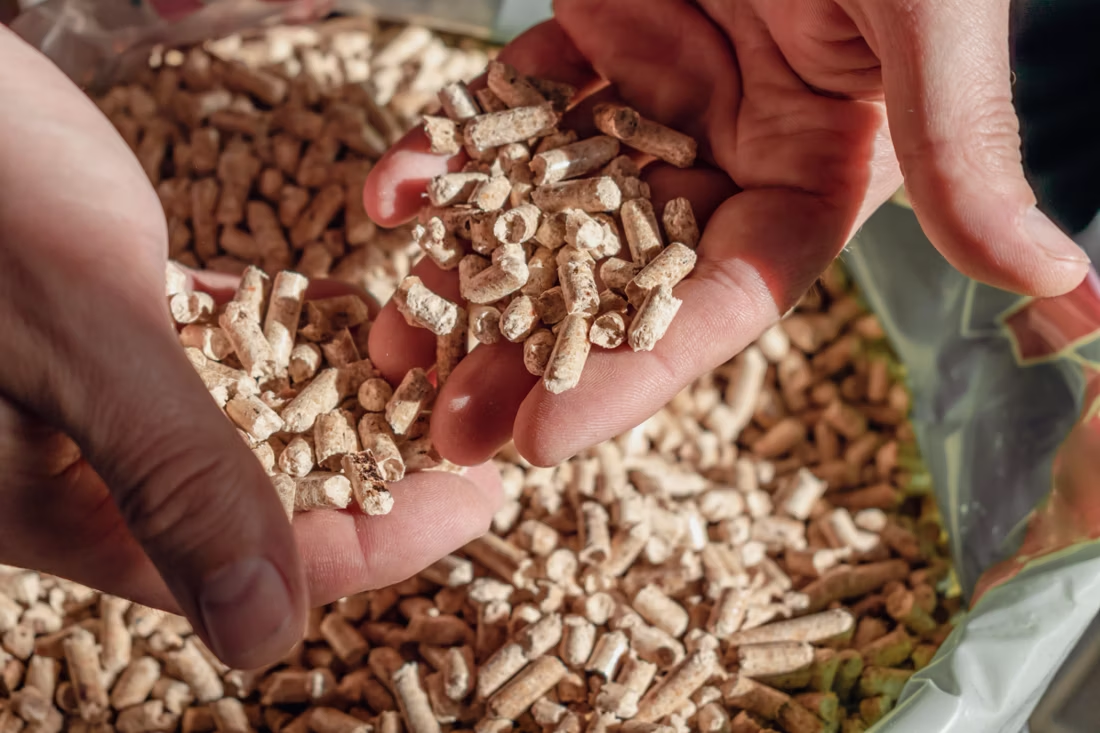
That shift is partly about air quality. Interior valleys around Prince George and Mackenzie see winter inversions that trap smoke close to the ground, and several regional districts here run wood-stove exchange programs that push older, uncertified units out in favor of CSA/EPA-certified appliances. A pellet stove or insert burns cleaner than almost any wood-fired option and rarely triggers a smoke advisory, which matters on the stillest, coldest nights when everyone's appliance is working hardest. Natural gas service reaches the Prince George core, but outlying communities like McBride, Valemount, and parts of Mackenzie sit largely off the gas grid, which makes bagged or bulk pellet fuel—sold locally as Pinnacle Premium and Princeton Fuel Pellets, running roughly $400 to $575 CAD per tonne—a practical, storable alternative to propane delivery.
Three steps. No salesperson until you're ready.
Tell us about your project
Your postal code, your situation, and the fuel you're leaning toward—or let the answers point you to one.
See what's actually available
The brands dealers within 100 miles genuinely carry—real options, never a catalog mirage.
Get your dealer & Project Guide
A trusted local dealer, plus the free Project Guide & Parts List that names every component of the job.
Frequently Asked Questions
How much does a pellet stove installation cost in the Regional District of Fraser-Fort George?
Installed pellet stoves and inserts in this region typically run $6,000 to $10,000 CAD, covering the appliance, venting, and a hearth pad that meets clearance requirements. A straightforward insert into an existing masonry fireplace in a Prince George neighbourhood tends to land toward the lower end. A freestanding stove that needs new through-wall venting—common in Mackenzie or McBride homes without an existing chimney—runs closer to the top of that range, and homes further out along Highway 16 toward McBride or up toward Valemount may see a modest travel charge added by installers based out of Prince George.
Is a pellet stove a good fit if I'm replacing an old wood stove under an exchange program?
It's one of the most common swaps happening in the district right now. Several regional districts here run wood-stove exchange programs aimed at getting older, uncertified stoves—the ones most likely to smoke heavily during a winter inversion—out of circulation, and a CSA/EPA-certified pellet unit qualifies as a clean replacement in most of these programs. Pellet stoves also sidestep the bucking, splitting, and stacking that come with wood, worth factoring in if your current setup relies on self-cut Douglas fir or lodgepole pine and you're ready for something lower-maintenance.
What size pellet stove do I need for my home?
Sizing depends on square footage and how exposed your community is to the coldest air. In Prince George proper, a mid-size pellet stove rated for roughly 1,200 to 2,000 square feet covers most single-family living areas built to typical insulation standards. Higher, more exposed spots like Valemount and McBride hold cold longer and may call for the next size up, or a second appliance for a detached shop or addition. An oversized unit run on its lowest setting burns less efficiently than a properly matched one, so a local dealer sizing it during an in-home visit beats guessing off a chart.
Do I need a permit to install a pellet stove here?
Yes. New installations go through the municipal building department wherever you are in the district—Prince George, Mackenzie, McBride, or Valemount each handle their own—and the work has to meet the CSA B365 installation code. Most established local dealers pull this permit as part of the job. It's also worth arranging a WETT inspection once the install is done; insurers commonly require one for solid-fuel appliances, pellet stoves included, before they'll add the unit to a homeowner's policy.
Where do I buy pellet fuel in the Fraser-Fort George region, and what does it cost?
Bagged and bulk pellets are widely available through hardware stores and fuel suppliers in Prince George, with regional brands like Pinnacle Premium and Princeton Fuel Pellets showing up on most shelves. Expect to pay roughly $400 to $575 CAD per tonne depending on brand, bag versus bulk delivery, and season—buying in late summer before demand picks up is a common way locals shave a bit off the price. Unlike firewood, you can't cut your own pellets under a FrontCounter BC permit, so budgeting for fuel purchases is a permanent part of the pellet math here.
How do winter smoke advisories affect pellet stove use?
Not much, which is exactly why a lot of homeowners in Prince George and Mackenzie are switching. Winter inversions settle into these valleys and trap wood smoke close to the ground, prompting smoke advisories on the stillest, coldest days, right when heating demand peaks. Pellet stoves burn a manufactured, uniform fuel far more completely than cordwood, so they produce a fraction of the visible smoke and generally aren't targeted by the burning restrictions that apply during an active advisory. That reliability during exactly the weather you need heat most is a big part of the appeal.
How much maintenance does a pellet stove need?
Plan on emptying the ash pan every few days during steady winter use and giving the burn pot and hopper a deeper clean weekly. A full service, including the auger, exhaust fan, and venting, is worth scheduling once a year, ideally before the district's cold settles in for good in November. It's less hands-on than tending a wood stove burning Douglas fir or western larch, but pellet appliances have more moving parts, the auger motor and exhaust fan among them, so an annual check from a local dealer catches wear before it becomes a mid-winter breakdown.
What happens to my pellet stove during a power outage?
This is the one real tradeoff against wood. Pellet stoves rely on electricity to run the auger, igniter, and exhaust fan, so a standard unit goes cold the moment the power does. Some models accept a battery backup or small inverter to ride out a short outage, worth asking about given how exposed rural lines can be around Mackenzie, McBride, and Valemount during a winter storm. Homes that see frequent outages sometimes keep a wood stove or fireplace as backup alongside a pellet unit for daily convenience.
Pellet vs. natural gas—which makes more sense in this region?
It depends where you are. Natural gas service reaches the Prince George core, and a gas fireplace or insert there offers instant, thermostat-controlled heat with no fuel to store, typically running $6,000 to $15,000 CAD installed. Once you're out toward Mackenzie, McBride, or Valemount, gas mains thin out fast and propane delivery becomes the comparison point instead—and pellet fuel, at $400 to $575 CAD per tonne and storable in bags in a garage or shed, often comes out ahead on cost and flexibility for those homes. A local dealer can walk you through the real numbers for your specific address rather than a district-wide average.
Why do fireplace quotes vary so much?
Because a fireplace is an iceberg—there's more behind the wall than in front of it. A low quote often covers only the unit; the full scope includes vent pipe, gas line or electrical, framing, and the tile or stone that has to come off and go back on. Make every bidder price the whole job. If a dealer can't speak to the full scope with confidence, that's your signal to keep looking.
Is it worth replacing an old fireplace that still sort of works?
Ask three questions: Is it ugly? Is it drafty? Does it actually work? Most old fireplaces fail at least two. Beyond looks, an old unit leaks air around the damper year-round and—if it's gas with a standing pilot—quietly burns a couple hundred dollars a year. A modern replacement seals the wall, heats the room, and changes how the whole space gets used.
Can a pellet stove heat a whole house?
It genuinely can. I burned a pellet stove as my only heat source for years after a furnace died, and it kept the entire house warm. Pellets feed automatically from a hopper, so you get wood-heat economics with thermostat-style control. Two honest caveats: it needs weekly cleaning during the season, and most models need electricity to run—ask about battery backup if outages are a concern.
What does it take to replace an existing fireplace?
Fireplaces are like icebergs—bigger behind the wall than in front of it. Replacement means removing the surrounding tile or stone (the finish material laps onto the fireplace face), pulling the old unit, setting the new one in the same enclosure, and re-finishing the wall. A hearth professional can determine what's behind your wall without demolition during an in-home preview.
Stove and Fireplace Dealers in Regional District of Fraser-Fort George
Listings include WhyFire partner dealers, dealers we have verified as authorized for the brands we recommend, and established local businesses that carry hearth products. Every listing shows which one it is. The ones marked Preferred run on WhyFire's software, so they can show you real pricing and book your appointment right here. No manufacturer pays for placement. How we verify dealers →
Dado Construction
Pellet Brands Stocked Around Regional District of Fraser-Fort George
Typical price runs $400-$575 per ton—buy early-season for the best rates. Manufacturers will point you to the nearest stocking dealer.
Pinnacle Premium
Princeton Fuel Pellets
Get your free pellet stove Project Guide & Parts List for Fraser-Fort George.
Tell me about your home, whether you're in Prince George, Mackenzie, McBride, or Valemount, and I'll match you with a trusted local dealer and send a free Project Guide & Parts List—the exact parts, including the vent kit, and a recommended installer for your pellet project.
Find Your Fireplace →