
Steady heat for a city that manufactures the fuel itself.
At 578 metres in BC's central interior, winter lows average -10.5°C with colder snaps common through the Nechako and Fraser valleys. I'll match you with a trusted local dealer who knows CSA B365 code, correct venting, and what's genuinely stocked near you.
Every Project Starts From One of These Five Situations
A fuel supply chain that starts practically in your backyard.
Prince George's winters run long rather than brutal—closer in character to Thunder Bay than to the deep cold of Winnipeg—but a -10.5°C average low and a heating season that stretches well past six months still make a secondary or primary appliance worth planning for, not an afterthought. The Fraser and Nechako valley bowl that the city sits in traps winter inversions, which is why several regional districts around Prince George run wood-stove exchange programs and require CSA or EPA-certified appliances before you can burn legally. Pellet stoves clear that bar by default, which is part of why they've become a common upgrade choice for households swapping out an older, uncertified wood stove.
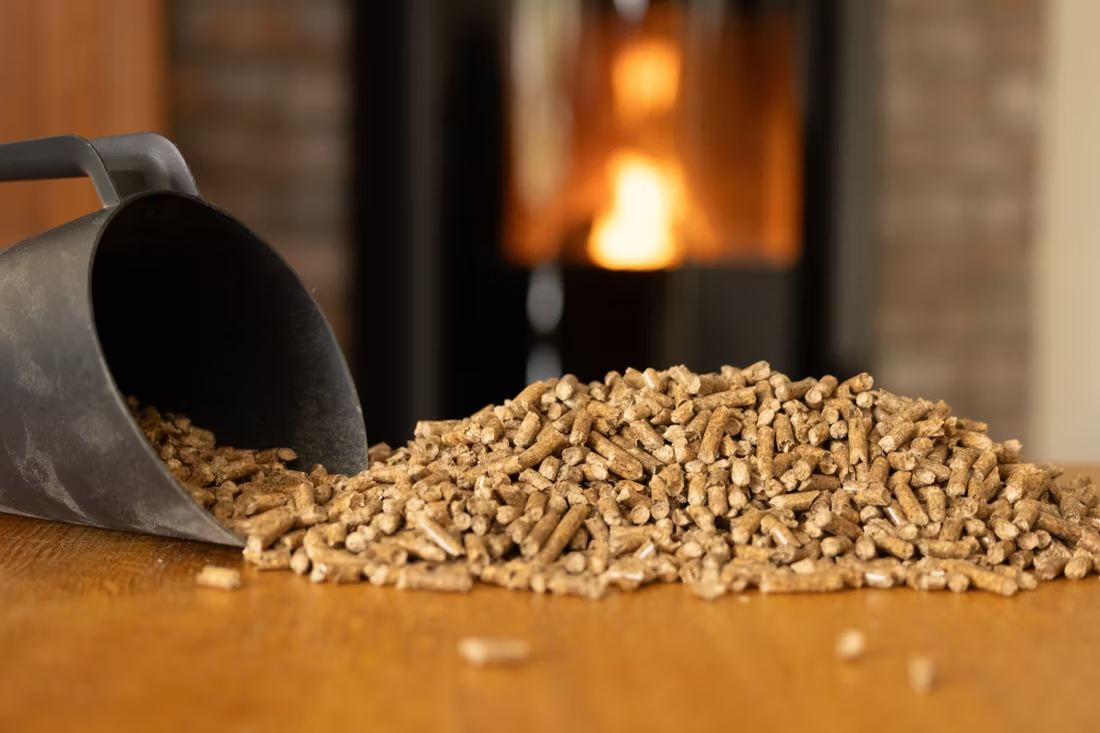
Prince George itself is home to some of the pellet manufacturing that supplies this market—Pinnacle Premium and Princeton Fuel Pellets are the regional brands most dealers stock, typically running $400 to $575 a ton—so supply concerns that hit other parts of the country rarely show up here. Natural gas through FortisBC and Pacific Northern Gas reaches most of the city too, which means pellet competes directly with gas for the primary-heat role rather than filling a gap gas can't reach. The households who land on pellet tend to want the visual and radiant feel of a real flame with a fuel that's locally milled, cleanly burning, and easier to store than cordwood cut and split from Douglas fir or lodgepole pine.
Three steps. No salesperson until you're ready.
Tell us about your project
Your postal code, your situation, and the fuel you're leaning toward—or let the answers point you to one.
See what's actually available
The brands dealers within 100 miles genuinely carry—real options, never a catalog mirage.
Get your dealer & Project Guide
A trusted local dealer, plus the free Project Guide & Parts List that names every component of the job.
Frequently Asked Questions
How much does a pellet stove or insert installation cost in Prince George?
Typical installs run $6,000 to $10,000 CAD. An insert dropping into an existing masonry firebox in an older Prince George home—say one of the character houses in the VLA or Millar Addition neighbourhoods—tends toward the lower end since the chimney chase already exists. A freestanding stove in a newer home without a chimney needs a full through-wall or through-roof vent kit built to CSA B365, which pushes the estimate toward the top of that range. Most local dealers include the permit and venting parts list in their quote rather than pricing them separately.
Is a pellet stove better than a wood stove given the smoke advisories here?
For anyone concerned about winter inversion advisories in the Prince George bowl, pellet is generally the easier path. Every pellet appliance sold today is CSA or EPA-certified out of the box, so it automatically satisfies the certification requirements tied to regional wood-stove exchange programs, and it burns markedly cleaner than an older uncertified wood stove. Wood still has its advocates here—Douglas fir, paper birch, and lodgepole pine are all locally abundant and free to cut under a FrontCounter BC permit—but if avoiding smoke-advisory complications is a priority, pellet is the lower-friction choice.
Where do I buy pellets in Prince George, and what do they cost?
Pinnacle Premium and Princeton Fuel Pellets are the two regional brands most local dealers and hardware suppliers carry, running roughly $400 to $575 a ton depending on the season and whether you buy by the pallet or the ton. Because Prince George sits near the mills that produce a good share of BC's pellet supply, availability holds up better here through winter than in markets that truck pellets in from further away. Buying early in fall, before the first cold snap drives demand up, is still the standard local advice for locking in the lower end of that range.
Do I need a permit to install a pellet stove in Prince George?
Yes. New installations go through the municipal building department, and the work has to meet the CSA B365 installation code that applies to all solid-fuel appliances in BC, pellet included. It's also worth arranging a WETT inspection once the unit is in—insurers commonly ask for one on solid-fuel appliances before extending or renewing a homeowner's policy, and most local installers can point you to a certified inspector or handle the scheduling as part of the project.
Will a pellet stove still work if the power goes out?
Not on its own. Pellet stoves rely on an electric auger to feed fuel and a blower to circulate heat, so a BC Hydro outage during an ice storm or heavy snow load stops the stove unless it's paired with a battery backup or small inverter setup, which some Prince George households add specifically for that reason. If outage resilience matters more to you than convenience, a wood stove burning Douglas fir or western larch will keep running with no power at all—it's a real tradeoff worth discussing with your dealer before you choose between the two fuels.
What size pellet stove do I need for a Prince George home?
With a climate zone 6C rating and winter lows averaging -10.5°C, most Prince George main living areas do well with a mid-size pellet stove rated for 1,200 to 2,000 square feet, especially in older homes around the Hart or Bowl areas that weren't built to today's insulation standards. Smaller, tightly insulated homes or those using the stove as a supplemental unit alongside gas or electric baseboard can size down. A local dealer will factor in ceiling height, window count, and how open the floor plan is rather than relying on square footage alone.
How much maintenance does a pellet stove need through a Prince George winter?
Ash removal and a glass wipe-down every week or two during heavy use is standard, along with a deeper cleaning of the burn pot and heat exchanger monthly. Given how long the heating season runs here—well past six months in most years—an annual professional service before the first real cold snap, checking the auger motor, gaskets, and exhaust fan, is the standard local recommendation. Skipping it is the most common reason a stove underperforms exactly when it's needed most, in a January cold snap.
Does a pellet stove qualify for a wood-stove exchange program in Prince George?
Several regional districts around Prince George run exchange or rebate programs aimed at getting older, uncertified wood stoves out of homes in inversion-prone valleys, and CSA or EPA-certified pellet appliances typically qualify as a replacement option since they meet the same emissions standard the programs are built around. Details and funding cycles shift year to year, so it's worth checking current availability through the regional district before you buy—a dealer who installs regularly in the area will usually know what's currently on offer.
Pellet vs. gas—which makes more sense for a Prince George home?
Gas, available through FortisBC and Pacific Northern Gas across most of the city, wins on convenience: instant on, no fuel storage, no ash. Pellet wins on the flame experience and on fuel that's milled close to home—Pinnacle Premium and Princeton Fuel Pellets both come from BC interior mills, so you're not paying to ship fuel long distances the way propane households sometimes do. Installed cost is similar in both directions, with pellet running $6,000 to $10,000 and gas $6,000 to $15,000 depending on venting and gas line work, so the decision usually comes down to whether you want a hands-on solid-fuel appliance or a hands-off gas unit.
Why do fireplace quotes vary so much?
Because a fireplace is an iceberg—there's more behind the wall than in front of it. A low quote often covers only the unit; the full scope includes vent pipe, gas line or electrical, framing, and the tile or stone that has to come off and go back on. Make every bidder price the whole job. If a dealer can't speak to the full scope with confidence, that's your signal to keep looking.
Is it worth replacing an old fireplace that still sort of works?
Ask three questions: Is it ugly? Is it drafty? Does it actually work? Most old fireplaces fail at least two. Beyond looks, an old unit leaks air around the damper year-round and—if it's gas with a standing pilot—quietly burns a couple hundred dollars a year. A modern replacement seals the wall, heats the room, and changes how the whole space gets used.
What does it take to replace an existing fireplace?
Fireplaces are like icebergs—bigger behind the wall than in front of it. Replacement means removing the surrounding tile or stone (the finish material laps onto the fireplace face), pulling the old unit, setting the new one in the same enclosure, and re-finishing the wall. A hearth professional can determine what's behind your wall without demolition during an in-home preview.
Why is my open fireplace making my house colder?
Open fireplaces suck—literally. As the fire burns, it consumes air your furnace already paid to heat and pulls it out through the chimney, so the house is actually colder after the fire goes out than before you lit it. An insert fixes this: it seals the chimney, puts fixed glass across the front, and turns that hole in your house into a real heat source.
Nearby Dealers
Hearth shops serving Prince George and the surrounding area. Every listing shows whether it is a WhyFire partner, a dealer we have verified as authorized for the brands we recommend, or a local business carrying hearth products. No manufacturer pays for placement. How we verify dealers →
Pellet Brands Stocked Around Prince George
Typical price runs $400-$575 per ton—buy early-season for the best rates. Manufacturers will point you to the nearest stocking dealer.
Pinnacle Premium
Princeton Fuel Pellets
Get your free Project Guide & Parts List for a Prince George pellet project.
Tell me about your home and I'll match you with a trusted local dealer and send a free Project Guide & Parts List—sized for a 6C interior winter, with the vent kit and parts specified so there's no guesswork before installation day.
Find Your Fireplace →