
No chimney, no venting, real zone heat for Fraser-Fort George homes.
With winter lows averaging -10.5°C across the region and BC Hydro power reaching even the smaller communities along Highway 16 and Highway 97, an electric fireplace is the fastest, least disruptive way to add real warmth to a bedroom, basement, or secondary suite. I'll match you with a trusted local dealer who knows which units actually hold up to an interior BC winter.
Every Project Starts From One of These Five Situations
A dependable supplement to wood and gas, not a replacement for either.
The Regional District of Fraser-Fort George covers a huge stretch of BC's interior, from Prince George out to Mackenzie, McBride, and Valemount, with roughly 82,205 people spread across a climate zone 6C landscape where winter lows average -10.5°C and the cold season runs long, not unlike a typical winter in Sudbury, Ontario. Most homes here still lean on wood cut from the Douglas fir, paper birch, lodgepole pine, and western larch stands that surround the region, or on natural gas where it's available along the Prince George corridor. Electric fireplaces fit into that mix as a flexible, no-maintenance add-on rather than the main event: a way to warm a basement rec room, a McBride cabin bedroom, or a Prince George secondary suite without running a new gas line or opening a chimney.
Because electric units draw straight from BC Hydro power instead of burning fuel, they skip the parts of a wood or gas project that take the most planning here—there's no WETT inspection, no CSA B365 code compliance, and no FrontCounter BC cutting permit to think about. Plug-in models need nothing more than a standard outlet; built-in wall inserts or larger electric stoves typically call for a dedicated 240V circuit and an electrical permit through the municipal building department, whether that's Prince George, Mackenzie, McBride, or Valemount. At $500 to $1,600 installed, it's usually the least expensive hearth project in the region—the tradeoff is that it's supplemental heat, not a system built to carry a home through a January cold snap on its own.
Three steps. No salesperson until you're ready.
Tell us about your project
Your postal code, your situation, and the fuel you're leaning toward—or let the answers point you to one.
See what's actually available
The brands dealers within 100 miles genuinely carry—real options, never a catalog mirage.
Get your dealer & Project Guide
A trusted local dealer, plus the free Project Guide & Parts List that names every component of the job.
Frequently Asked Questions
How much does an electric fireplace installation cost in Fraser-Fort George?
Most electric fireplace projects across the region run $500 to $1,600 installed. A basic plug-in insert or wall-mounted unit sits at the low end since it just needs a standard outlet and a bit of trim work. A built-in electric fireplace or a linear wall unit that requires a dedicated 240V circuit, new wiring, and an electrical permit through your municipal building department—Prince George, Mackenzie, McBride, or Valemount—lands toward the top of that range. Either way, it's a fraction of the cost of a wood or gas installation, which typically run $6,000 to $15,000 CAD in this region once venting and gas line work are factored in.
Can an electric fireplace actually heat a room through a Fraser-Fort George winter?
It can carry a single room, but I wouldn't rely on it as your only heat source once temperatures drop toward the region's average winter low of -10.5°C. A quality electric insert or stove puts out roughly 5,000 to 9,000 BTU, enough to comfortably heat a bedroom, den, or basement suite, but it's not sized to replace a furnace or a wood stove on the coldest nights of a Prince George or Mackenzie winter. Most homeowners here use electric fireplaces the way they're meant to be used—as zone heat for a specific room, paired with whatever heats the rest of the house.
Do I need a permit for an electric fireplace in this region?
It depends on the unit. A freestanding, plug-in electric fireplace generally doesn't need a permit—it's no different electrically than plugging in a space heater. A built-in electric fireplace or insert that requires new wiring or a dedicated circuit does need an electrical permit, pulled through your municipal building department, whether that's Prince George, Mackenzie, McBride, or Valemount. A local dealer familiar with these installations will know exactly which category your unit falls into and can help coordinate the permit and inspection as part of the project.
Why do so many homes here still burn wood or gas instead of going electric?
Cost of fuel is the main driver. FrontCounter BC and the BC Ministry of Forests issue free personal-use cutting permits for Douglas fir, paper birch, lodgepole pine, and western larch on Crown land nearly year-round, with only summer fire restrictions to work around, so a wood stove can heat a rural McBride or Valemount property for very little cash outlay. Natural gas, where it reaches homes along the Prince George corridor, delivers similar convenience to electric but with more heat output per dollar through a cold winter. Electric fireplaces don't compete with either on raw heating economics—they win on installation simplicity, cleanliness, and the ability to add heat to a room that has neither a chimney nor a gas line.
Where do electric fireplaces make the most sense in Fraser-Fort George?
Secondary suites and basement apartments are the most common fit—homeowners and landlords in Prince George add an electric unit to give a rental suite its own heat source without touching the building's gas or wood system. They're also popular in newer condo and townhouse builds where a chimney was never part of the plan, and in smaller communities like Mackenzie or Valemount for a cabin bedroom or sunroom that only needs occasional extra warmth. If you're heating an entire main living area through a full interior BC winter, most local dealers will steer you toward wood, gas, or pellet instead.
What happens to my electric fireplace during a power outage?
It goes dark, along with the rest of your home's electric heat. That's the one real vulnerability worth planning around in this region, where interior BC storms can knock out BC Hydro service along Highway 16 or Highway 97 for hours at a stretch, especially near Mackenzie or McBride. If backup heat during an outage matters to you, most homeowners here pair an electric fireplace for everyday convenience with a wood stove or gas appliance elsewhere in the house that can keep running without power.
How much does it cost to run an electric fireplace day to day?
Electric fireplaces are inexpensive to operate on BC Hydro rates—a typical 1,500-watt unit running a few hours an evening usually adds only a few dollars a month to a power bill, far less than most homeowners expect. That low running cost is part of why they're a popular add-on for a room that doesn't need to be heated around the clock, like a guest bedroom in Valemount or a rec room in Prince George, rather than a full-time heating solution for the whole house.
How much maintenance does an electric fireplace need?
Very little, which is one of its biggest advantages over a wood or gas system in this region. There's no chimney to sweep, no WETT inspection to schedule, and no annual gas line check. Occasionally dust the heating element and clean the glass front, and check that the fan or blower isn't struggling—most units run for years with nothing more than that. It's a real advantage for a rental suite or a vacation property in McBride or Valemount that doesn't get checked on daily.
How do I pick the right size electric fireplace for my space?
Sizing an electric fireplace comes down to the square footage of the specific room it's heating, not the whole house—a 400 to 600 sq ft bedroom or den is typically well served by a 1,500-watt unit rated in the 5,000 to 9,000 BTU range. Look for a CSA-certified unit, since that's the electrical safety standard that matters for these appliances, separate from the CSA B365 code that governs wood-burning installations. A local dealer can walk your room and recommend a wattage and mounting style—wall-mounted, built-in, or freestanding—that actually fits the space.
How much does an electric fireplace cost to run?
With the heater on, a typical unit draws about 1,500 watts—at average electric rates that's roughly 20 cents an hour. Run the flame effect alone and it costs pennies; the flames are LED-driven and use about as much power as a light bulb. There's no pilot light, no fuel delivery, and essentially no maintenance.
What fireplace styles should I know before shopping?
Four cover most of the market: screen-front traditional (mesh front, open feel, fits craftsman homes), traditional door set (the classic look you grew up with), modern linear (wide, low, the statement piece for entertaining), and clean face contemporary (no trim—your tile or stone runs right to the fire's edge). Walk in knowing those four terms and you're ahead of most buyers.
Does an electric fireplace need a vent or chimney?
No—that's its superpower. An electric fireplace needs a wall and an outlet, period. No vent pipe, no gas line, no clearances to design around, which is why it works in bedrooms, offices, apartments, and walls where venting a gas or wood unit would be impractical or impossible. Installation is typically the simplest and least expensive of any fireplace type.
Can I put a TV above my fireplace?
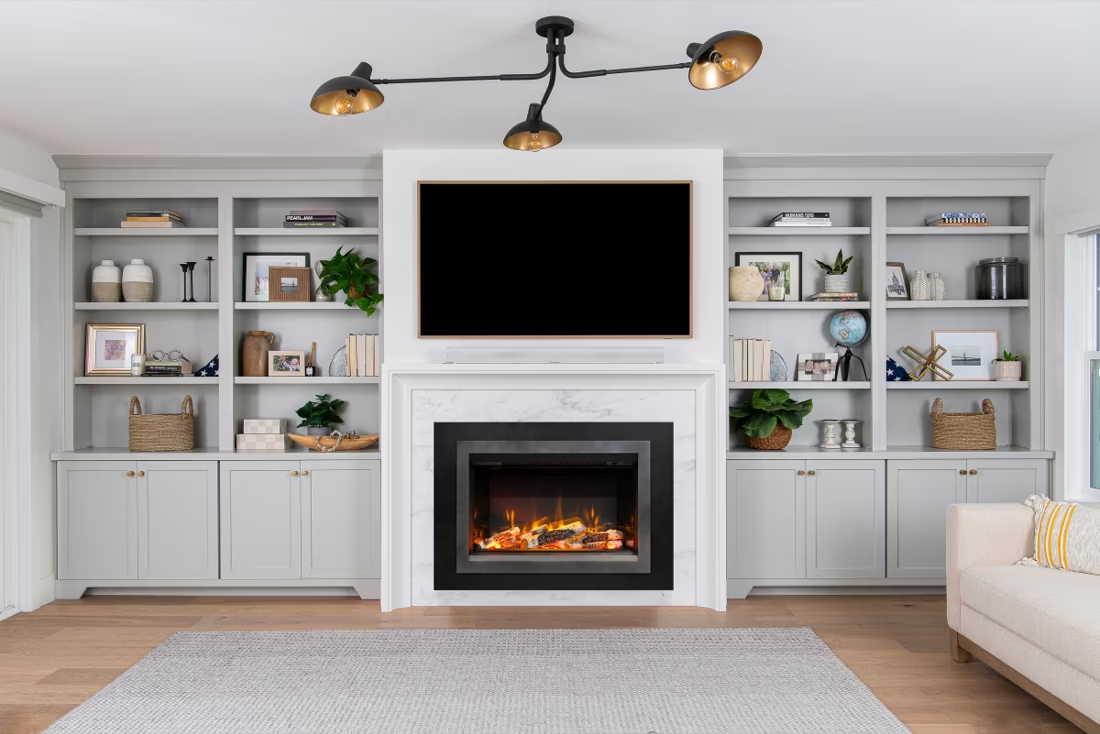
Yes—with an asterisk. Fireplaces are hot and TVs don't like heat. Either put a mantel between them to deflect rising warmth, or choose a fireplace with heat-management technology that creates a cool zone on the wall above—the wall stays around 125 degrees, barely warm, while the room still gets full heat. If you like clean lines and don't want a mantel, heat management is the answer.
Stove and Fireplace Dealers in Regional District of Fraser-Fort George
Listings include WhyFire partner dealers, dealers we have verified as authorized for the brands we recommend, and established local businesses that carry hearth products. Every listing shows which one it is. The ones marked Preferred run on WhyFire's software, so they can show you real pricing and book your appointment right here. No manufacturer pays for placement. How we verify dealers →
Dado Construction
Electric Service in Regional District of Fraser-Fort George
An electric fireplace's heater draws about 1,500 watts—pennies per hour at local rates.
Bc Hydro
FortisBC (Electric)
Get your free Project Guide & Parts List for an electric fireplace in Fraser-Fort George.
Tell me about your home and which room you're heating, and I'll match you with a trusted local dealer serving the region and send a free Project Guide & Parts List—the right unit, the circuit requirements, and a plan for your electric fireplace project.
Find Your Fireplace →