
Steady, clean heat for a mild, ferry-linked coast.
With winter lows averaging a mild 1.2°C and roughly 13,000 residents spread across a forestry-rooted stretch of BC's upper Sunshine Coast, the Powell River Region rarely sees brutal cold snaps, but the marine damp and long grey heating season still reward steady, automated heat. I match homeowners here with a trusted local dealer who knows CSA B365 code, the regional wood-stove exchange program, and which Pinnacle Premium or Princeton Fuel Pellets bag actually makes it up the coast.
Every Project Starts From One of These Five Situations
A forestry town's mild, damp winters call for automated heat.
The Powell River Region sits along BC's upper Sunshine Coast, reachable by ferry from Comox on Vancouver Island or from Earls Cove down the coast, with no direct road link to the Lower Mainland. It's a former pulp-and-paper mill town ringed by Douglas fir, paper birch, lodgepole pine, and western larch. Winters here are mild by Canadian standards, with an average winter low near 1.2°C, among the gentlest in the province, but the season stretches long and wet, October through April, with persistent damp rather than deep freezes. That mix of mild-but-long dampness is exactly where pellet appliances earn their keep: a thermostat-controlled burn that holds steady through weeks of grey, soaked weather without anyone needing to split, stack, or dry cordwood on a coast that rarely fully dries out.
Natural gas service reaches a good share of homes in Powell River proper, so pellet isn't the only automated option in town, but it holds its own for the many properties on acreage, well water, or off the gas main entirely. Local hearth dealers stock Pinnacle Premium and Princeton Fuel Pellets, running roughly $400 to $575 CAD per tonne, and they handle the CSA B365-compliant installation along with the WETT inspection most insurers want on file before covering a solid-fuel appliance. If you're retiring an older, smoky wood stove, ask about the regional wood-stove exchange program: swapping in a CSA or EPA-certified pellet unit can qualify for a rebate, which matters given how often coastal and interior BC valleys alike see winter smoke advisories.
Three steps. No salesperson until you're ready.
Tell us about your project
Your postal code, your situation, and the fuel you're leaning toward—or let the answers point you to one.
See what's actually available
The brands dealers within 100 miles genuinely carry—real options, never a catalog mirage.
Get your dealer & Project Guide
A trusted local dealer, plus the free Project Guide & Parts List that names every component of the job.
Frequently Asked Questions
How much does a pellet stove installation cost in the Powell River Region?
Installations here typically run $6,000 to $10,000 CAD. A freestanding pellet stove replacing an old wood stove, using the existing hearth pad and chimney chase, lands toward the lower end. A new install requiring fresh venting through an exterior wall, a code-compliant hearth pad, and electrical for the auger and blower sits higher. Because the region is ferry-served rather than road-connected to the mainland, homeowners on Texada Island or in outlying areas like Lund sometimes see a modest freight or travel charge added by dealers based in Powell River proper.
What size pellet stove do I need for a home in the Powell River Region?
Given the mild average winter low of 1.2°C, most detached homes here are well served by a small-to-medium pellet stove rated for roughly 1,000 to 1,800 square feet, noticeably smaller than what a household in Prince George or Fort McMurray would need for the same square footage. That said, older post-and-beam and open-concept homes common around Powell River can lose heat faster than the floor plan suggests, so a local dealer will size the unit during an in-home visit rather than off a generic chart.
Do I need a permit to install a pellet stove in the Powell River Region?
Yes. New installations require a building permit through the municipal building department, whether you're inside Powell River city limits or in a qathet Regional District electoral area, and the work must follow CSA B365 installation code. Separately, most home insurers require a WETT inspection before they'll cover a solid-fuel appliance, pellet included, even though pellet units burn cleaner than an open wood stove. A local dealer typically coordinates both the permit and the WETT sign-off as part of the job.
Where do I buy pellets, and how much do they cost in the Powell River Region?
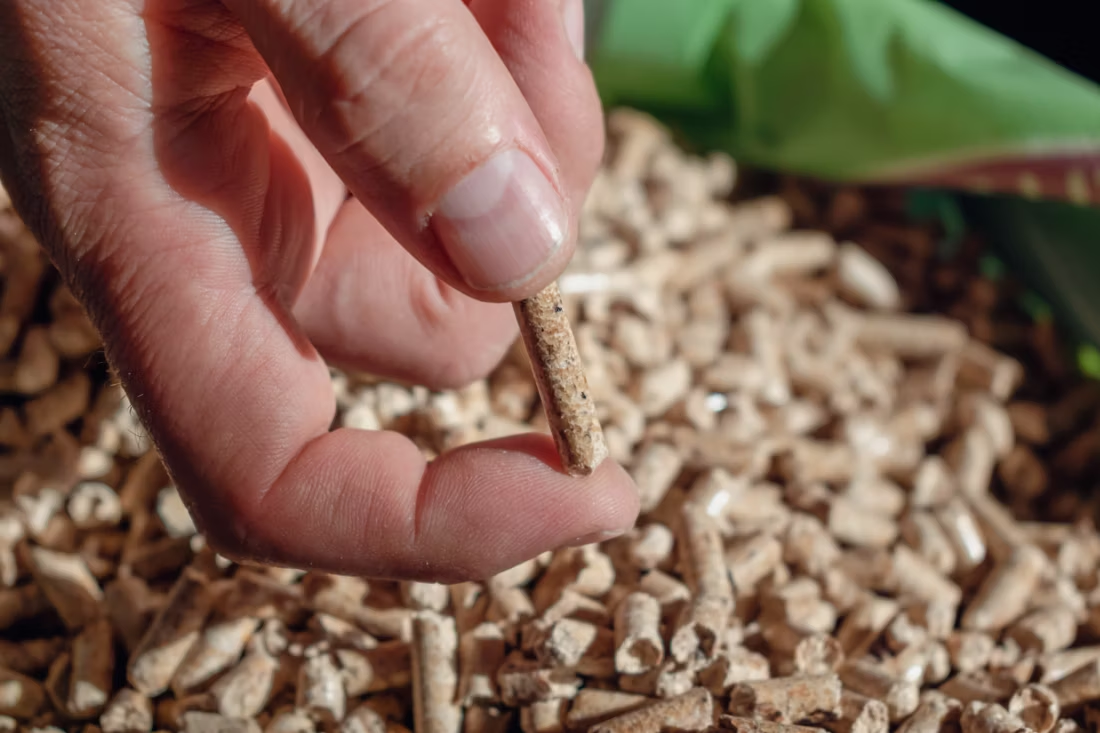
Pinnacle Premium and Princeton Fuel Pellets are the two brands most local hearth shops and hardware stores carry, priced around $400 to $575 CAD per tonne depending on season and how early you order. Because the region relies on ferry service rather than a direct road link to the Lower Mainland, many households buy a season's supply, typically two to three tonnes for an average stove, in one delivery rather than restocking bag by bag, both to save on repeated freight and to avoid running short if a sailing gets cancelled during a winter storm. Keep bags off damp concrete in a garage or shed, since coastal humidity degrades pellet quality faster than it would in a dry interior climate.
Will my pellet stove work if the power goes out?
Not on its own. Pellet stoves need electricity to run the auger, igniter, and combustion blower, so a standard unit goes cold in an outage. That's worth planning for in the Powell River Region, where winter windstorms off the Strait of Georgia can knock out power for hours and where ferry-dependent supply lines can make restoring service take longer than on the mainland. Homeowners who want a hedge against outages often pair a pellet stove with a small battery-inverter setup, or size a portable generator for the stove's low draw; a wood stove remains the only option here that needs no electricity at all.
Can I get a rebate for switching to a pellet stove in the Powell River Region?
Possibly. The qathet Regional District, like several BC regional districts, runs a wood-stove exchange program offering a rebate when an old, uncertified wood stove is retired and replaced with a CSA or EPA-certified appliance, and pellet stoves qualify. These programs specifically target the older, smokier units still common in longtime Powell River-area homes, since both interior valleys and coastal pockets can see winter smoke advisories. A local dealer can confirm current funding and paperwork, since program availability shifts from year to year.
Pellet, gas, or wood, which fits my home best in the Powell River Region?
With natural gas reaching a good share of Powell River proper, gas is the simplest choice for homes already on the main, giving instant heat with no fuel to store. Pellet is the stronger fit for homes off the gas grid, particularly acreage properties and outlying spots like Lund, Paradise Valley, or Texada Island across a second ferry hop, where propane and pellet are the realistic automated options. Wood remains popular for its zero-electricity reliability and the ready supply of Douglas fir and western larch off nearby Crown land, but it asks more of the homeowner in cutting, stacking, and sweeping. Many households run two systems: gas or pellet for daily convenience, wood as backup.
How much maintenance does a pellet stove need?
Plan on emptying the ash pan every few days during steady winter use, with a fuller cleaning of the burn pot, exhaust vent, and glass roughly every tonne or two of pellets burned, which works out to about monthly for most households given the long, mild-but-steady heating season here. Book a full annual service through a local dealer each fall before the wet season sets in, since coastal humidity can affect venting components over time more than it would in a dry interior climate.
Winters here seem mild, is a pellet stove really necessary in the Powell River Region?
Fair question. With an average winter low near 1.2°C, among the gentlest in the province, pellet heat isn't a survival necessity the way it is in Prince George or Fort McMurray. What it solves here is the long, damp shoulder season, roughly eight months a year when a heat pump alone can struggle to keep a marine-climate home feeling warm and dry, and when a thermostat-controlled stove runs cheaper than electric baseboard. Most homeowners in the region choose pellet for comfort, backup, and lower operating cost rather than because the cold demands it.
Why do fireplace quotes vary so much?
Because a fireplace is an iceberg—there's more behind the wall than in front of it. A low quote often covers only the unit; the full scope includes vent pipe, gas line or electrical, framing, and the tile or stone that has to come off and go back on. Make every bidder price the whole job. If a dealer can't speak to the full scope with confidence, that's your signal to keep looking.
Is it worth replacing an old fireplace that still sort of works?
Ask three questions: Is it ugly? Is it drafty? Does it actually work? Most old fireplaces fail at least two. Beyond looks, an old unit leaks air around the damper year-round and—if it's gas with a standing pilot—quietly burns a couple hundred dollars a year. A modern replacement seals the wall, heats the room, and changes how the whole space gets used.
Are pellet stoves loud?
They make some noise—there are two fans running plus an auger motor that turns as it feeds pellets. But there's a real range: premium models are engineered quiet, and the best offer a whisper-quiet mode you can comfortably watch TV next to. If noise matters in your room, ask to hear a stove running before you buy—it's a five-minute test that saves years of annoyance.
Can a pellet stove heat a whole house?
It genuinely can. I burned a pellet stove as my only heat source for years after a furnace died, and it kept the entire house warm. Pellets feed automatically from a hopper, so you get wood-heat economics with thermostat-style control. Two honest caveats: it needs weekly cleaning during the season, and most models need electricity to run—ask about battery backup if outages are a concern.
Stove and Fireplace Dealers in Powell River Region
Listings include WhyFire partner dealers, dealers we have verified as authorized for the brands we recommend, and established local businesses that carry hearth products. Every listing shows which one it is. The ones marked Preferred run on WhyFire's software, so they can show you real pricing and book your appointment right here. No manufacturer pays for placement. How we verify dealers →
Hornby Island Co-Op
Bennett Sheet Metal & Heating Ltd.
Pellet Brands Stocked Around Powell River Region
Typical price runs $400-$575 per ton—buy early-season for the best rates. Manufacturers will point you to the nearest stocking dealer.
Pinnacle Premium
Princeton Fuel Pellets
Get your free Powell River Region pellet stove Project Guide & Parts List.
Tell me about your home, whether you're on the gas main or off it, and how you plan to use the stove, and I'll match you with a trusted local Powell River Region dealer and send a free Project Guide & Parts List, the exact parts, including the vent kit, for your pellet project.
Find Your Fireplace →