
Instant heat for a coastal climate that barely dips below freezing.
With winter lows averaging just 1.2°C and a mild, damp marine climate, the Powell River Region doesn't need a wood-burning workhorse to get through January—but plenty of homes still want heat that comes on with a switch and holds steady through the region's long, grey, rainy stretches. I match you with a local dealer who knows FortisBC's gas network here and what actually vents cleanly in a coastal home.
Every Project Starts From One of These Five Situations
Mild winters still call for heat on demand.
The Powell River Region sits on BC's Sunshine Coast, reachable only by ferry from the mainland highway network, in a marine climate zone (5C) where winter lows average around 1.2°C rather than the deep freezes you'd find inland toward Prince George or Fort McMurray. The heating season here runs long on damp, grey days rather than hard frost, and forests of Douglas fir, paper birch, lodgepole pine, and western larch have supplied wood heat to the region for generations. But plenty of homeowners in Powell River, Lund, and on Texada Island want heat that doesn't require splitting and stacking cordwood every fall, and that's where gas has become the default choice for main living spaces and remodels.
FortisBC runs natural gas service into the Powell River townsite and surrounding developed areas, which means most homes there can add a direct-vent gas fireplace or insert without any propane tank at all. Outside that serviced footprint—on Texada Island, up toward Lund, or in rural pockets of the region—propane from a local bulk supplier is the standard fallback, and a gas fireplace works exactly the same way once it's set up on the right orifice and regulator. Either fuel source gives you real heat output during a ferry-delayed storm outage, with the right ignition system, and none of the smoke-management concerns tied to the wood-stove exchange and certification programs running elsewhere in the province.
Three steps. No salesperson until you're ready.
Tell us about your project
Your postal code, your situation, and the fuel you're leaning toward—or let the answers point you to one.
See what's actually available
The brands dealers within 100 miles genuinely carry—real options, never a catalog mirage.
Get your dealer & Project Guide
A trusted local dealer, plus the free Project Guide & Parts List that names every component of the job.
Frequently Asked Questions
How much does a gas fireplace installation cost in the Powell River Region?
A typical project runs $6,000 to $15,000 CAD. A direct-vent insert going into an existing masonry fireplace, with a gas line already run to that wall, lands toward the lower end. A new direct-vent fireplace for a remodel or new build—with framing, a fresh gas line, and venting through an exterior wall or roof—sits in the middle to upper range. Homes on Texada Island or in more remote pockets of the region that need a new propane tank set and a longer line run typically land at the top of that range, and may see a modest travel charge from installers based in Powell River proper.
Can I convert my existing wood fireplace to gas?
Yes, and it's a common project for older homes in Powell River with an original masonry firebox. A gas insert drops into the existing opening and vents through a stainless liner run up the current chimney, so you keep the fireplace look while gaining thermostat-controlled heat. Expect roughly $6,000 to $10,000 for a straightforward conversion where the chimney is structurally sound and either FortisBC gas or a propane line can reach the wall.
Is natural gas available everywhere in the region, or do I need propane?
It depends where you are. FortisBC's natural gas network covers the Powell River townsite and most of the surrounding developed area, so homes there can typically tie a new fireplace into existing gas service. Outside that footprint—Texada Island, Lund, and scattered rural properties—there's no gas main, and propane from a local bulk supplier is the standard fuel instead. A gas fireplace runs the same way on either fuel; it's simply a matter of which orifice and regulator the installer sets it up with.
Will a gas fireplace still work if the power goes out?
Most direct-vent gas fireplaces with intermittent pilot ignition (IPI) carry a battery backup that takes over automatically, so the fireplace still lights and runs when the grid drops. That matters on the Sunshine Coast, where winter storms can knock out power for a day or more while ferry sailings are also disrupted. Some manufacturers, like Valor, go further and generate their own electricity through the pilot's thermocouple, so there's no battery to remember at all. Ask your local dealer which ignition system a given model uses before you decide.
What's the difference between a gas fireplace, insert, and stove?
A gas fireplace is a fully framed-in unit, usually chosen for new construction or a full remodel. A gas insert slides into an existing masonry firebox and uses the existing chimney as its vent path—the more common upgrade for older Powell River homes retiring a wood fireplace. A gas stove is a freestanding cabinet unit that sits on the floor, useful in a room with no existing chimney or in a manufactured home. A local dealer can walk your space and tell you which configuration actually fits the wall and venting you have.
Do I need a permit to install a gas fireplace in the Powell River Region?
Yes. The municipal building department requires a building permit and a separate gas line permit for new gas fireplace installations, and the gas work itself has to be done by a licensed gas fitter under BC's CSA B365 installation code. Going through a full-service local dealer means the gas fitting, venting, and inspection sign-off get coordinated as one job rather than you scheduling separate trades yourself.
Should I get a vented or vent-free gas fireplace?
Vented, direct-vent units pull combustion air from outside and exhaust it back outside through sealed pipe, keeping combustion byproducts entirely out of the room. Vent-free units burn into the living space and come with strict room-sizing limits and an oxygen depletion sensor requirement. In a coastal climate where homes are often built tight against the damp, most local dealers steer homeowners toward direct-vent models—they heat just as well without adding moisture or combustion byproducts to indoor air.
How often does a gas fireplace need servicing?
Plan on an annual inspection, ideally before the wet season sets in around October. A technician checks the burner, pilot assembly, gas connections, and venting, and cleans the glass—a much shorter visit than a wood chimney sweep. Given how many Powell River homes run a gas fireplace daily through the damp months, that yearly check is worth booking early, before local technicians' fall schedules fill up.
Gas vs. wood—which makes more sense for a home in the Powell River Region?
Wood—cut as Douglas fir, paper birch, lodgepole pine, or western larch under a free FrontCounter BC cutting permit—still makes sense for households that want a heat source that works with no power at all, useful given the region's ferry-dependent supply lines and occasional storm outages. Gas offers instant, thermostat-controlled heat with no ash, no wood-stove exchange paperwork, and no CSA/EPA certification concerns to track. Because winter lows here average close to freezing rather than the sharp cold snaps found inland, many homeowners find a single gas fireplace or insert covers the whole season comfortably, keeping wood as a backup rather than the main event.
Can a gas fireplace run on a thermostat?
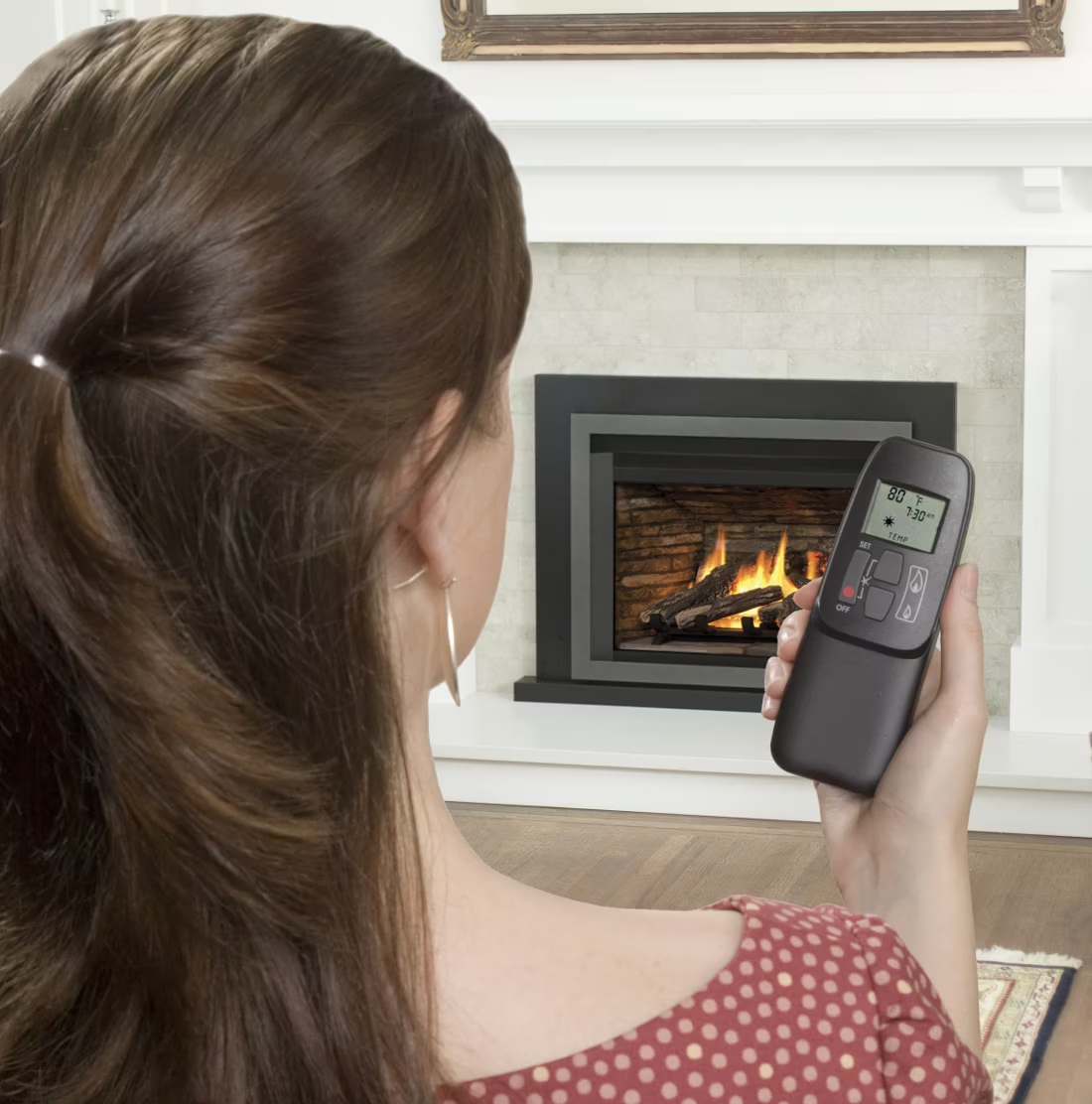
Most modern gas fireplaces can—turn it on and off from the couch with a remote, or set a room temperature and let the fireplace hold the comfort zone for you. If low maintenance matters to your family, this is the feature set that makes gas the convenience pick over wood and pellet.
Why do fireplace quotes vary so much?
Because a fireplace is an iceberg—there's more behind the wall than in front of it. A low quote often covers only the unit; the full scope includes vent pipe, gas line or electrical, framing, and the tile or stone that has to come off and go back on. Make every bidder price the whole job. If a dealer can't speak to the full scope with confidence, that's your signal to keep looking.
Is my gas fireplace wasting gas?
If it was installed more than 15 years ago, probably. Older gas fireplaces keep a standing pilot light burning all the time, and that little flame can cost a couple hundred dollars a year. Newer models use pilot-on-demand ignition—the pilot lights only when you use the fireplace and goes out when you turn it off.
What's the difference between an insert and a zero-clearance fireplace?
An insert is a fireplace that slides into a pre-existing wood-burning fireplace—if you don't have one, there's nothing to insert it into. A zero-clearance fireplace is built into a framed wall, which makes it the answer for remodels and new construction. Simple test: existing masonry fireplace means insert; blank or framed wall means zero-clearance.
Stove and Fireplace Dealers in Powell River Region
Listings include WhyFire partner dealers, dealers we have verified as authorized for the brands we recommend, and established local businesses that carry hearth products. Every listing shows which one it is. The ones marked Preferred run on WhyFire's software, so they can show you real pricing and book your appointment right here. No manufacturer pays for placement. How we verify dealers →
Hornby Island Co-Op
Bennett Sheet Metal & Heating Ltd.
Natural Gas Service in Powell River Region
Confirm service at your address before planning a gas fireplace—a quick call settles it.
FortisBC (Gas)
Pacific Northern Gas
Get your free Project Guide & Parts List for a gas fireplace in the Powell River Region.
Tell me about your home and I'll match you with a local Powell River Region dealer and send over a free Project Guide & Parts List—the exact parts, including the vent kit, and the dealer best suited to help with your gas project, no big-box guesswork.
Find Your Fireplace →