
Find your fireplace in the Powell River Region.
Wood, gas, pellet, and electric fireplace resources for the whole region—from the City of Powell River out to Texada Island and Lund. Pick a fuel and get matched with a local dealer who actually works this stretch of coast.
Every Project Starts From One of These Five Situations
Mild marine winters, a ferry-only mainland link, and a region that still runs on wood heat.
The Powell River Region sits on BC's Sunshine Coast, cut off from the rest of the mainland road network and reachable only by BC Ferries or air—a geography that shapes how homeowners here think about heat. Winter lows average a mild 1.2°C, a marine climate gentle enough that hard freezes are rare, but the damp, penetrating cold off the Salish Sea still drives a real heating season from October through April. Compare that to Prince George, five hours up the Interior, and Powell River's winters look almost gentle—yet storm-driven power outages on the coastal grid make a wood stove or pellet insert more than decorative here; for many households it's the heat source that keeps working when BC Hydro doesn't. Douglas fir, paper birch, lodgepole pine, and western larch are the species most commonly split and burned locally, much of it self-cut under permits from FrontCounter BC and the BC Ministry of Forests.
Because this is a coastal region rather than an Interior valley, Powell River doesn't see the same winter temperature inversions that trap smoke in places like Kamloops or the Okanagan—but dry summer and fall conditions still bring the occasional smoke advisory, and the regional district's wood-stove exchange program has pushed most households toward CSA/EPA-certified appliances over the past several years. Any new wood, gas, or pellet installation goes through the municipal building department and must meet CSA B365 installation code, and a WETT inspection is standard practice for insurance on wood-burning appliances—something almost every local insurer will ask for at renewal. This hub rolls up hearth retailers, service technicians, and fuel suppliers across the whole region, from the City of Powell River out to Texada Island and Lund. Pick a fuel below for local dealers, install costs, and the unit recommendations that make sense for your address and your ferry schedule.
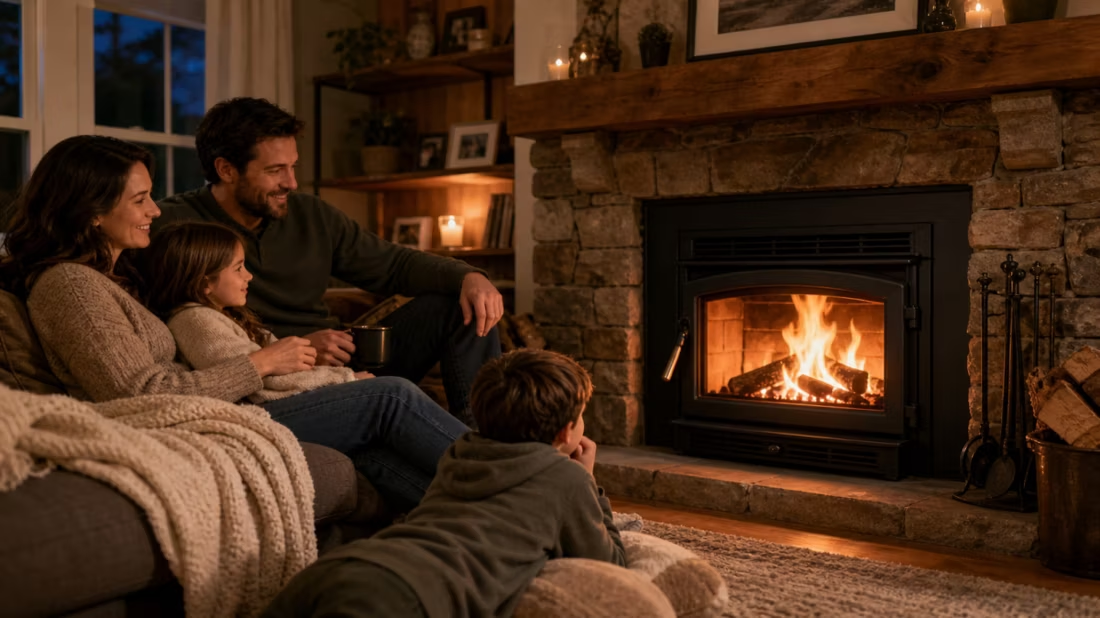
Four fuels. One honest answer for Powell River Region.
Wood
69 models available near Powell River Region.
Find your wood stove →Gas
111 models available near Powell River Region.
Find your gas fireplace →Pellet
See what's available near Powell River Region.
Find your pellet stove →Electric
See what's available near Powell River Region.
Find your electric fireplace →Three steps. No salesperson until you're ready.
Tell us about your project
Your postal code, your situation, and the fuel you're leaning toward—or let the answers point you to one.
See what's actually available
The brands dealers within 100 miles genuinely carry—real options, never a catalog mirage.
Get your dealer & Project Guide
A trusted local dealer, plus the free Project Guide & Parts List that names every component of the job.
Frequently Asked Questions
Which fireplace fuel makes the most sense in the Powell River Region?
All four fuels are used here, but which one makes sense depends on how much you're planning around the coastal grid rather than the thermometer. Winter lows average a mild 1.2°C, so raw cold isn't the driver it is in the Interior—wood heat's real value in the Powell River Region is resilience: when a winter storm takes down BC Hydro lines along the coast, a wood stove burning Douglas fir or paper birch keeps a house warm regardless. Gas fireplaces are a solid convenience option within FortisBC's serviced corridor around the City of Powell River. Pellet stoves have a following too, with Pinnacle Premium and Princeton Fuel Pellets both distributed on the coast, and they burn cleaner on the smoke-advisory days that do crop up in dry stretches. Electric fireplaces work well as supplemental ambiance almost everywhere, though given how mild the climate runs, they're rarely anyone's primary heat source out here.
Do I need a permit to install a wood stove, insert, or gas fireplace here?
Yes. New wood, gas, and pellet installations go through the municipal building department, and the installation itself has to meet CSA B365 code regardless of which fuel you choose. If you're cutting your own firewood on public land, permits run through FrontCounter BC and the BC Ministry of Forests rather than the municipal office. Gas installs also need a licensed gas fitter to make the connection. Most of the local dealers we match homeowners with handle the permit paperwork as part of the project, so it's rarely something you're sorting out on your own.
What's a WETT inspection and why does my insurer want one?
A WETT inspection is a Wood Energy Technology Transfer inspection—an assessment of your wood stove, insert, or chimney by a certified inspector, confirming the installation meets code and is safe to insure. Almost every insurer serving the Powell River Region asks for one before writing or renewing a policy on a home with a wood-burning appliance, and many require a fresh inspection any time you buy or sell a house that already has a stove installed. It's a normal step, not a red flag—your installer or a local sweep can usually arrange it as part of the job.
Are there smoke advisories or burning restrictions in the region?
Not in the way Interior valleys deal with it. Places like Kamloops or the Okanagan trap cold air and smoke in winter temperature inversions; the Powell River Region's coastal geography doesn't set up the same way, so winter burning restrictions here are rare. What you will see is the occasional smoke advisory during dry summer and fall stretches, plus a regional wood-stove exchange program that's pushed a lot of older, uncertified stoves out of service over the past several years in favour of CSA/EPA-certified units. If you're buying a house with an older stove already installed, it's worth checking whether it would qualify for exchange.
Is natural gas available throughout the region, or is it mostly propane?
Mostly within town. FortisBC's natural gas network reaches the City of Powell River and the surrounding serviced corridor, so gas fireplaces are a straightforward option there. Once you're out toward Texada Island, Lund, or the rural electoral areas, most homes run on propane instead—tank delivery works the same way as gas heat but doesn't depend on a buried municipal line, which matters on an island only reachable by ferry.
What does installation typically cost, and does ferry access add to the price?
Costs run fairly close to provincial averages, with a modest premium for anything on Texada Island or the more remote parts of the region, since crews and materials cross by ferry. Expect roughly $4,000-$9,000 CAD for a wood stove or insert installed, $4,500-$10,000 CAD for a gas fireplace or insert depending on gas-line work, and $4,000-$7,500 CAD for a pellet stove or insert. Electric fireplaces are the outlier at $300-$3,000 CAD for the unit plus $500-$1,200 CAD in labour for anything beyond a simple plug-in placement. Ferry-dependent jobs on Texada typically add a modest trip fee that your dealer will quote up front.
How many BTUs do I need in a fireplace?
Wrong question—and the industry's favorite way to confuse you. More BTUs isn't better if the fireplace cooks you out of the room you spent thousands to enjoy. Think in terms you can verify: how many square feet the unit heats, whether it's primary or backup heat, and whether you want it running overnight. Those three answers size a fireplace correctly every time.
Will we actually use a fireplace once we have one?
In my own home, the room with the fireplace has never been the same—it became the social hub. Game nights, holidays, date nights after the kids are down: the fire is where the house gathers. There's a reason people in this industry joke that we're really in the romance and entertainment business. You won't wonder whether you'll use it; you'll wonder how the room worked before.
Does a fireplace add value to my home?
On average, a fireplace adds back to the home about the same amount you spent installing it. Add the monthly savings from heating the rooms you actually use instead of the whole house—often hundreds of dollars a year—and the value case is strong before you even count what a fire does for how your family uses the room.
Can I install a fireplace myself?
If you're putting a fire in your house on purpose, it's best to work with an expert. Unless you're genuinely experienced in framing, gas line, vent pipe, and the national code on clearances to combustibles, have a professional do it—and ideally the same company that sells you the fireplace, so warranty, service, and liability all live under one roof.
Stove and Fireplace Dealers in Powell River Region
Listings include WhyFire partner dealers, dealers we have verified as authorized for the brands we recommend, and established local businesses that carry hearth products. Every listing shows which one it is. The ones marked Preferred run on WhyFire's software, so they can show you real pricing and book your appointment right here. No manufacturer pays for placement. How we verify dealers →
Hornby Island Co-Op
Bennett Sheet Metal & Heating Ltd.
Get matched with a local Powell River Region dealer.
Tell us your fuel and address, and we'll build a free Project Guide & Parts List—the right unit, the vent kit it needs, and the local dealer we recommend for your project.
Find Your Fireplace →