
Simple, no-vent heat for Nelson's heritage homes and hillside condos.
Winter lows around -3.7°C and long, damp Kootenay evenings call for reliable supplemental heat, not a chimney project. I'll match you with a trusted local dealer who knows what actually fits your panel, your strata rules, and your budget.
Every Project Starts From One of These Five Situations
Heat that skips the chimney, the WETT inspection, and the smoke advisories.
Nelson climbs the hillside above Kootenay Lake in a cluster of early-1900s heritage homes, narrow lots, and walk-up apartments along Baker Street, and a lot of that housing stock was never built with a masonry chimney or a modern electrical panel in mind. At 541 metres in climate zone 5B, winters here average a low around -3.7°C—milder than towns further up the valley like Cranbrook or across the Rockies in places like Prince George, but still cool enough for six months of steady heating demand. An electric fireplace slots into that gap: it adds real ambiance and supplemental warmth to a character living room or a rental suite without touching the roofline or the wiring beyond a standard circuit.
The Regional District of Central Kootenay's valley bowl is prone to winter inversions, and smoke advisories are a normal part of the season here, which is part of why several regional wood-stove exchange programs exist and why CSA/EPA-certified appliances and WETT inspections matter so much for wood burners. Electric sidesteps all of that—no emissions, no venting, no insurance conversation about your chimney. With BC Hydro and FortisBC Electric billing residential power at roughly $0.114 per kWh, running an electric insert or built-in unit costs pennies an hour, which is exactly why it's become the default choice for downtown condos, secondary suites, and older homes where a full wood or gas retrofit isn't worth the disruption.
Three steps. No salesperson until you're ready.
Tell us about your project
Your postal code, your situation, and the fuel you're leaning toward—or let the answers point you to one.
See what's actually available
The brands dealers within 100 miles genuinely carry—real options, never a catalog mirage.
Get your dealer & Project Guide
A trusted local dealer, plus the free Project Guide & Parts List that names every component of the job.
Frequently Asked Questions
How much does an electric fireplace installation cost in Nelson?
Most electric fireplace projects in Nelson run $500 to $1,600 CAD. A plug-in insert or wall-mount unit that drops into an existing fireplace opening or just needs a nearby outlet sits at the low end. A hardwired built-in unit—common when someone's finishing a basement on one of the benches above town or renovating a heritage home on Ward or Silica Street with older wiring—costs more once a licensed electrician runs a dedicated circuit. Panel capacity is the real variable in Nelson's older housing stock, so a dealer will usually want to see your panel before quoting.
Do I need a permit for an electric fireplace in Nelson?
A simple plug-in unit generally doesn't need a permit. If you're hardwiring a built-in electric fireplace into a new circuit, that work needs to go through a licensed electrician and typically an electrical permit tied to the municipal building department. That's a much lighter process than a wood installation here, which needs to meet CSA B365 and usually a WETT inspection before an insurer will sign off—one of the reasons electric appeals to owners who want heat without the paperwork.
Is electric a good fit for Nelson's older heritage homes?
Often, yes. A lot of Nelson's character homes on the hillside date to the early 1900s and carry older wiring or limited panel capacity, which makes a full rewire for a large hardwired system a real cost consideration. An electric insert sized to slot into an existing but unused masonry firebox is a common workaround—it reuses the opening for looks without needing chimney repairs, a WETT inspection, or a new gas line. For homes where the panel genuinely can't support more load, a plug-in unit avoids electrical work entirely.
What does it cost to run an electric fireplace in Nelson?
With BC Hydro and FortisBC Electric billing residential power at about $0.114 per kWh, a typical 1,500-watt electric fireplace costs roughly 17 cents an hour to run on the heat setting, or less with the flame-only mode. That's noticeably cheaper per hour than firing up a gas insert on FortisBC's natural gas network, and it comes without the seasonal cost of pellets, currently running $400-$575 a ton for regional brands like Pinnacle Premium. Most Nelson households treat electric as everyday supplemental heat for a living room or bedroom rather than a whole-home solution.
Will an electric fireplace work in my condo or rental in Nelson?
Yes, and it's often the only realistic option. Strata buildings and rental suites downtown along Baker Street rarely allow chimney work, gas line installation, or open-flame appliances, but a plug-in or wall-mount electric unit needs neither. It's also the easiest fireplace to take with you if you move—something worth factoring in given how much of Nelson's housing stock turns over as a rental market.
How does electric compare to wood heat given Nelson's winter air quality advisories?
The Central Kootenay valley bowl traps smoke during winter inversions, which is why regional wood-stove exchange programs exist and why CSA/EPA-certified appliances are required for new wood installs. Electric fireplaces produce zero local emissions, so they're unaffected by smoke advisories and don't add to the inversion problem on the coldest, stillest nights. Many Nelson households keep a certified wood stove for backup heat during outages and use electric day to day for convenience and air quality.
What size electric fireplace do I need for my Nelson home?
Because winters here average a relatively mild -3.7°C low, most electric fireplaces in Nelson are sized as supplemental heat rather than a primary system—a standard 1,500-watt unit comfortably takes the edge off a living room in one of the smaller character homes near downtown. Larger, more open floor plans in newer builds on the benches above town sometimes call for two zones or a bigger insert. A local dealer will size it against your actual room volume and insulation rather than square footage alone.
What's the difference between an electric insert, wall-mount, and built-in unit?
An electric insert is built to slide into an existing masonry firebox, which suits Nelson's many heritage homes with an unused wood fireplace opening. A wall-mount unit hangs like a piece of art and needs only a nearby outlet or simple circuit, popular in condos and rentals. A built-in unit is framed into new construction or a renovation, wired on its own circuit, and gives the most flexibility on size and finish—but it's the option most likely to need an electrician and a permit.
Electric vs. gas fireplace—which makes more sense in Nelson?
FortisBC's gas network serves Nelson, and a gas fireplace or insert delivers real heat output for $6,000-$15,000 CAD installed—a legitimate primary or near-primary heat source. Electric costs a fraction of that upfront, at $500-$1,600, but tops out as supplemental heat and depends entirely on grid power from BC Hydro, so it won't help during an outage any more than an unbacked gas pilot would. Homeowners after ambiance, a rental-friendly setup, or a low-cost secondary heat source usually land on electric; those wanting a fireplace to genuinely warm a room through a Kootenay winter evening tend to look at gas or a certified wood insert instead.
How much does an electric fireplace cost to run?
With the heater on, a typical unit draws about 1,500 watts—at average electric rates that's roughly 20 cents an hour. Run the flame effect alone and it costs pennies; the flames are LED-driven and use about as much power as a light bulb. There's no pilot light, no fuel delivery, and essentially no maintenance.
What fireplace styles should I know before shopping?
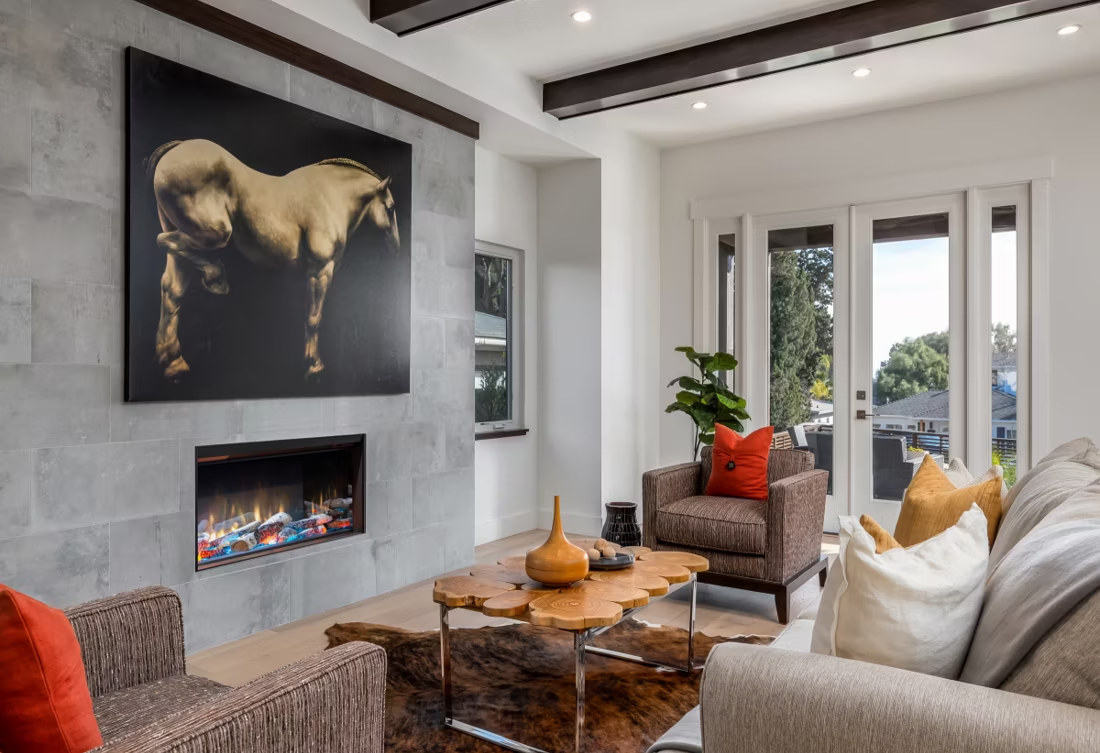
Four cover most of the market: screen-front traditional (mesh front, open feel, fits craftsman homes), traditional door set (the classic look you grew up with), modern linear (wide, low, the statement piece for entertaining), and clean face contemporary (no trim—your tile or stone runs right to the fire's edge). Walk in knowing those four terms and you're ahead of most buyers.
Do electric fireplaces actually produce heat?
Yes—most put out around 4,800–5,000 BTUs from a standard outlet, which comfortably warms a bedroom, office, or den as a comfort-zone heater. What they won't do is carry a whole house the way wood, gas, or pellet can. Think of electric as ambiance-first with honest supplemental heat: flames on with no heat in July, flames plus warmth in January.
Does an electric fireplace need a vent or chimney?
No—that's its superpower. An electric fireplace needs a wall and an outlet, period. No vent pipe, no gas line, no clearances to design around, which is why it works in bedrooms, offices, apartments, and walls where venting a gas or wood unit would be impractical or impossible. Installation is typically the simplest and least expensive of any fireplace type.
Nearby Dealers
Hearth shops serving Nelson and the surrounding area. Every listing shows whether it is a WhyFire partner, a dealer we have verified as authorized for the brands we recommend, or a local business carrying hearth products. No manufacturer pays for placement. How we verify dealers →
Flush Away Plumbing
All Elements Industries
Pyramid Building Supplies
Peltzer Heating Ltd
Nakusp Home Hardware
Electric Service in Nelson
An electric fireplace's heater draws about 1,500 watts—pennies per hour at local rates.
Bc Hydro
FortisBC (Electric)
Get your free Project Guide & Parts List for a Nelson electric fireplace.
Tell me about your home—heritage character home, hillside condo, or new build—and I'll match you with a trusted local dealer and send a free Project Guide & Parts List sized to your panel, your space, and your budget.
Find Your Fireplace →