
Warmth and glow for Central Kootenay homes, without adding smoke to the valley.
From Nelson to Nakusp, Kaslo to Creston, valley-bottom communities in Central Kootenay deal with winter inversions that trap wood smoke close to the ground. Electric fireplaces run clean on BC Hydro's hydroelectric grid, need no chimney or gas line, and drop into almost any room. I'll match you with a local dealer who knows what actually fits your space.
Every Project Starts From One of These Five Situations
A valley climate that rewards heat without smoke.
Central Kootenay's roughly 27,600 residents are spread across steep valley communities strung along Kootenay Lake, the Slocan Valley, and the Arrow Lakes. Winter lows average around minus 3.7°C region-wide, milder on paper than a prairie winter in Regina or Saskatoon, but the valley geography traps cold, still air, and wood smoke sits low over towns like Nelson and Slocan for days at a time. Wood heat has deep roots here, split from Douglas fir, paper birch, lodgepole pine, and western larch, and several communities run wood-stove exchange programs pushing older units toward CSA and EPA-certified replacements. That local air-quality reality is exactly why electric fireplaces have found steady demand alongside wood and gas.
An electric fireplace or insert adds zero smoke and zero emissions to a valley that's already managing inversion advisories most winters, and it sidesteps the WETT inspections and CSA B365 code requirements that apply to wood appliances. Typical installs run $500 to $1,600, well below the $6,000-plus range for a wood or gas system, which makes electric a natural fit for a Nelson heritage home's spare bedroom, a rental suite in Castlegar, or a lakeside cabin near Kaslo that doesn't need a full heating retrofit. It won't replace a furnace or heat pump as the region's primary heat source, but as supplemental warmth and everyday ambiance, it's an easy addition most municipal building departments barely blink at.
Three steps. No salesperson until you're ready.
Tell us about your project
Your postal code, your situation, and the fuel you're leaning toward—or let the answers point you to one.
See what's actually available
The brands dealers within 100 miles genuinely carry—real options, never a catalog mirage.
Get your dealer & Project Guide
A trusted local dealer, plus the free Project Guide & Parts List that names every component of the job.
Frequently Asked Questions
How much does an electric fireplace installation cost in Central Kootenay?
Most electric fireplace projects across Central Kootenay run $500 to $1,600 CAD. A plug-in wall-mount or freestanding unit sits at the low end since it needs nothing more than a standard outlet. A built-in electric fireplace or insert wired into a dedicated circuit, common in Nelson and Castlegar renovations, runs higher once an electrician is involved. Compared to the $6,000-plus typical for a wood or gas install in this region, electric is the budget-friendly way to add real ambiance and zone heat to a room without touching your chimney or gas line.
Will an electric fireplace actually heat a room through a Central Kootenay winter?
It depends on the room and your expectations. With average winter lows around minus 3.7°C, most electric fireplaces here work well as zone heaters for a bedroom, den, or secondary suite, supplementing a heat pump or baseboard system rather than replacing it. On the coldest valley-bottom mornings in Nakusp or Creston, a 1,500-watt unit will comfortably take the edge off a single room but won't carry an entire drafty older home on its own. If whole-home heat is the goal, most local dealers will steer you toward wood or gas instead and reserve electric for the rooms where instant, no-fuss warmth matters most.
Do I need a permit to install an electric fireplace in Central Kootenay?
Usually not for a plug-in unit, since there's no venting or gas line involved. A built-in electric fireplace that requires new wiring or a dedicated circuit typically needs an electrical permit through your municipal building department, and a licensed electrician handles that as part of the job. This is a far lighter process than a wood stove, which falls under CSA B365 installation code and commonly needs a WETT inspection before an insurance company will sign off. If you're weighing electric partly to avoid that paperwork, that instinct is correct.
Why do electric fireplaces make sense in a region with winter smoke advisories?
Central Kootenay's valley towns, Nelson and the Slocan Valley in particular, sit in terrain that traps cold air and smoke during still winter weather, which is why the region issues inversion and smoke advisories and runs wood-stove exchange programs to move older units toward certified appliances. An electric fireplace produces no combustion byproducts at all, so it never adds to that problem and never gets restricted during an advisory. For a household that wants fire-like ambiance in town without worrying about smoke management on the calm, cold nights when it matters most, electric sidesteps the issue entirely.
Electric vs. gas fireplace, which is the better fit for my Central Kootenay home?
Natural gas is available through much of the region, and a gas fireplace or insert typically runs $6,000 to $15,000 installed, delivering real whole-room heat output and running through a power outage with the right ignition system. Electric runs $500 to $1,600, needs no gas line or venting, and is the simpler choice for a secondary suite, a rental unit, or a room where you mainly want visual warmth and light supplemental heat. If your household already has a gas line and wants a fireplace as a primary heat source for a living room, gas usually wins. For a cabin near Kootenay Lake or a spare room addition, electric is often the more sensible spend.
What styles of electric fireplace work in older Central Kootenay homes?
A lot of the region's housing stock, especially in Nelson's heritage neighbourhoods, has an existing masonry fireplace with a chimney that's no longer lined for safe wood burning. An electric insert slides into that opening and gives you flame effect and heat without touching the chimney at all, which sidesteps the cost of relining. For newer construction or a room without any existing firebox, a wall-mount or built-in linear unit is the common choice, and freestanding stove-style electric units suit cabins around Nakusp or Kaslo that want a wood-stove look without the wood-stove upkeep.
Is electricity expensive to run a fireplace on in this region?
BC Hydro's rates, drawn from the province's hydroelectric system, are among the lowest in Canada, which keeps day-to-day operating costs for an electric fireplace modest even with regular use through a Central Kootenay winter. The tradeoff worth knowing: electric fireplaces are entirely dependent on grid power, and mountain communities like Kaslo, New Denver, and parts of the Slocan Valley can see outages during winter storms. A wood stove keeps working when the power's out; an electric fireplace doesn't. Many households in the region keep both, wood as backup heat and electric for everyday convenience.
How much maintenance does an electric fireplace need?
Very little, which is part of the appeal in a region where wood systems need annual WETT-aligned chimney sweeps and gas units need yearly technician service. An electric fireplace just needs the dust wiped off the heater vents, an occasional LED light replacement, and a check that the outlet or circuit is in good shape. There's no ash, no creosote, and no combustion byproducts to manage, and no annual inspection is required for insurance purposes the way it commonly is for wood appliances under CSA B365.
What kinds of Central Kootenay properties are the best fit for electric fireplaces?
Secondary suites, rental units, and condos in Nelson and Castlegar without chimney access are a natural fit, since electric needs no venting at all. Seasonal cabins around Kootenay Lake and the Arrow Lakes, where owners want ambiance and light heat without committing to a wood or gas system, are another common case. It also suits additions and bonus rooms in existing homes where running a new gas line or building a hearth for a wood stove isn't practical. For a primary living space carrying the whole heating load through a Kootenay winter, most local dealers still recommend wood or gas as the main system with electric as the supplement.
How much does an electric fireplace cost to run?
With the heater on, a typical unit draws about 1,500 watts—at average electric rates that's roughly 20 cents an hour. Run the flame effect alone and it costs pennies; the flames are LED-driven and use about as much power as a light bulb. There's no pilot light, no fuel delivery, and essentially no maintenance.
What fireplace styles should I know before shopping?
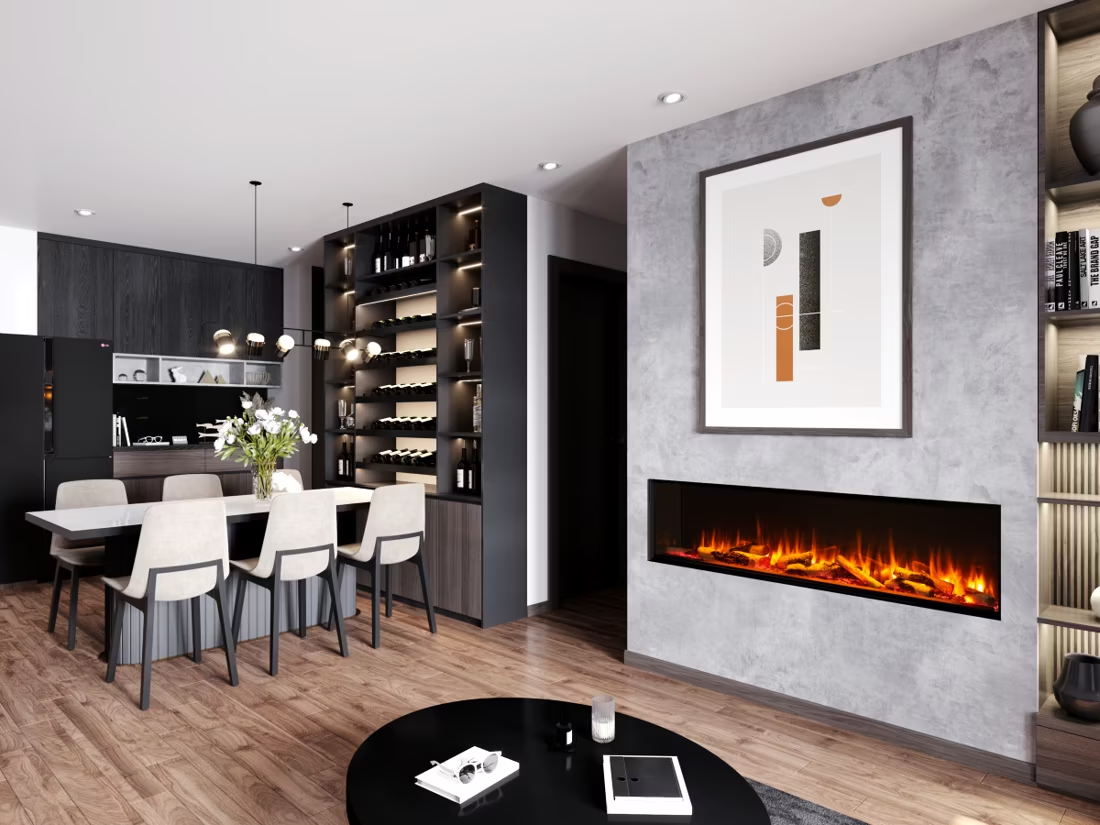
Four cover most of the market: screen-front traditional (mesh front, open feel, fits craftsman homes), traditional door set (the classic look you grew up with), modern linear (wide, low, the statement piece for entertaining), and clean face contemporary (no trim—your tile or stone runs right to the fire's edge). Walk in knowing those four terms and you're ahead of most buyers.
Can I put a TV above my fireplace?
Yes—with an asterisk. Fireplaces are hot and TVs don't like heat. Either put a mantel between them to deflect rising warmth, or choose a fireplace with heat-management technology that creates a cool zone on the wall above—the wall stays around 125 degrees, barely warm, while the room still gets full heat. If you like clean lines and don't want a mantel, heat management is the answer.
Do electric fireplaces actually produce heat?
Yes—most put out around 4,800–5,000 BTUs from a standard outlet, which comfortably warms a bedroom, office, or den as a comfort-zone heater. What they won't do is carry a whole house the way wood, gas, or pellet can. Think of electric as ambiance-first with honest supplemental heat: flames on with no heat in July, flames plus warmth in January.
Stove and Fireplace Dealers in Regional District of Central Kootenay
Listings include WhyFire partner dealers, dealers we have verified as authorized for the brands we recommend, and established local businesses that carry hearth products. Every listing shows which one it is. The ones marked Preferred run on WhyFire's software, so they can show you real pricing and book your appointment right here. No manufacturer pays for placement. How we verify dealers →
Flush Away Plumbing
All Elements Industries
Pyramid Building Supplies
Peltzer Heating Ltd
Nakusp Home Hardware
Electric Service in Regional District of Central Kootenay
An electric fireplace's heater draws about 1,500 watts—pennies per hour at local rates.
Bc Hydro
FortisBC (Electric)
Get your free Project Guide & Parts List for an electric fireplace in Central Kootenay.
Tell me about your home, the room you're heating, and how you plan to use it, and I'll match you with a local Central Kootenay dealer and send a free Project Guide & Parts List, the exact unit and parts recommended for your space, no big-box guesswork.
Find Your Fireplace →