
Every fuel, every valley town in Central Kootenay.
Wood, gas, pellet, and electric fireplace resources for the whole region—from the Slocan Valley and Kootenay Lake shoreline up to the Arrow Lakes. Pick a fuel and get matched with a trusted local dealer who actually works in your town.
Every Project Starts From One of These Five Situations
Mild valley winters, real winter inversions, and a region built on wood heat.
The Regional District of Central Kootenay stretches across mountain valleys and long lakes—Kootenay Lake, the Arrow Lakes, the Slocan Valley—where winter lows average around -3.7°C, far milder than the prairie cold you'd find in Regina or Winnipeg but still cold enough for a real heating season. Douglas fir, paper birch, lodgepole pine, and western larch are the wood species most local households burn, much of it cut under permits from FrontCounter BC and the Ministry of Forests, which keeps wood heat both affordable and culturally rooted in towns like Nelson, Kaslo, and Nakusp.
The catch is geography: these are narrow valleys, and cold air pools at the bottom on still winter days, trapping smoke and triggering advisories. Several communities in the region run wood-stove exchange programs and require CSA or EPA-certified appliances as a result, and a WETT inspection is commonly required by insurers on any wood-burning install. New installations go through a municipal building department and follow the CSA B365 installation code, whether you're putting in a wood insert in Castlegar or a gas fireplace in Nelson. This hub rolls up hearth retailers, service techs, and fuel suppliers across the whole region, from the West Arm of Kootenay Lake through Salmo and Winlaw to Crawford Bay and Nakusp. Pick your fuel below for local dealers, install costs, and unit recommendations specific to your town.
Four fuels. One honest answer for Regional District of Central Kootenay.
Wood
69 models available near Regional District of Central Kootenay.
Find your wood stove →Gas
111 models available near Regional District of Central Kootenay.
Find your gas fireplace →Pellet
See what's available near Regional District of Central Kootenay.
Find your pellet stove →Electric
See what's available near Regional District of Central Kootenay.
Find your electric fireplace →Three steps. No salesperson until you're ready.
Tell us about your project
Your postal code, your situation, and the fuel you're leaning toward—or let the answers point you to one.
See what's actually available
The brands dealers within 100 miles genuinely carry—real options, never a catalog mirage.
Get your dealer & Project Guide
A trusted local dealer, plus the free Project Guide & Parts List that names every component of the job.
Frequently Asked Questions
Which fireplace fuel makes the most sense in Central Kootenay?
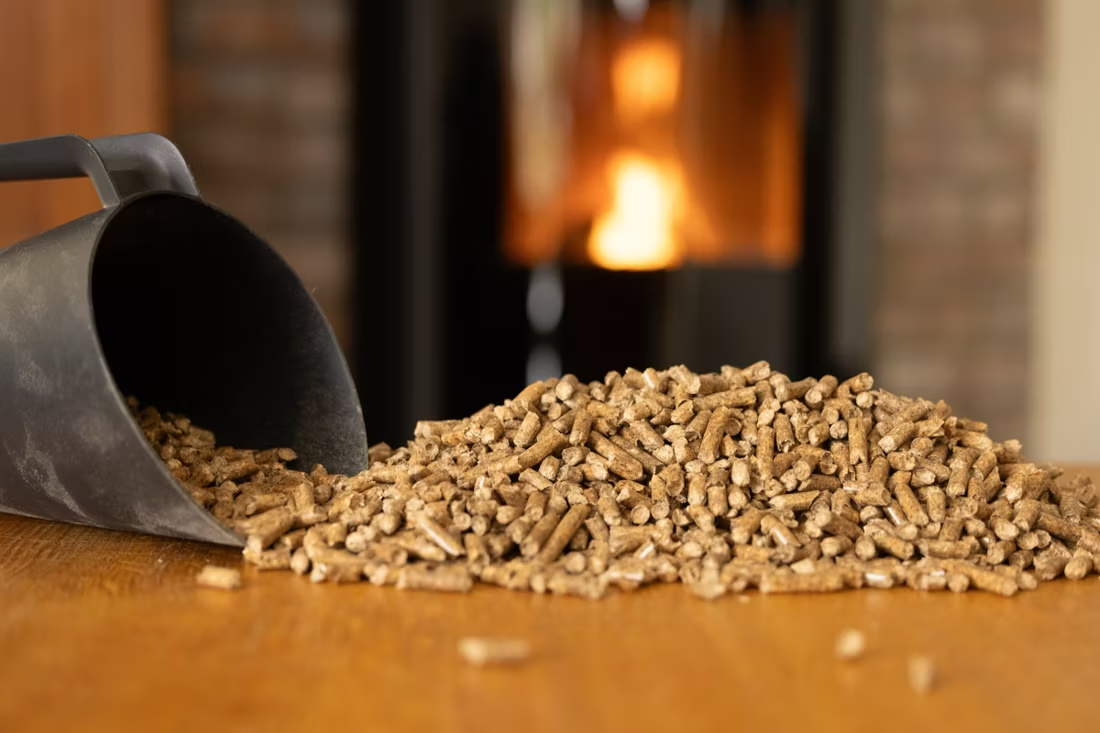
All four fuels have a real place here, and the right choice usually comes down to which valley you're in and how you want to manage a long, mild-but-persistent heating season. Wood remains the backbone fuel in rural areas around Kaslo, Nakusp, and the Slocan Valley, where Douglas fir, paper birch, and lodgepole pine are cut locally under Ministry of Forests permits and a CSA-certified stove holds a fire comfortably through the region's -3.7°C average lows. Natural gas is available and popular in and around Nelson and Castlegar through FortisBC's network, and it's the low-maintenance choice for homeowners who don't want to manage wood supply. Pellet stoves have a solid following too—Pinnacle Premium and Princeton Fuel Pellets are both distributed regionally, and pellet appliances burn cleaner during the smoke advisories these valleys see most winters. Electric fireplaces are supplemental almost everywhere here; they add ambiance and zone heat well but aren't sized to carry a home through the coldest stretch on their own.
Do I need a permit to install a wood stove or fireplace in Central Kootenay?
Yes, in nearly every case. New wood stoves and inserts have to be CSA or EPA-certified, installations follow the CSA B365 code, and the permit itself goes through your municipal building department—Nelson, Castlegar, and the smaller regional district areas each handle this slightly differently, so it's worth confirming before work starts. Most insurers also require a WETT inspection once the install is complete before they'll cover a wood-burning appliance, which is a step homeowners sometimes forget to budget time for. Gas installations need a separate gas-fitting permit and a licensed technician for the hookup. Pellet stoves are permitted similarly to wood but without the same insurance friction. Most hearth retailers we match homeowners with handle the permitting and WETT scheduling directly as part of the project, so it's rarely something you're chasing down alone.
What are the smoke advisories and stove exchange programs I keep hearing about?
Central Kootenay's valleys trap cold air on still winter days, and smoke from older, uncertified wood stoves can pool at ground level rather than dispersing—the same terrain that gives towns like Nelson their scenic lake views also concentrates smoke during inversions. Several communities in the region run wood-stove exchange programs that offer a rebate toward replacing an old, uncertified stove with a modern CSA or EPA-certified unit, which burns dramatically cleaner for the same amount of wood. If you're comparing wood to pellet as a primary heat source, this is a real factor: pellet appliances burn very cleanly by design and don't carry the same advisory-day concerns. A good local dealer can tell you whether your municipality currently has an exchange program running and what the certification requirements are for a new install.
Can I find a retailer that carries more than one fuel type?
Most retailers serving Central Kootenay carry two or three fuel types rather than specializing in just one, which fits how households here actually heat—wood or a gas fireplace as the primary source, often with an electric unit somewhere else in the house for a bedroom or a basement. A multi-fuel dealer is genuinely useful if you're still deciding, since you can look at working wood, gas, and pellet units side by side and talk through trade-offs specific to your address, your valley, and whether FortisBC service reaches your street or you're better off with wood or propane. We match you with the retailer whose lineup and service area actually fits your project rather than sending you to whoever's largest.
How does installation and service work for homes outside Nelson and Castlegar?
Retailers and service techs are concentrated around Nelson and Castlegar but regularly travel out to Kaslo, Nakusp, Salmo, Winlaw, and Crawford Bay, given how spread out the region is along its lakes and valleys. Expect a modest trip fee for the farther service calls, and expect scheduling to fill up once the weather turns—booking your annual chimney sweep, WETT inspection, or gas check in late summer, before the first cold snap, puts you ahead of the fall rush. For properties well up a valley road, it's worth asking your dealer about spare parts on hand and backup ignition options for gas units, since a snow event can delay a return visit by a day or two.
What does a fireplace installation typically cost in Central Kootenay?
Costs vary by fuel and by how much venting or gas-line work is involved. Wood stove or insert installs typically run $4,000-$9,000 CAD, with a WETT inspection adding a modest fee on top and full chimney work for new construction pushing higher. Gas fireplaces, inserts, and stoves generally run $4,000-$10,000 depending on whether a new gas line is needed or you're converting an existing hearth through FortisBC service. Pellet stove or insert installs usually land around $4,000-$7,000. Electric fireplaces are the outlier—$300-$3,000 CAD for the unit itself, plus a few hundred dollars in labor for anything beyond a straightforward plug-in placement. The region and fuel pages above break these numbers down further with local retailer pricing.
How many BTUs do I need in a fireplace?
Wrong question—and the industry's favorite way to confuse you. More BTUs isn't better if the fireplace cooks you out of the room you spent thousands to enjoy. Think in terms you can verify: how many square feet the unit heats, whether it's primary or backup heat, and whether you want it running overnight. Those three answers size a fireplace correctly every time.
Will we actually use a fireplace once we have one?
In my own home, the room with the fireplace has never been the same—it became the social hub. Game nights, holidays, date nights after the kids are down: the fire is where the house gathers. There's a reason people in this industry joke that we're really in the romance and entertainment business. You won't wonder whether you'll use it; you'll wonder how the room worked before.
Can I install a fireplace myself?
If you're putting a fire in your house on purpose, it's best to work with an expert. Unless you're genuinely experienced in framing, gas line, vent pipe, and the national code on clearances to combustibles, have a professional do it—and ideally the same company that sells you the fireplace, so warranty, service, and liability all live under one roof.
Why is my open fireplace making my house colder?
Open fireplaces suck—literally. As the fire burns, it consumes air your furnace already paid to heat and pulls it out through the chimney, so the house is actually colder after the fire goes out than before you lit it. An insert fixes this: it seals the chimney, puts fixed glass across the front, and turns that hole in your house into a real heat source.
Stove and Fireplace Dealers in Regional District of Central Kootenay
Listings include WhyFire partner dealers, dealers we have verified as authorized for the brands we recommend, and established local businesses that carry hearth products. Every listing shows which one it is. The ones marked Preferred run on WhyFire's software, so they can show you real pricing and book your appointment right here. No manufacturer pays for placement. How we verify dealers →
Flush Away Plumbing
All Elements Industries
Pyramid Building Supplies
Peltzer Heating Ltd
Nakusp Home Hardware
Get matched with a trusted Central Kootenay dealer.
Pick your fuel below and we'll put together a free Project Guide & Parts List—the right unit, the vent kit it needs, and the local dealer we recommend to help with your project.
Find Your Fireplace →