
Keep Your Family Warm and Safe—No Matter What
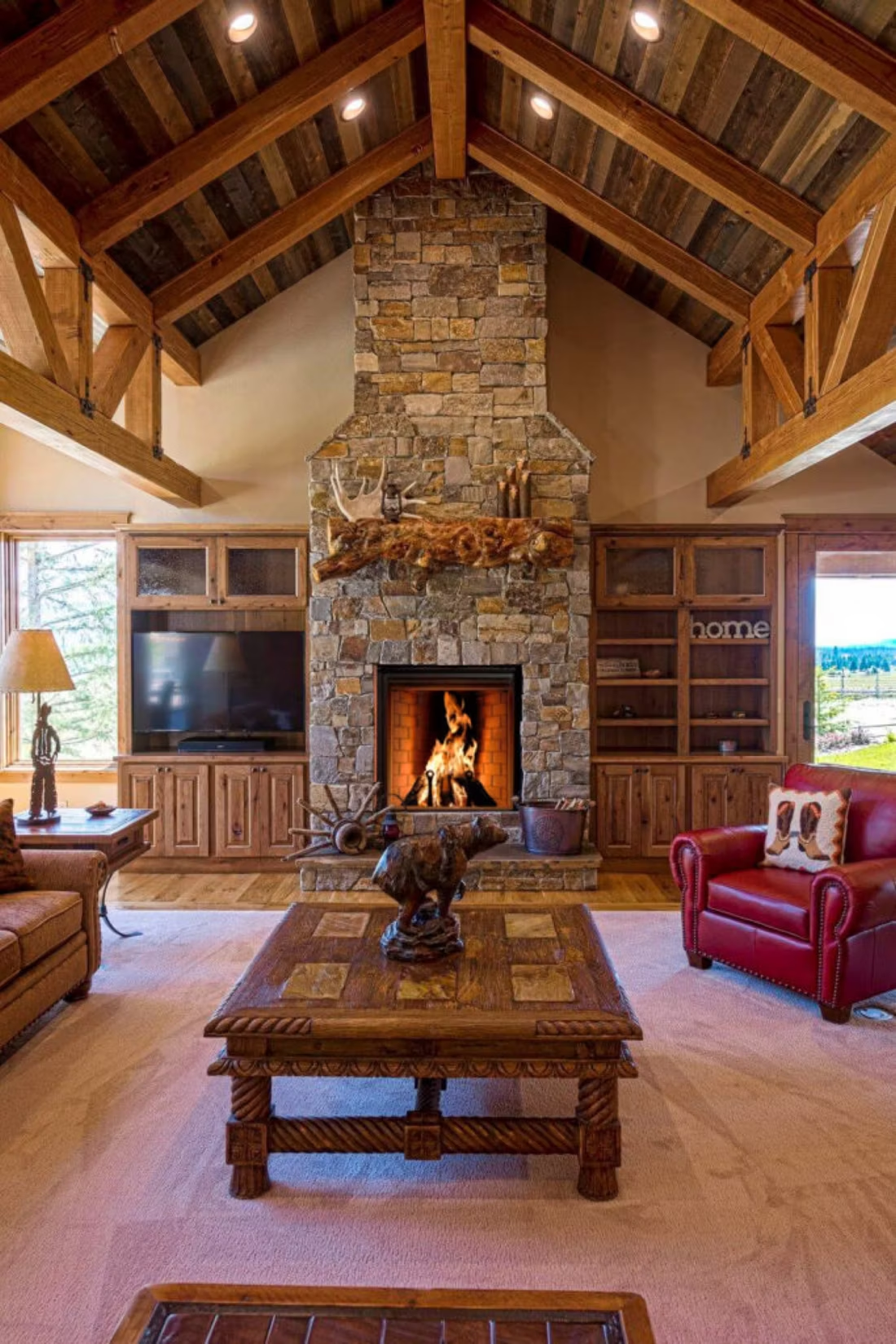
Winter lows here average just 1.4°C, so wood heat in Metro Vancouver isn't about surviving a deep freeze—it's about the ambiance of a real fire and a backup source of heat when an atmospheric river storm takes down power lines from West Vancouver to Maple Ridge. I'll match you with a trusted local dealer who knows the WETT and CSA B365 requirements cold.
Every Project Starts From One of These Five Situations
A marine climate with a backup-power problem.
Metro Vancouver's 21 municipalities—Vancouver, Burnaby, Surrey, Richmond, Coquitlam, North Vancouver, Delta, Langley, Maple Ridge, and Pitt Meadows among them—sit in climate zone 4C, where winter lows average around 1.4°C and snow is the exception rather than the rule. That's nowhere close to the sustained cold of Prince George or Winnipeg, so wood heat here isn't a survival necessity the way it is on the Prairies. It's chosen instead for the character it adds to older homes on Vancouver's east side, and for the fact that a wood stove or insert keeps working when a November or December windstorm off the Strait of Georgia drops trees on power lines and BC Hydro customers lose electricity for days. Firewood species commonly sold and burned in the region—Douglas fir, paper birch, lodgepole pine, and western larch—mostly come from Fraser Valley and Sea-to-Sky woodlots rather than from cutting inside the urban core itself, though FrontCounter BC and the BC Ministry of Forests still issue free personal-use cutting permits year-round, with restrictions during summer fire season.
Metro Vancouver Regional District runs its own wood-burning appliance regulation, and several member municipalities have run stove exchange programs that swap old, smoky units for CSA or EPA-certified replacements. That matters most in valley pockets like Maple Ridge and Pitt Meadows, where winter inversions can trap smoke close to the ground on the calmest, dampest days. Any new installation also has to meet the CSA B365 installation code, and most home insurers now require a WETT inspection before they'll cover a wood-burning appliance—two details a trusted local dealer builds into the project from the start rather than leaving you to sort out after the fact.
Firewood Cutting Permits Near Metro Vancouver
FrontCounter Bc / Bc Ministry Of Forests
Three steps. No salesperson until you're ready.
Tell us about your project
Your postal code, your situation, and the fuel you're leaning toward—or let the answers point you to one.
See what's actually available
The brands dealers within 100 miles genuinely carry—real options, never a catalog mirage.
Get your dealer & Project Guide
A trusted local dealer, plus the free Project Guide & Parts List that names every component of the job.
Frequently Asked Questions
How much does a wood stove or insert cost to install in Metro Vancouver?
Installed wood systems across the region typically run $6,000 to $12,000 CAD. A cast-iron insert going into an existing masonry fireplace in an older Vancouver or Burnaby home usually lands on the lower end, since the chimney is already in place. A new freestanding stove that needs a full Class A chimney run through the roof—common in newer Surrey, Langley, or Coquitlam builds without an existing hearth—tends to land higher. Homes on the North Shore or up toward the Sea-to-Sky corridor sometimes see a modest travel charge added by installers based closer to Vancouver's core.
Do I need a permit to install a wood stove in Metro Vancouver?
Yes. Every installation needs a building permit through your local municipal building department—Vancouver, Burnaby, Surrey, and each of the other member municipalities administer their own permitting rather than the region issuing one blanket permit. The installation itself has to meet the CSA B365 code, and most insurers require a WETT inspection afterward before they'll add the appliance to your homeowner's policy. A dealer who works in the region regularly will usually pull the permit and schedule the WETT inspection as part of the job.
Does wood heat actually make sense in a climate this mild?
It's a fair question with winter lows averaging 1.4°C—Metro Vancouver isn't Prince George or Winnipeg, and nobody here is burning wood to survive a five-month deep freeze. What drives demand locally is different: the look and feel of a real fire in an older home, and a genuine hedge against the windstorms that roll in off the Strait of Georgia most winters and knock out BC Hydro service for a day or more at a time. If your priority is daily heating efficiency in a mild climate, gas or electric often makes more sense; if you want ambiance plus a heat source that keeps working in a storm, wood still earns its place here.
Where can I get a permit to cut my own firewood near Metro Vancouver?
FrontCounter BC and the BC Ministry of Forests issue free personal-use cutting permits, valid year-round with restrictions during summer fire season, for Crown land out toward the Fraser Valley and Sea-to-Sky corridor. Species available on permit land typically include Douglas fir, lodgepole pine, and western larch, with paper birch also common in the area. Very little of that land sits inside Metro Vancouver's dense urban municipalities, so most homeowners in Vancouver, Burnaby, or Richmond end up buying seasoned cordwood locally rather than cutting their own, but the free permits are a real option if you're willing to drive out and haul it back.
What are the air quality rules for wood burning in Metro Vancouver?
Metro Vancouver Regional District regulates wood-burning appliances directly, and several member municipalities have run exchange programs that swap old, uncertified stoves for CSA or EPA-certified units at a discount. The rules matter most in valley communities like Maple Ridge and Pitt Meadows, where winter inversions can trap smoke close to the ground on cold, still days—exactly the conditions that trigger a smoke advisory. Installing a modern, certified stove or insert through a local dealer keeps you compliant and burns noticeably cleaner than an older uncertified unit.
What is a WETT inspection and do I actually need one?
WETT (Wood Energy Technology Transfer) inspections verify that a wood-burning installation meets the CSA B365 code, and most home insurance providers in Metro Vancouver now require one before they'll cover a wood stove, insert, or fireplace on your policy—whether it's a brand-new install or a system already in an older home you just bought. Expect your dealer to arrange the inspection as part of a new installation; if you're buying a resale home with an existing wood appliance, budget for a standalone WETT inspection before you close, since insurers increasingly ask for it upfront.
Wood vs. gas vs. pellet—what actually makes sense for my home here?
Natural gas is available through FortisBC across nearly all of Metro Vancouver, so most homes built or renovated in the last two decades default to a direct-vent gas fireplace for daily convenience. Wood tends to win out in older homes with an existing masonry chimney, or for households that want a real backup heat source when a windstorm takes out power. Pellet stoves split the difference—cleaner-burning and easier to load than cordwood, with regional brands like Pinnacle Premium and Princeton Fuel Pellets running $400 to $575 CAD a ton—but like gas, they need electricity to run the auger and blower, so they won't help you through an outage the way a wood stove will.
Can I install a wood stove in a condo or townhouse in Metro Vancouver?
It's the exception rather than the rule. With most of the region's 2.7 million residents living in multi-family buildings, strata bylaws and shared chimney or venting constraints usually rule out a true wood-burning stove in a condo or apartment. Detached and semi-detached homes in areas like North Vancouver, Delta, Langley, and parts of Surrey are where most new wood installations actually happen. If you're in a strata property and want the look of a fire, a local dealer will usually steer you toward a gas or electric unit instead, since those fit within most bylaws and don't need a masonry chimney.
What size wood stove do I need for a Metro Vancouver home?
Because winter lows here rarely drop far below freezing, most homes do fine with a small to mid-size stove rated for 800 to 1,500 square feet, sized to the main living area rather than the whole house the way it would be in a colder interior climate. Many installations are actually inserts dropped into an existing masonry fireplace in a 1960s-to-1980s-built Vancouver, Burnaby, or Richmond home, where the firebox opening itself constrains the size options. A local dealer will size the unit to your specific room and chimney rather than a general square-footage chart, since an oversized stove in a mild climate like this gets damped down constantly and builds creosote faster than it should.
Why do fireplace quotes vary so much?
Because a fireplace is an iceberg—there's more behind the wall than in front of it. A low quote often covers only the unit; the full scope includes vent pipe, gas line or electrical, framing, and the tile or stone that has to come off and go back on. Make every bidder price the whole job. If a dealer can't speak to the full scope with confidence, that's your signal to keep looking.
Louvered or clean face—which fireplace front is better?
Louvered fronts have grill work above and below the glass for airflow, move heat a little better with a fan, and suit traditional mantels. Clean face designs drop the louvers entirely so finish work runs to the fire's edge—they fit both modern and traditional rooms. When we did our own home we chose clean face: a big viewing area beat a little extra airflow. It depends on your room, not on a rulebook.
Is it worth replacing an old fireplace that still sort of works?
Ask three questions: Is it ugly? Is it drafty? Does it actually work? Most old fireplaces fail at least two. Beyond looks, an old unit leaks air around the damper year-round and—if it's gas with a standing pilot—quietly burns a couple hundred dollars a year. A modern replacement seals the wall, heats the room, and changes how the whole space gets used.
Do I need a permit to install a fireplace?
In most jurisdictions, yes—fireplace and stove installations involve venting, clearances, and often gas or electrical work that gets permitted and inspected. That's a feature, not a hassle: the inspection protects your family and your homeowner's insurance. A professional installer pulls the permit, installs to code, and stands behind the inspection. If someone suggests skipping it, keep looking.
Stove and Fireplace Dealers in Metro Vancouver
Listings include WhyFire partner dealers, dealers we have verified as authorized for the brands we recommend, and established local businesses that carry hearth products. Every listing shows which one it is. The ones marked Preferred run on WhyFire's software, so they can show you real pricing and book your appointment right here. No manufacturer pays for placement. How we verify dealers →
Western Natural Gas
Evershine Fireplace Surrey
Real Fireplaces
Home Makeover Centre
The Fireplace Warehouse
Vancouver Gas Fireplaces
Gas Guys Outdoor Designs
Oray Fireplaces
Get your free Project Guide & Parts List for a wood heat project in Metro Vancouver.
Tell me about your home—character bungalow, newer build, or a resale with an existing wood appliance—and I'll match you with a trusted local dealer and send over a free Project Guide & Parts List: the exact parts, including the vent kit, and the recommended installer for your project.
Find Your Fireplace →