
A clean, steady heat source for Metro Vancouver's mild, wet winters.
With winter lows that hover around 1.4°C and a heating season far shorter than interior BC or the Prairies, Metro Vancouver doesn't need a furnace-replacing burn—it needs a certified, efficient appliance that clears the region's air rules and still throws real heat into a living room from Kitsilano to Langley. I match homeowners here with a trusted local dealer who knows the venting, the bylaw, and the insurance sign-off cold.
Every Project Starts From One of These Five Situations
Built for a region that regulates what it burns.
Metro Vancouver is dense and mild: 2.7 million people across Vancouver, Burnaby, Surrey, Richmond, the North Shore, and the Fraser Valley communities out toward Maple Ridge and Langley, sitting in a 4C marine climate where winter lows average just 1.4°C and the heating season is short compared with the rest of the province. Natural gas reaches most of the region, so plenty of homes already have baseboard or forced-air heat sorted. Pellet appliances fill a different role here—real flame, zone heat for a main living room in an older character home on the east side or a townhouse without a gas line, and fuel that comes as bagged pellets rather than split cordwood, which matters on a standard city lot. Regional brands like Pinnacle Premium and Princeton Fuel Pellets, milled in part from the same Douglas fir, paper birch, lodgepole pine, and western larch that come through BC's interior sawmills, run $400 to $575 CAD per ton through local hearth dealers.
Air quality is the other driver. Several regional districts in and around Metro Vancouver run wood-stove exchange programs and require CSA or EPA-certified appliances, and the Fraser Valley end of the region can see winter inversions that trap smoke on the coldest, stillest days. A pellet stove burns with a fraction of the particulate output of an old uncertified wood stove, so it's rarely caught up in the burn restrictions that apply to older solid-fuel units, and it's a common recommendation for anyone trading in a decades-old wood stove under a regional exchange incentive. Installations still fall under CSA B365, and most insurers ask for a WETT inspection on a solid-fuel appliance before they'll add it to a policy, even a clean-burning pellet unit—a local dealer who does this daily will have both boxes checked before the truck leaves.
Three steps. No salesperson until you're ready.
Tell us about your project
Your postal code, your situation, and the fuel you're leaning toward—or let the answers point you to one.
See what's actually available
The brands dealers within 100 miles genuinely carry—real options, never a catalog mirage.
Get your dealer & Project Guide
A trusted local dealer, plus the free Project Guide & Parts List that names every component of the job.
Frequently Asked Questions
How much does a pellet stove installation cost in Metro Vancouver?
Installations across the region typically run $6,000 to $10,000 CAD. A freestanding pellet stove venting through an exterior wall in a single-family home in Surrey or Coquitlam sits toward the lower end; a pellet insert replacing an old wood stove in a Vancouver character home, where the existing masonry chimney needs a liner and hearth clearances have to be brought up to current code, lands higher. Homes going through a regional wood-stove exchange program sometimes offset part of the cost with an incentive, which a local dealer can confirm is still active before you commit to a model.
Why choose pellet when most homes here already have natural gas?
Gas is the default for whole-home heat across most of Metro Vancouver, but pellet stoves fill a specific gap: real, visible flame with the efficiency and low emissions of a modern appliance, in a home where running a new gas line to a second living space isn't practical, or where the owner wants solid-fuel ambiance without managing cordwood on a city lot. It's also a common upgrade path for households replacing an old, uncertified wood stove—cleaner burn, easier fuel handling, and none of the smoke-management issues that come with green or poorly seasoned firewood in a coastal climate this damp.
What permits and inspections does a pellet stove need in Metro Vancouver?
Each municipality—Vancouver, Burnaby, Richmond, Surrey, and the rest—handles building permits through its own building department, and installations have to meet the CSA B365 installation code regardless of city. Most insurers also ask for a WETT inspection before adding a solid-fuel appliance to your policy, and that applies to certified pellet stoves as well as wood units. A dealer who installs pellet appliances regularly across the region will usually pull the permit and arrange the WETT inspection as part of the job rather than leaving you to chase both separately.
How do the region's wood-burning bylaws affect a pellet stove?
Several regional districts around Metro Vancouver require CSA or EPA-certified appliances and run exchange programs aimed at retiring older, uncertified wood stoves, since interior valleys and parts of the Fraser Valley can see winter inversions that trap smoke close to the ground. A properly certified pellet stove burns with very low particulate output, so it's generally not the target of the burn restrictions that apply to old smoke-dragon wood stoves on advisory days. If you're swapping out an aging wood stove, ask your dealer whether your municipality's exchange program applies—it can shave real money off a pellet conversion.
Where do I buy pellets, and how much storage do I need?
Regional brands like Pinnacle Premium and Princeton Fuel Pellets are widely stocked at hearth dealers and building supply stores across the region, running roughly $400 to $575 CAD per ton depending on the season and how early you buy. A typical Metro Vancouver home using a pellet stove for supplemental heat through a mild winter burns somewhere around one to two tons a season, which is a manageable stack of bagged pellets in a garage or shed—a real advantage over cordwood storage on the smaller lots common in Vancouver, Burnaby, and Richmond.
Will my pellet stove still work if the power goes out?
Not without help. Pellet stoves rely on an electric auger and blower to feed fuel and move heat, so a power outage shuts them down, unlike a wood stove that keeps burning regardless. For homes on the North Shore or in areas exposed to winter windstorms where outages happen most often, a small battery backup or inverter sized for the stove's draw is worth discussing with your dealer if backup heat is a priority. If storm outages are a bigger concern than day-to-day convenience, that's a good reason to compare pellet against a wood stove for the same room.
Does my strata allow a pellet stove installation?
Many strata corporations across Vancouver, Burnaby, and Richmond condo and townhouse buildings restrict solid-fuel appliances or require council approval before venting penetrates an exterior wall, and high-rise buildings often need an engineer's sign-off on the vent path. Single-family homes in Surrey, Langley, Maple Ridge, and similar municipalities generally have far more flexibility. If you're in a strata property, check your bylaws and get written approval before ordering equipment—a local dealer who's done strata installs in the region can usually tell you what a given building typically requires.
What size pellet stove do I need for a Metro Vancouver home?
Because winter lows here average around 1.4°C and the heating season is short compared to the rest of BC, most homes need a small to medium pellet stove sized to heat one main living area of roughly 800 to 1,500 square feet rather than a whole-house unit. Older character homes in East Vancouver or on the North Shore, often with single-pane windows and less insulation, may want a step up in output compared to a newer build in Coquitlam or South Surrey with tighter construction. A dealer sizing the stove in person, rather than off a generic chart, is the difference between a stove that idles all winter and one that actually holds the room.
Pellet vs. wood—which makes more sense in Metro Vancouver?
Wood has real appeal if you're willing to source and season your own cordwood—Douglas fir, paper birch, lodgepole pine, and western larch are the species most available, and personal-use cutting permits through FrontCounter BC and the BC Ministry of Forests are free, though the nearest Crown land is a drive out of the urban core. For most Metro Vancouver households, buying bagged pellets locally and skipping the storage, splitting, and chimney maintenance that comes with wood is the more practical fit, especially on a standard city lot. Wood still wins if you want heat that runs with no electricity at all; pellet wins on cleaner burn, easier fuel handling, and fewer bylaw headaches.
Why do fireplace quotes vary so much?
Because a fireplace is an iceberg—there's more behind the wall than in front of it. A low quote often covers only the unit; the full scope includes vent pipe, gas line or electrical, framing, and the tile or stone that has to come off and go back on. Make every bidder price the whole job. If a dealer can't speak to the full scope with confidence, that's your signal to keep looking.
Is it worth replacing an old fireplace that still sort of works?
Ask three questions: Is it ugly? Is it drafty? Does it actually work? Most old fireplaces fail at least two. Beyond looks, an old unit leaks air around the damper year-round and—if it's gas with a standing pilot—quietly burns a couple hundred dollars a year. A modern replacement seals the wall, heats the room, and changes how the whole space gets used.
Are pellet stoves loud?
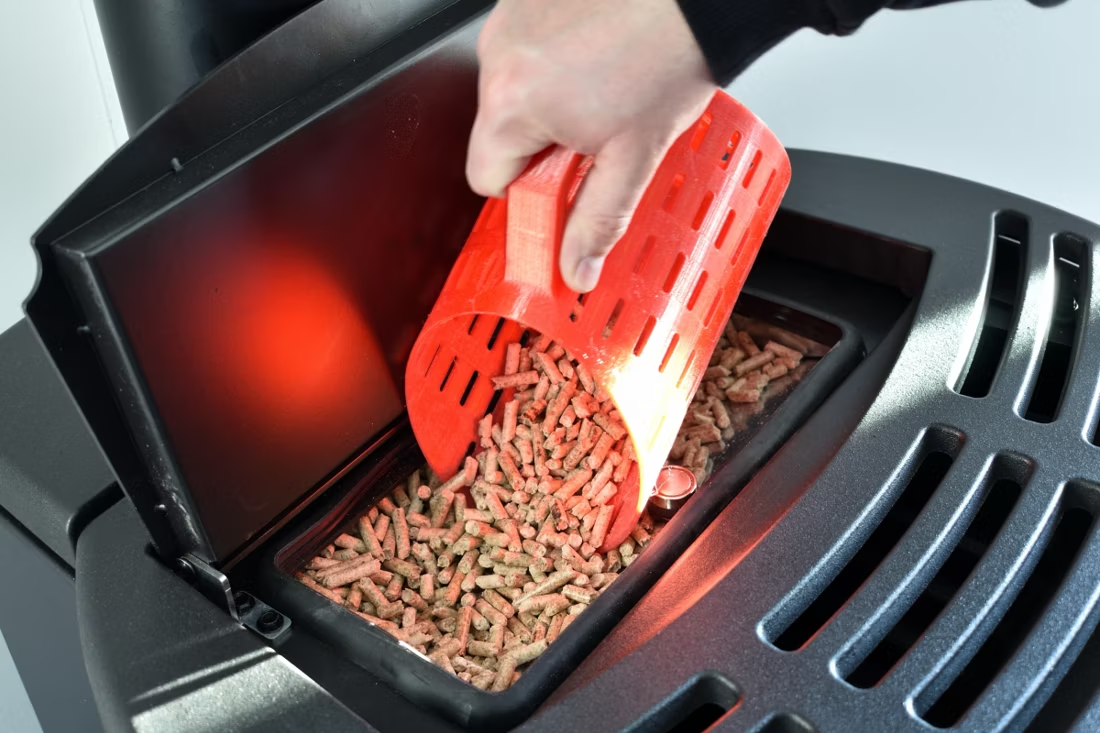
They make some noise—there are two fans running plus an auger motor that turns as it feeds pellets. But there's a real range: premium models are engineered quiet, and the best offer a whisper-quiet mode you can comfortably watch TV next to. If noise matters in your room, ask to hear a stove running before you buy—it's a five-minute test that saves years of annoyance.
Can a pellet stove heat a whole house?
It genuinely can. I burned a pellet stove as my only heat source for years after a furnace died, and it kept the entire house warm. Pellets feed automatically from a hopper, so you get wood-heat economics with thermostat-style control. Two honest caveats: it needs weekly cleaning during the season, and most models need electricity to run—ask about battery backup if outages are a concern.
Stove and Fireplace Dealers in Metro Vancouver
Listings include WhyFire partner dealers, dealers we have verified as authorized for the brands we recommend, and established local businesses that carry hearth products. Every listing shows which one it is. The ones marked Preferred run on WhyFire's software, so they can show you real pricing and book your appointment right here. No manufacturer pays for placement. How we verify dealers →
Western Natural Gas
Evershine Fireplace Surrey
Real Fireplaces
Home Makeover Centre
The Fireplace Warehouse
Vancouver Gas Fireplaces
Gas Guys Outdoor Designs
Oray Fireplaces
Pellet Brands Stocked Around Metro Vancouver
Typical price runs $400-$575 per ton—buy early-season for the best rates. Manufacturers will point you to the nearest stocking dealer.
Pinnacle Premium
Princeton Fuel Pellets
Get your free Metro Vancouver pellet stove Project Guide & Parts List.
Tell me about your home, your municipality, and how you plan to use the stove, and I'll match you with a trusted local Metro Vancouver dealer and send a free Project Guide & Parts List—the exact parts, including the vent kit, for your pellet project, no big-box guesswork.
Find Your Fireplace →