
Instant warmth for the wet, mild winters of Metro Vancouver.
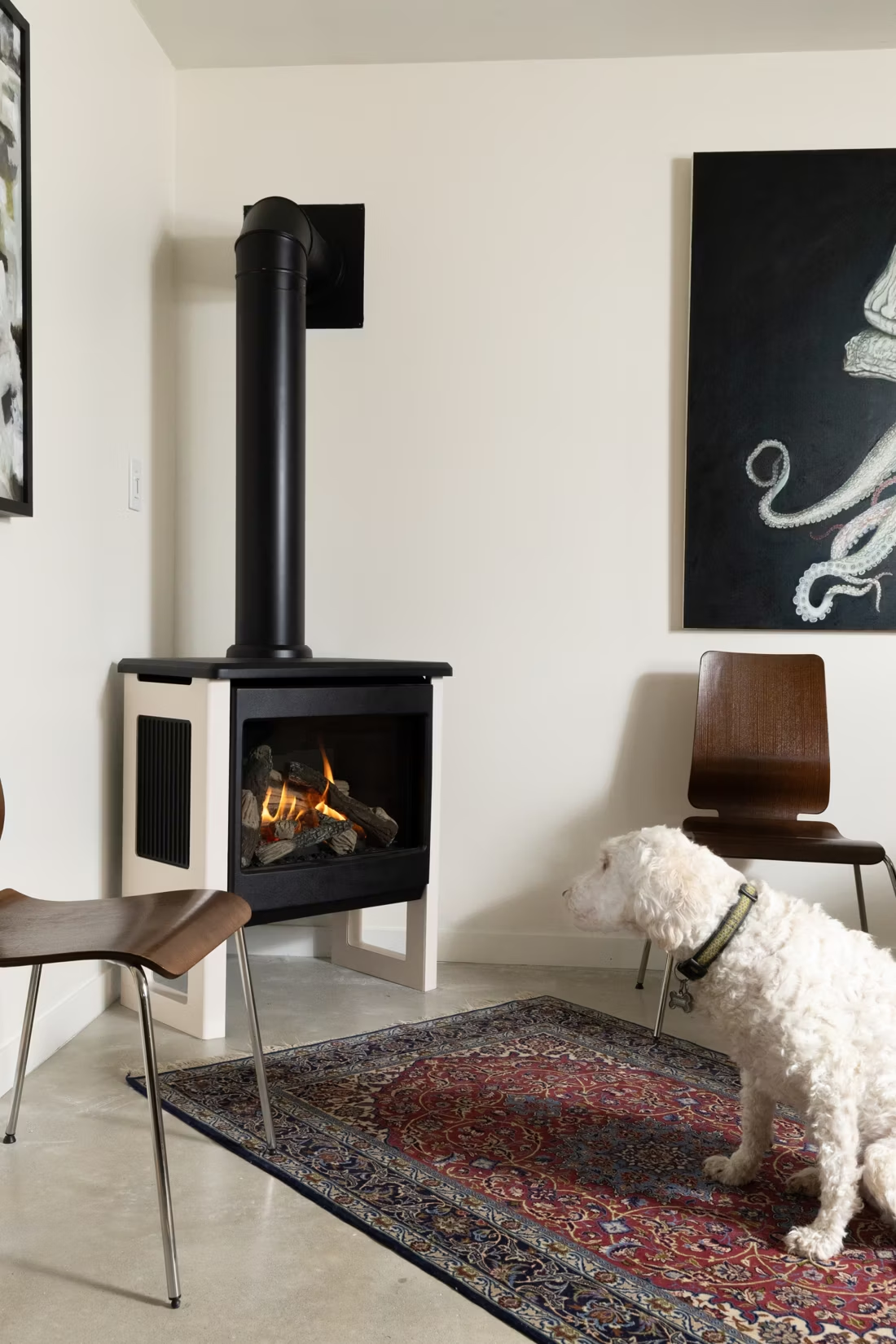
Across Metro Vancouver's municipalities, FortisBC natural gas already reaches most streets from Vancouver and Burnaby to Surrey, Coquitlam, and the North Shore. A gas fireplace gives you real heat on demand through the region's long rainy season, with no wood-burning bylaw to think about. I match homeowners with a trusted local dealer who knows which vent path and gas line work actually fit your home.
Every Project Starts From One of These Five Situations
Damp chill, not deep cold—and heat you don't have to tend.
Metro Vancouver's marine climate is about as mild as Canada gets—winter lows average only around 1.4°C, and a hard freeze is the exception, a world away from the minus-20s and minus-30s that define a winter in Winnipeg or Edmonton. But mild doesn't mean warm: the region runs on a long, damp heating season, roughly October through April, where the chill is persistent rather than extreme, and homeowners want heat that switches on the moment a room feels cold rather than a fire that needs tending. That preference is a big part of why gas has become the default choice here, and with natural gas mains already run by FortisBC through most of Vancouver, Burnaby, Surrey, Richmond, Coquitlam, and the North Shore, the fuel is already sitting at the property line for the large majority of homes in the region.
Metro Vancouver's air quality rules add another reason gas holds up well here: several municipalities restrict wood-burning appliances during winter inversion advisories and increasingly require CSA or EPA-certified units for any new wood installation, while gas appliances aren't subject to those burn-ban days at all. Permits for a new gas fireplace run through your municipal building department, and the gas line itself has to be connected by a gas fitter licensed through Technical Safety BC, a step a full-service local dealer coordinates as part of the project rather than leaving you to schedule separate trades. Installed costs across the region typically run $6,000 to $15,000 CAD, depending on whether you're dropping an insert into an existing chimney or running new gas line and venting for a built-in unit in a condo or new-construction home.
Three steps. No salesperson until you're ready.
Tell us about your project
Your postal code, your situation, and the fuel you're leaning toward—or let the answers point you to one.
See what's actually available
The brands dealers within 100 miles genuinely carry—real options, never a catalog mirage.
Get your dealer & Project Guide
A trusted local dealer, plus the free Project Guide & Parts List that names every component of the job.
Frequently Asked Questions
How much does a gas fireplace installation cost in Metro Vancouver?
Most installations across the region run $6,000 to $15,000. A direct-vent insert going into an existing masonry fireplace in an older Kitsilano or New Westminster character home, with a gas line already nearby, sits toward the lower end. A new built-in unit for a condo renovation or new-construction home in Surrey or Coquitlam, where a fresh gas line and venting have to be run through concrete or a tight wall assembly, lands higher. Strata approval and shared-wall venting logistics can add time and cost in high-rise buildings, which is common across downtown Vancouver and Burnaby towers.
Can I convert an existing wood fireplace to gas?
Yes, and it's one of the most common projects local hearth dealers handle in Metro Vancouver's older housing stock. The character homes of East Vancouver, the westside, and New Westminster often still have a wood-burning masonry fireplace built when Douglas fir and other local softwoods were burned as a matter of course. A gas insert drops into the existing firebox and vents through a liner run up the original chimney, so you keep the mantel and opening but gain a fireplace that lights with a switch. Expect roughly $6,000 to $10,000 for a typical conversion, depending on chimney condition and whether a gas line already reaches that wall.
Do I need natural gas, or is propane an option?
Natural gas from FortisBC reaches the vast majority of Metro Vancouver, including Vancouver, Burnaby, Surrey, Richmond, Coquitlam, Delta, and most of the North Shore, so most homeowners in the region simply tie into an existing line. Propane remains the practical choice on Bowen Island, in parts of Belcarra, and other pockets that sit off the gas main, where a local dealer will spec a tank set and configure the fireplace's orifice for propane instead. Either fuel works in the same fireplace models, so availability at your address, not appliance choice, usually decides the question.
Do I need a permit to install a gas fireplace in Metro Vancouver?
Yes. Every municipality in the region requires a building permit through its own municipal building department, plus a gas permit for the line work, which by law has to be done by a gas fitter licensed through Technical Safety BC. Requirements and inspection timelines vary slightly from Vancouver to Burnaby to Surrey, which is one reason to go through a full-service local dealer who already knows their inspector and handles both permits as part of the project rather than leaving you to coordinate separate trades.
What's the difference between a vented and vent-free gas fireplace, and which is allowed here?
Direct-vent gas fireplaces draw combustion air from outside and exhaust it back outside through a sealed pipe, keeping the unit completely separate from your indoor air—the standard choice across Metro Vancouver, especially in the region's dense condo and townhouse stock where tight modern building envelopes make indoor air quality a real concern. Vent-free appliances are far less common here, and many municipal codes and strata rules restrict or prohibit them outright. If you're in an apartment or townhouse, assume direct-vent is the fit and confirm with your strata before ordering anything.
Will my gas fireplace still work if the power goes out?
Most will, which matters in a region where fall and winter windstorms off the Strait of Georgia regularly knock out power across the North Shore, Delta, and the Fraser Valley fringes of Metro Vancouver. Units with intermittent pilot ignition carry a battery backup that takes over the moment the power drops, so the fireplace still lights on demand. Valor fireplaces go further, generating their own electricity through the pilot assembly so there's no battery to maintain at all. Ask your local dealer about the ignition system on any model you're considering if backup heat during a storm outage is a priority.
Gas vs. wood—which makes more sense in Metro Vancouver?
Wood still has a place here, especially where a homeowner wants a stove burning Douglas fir or lodgepole pine cut under a free FrontCounter BC personal-use permit, but several municipalities in the region now restrict wood-burning appliances during winter air quality advisories and require CSA or EPA-certified units for any new installation, plus a WETT inspection for insurance. Gas fireplaces aren't subject to burn-ban days, produce no smoke, and turn on with a switch, which is why gas has become the default for primary living-space heat across the region while wood tends to stay a secondary or cabin-style choice, particularly toward the Fraser Valley edges of Metro Vancouver.
How often does a gas fireplace need to be serviced?
Plan on an annual inspection, ideally in late summer or early fall before the region's rainy heating season sets in. A technician checks the burner, pilot assembly, gas connections, and venting, and cleans the glass—a quick visit compared to a wood chimney sweep, but still worth keeping on schedule for a fireplace that may run daily through a long, damp Metro Vancouver winter. A standard annual service call from a local gas technician typically runs $150 to $250.
I live in a condo or townhouse—does that change anything?
It usually does. A large share of Metro Vancouver's housing stock is multi-family, and strata corporations commonly have their own rules about fireplace type, venting path, and which contractors can do gas line work inside shared walls or through an exterior envelope. Direct-vent units are almost always required in this setting, and your strata may need to sign off before a municipal gas permit is issued. A local dealer who regularly works in Vancouver and Burnaby high-rises will know how to navigate strata approval alongside the standard permit process, which can save weeks on a project timeline.
Can a gas fireplace run on a thermostat?
Most modern gas fireplaces can—turn it on and off from the couch with a remote, or set a room temperature and let the fireplace hold the comfort zone for you. If low maintenance matters to your family, this is the feature set that makes gas the convenience pick over wood and pellet.
Why do fireplace quotes vary so much?
Because a fireplace is an iceberg—there's more behind the wall than in front of it. A low quote often covers only the unit; the full scope includes vent pipe, gas line or electrical, framing, and the tile or stone that has to come off and go back on. Make every bidder price the whole job. If a dealer can't speak to the full scope with confidence, that's your signal to keep looking.
What do I measure to size a fireplace insert?
Four numbers tell you what fits: the front width, the front height, the back width, and the overall depth of your existing fireplace opening. Grab a tape measure, jot those down, and snap a photo of the wall—those two things do more to move your project forward than anything else you can do today.
What's the difference between radiant and convective fireplace heat?
Most fireplaces are a thin metal box—they heat fine, but you rely on the fan to move the warmth into the room. Radiant models use a thick cast-ceramic firebox, about an inch and a quarter thick, that soaks up the fire's heat and radiates roughly 25–30% more warmth into the room with no fan running. If you watch TV in the same room or want heat in a power outage, radiant is worth asking about.
Stove and Fireplace Dealers in Metro Vancouver
Listings include WhyFire partner dealers, dealers we have verified as authorized for the brands we recommend, and established local businesses that carry hearth products. Every listing shows which one it is. The ones marked Preferred run on WhyFire's software, so they can show you real pricing and book your appointment right here. No manufacturer pays for placement. How we verify dealers →
Western Natural Gas
Evershine Fireplace Surrey
Real Fireplaces
Home Makeover Centre
The Fireplace Warehouse
Vancouver Gas Fireplaces
Gas Guys Outdoor Designs
Oray Fireplaces
Natural Gas Service in Metro Vancouver
Confirm service at your address before planning a gas fireplace—a quick call settles it.
FortisBC (Gas)
Pacific Northern Gas
Get your free Project Guide & Parts List for a gas fireplace in Metro Vancouver.
Tell me about your home, whether it's a character conversion, a new build, or a condo unit, and I'll match you with a trusted local Metro Vancouver dealer and send a free Project Guide & Parts List—the exact parts, including the vent kit, and the dealer best suited to your project.
Find Your Fireplace →