
Efficient heat that keeps the Okanagan valley air clear.
Lake Country sits at 431 metres in the Okanagan, where winter lows average a mild -4.1°C but valley inversions trap wood smoke for days at a time. A pellet stove or insert burns cleaner, and I'll match you with a trusted local dealer who knows what's actually installable on your street.
Every Project Starts From One of These Five Situations
A mild climate with a real smoke problem.
Lake Country's winters are gentle by Canadian standards—an average low of just -4.1°C, nowhere close to the -30°C nights that define a winter in Winnipeg or Edmonton. But the Okanagan's valley geometry works against clean air: cold, still air settles between the hillsides through much of the heating season, and Interior valleys like this one see recurring winter inversions and smoke advisories. Several regional districts, including this one, run wood-stove exchange programs and require CSA- or EPA-certified appliances precisely because trapped smoke from older wood stoves becomes a real health concern on inversion days.
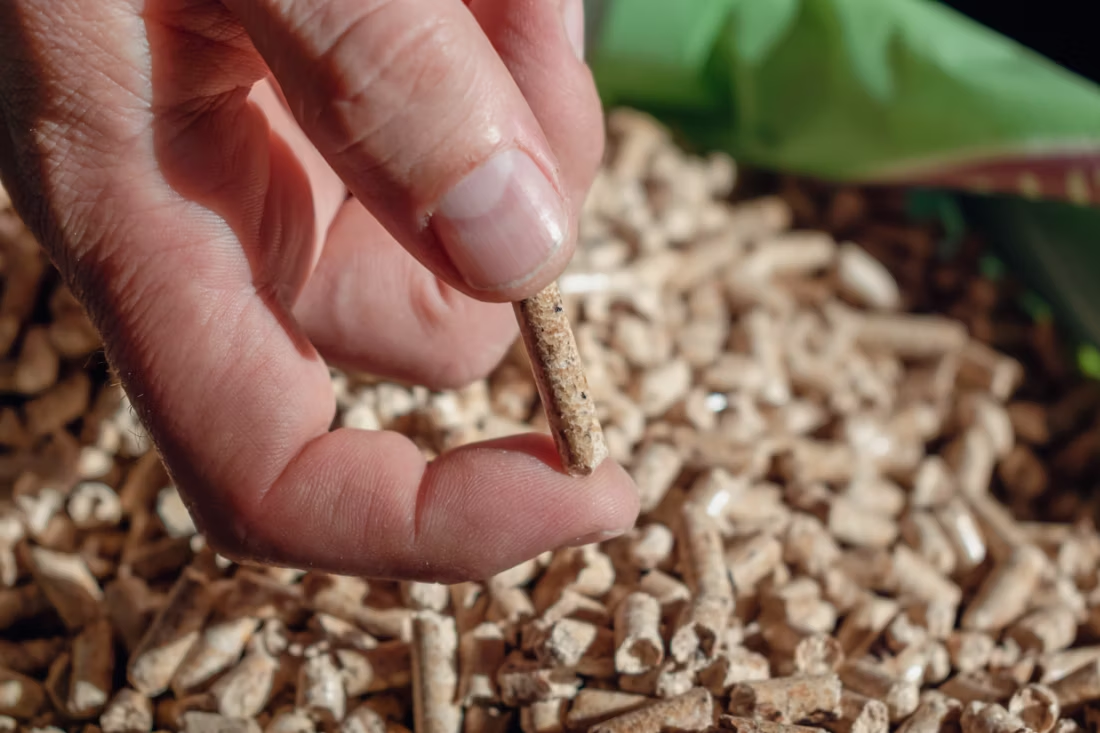
Douglas fir, paper birch, lodgepole pine, and western larch are the woods most Okanagan households know, and plenty of homes still burn them. But a pellet stove or insert sidesteps the smoke-advisory problem almost entirely—regional brands like Pinnacle Premium and Princeton Fuel Pellets run $400 to $575 CAD a tonne and burn with a fraction of the particulate output of cordwood, which matters when your local district is watching air quality closely. Natural gas is also on the table here through FortisBC and Pacific Northern Gas, but for homeowners who want the ambience and backup-heat value of a solid-fuel appliance without adding to a winter inversion, pellet is the appliance most local dealers steer them toward.
Three steps. No salesperson until you're ready.
Tell us about your project
Your postal code, your situation, and the fuel you're leaning toward—or let the answers point you to one.
See what's actually available
The brands dealers within 100 miles genuinely carry—real options, never a catalog mirage.
Get your dealer & Project Guide
A trusted local dealer, plus the free Project Guide & Parts List that names every component of the job.
Frequently Asked Questions
How much does a pellet stove installation cost in Lake Country?
Most pellet stove and insert installations here run $6,000 to $10,000 CAD. A pellet insert going into an existing masonry firebox—common in the older parts of Lake Country and Winfield—tends to land toward the lower end since the chimney chase is already there. A freestanding stove needing new through-wall or through-roof venting, more typical in newer construction around Okanagan Centre, runs closer to the top of that range. Your municipal building department requires a permit for either, and installation must follow the CSA B365 code.
Do I need a permit to install a pellet stove in Lake Country?
Yes. The municipal building department issues the permit, and installation has to meet the CSA B365 solid-fuel appliance code whether you're doing a freestanding stove or an insert. Most homeowners also arrange a WETT inspection afterward, since it's commonly required for insurance on solid-fuel appliances, pellet units included. A local dealer who handles pellet installs regularly typically manages the paperwork and schedules the inspection as part of the job.
What size pellet stove do I need for a Lake Country home?
Because winter lows here average a mild -4.1°C, most homes don't need a stove sized for extreme cold the way a home in Prince George or Fort McMurray would. A mid-size unit rated for 1,200 to 2,000 square feet covers most Lake Country living areas comfortably, and many households run pellet as a supplemental or zone-heat source alongside natural gas rather than as the sole heat for the whole house. A local dealer will size against your actual floor plan and insulation rather than square footage alone.
Where do I buy pellets in Lake Country, and what will they cost?
Pinnacle Premium and Princeton Fuel Pellets are the two brands most local retailers stock, typically running $400 to $575 CAD a tonne depending on the season and how early you buy. Buying a season's supply in late summer before demand picks up usually gets you the better end of that range. A tonne of pellets stores in roughly a third the space of an equivalent stack of firewood, which is worth factoring in if you're planning storage in a garage or shed rather than a dedicated woodshed.
Do pellet stoves help during winter smoke advisories in the Okanagan?
They're generally the preferred solid-fuel option on inversion days. Because Interior valleys like Lake Country see recurring winter inversions and smoke advisories, several regional districts run wood-stove exchange programs and require CSA- or EPA-certified appliances. A certified pellet stove burns far cleaner than an older uncertified cordwood stove, and it's the appliance most local dealers point exchange-program participants toward when they're replacing an old smoky unit.
Pellet stove vs. wood stove—which makes more sense here?
Wood is still cut and burned throughout the Okanagan—Douglas fir, paper birch, lodgepole pine, and western larch are all common, and FrontCounter BC / BC Ministry of Forests issues cutting permits year-round at no cost, aside from summer fire restrictions. Wood also keeps working during a power outage, which a pellet stove can't do without a battery backup for its auger and blower. But pellet burns cleaner on the inversion days this valley is known for, and it doesn't require splitting, stacking, or seasoning. A lot of Lake Country households land on pellet for the daily convenience and keep wood as a backup plan.
Pellet stove vs. gas fireplace—how do I choose?
FortisBC (Gas) and Pacific Northern Gas both serve parts of Lake Country, so gas is a real option for most addresses here, typically running $6,000 to $15,000 CAD installed. Gas fires instantly at the flip of a switch and needs almost no daily attention; pellet requires filling a hopper and emptying an ash pan every few days but gives you a live flame and radiant heat a lot of homeowners prefer, along with a fuel source that isn't tied to a utility bill that moves with commodity prices. If you already have gas service to the house, that tends to tip the decision toward gas for primary heat, with pellet reserved as a wood-adjacent backup.
How much maintenance does a pellet stove need?
Plan on emptying the ash pan every few days during regular use and doing a deeper hopper and burn-pot cleaning every couple of weeks, plus an annual professional service—ideally in late summer before the heating season starts—to check the venting, auger, and blower. It's a lighter lift than sweeping a wood chimney, but skipping the annual service on a stove that's running most of the winter is how a jammed auger or blocked vent shows up on the coldest week of the year.
Are there rebates available for a pellet stove upgrade in Lake Country?
CleanBC and FortisBC both run periodic rebate programs for efficient heating upgrades, and the regional wood-stove exchange program covering this area sometimes extends to pellet appliances when you're replacing an older uncertified wood stove. Program details and funding levels shift year to year, so it's worth checking current terms before you buy. A local dealer who handles installs in Lake Country regularly is usually current on what's available that season and can tell you whether your specific upgrade qualifies.
Why do fireplace quotes vary so much?
Because a fireplace is an iceberg—there's more behind the wall than in front of it. A low quote often covers only the unit; the full scope includes vent pipe, gas line or electrical, framing, and the tile or stone that has to come off and go back on. Make every bidder price the whole job. If a dealer can't speak to the full scope with confidence, that's your signal to keep looking.
Is it worth replacing an old fireplace that still sort of works?
Ask three questions: Is it ugly? Is it drafty? Does it actually work? Most old fireplaces fail at least two. Beyond looks, an old unit leaks air around the damper year-round and—if it's gas with a standing pilot—quietly burns a couple hundred dollars a year. A modern replacement seals the wall, heats the room, and changes how the whole space gets used.
Why is my open fireplace making my house colder?
Open fireplaces suck—literally. As the fire burns, it consumes air your furnace already paid to heat and pulls it out through the chimney, so the house is actually colder after the fire goes out than before you lit it. An insert fixes this: it seals the chimney, puts fixed glass across the front, and turns that hole in your house into a real heat source.
What's the difference between an insert and a zero-clearance fireplace?
An insert is a fireplace that slides into a pre-existing wood-burning fireplace—if you don't have one, there's nothing to insert it into. A zero-clearance fireplace is built into a framed wall, which makes it the answer for remodels and new construction. Simple test: existing masonry fireplace means insert; blank or framed wall means zero-clearance.
Nearby Dealers
Hearth shops serving Lake Country and the surrounding area. Every listing shows whether it is a WhyFire partner, a dealer we have verified as authorized for the brands we recommend, or a local business carrying hearth products. No manufacturer pays for placement. How we verify dealers →
Fire-Craft
Ace Plumbing And Heating
White's Barbecue & Fireplace Centre
Applewood Heating & Air Conditioning
Pellet Brands Stocked Around Lake Country
Typical price runs $400-$575 per ton—buy early-season for the best rates. Manufacturers will point you to the nearest stocking dealer.
Pinnacle Premium
Princeton Fuel Pellets
Get your free Project Guide & Parts List for a Lake Country pellet stove.
Tell me about your home and whether you're leaning toward Pinnacle Premium or Princeton Fuel Pellets, and I'll match you with a trusted local dealer and send a free Project Guide & Parts List with the exact vent kit and parts your project needs.
Find Your Fireplace →