
Easy heat and ambiance for mild Okanagan winters.
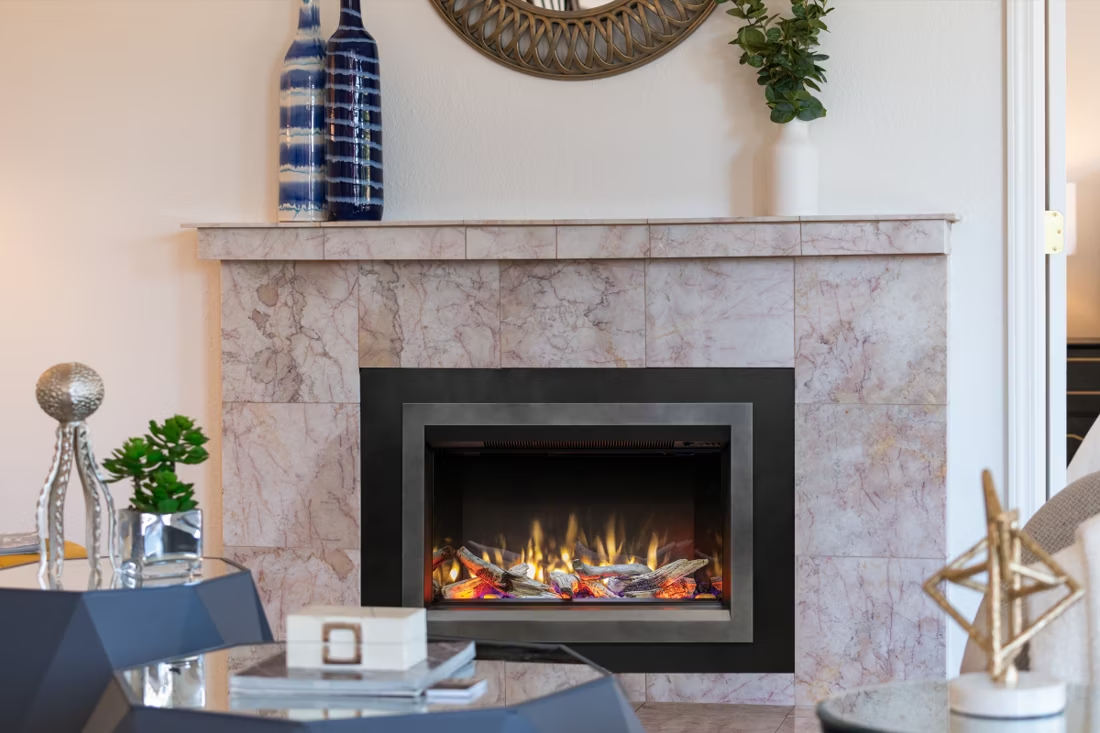
Lake Country's winter lows average just -4.1°C, one of the gentler climates in interior BC, which is exactly the kind of winter where an electric fireplace can pull real weight. No chimney, no gas line, no WETT inspection. I'll match you with a trusted local dealer and send a free Project Guide & Parts List sized to your room and your panel.
Every Project Starts From One of These Five Situations
Lake Country's winters rarely demand a workhorse heater.
Sitting at 431 metres between Okanagan and Kalamalka Lakes, Lake Country gets a real winter, but a comparatively short and mild one for interior BC. An average winter low of -4.1°C is nowhere near what Edmonton or Winnipeg homeowners plan around, and it means a lot of local houses use their fireplace for daily ambiance and shoulder-season warmth rather than as the thing standing between them and a dangerous night. That's the sweet spot for electric: instant heat at the flip of a switch, without committing a room to a full wood or gas system built for colder, longer heating seasons than this valley actually sees.
It also sidesteps two things the Central Okanagan cares about every winter: air quality and paperwork. Interior valleys around Lake Country see winter inversions and smoke advisories, and several regional programs actively encourage wood-stove exchanges toward cleaner-burning or non-combustion options. An electric fireplace produces zero emissions, so it never factors into an advisory day. It also skips the CSA B365 installation requirements and WETT inspection that wood appliances need for insurance here, and in most cases skips a municipal building permit entirely, which is part of why it's become the default choice for condos and townhomes around Okanagan Lake where strata rules often restrict solid fuel and gas appliances outright.
Three steps. No salesperson until you're ready.
Tell us about your project
Your postal code, your situation, and the fuel you're leaning toward—or let the answers point you to one.
See what's actually available
The brands dealers within 100 miles genuinely carry—real options, never a catalog mirage.
Get your dealer & Project Guide
A trusted local dealer, plus the free Project Guide & Parts List that names every component of the job.
Frequently Asked Questions
How much does an electric fireplace cost to install in Lake Country?
Most installs run $500-$1,600 CAD. A plug-in insert or wall-mount unit that uses an existing outlet sits at the low end and can often go in in an afternoon. Costs climb toward the top of that range when a unit needs a dedicated 120-volt circuit run by a licensed electrician, which is common in older Lake Country homes near Winfield and Okanagan Centre where panels weren't built with a fireplace circuit in mind. Compare that to $6,000-$15,000 CAD for a gas install or $6,000-$12,000 CAD for wood, and it's clear why electric is the go-to for a secondary suite, rec room, or lake-view addition.
Do I need a permit for an electric fireplace in Lake Country?
Usually not for the appliance itself. Plug-in electric fireplaces and inserts don't involve venting or combustion, so they fall outside the CSA B365 rules that govern wood and gas appliances through the municipal building department. The one exception is if your installer needs to run a new dedicated circuit or upgrade panel capacity, which is electrical work that should be permitted and inspected regardless of fuel type. A trusted local dealer will tell you upfront whether your unit needs that step.
Can an electric fireplace actually heat a room in Lake Country, or is it just for looks?
It depends on the room and how mild your winter really is. Given an average low of -4.1°C, a well-sized electric insert or built-in unit can genuinely serve as the primary heat for a bedroom, den, or secondary suite here in a way it couldn't in Prince George or Fort McMurray. For a whole main living area through a full Okanagan winter, most homeowners still pair it with baseboard, a heat pump, or a furnace, and let the fireplace carry the room on shoulder-season evenings and the coldest snaps in between.
Electric vs. gas fireplace—which makes more sense for my Lake Country home?
Both are well supported here since FortisBC runs natural gas service alongside FortisBC and BC Hydro electric utilities, so it's really a question of budget and priorities. Electric wins on upfront cost, at $500-$1,600 CAD versus $6,000-$15,000 CAD for a gas install, and it's simpler if you're in a condo or strata unit with restrictions on venting. Gas wins if you want backup heat during a power outage, which does happen during wind events and wildfire season in the Okanagan, since most gas units can be fitted with battery-backed ignition that keeps working when the grid doesn't.
Electric vs. wood—how do they compare for Lake Country air quality?
Wood burners here typically split Douglas fir, paper birch, lodgepole pine, or western larch, and they need a CSA/EPA-certified appliance plus a WETT inspection for insurance, on top of watching for smoke advisories during winter inversions in the valley. Electric fireplaces sidestep all of that: no smoke, no certification requirement, no advisory-day restrictions, and no chimney to maintain. The tradeoff is that wood keeps working in a power outage and electric doesn't, so a lot of households treat wood as the resilient backup and electric as the everyday, zero-hassle choice.
What kind of electric fireplace should I look for in Lake Country?
For a straightforward retrofit into an existing wall or old masonry opening, a built-in insert from a Canadian-made line like Napoleon or Dimplex is a common local pick and typically drops into the $500-$1,600 CAD range depending on size and finish. For lake-view homes doing a fuller renovation, a linear wall-mount unit gives a wider flame display without needing any structural opening at all. A local dealer can walk you through which frame size and heater wattage actually suits your room rather than just the display model on the showroom floor.
What's actually involved in installing an electric fireplace?
For a plug-in unit, installation is mostly carpentry: framing or mounting, then plugging into a standard outlet. For a built-in insert with a hardwired connection, an electrician runs a dedicated circuit to code, which is the piece worth budgeting extra time and money for in older Lake Country homes where the panel may already be near capacity. Either way, there's no flue, no gas line, and no combustion air intake to plan around, which is a big part of why the install cost stays so far under wood or gas.
How much does it cost to run an electric fireplace in Lake Country?
At BC Hydro's residential rate of roughly $0.114 per kWh, a typical 1,500-watt electric fireplace running on high costs around $0.17 an hour to operate, or a bit over $1 for a six-hour evening. Most units let you run the flame effect with the heater off, which uses only a fraction of that, so you can keep the ambiance going through a mild Okanagan evening without meaningfully moving your FortisBC or BC Hydro bill.
Why do so many newer Lake Country homes go electric instead of wood or gas?
A lot of the newer builds and condos going up around Okanagan and Kalamalka Lakes are on strata title, and many strata bylaws restrict or outright prohibit solid-fuel and open-flame gas appliances due to insurance and venting concerns. Electric avoids that conversation entirely since there's no combustion, no flue penetrating a shared wall or roof, and no WETT inspection tied to a homeowner's policy. Combined with a winter climate mild enough that supplemental heat is often all a room needs, it's an easy sell for builders and buyers alike.
How much does an electric fireplace cost to run?
With the heater on, a typical unit draws about 1,500 watts—at average electric rates that's roughly 20 cents an hour. Run the flame effect alone and it costs pennies; the flames are LED-driven and use about as much power as a light bulb. There's no pilot light, no fuel delivery, and essentially no maintenance.
What fireplace styles should I know before shopping?
Four cover most of the market: screen-front traditional (mesh front, open feel, fits craftsman homes), traditional door set (the classic look you grew up with), modern linear (wide, low, the statement piece for entertaining), and clean face contemporary (no trim—your tile or stone runs right to the fire's edge). Walk in knowing those four terms and you're ahead of most buyers.
Can I put a TV above my fireplace?
Yes—with an asterisk. Fireplaces are hot and TVs don't like heat. Either put a mantel between them to deflect rising warmth, or choose a fireplace with heat-management technology that creates a cool zone on the wall above—the wall stays around 125 degrees, barely warm, while the room still gets full heat. If you like clean lines and don't want a mantel, heat management is the answer.
Do electric fireplaces actually produce heat?
Yes—most put out around 4,800–5,000 BTUs from a standard outlet, which comfortably warms a bedroom, office, or den as a comfort-zone heater. What they won't do is carry a whole house the way wood, gas, or pellet can. Think of electric as ambiance-first with honest supplemental heat: flames on with no heat in July, flames plus warmth in January.
Nearby Dealers
Hearth shops serving Lake Country and the surrounding area. Every listing shows whether it is a WhyFire partner, a dealer we have verified as authorized for the brands we recommend, or a local business carrying hearth products. No manufacturer pays for placement. How we verify dealers →
Fire-Craft
Ace Plumbing And Heating
White's Barbecue & Fireplace Centre
Applewood Heating & Air Conditioning
Electric Service in Lake Country
An electric fireplace's heater draws about 1,500 watts—pennies per hour at local rates.
Bc Hydro
FortisBC (Electric)
Get your free Project Guide & Parts List for a Lake Country electric fireplace.
Tell me about your home, your panel, and the room you're heating, and I'll match you with a trusted local dealer and send a free Project Guide & Parts List with the right unit size and circuit needs spelled out.
Find Your Fireplace →