
Find your fireplace across the Regional District of Central Okanagan.
Wood, gas, pellet, and electric fireplace resources for the whole valley—from the Kelowna waterfront up into West Kelowna, Lake Country, and Peachland. Pick a fuel and get matched with a local dealer who actually installs it here.
Every Project Starts From One of These Five Situations
Mild lake winters, sharp valley inversions, and four fuels that all work here.
Okanagan Lake moderates this valley enough that the average winter low sits around -3.4°C—mild by BC interior standards and nowhere near the deep-freeze winters of Prince George or Winnipeg. But the same lake and surrounding hills that keep temperatures gentle also trap cold air and smoke on calm days, producing the winter inversions and smoke advisories this region is known for. Douglas fir, paper birch, lodgepole pine, and western larch are the wood species most local households burn, much of it cut under permits from FrontCounter BC and the BC Ministry of Forests off the Crown land ringing the valley.
Because inversions concentrate smoke near the valley floor, several regional districts here—including Central Okanagan—run wood-stove exchange programs that help homeowners swap older uncertified stoves for CSA/EPA-certified units, and any new wood appliance install needs to meet the CSA B365 installation code. Building permits run through each municipality's own building department—Kelowna, West Kelowna, Lake Country, and Peachland each handle their own—and most insurers ask for a WETT inspection before they'll cover a wood-burning appliance. Natural gas is widely available through FortisBC, which keeps gas fireplaces a mainstream option in town, and pellet stoves have solid regional support from brands like Pinnacle Premium and Princeton Fuel Pellets. This hub rolls up retailers, service techs, and fuel suppliers across the whole region—pick your fuel below for local dealers, install costs, and recommendations specific to your address.
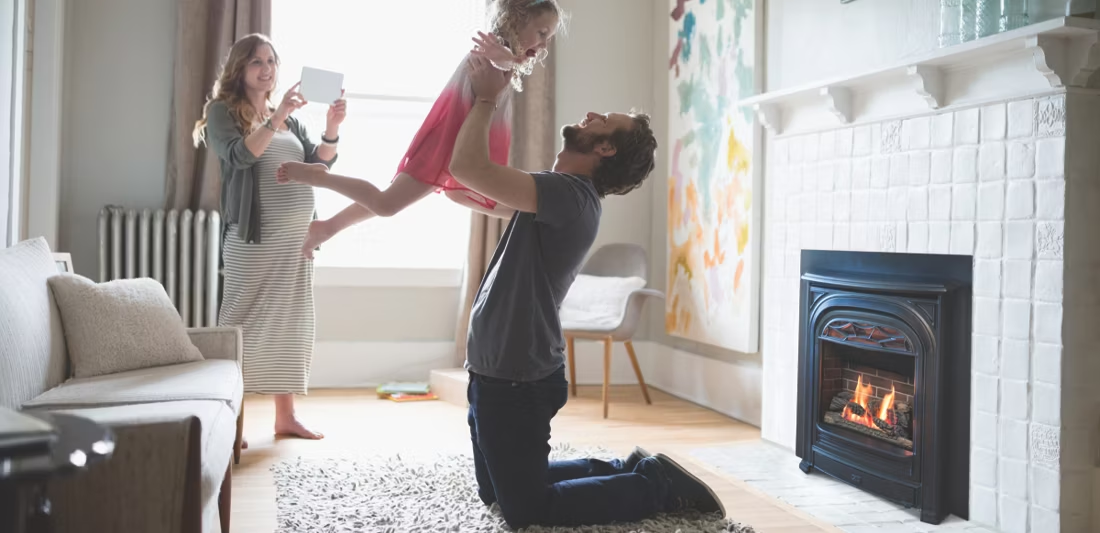
Four fuels. One honest answer for Regional District of Central Okanagan.
Wood
69 models available near Regional District of Central Okanagan.
Find your wood stove →Gas
111 models available near Regional District of Central Okanagan.
Find your gas fireplace →Pellet
See what's available near Regional District of Central Okanagan.
Find your pellet stove →Electric
See what's available near Regional District of Central Okanagan.
Find your electric fireplace →Three steps. No salesperson until you're ready.
Tell us about your project
Your postal code, your situation, and the fuel you're leaning toward—or let the answers point you to one.
See what's actually available
The brands dealers within 100 miles genuinely carry—real options, never a catalog mirage.
Get your dealer & Project Guide
A trusted local dealer, plus the free Project Guide & Parts List that names every component of the job.
Frequently Asked Questions
Which fireplace fuel makes the most sense in the Central Okanagan?
All four fuels are genuinely common here, and the right pick depends more on your home and street than the climate—winter lows averaging -3.4°C are mild enough that no fuel is fighting an extreme load. Wood remains popular given how much Douglas fir, paper birch, lodgepole pine, and western larch grow in the surrounding hills, and a CSA-certified stove handles the valley's cool, damp winters comfortably. Gas is the convenience choice where FortisBC lines run, which covers most of Kelowna and West Kelowna. Pellet stoves burn cleaner during inversion season and are well supported locally by Pinnacle Premium and Princeton Fuel Pellets. Electric fireplaces do more real work here than in colder regions of the province, since the modest heating load means an electric unit can genuinely take the edge off a room rather than just adding ambiance.
Do I need a permit or WETT inspection to install a wood stove here?
Yes to both, in almost every case. New wood stoves and inserts need to meet the CSA B365 installation code, and the building permit itself goes through whichever municipality you're in—Kelowna, West Kelowna, Lake Country, and Peachland each run their own building department rather than a single regional office. Separately, most home insurers require a WETT inspection before they'll cover a wood-burning appliance, and many ask for a fresh one again at resale or policy renewal. Gas installs need a licensed gas fitter and a gas-line permit; pellet stoves are permitted similarly to wood but aren't subject to the same insurance scrutiny. Most retailers we match homeowners with handle the permit paperwork and can point you to a WETT inspector directly.
What causes the smoke advisories and valley inversions I keep hearing about?
Okanagan Lake and the hills flanking it create a valley that's excellent at trapping cold air and wood smoke on calm winter days—the same geography that keeps temperatures milder than most of interior BC also concentrates smoke near the valley floor when the air goes still. That's why the region issues winter smoke advisories and why Central Okanagan runs a wood-stove exchange program aimed at replacing older uncertified stoves with CSA/EPA-certified units. If you're burning an older stove, it's worth checking whether you qualify for an exchange rebate before you spend money on repairs to a unit that's on its way out anyway.
Is natural gas available everywhere in the region?
Natural gas service through FortisBC is common here, but it's denser in the Kelowna and West Kelowna cores than out toward the hillsides of Lake Country or Peachland, where some properties run on propane instead. Before you commit to a gas fireplace, it's worth confirming mains service actually reaches your specific address—a local dealer can check this in minutes and will know whether a propane conversion makes more sense for a rural or hillside lot than waiting on a gas-line extension.
What does a fireplace installation typically cost in the Central Okanagan?
Costs shift with the fuel and how much venting or gas-line work your home needs. Wood stove or insert installs, including a CSA-certified unit and any chimney work, typically run $4,000-$9,000 CAD. Gas fireplaces, inserts, and stoves usually land around $4,500-$10,000 CAD depending on whether an existing gas line reaches the hearth or needs extending. Pellet stove and insert installs generally fall between $4,000-$7,000 CAD. Electric fireplaces are the budget entry point—$200-$3,000 CAD for the unit itself, plus $300-$1,200 CAD in labor for anything past a simple plug-and-play placement. The region and fuel pages above break these down further with local retailer pricing.
How far ahead should I book installation or a WETT inspection before winter?
Given how fast this region has grown, retailers and WETT-certified sweeps book up quickly once fall arrives, especially through Kelowna and West Kelowna. Late summer is the smart window to book a wood stove install, a gas fireplace conversion, or an annual WETT inspection—waiting until the first cold snap means competing with everyone else in the valley for the same crews. Many local dealers carry more than one fuel line rather than specializing in just one, so it's also a good time to compare wood, gas, pellet, and electric options side by side with someone who services your specific street, whether that's lakefront Kelowna or a hillside lot in Lake Country.
How many BTUs do I need in a fireplace?
Wrong question—and the industry's favorite way to confuse you. More BTUs isn't better if the fireplace cooks you out of the room you spent thousands to enjoy. Think in terms you can verify: how many square feet the unit heats, whether it's primary or backup heat, and whether you want it running overnight. Those three answers size a fireplace correctly every time.
Will we actually use a fireplace once we have one?
In my own home, the room with the fireplace has never been the same—it became the social hub. Game nights, holidays, date nights after the kids are down: the fire is where the house gathers. There's a reason people in this industry joke that we're really in the romance and entertainment business. You won't wonder whether you'll use it; you'll wonder how the room worked before.
What is an in-home preview and do I need one?
It's a visit where a hearth professional measures your space, confirms the model you picked actually works in your home, and walks the specs—framing, gas line, venting, finish work—before anything is ordered. Some details you just can't know until you see the house. Never make a down payment without one; it's the single most-skipped step that burns buyers.
What's the difference between an insert and a zero-clearance fireplace?
An insert is a fireplace that slides into a pre-existing wood-burning fireplace—if you don't have one, there's nothing to insert it into. A zero-clearance fireplace is built into a framed wall, which makes it the answer for remodels and new construction. Simple test: existing masonry fireplace means insert; blank or framed wall means zero-clearance.
Stove and Fireplace Dealers in Regional District of Central Okanagan
Listings include WhyFire partner dealers, dealers we have verified as authorized for the brands we recommend, and established local businesses that carry hearth products. Every listing shows which one it is. The ones marked Preferred run on WhyFire's software, so they can show you real pricing and book your appointment right here. No manufacturer pays for placement. How we verify dealers →
White's Barbecue & Fireplace Centre
Ace Plumbing And Heating
Fire-Craft
Get matched with a local Central Okanagan dealer.
Pick your fuel below and we'll put together a free Project Guide & Parts List—the right unit, the vent kit it needs, and the local dealer we recommend for your project in Kelowna, West Kelowna, Lake Country, or Peachland.your project.
Find Your Fireplace →