
Clean, steady heat for a valley prone to winter inversions.
Across the Fraser Valley Regional District's 324,351 residents, winters are mild—lows average just 0.4°C—but the valley floor traps cold air and wood smoke for days at a time. A CSA-certified pellet stove burns clean enough to sidestep advisory-day guilt. I'll match you with a trusted local dealer who knows the region's venting rules and can put together a free plan for your project.
Every Project Starts From One of These Five Situations
A mild coastal climate that still fights its own smoke.
The Fraser Valley Regional District runs from Abbotsford and Mission east through Chilliwack, Kent, Harrison Hot Springs, and Hope, boxed in by the Coast and Cascade ranges. Climate zone 4C keeps winters mild by Canadian standards—the average winter low sits at just 0.4°C—but that same mountain-ringed geography means the valley floor holds still, cold air and wood smoke in place far longer than open coastal areas like greater Vancouver. Eastern stretches near Hope and Chilliwack see the worst of it: fog and temperature inversions that can pin smoke at ground level for days. Local firewood still comes largely from Douglas fir, paper birch, lodgepole pine, and western larch, and cutting permits through FrontCounter BC and the Ministry of Forests are free and available year-round outside summer fire restrictions—but plenty of households are choosing to skip the woodpile and cutting permit altogether in favour of bagged pellets.
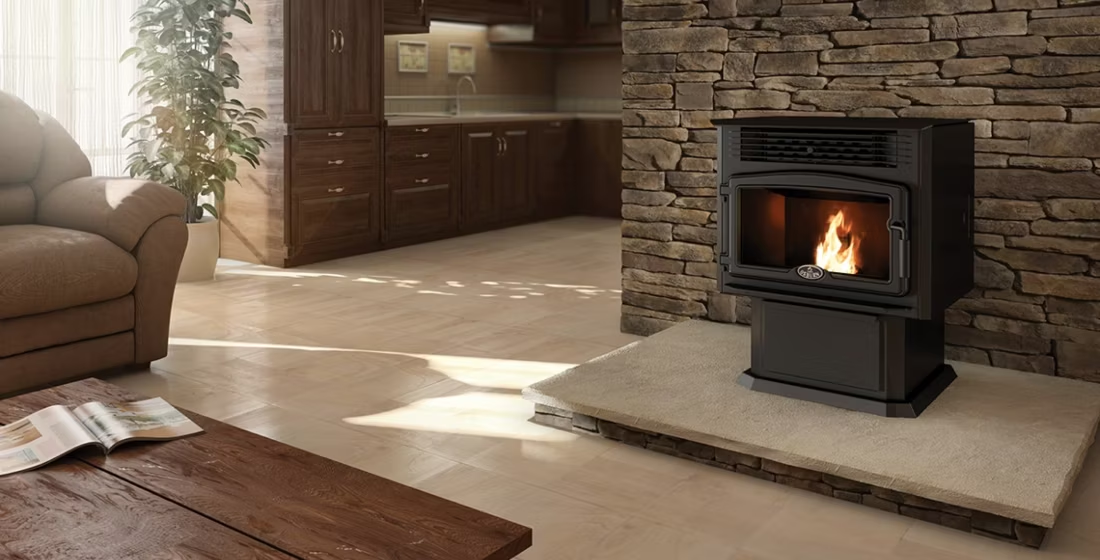
That shift is partly a smoke-advisory story. Several regional districts here run wood-stove exchange programs and require CSA or EPA-certified appliances precisely because older, uncertified stoves are the biggest contributor to valley smoke on inversion days. A modern pellet stove or insert burns far cleaner than an old smoke-dragon wood stove, which makes it a natural fit for a region that wants solid-fuel ambiance without adding to a smoke advisory. Regional brands like Pinnacle Premium and Princeton Fuel Pellets are pressed largely from the same Douglas fir and softwood mill residue that fuels the valley's wood tradition, and typically run $400-$575 CAD per ton locally. With natural gas available through FortisBC across most of the valley, pellet tends to be the choice for homeowners who want a real, visible flame and backup heat option without wood's smoke footprint or the hassle of a chimney full of creosote.
Three steps. No salesperson until you're ready.
Tell us about your project
Your postal code, your situation, and the fuel you're leaning toward—or let the answers point you to one.
See what's actually available
The brands dealers within 100 miles genuinely carry—real options, never a catalog mirage.
Get your dealer & Project Guide
A trusted local dealer, plus the free Project Guide & Parts List that names every component of the job.
Frequently Asked Questions
How much does a pellet stove installation cost in the Fraser Valley?
Most installations across the region run $6,000 to $10,000 CAD. A pellet insert going into an existing masonry fireplace with a straightforward vent-through-chimney path lands toward the lower end. A freestanding pellet stove in a new location—say, converting a room in an Abbotsford or Mission home that never had a fireplace—costs more once you add wall penetration, a dedicated electrical outlet for the auger and blower, and a proper hearth pad. Homes further out toward Hope or Kent may see a modest travel charge from installers based closer to Chilliwack or Abbotsford.
Do I need a permit to install a pellet stove in the Fraser Valley?
Yes. New installations go through your municipal building department—Abbotsford, Chilliwack, Mission, and the smaller municipalities each handle their own permitting—and the work has to follow the CSA B365 installation code. Even though pellet stoves burn far cleaner than an open wood fire, most insurers still treat them as a solid-fuel appliance and require a WETT inspection before they'll add it to your policy. A local dealer who pulls permits and arranges WETT sign-off routinely can save you the back-and-forth of doing it yourself.
Will a pellet stove be affected by smoke advisories or burn bans in the Fraser Valley?
Generally no, and that's a big part of the appeal here. The valley's winter inversions and smoke advisories mainly target older, uncertified wood stoves, which is why several regional districts run wood-stove exchange programs to get those units out of circulation. A CSA or EPA-certified pellet appliance burns cleanly enough that it's rarely, if ever, the target of a curtailment notice. If you're weighing a stove upgrade specifically to avoid inversion-day restrictions, pellet is one of the more reliable ways to keep burning through an advisory.
Where do I buy pellets locally, and how much do they cost?
Regional brands like Pinnacle Premium and Princeton Fuel Pellets are widely available through hardware stores, farm supply outlets, and dedicated pellet depots across the valley, typically running $400 to $575 CAD per ton. Buying a full season's supply—usually 2 to 3 tons for an average Fraser Valley home given how mild the winters run—in late summer or early fall often gets you ahead of any late-season price bump. Store bags off the ground in a dry garage or shed; pellets that absorb moisture swell, jam the auger, and burn poorly.
What size pellet stove do I need for a Fraser Valley home?
Because winter lows here average just 0.4°C, most valley homes get by comfortably with a small to mid-size pellet stove rated for 1,000-1,800 square feet, even for the primary living space—a much lighter load than a colder BC interior town like Prince George would need. Homes out toward Hope, where valley cold pools and elevation add a few extra degrees of chill on winter mornings, sometimes step up to the next size. A local dealer sizing the unit in person, rather than off a generic chart, keeps you from ending up with a stove that short-cycles because it's oversized for our mild climate.
Pellet vs. wood vs. gas—what's the right call for my home here?
Wood, cut for free under a FrontCounter BC permit from local Douglas fir, birch, lodgepole pine, or western larch, is the lowest-cost fuel and keeps working through a power outage—pellet stoves need electricity to run the auger and blower, so they go dark when the grid does unless you add a battery backup. Gas, available through FortisBC across most of the valley, gives you instant heat with no fuel storage at all. Pellet sits in between: cleaner-burning than wood, with more of a real flame and less handling than gas, but tied to the grid and to a bagged fuel supply rather than a buried line. Many Fraser Valley households land on pellet specifically because it dodges both wood smoke concerns and the ongoing cost of a gas hookup.
How often does a pellet stove need maintenance?
Plan on a daily or every-few-day ash pan cleanout depending on how much you run it, a weekly glass and burn-pot cleaning, and a full professional service—vent inspection, gasket check, auger and blower cleaning—once a year, ideally in late summer before the heating season starts. Given the valley's inversion-prone winters, a well-maintained, properly tuned pellet stove also burns more completely, which matters if regional air quality rules ever tighten further on solid-fuel appliances.
Can I burn firewood in a pellet stove, or combine the two?
No—pellet stoves are built specifically for compressed wood pellets and can't safely or efficiently burn cordwood; the hopper-fed auger system and burn pot are engineered around the size and burn rate of pellets. If you want both fuel options, some households in the Fraser Valley keep a separate wood stove or insert (subject to the same CSA B365 and WETT insurance requirements) alongside a pellet unit, often using pellet as the primary daily heater and wood as backup. A local dealer can talk through whether a dual-appliance setup makes sense for your home and chimney configuration.
Are there rebates for switching to a pellet stove in the Fraser Valley?
Several regional districts in the Fraser Valley run wood-stove exchange programs that offer a rebate when you retire an old, uncertified wood stove for a CSA or EPA-certified replacement, and a certified pellet stove typically qualifies. Programs and funding amounts vary by municipality and change year to year, so check with Abbotsford, Chilliwack, Mission, or your local regional district office directly before you buy. A local dealer who handles these exchanges regularly can usually tell you on the spot whether your current stove is eligible and what paperwork the rebate requires.
Why do fireplace quotes vary so much?
Because a fireplace is an iceberg—there's more behind the wall than in front of it. A low quote often covers only the unit; the full scope includes vent pipe, gas line or electrical, framing, and the tile or stone that has to come off and go back on. Make every bidder price the whole job. If a dealer can't speak to the full scope with confidence, that's your signal to keep looking.
Is it worth replacing an old fireplace that still sort of works?
Ask three questions: Is it ugly? Is it drafty? Does it actually work? Most old fireplaces fail at least two. Beyond looks, an old unit leaks air around the damper year-round and—if it's gas with a standing pilot—quietly burns a couple hundred dollars a year. A modern replacement seals the wall, heats the room, and changes how the whole space gets used.
Why is a fireplace insert so efficient?
An insert does two things: it seals the chimney completely, so you stop losing air you already paid to heat, and it radiates warmth into the room through the firebox and glass. Most add a heat-exchange fan that pulls cool room air underneath, wraps it around the hot firebox, and pushes it back out warm. Your home is more efficient before you've even lit the first fire.
What should I look for in pellet stove design?
Three things separate the field: how easy the burn pot is to clean (trapdoor designs let the ash drop straight into the pan), how the auger moves pellets (top-mounted augers that pull instead of push jam less and wear slower), and diagnostics (self-diagnosing control boards tell you exactly which part needs attention instead of leaving you guessing). Heat output is table stakes—livability is in these details.
Stove and Fireplace Dealers in Fraser Valley
Listings include WhyFire partner dealers, dealers we have verified as authorized for the brands we recommend, and established local businesses that carry hearth products. Every listing shows which one it is. The ones marked Preferred run on WhyFire's software, so they can show you real pricing and book your appointment right here. No manufacturer pays for placement. How we verify dealers →
Dagg's Fireplace Shop
Encore Fireplaces
Pellet Brands Stocked Around Fraser Valley
Typical price runs $400-$575 per ton—buy early-season for the best rates. Manufacturers will point you to the nearest stocking dealer.
Pinnacle Premium
Princeton Fuel Pellets
Get your Fraser Valley pellet stove Project Guide & Parts List.
Tell me about your home and how you plan to use the stove, and I'll match you with a trusted local Fraser Valley dealer and send a free Project Guide & Parts List—the exact parts, including the vent kit, for your pellet project, no big-box guesswork.
Find Your Fireplace →