
Gas heat that starts instantly through Comox Valley's mild, damp winters.
Courtenay sits at just 13 metres above sea level with an average winter low around 1.4°C, so the case for gas here isn't survival heat, it's instant, reliable comfort when Pacific storms roll through. I'll match you with a trusted local dealer who knows the FortisBC hookup, the venting, and what's actually installable on your street.
Every Project Starts From One of These Five Situations
Comfort heat for a coastline that rarely freezes.
Courtenay's marine climate is genuinely mild by Canadian standards, closer in feel to a shoulder-season chill than the deep-freeze winters of Winnipeg or Edmonton. Winter lows hovering just above 1°C mean many Comox Valley homes could get by on a heat pump alone, but the tradeoff is exposure: fall and winter windstorms off the Strait of Georgia knock out power across Vancouver Island most years, sometimes for a day or more. That's the real reason gas fireplaces stay popular here—they fire up on demand regardless of what BC Hydro's grid is doing, and they don't require the woodpile and constant re-stacking that this damp climate makes miserable.
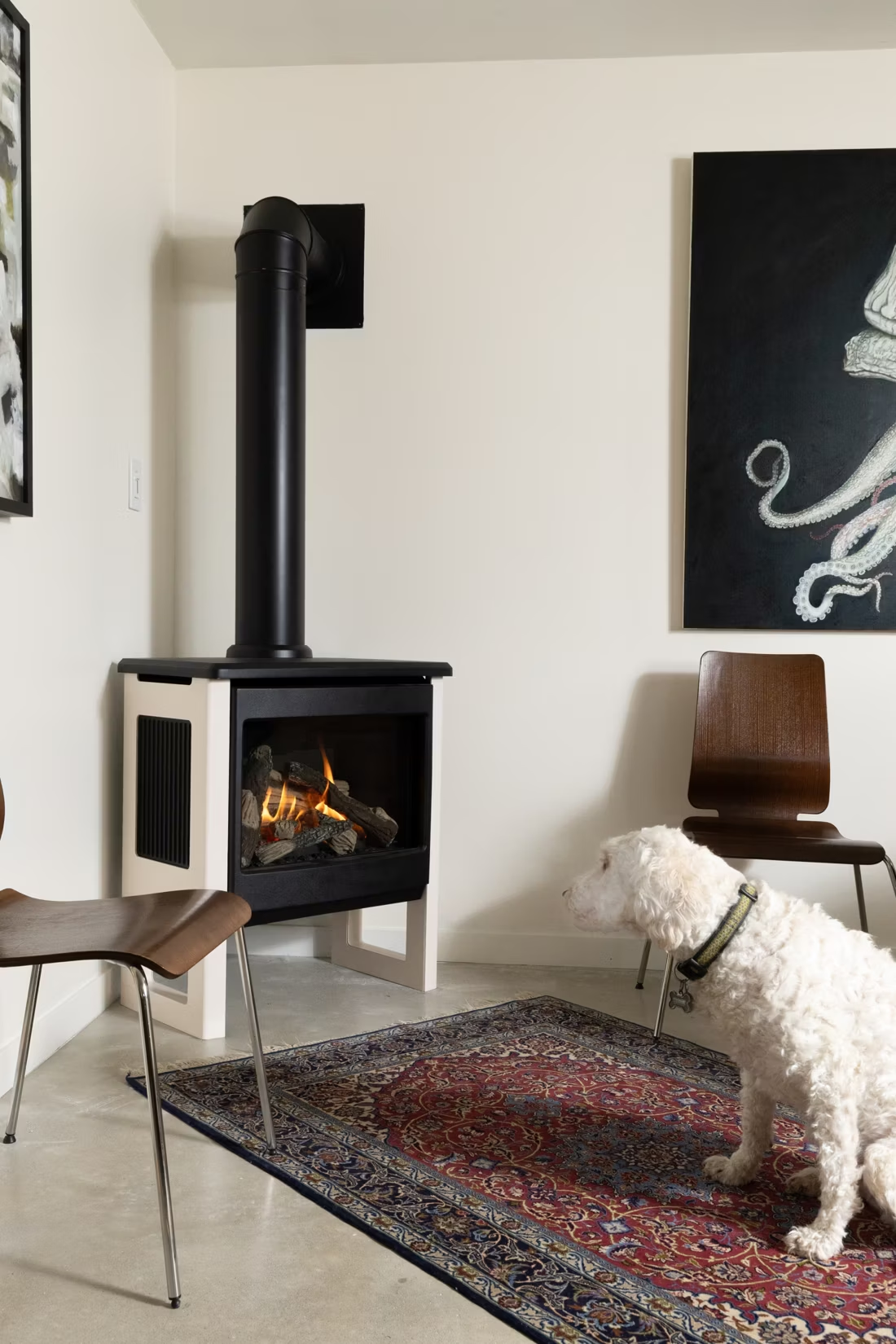
FortisBC (Gas) runs an extensive distribution network through Courtenay and most of the Comox Valley, with Pacific Northern Gas serving other parts of the province, so most in-town addresses have a straightforward tie-in. Installed costs typically run $6,000 to $15,000 CAD, and any new unit needs a permit through the municipal building department along with work from a licensed gas contractor. Wood is still common here—Douglas fir, paper birch, lodgepole pine, and western larch are all split locally—but interior valley inversions and smoke advisories have pushed a fair number of Comox Valley households toward gas or pellet for their main living space, keeping wood as a backup or secondary appliance instead.
Three steps. No salesperson until you're ready.
Tell us about your project
Your postal code, your situation, and the fuel you're leaning toward—or let the answers point you to one.
See what's actually available
The brands dealers within 100 miles genuinely carry—real options, never a catalog mirage.
Get your dealer & Project Guide
A trusted local dealer, plus the free Project Guide & Parts List that names every component of the job.
Frequently Asked Questions
How much does a gas fireplace installation cost in Courtenay?
Most installs land between $6,000 and $15,000 CAD. A direct-vent insert going into an existing masonry firebox in one of the older character homes around downtown Courtenay or Old Courtenay tends to sit toward the lower end, especially if a gas line already runs to the house. A new built-in unit for a renovation or addition, with fresh gas piping and venting through an exterior wall, runs toward the top of that range. Homes on the edges of the Comox Valley that sit off the FortisBC mains and need a propane tank set should budget extra on top of the install itself.
Can I convert my existing wood fireplace to gas?
Yes, and it's a routine request in Courtenay's older neighbourhoods where masonry fireboxes were originally built to burn Douglas fir or birch. A gas insert typically slides into that existing opening with a liner run up the current chimney, generally in the $6,000-$9,500 range depending on whether you're tying into FortisBC's gas line or running on propane. Unlike a wood appliance, a gas conversion doesn't trigger a WETT inspection requirement for insurance, though your installer still needs to be a licensed gas contractor and the work still goes through the municipal building department.
Do I need natural gas service, or can I run on propane?
Most of Courtenay proper is on FortisBC's gas distribution network, so tying a fireplace into an existing gas line is usually simple if your furnace or water heater already runs on it. Outlying pockets of the Comox Valley, including parts of Black Creek and Merville, sit outside the mains and typically run on propane instead, with a tank set on the property. Either fuel works in the same fireplace bodies most local dealers carry, so your address, not the appliance, is what decides the fuel path.
Will a gas fireplace still work if the power goes out?
Most will, and this is arguably the strongest local argument for gas over an electric fireplace or heat pump alone. Vancouver Island's fall and winter windstorms are a regular cause of multi-hour or multi-day power outages across the Comox Valley. Units with intermittent pilot ignition run on AA battery backup that kicks in automatically, while Valor units skip batteries entirely because their pilot generates its own current. Ask your dealer which ignition system is on any model you're considering, since it's a meaningful practical difference here, not a minor spec.
What's the difference between a gas fireplace, insert, and stove?
A gas fireplace is a built-in unit framed into a wall, common in newer construction around Courtenay's growing subdivisions. A gas insert fits inside an existing masonry firebox, which is the typical retrofit for older homes near downtown that originally burned Douglas fir or lodgepole pine. A gas stove stands freestanding on a hearth pad, similar in footprint to a wood stove but running off a gas line or propane tank instead of cordwood. For most existing Comox Valley homes with a working chimney, an insert is the least disruptive option.
Do I need a permit to install a gas fireplace in Courtenay?
Yes. You'll need a building permit through the municipal building department, and the gas work itself must be done by a contractor licensed with Technical Safety BC. Installations follow the CSA B365 code. Most dealers who regularly work in the Comox Valley handle both the building permit and the gas permit as part of the job, which saves you from coordinating two separate approvals yourself.
Vented vs. vent-free gas fireplaces—what should I know here?
Direct-vent units draw combustion air from outside and exhaust it back outside through sealed venting, and that's the standard for every gas fireplace installed in BC. Vent-free, or unvented, gas appliances aren't CSA-certified for permanent installation here, so you won't find a local dealer offering them as an option. That's actually a good match for the Comox Valley's air quality concerns around winter inversions and smoke advisories, since a sealed direct-vent unit adds no combustion byproducts to the room air.
How often does a gas fireplace need to be serviced?
Plan on an annual check, ideally in late summer or early fall before the first storm season knocks out power and everyone's calling their dealer at once. A technician checks the burner, pilot assembly, gas connections, and venting, and cleans the glass. It's a lighter job than a wood chimney sweep, but skipping it on a unit that runs through Courtenay's damp, mould-prone winters is how a pilot or ignition issue shows up on the one night you actually need the fireplace. Expect roughly $150-$250 CAD for a standard visit.
Gas vs. wood vs. pellet—which makes sense for a Comox Valley home?
Wood—split from Douglas fir, birch, or western larch, with free cutting permits available through FrontCounter BC on public land—still has a place for households that want a backup heat source that doesn't depend on electricity or a gas line. But interior valley inversions and smoke advisories have made gas and pellet the more common daily choice, since neither adds particulate to the air on a stagnant winter day. Pellet stoves, using regional brands like Pinnacle Premium or Princeton Fuel Pellets at roughly $400-$575 CAD a ton, split the difference: cleaner than wood but still dependent on power for the auger. Gas wins for pure convenience and outage resilience, which is why a lot of Courtenay homes run gas in the main living space and keep a certified wood stove elsewhere as a fallback.
Can a gas fireplace run on a thermostat?
Most modern gas fireplaces can—turn it on and off from the couch with a remote, or set a room temperature and let the fireplace hold the comfort zone for you. If low maintenance matters to your family, this is the feature set that makes gas the convenience pick over wood and pellet.
Why do fireplace quotes vary so much?
Because a fireplace is an iceberg—there's more behind the wall than in front of it. A low quote often covers only the unit; the full scope includes vent pipe, gas line or electrical, framing, and the tile or stone that has to come off and go back on. Make every bidder price the whole job. If a dealer can't speak to the full scope with confidence, that's your signal to keep looking.
Does a gas fireplace work when the power is out?
Yes—modern gas fireplaces have a battery backup for the ignition system that lasts for weeks, so no power equals no problem. Your furnace can't say that: no electricity, no blower, no heat. It's one of the most common reasons families add a fireplace, and worth confirming on any model you're considering.
What do I measure to size a fireplace insert?
Four numbers tell you what fits: the front width, the front height, the back width, and the overall depth of your existing fireplace opening. Grab a tape measure, jot those down, and snap a photo of the wall—those two things do more to move your project forward than anything else you can do today.
Nearby Dealers
Hearth shops serving Courtenay and the surrounding area. Every listing shows whether it is a WhyFire partner, a dealer we have verified as authorized for the brands we recommend, or a local business carrying hearth products. No manufacturer pays for placement. How we verify dealers →
Bennett Sheet Metal & Heating Ltd.
Hornby Island Co-Op
Natural Gas Service in Courtenay
Confirm service at your address before planning a gas fireplace—a quick call settles it.
FortisBC (Gas)
Pacific Northern Gas
Get your free Project Guide & Parts List for a Courtenay gas fireplace.
Tell me about your home and whether you're on FortisBC gas or propane, and I'll match you with a trusted local dealer and send a free Project Guide & Parts List with the exact vent kit and parts your project needs.
Find Your Fireplace →