
Find your fireplace in the Comox Valley.
Wood, gas, pellet, and electric fireplace resources for the whole valley, from the Courtenay-Comox corridor out to Cumberland, Black Creek, and the islands. Pick a fuel and get matched with a local dealer who actually works in your area.
Every Project Starts From One of These Five Situations
Mild coastal winters, avg lows near 1.4°C, and four fuels that all still work here.
The Comox Valley sits on the east coast of Vancouver Island between the Strait of Georgia and the Beaufort Range, taking in Courtenay, Comox, and Cumberland along with rural pockets like Black Creek, Merville, Royston, and Fanny Bay, plus the ferry-served communities of Denman and Hornby Islands. A marine climate keeps winter lows mild, averaging around 1.4°C, so hard freezes here are rare compared with the Interior or places like Prince George or Fort McMurray, though the valley still runs a long stretch of damp, grey weather from October through April. Douglas fir, paper birch, lodgepole pine, and western larch are the wood species most local households burn, some of it cut on nearby Crown land under permits from FrontCounter BC / BC Ministry of Forests.
Natural gas service runs through Courtenay, Comox, and Cumberland via FortisBC, which keeps gas fireplaces and inserts a genuinely mainstream choice in town, while pellet stoves burning regional brands like Pinnacle Premium and Princeton Fuel Pellets fill in well for rural properties past the gas mains. Winter inversions still settle into the valley floor on calm days and trigger smoke advisories, which is why the region and neighbouring regional districts run wood-stove exchange programs that swap out older uncertified units for CSA/EPA-certified stoves. Any new wood-burning appliance follows the CSA B365 installation code, and insurers here commonly require a WETT inspection before covering a wood stove or fireplace—something an experienced local dealer builds into the project alongside permits through your municipal building department or the regional district for unincorporated areas. This hub rolls up hearth retailers, service technicians, and fuel suppliers across the whole valley; pick your fuel below for local dealers, typical costs, and unit recommendations for your specific town.
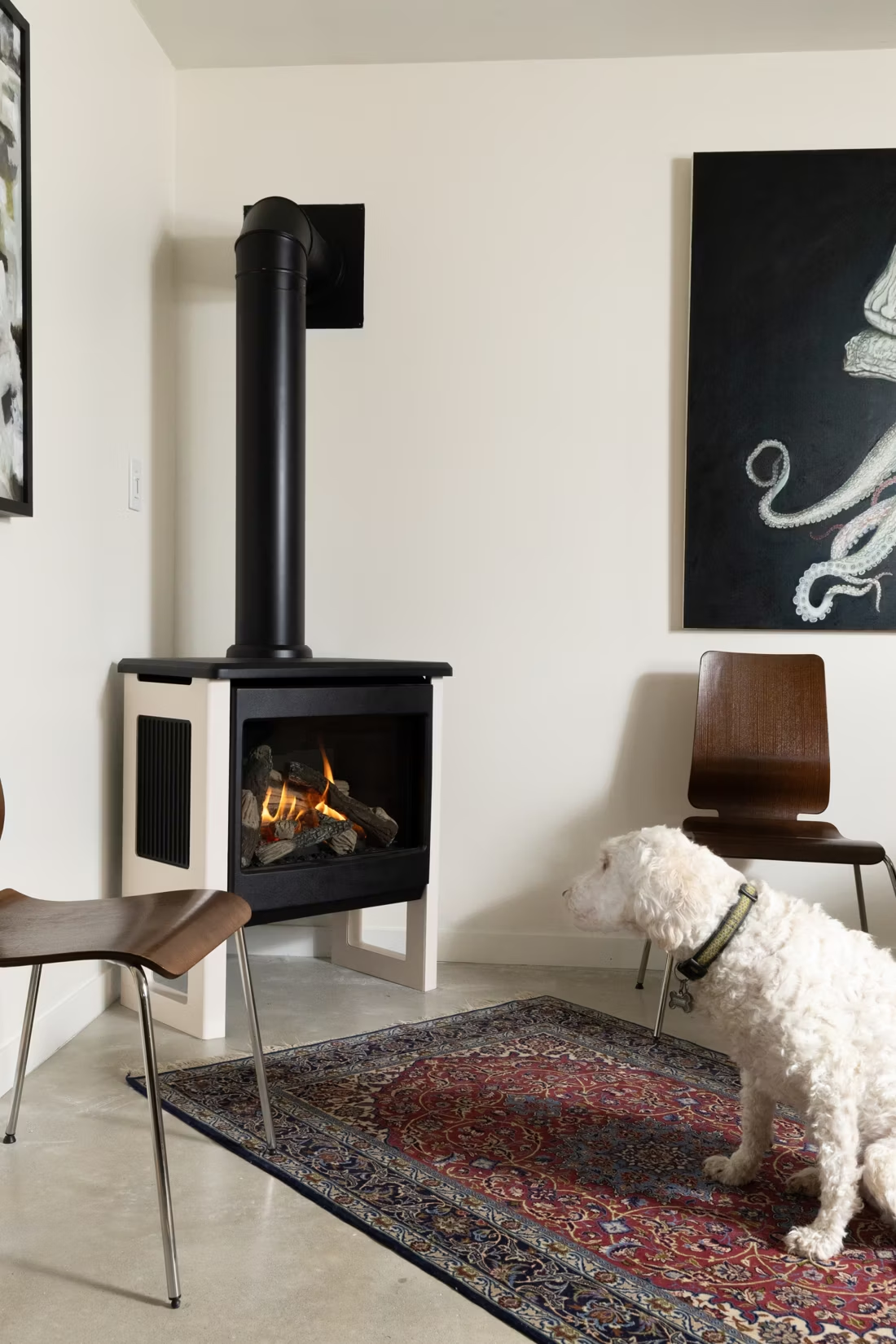
Four fuels. One honest answer for Comox Valley.
Three steps. No salesperson until you're ready.
Tell us about your project
Your postal code, your situation, and the fuel you're leaning toward—or let the answers point you to one.
See what's actually available
The brands dealers within 100 miles genuinely carry—real options, never a catalog mirage.
Get your dealer & Project Guide
A trusted local dealer, plus the free Project Guide & Parts List that names every component of the job.
Frequently Asked Questions
Which fireplace fuel makes the most sense in the Comox Valley?
All four fuels genuinely work here, but the right one depends on where you live. Natural gas from FortisBC reaches most of Courtenay, Comox, and Cumberland, making gas fireplaces and inserts a mainstream choice—no wood handling, reliable heat through the valley's damp, grey winter days. Wood stoves still matter too, both for ambiance and as backup during the windstorms that regularly knock out power along the coast; Douglas fir and western larch burn well here, and a good catalytic stove will hold overnight even though our winter lows only average around 1.4°C. Pellet stoves burning Pinnacle Premium or Princeton Fuel Pellets are a strong option for rural properties past the gas mains, like Black Creek or Fanny Bay, where you want automated heat without a new gas line. Electric fireplaces work well as supplemental heat in bedrooms, basements, or the vacation properties out on Denman and Hornby Islands, though nobody should expect one to carry a whole home through winter on its own.
Do I need a permit to install a wood stove or fireplace in the Comox Valley?
In most cases, yes. New wood stoves and inserts go in under the CSA B365 installation code, with the building permit coming from your municipal building department if you're inside Courtenay, Comox, or Cumberland, or from the Comox Valley Regional District if you're in an unincorporated area like Black Creek or Merville. Gas installs need a licensed gas fitter and a separate gas permit; pellet stoves follow a path similar to wood without the added combustion-air requirements of an open masonry chimney. Beyond the building permit, most home insurers here will ask for a WETT inspection before they'll cover a wood-burning appliance, which is a separate step from the municipal process but one a qualified local dealer routinely helps you sort out.
What's this I keep hearing about wood-stove exchange programs and smoke advisories?
The Comox Valley sits low between the Beaufort Range and the Strait of Georgia, and on calm winter days that geography traps wood smoke near the valley floor, which is why smoke advisories go out most winters. In response, the region and several neighbouring regional districts run wood-stove exchange programs that offer a rebate toward a new CSA/EPA-certified stove when you retire an old, uncertified one—it's worth checking current program details before you buy, since the incentive can meaningfully offset the cost of upgrading. A certified stove also burns cleaner regardless of the rebate, which matters given how much of the local wood supply is Douglas fir and lodgepole pine cut on nearby Crown land.
Can I find a retailer that carries more than one fuel type?
Yes, and it's the norm here rather than the exception. Plenty of Comox Valley homes end up mixing fuels—gas as primary heat with a wood stove for backup during a windstorm outage, or a pellet stove out past the gas mains paired with an electric unit somewhere else in the house—so most local dealers stock and service two or three fuel types rather than specializing narrowly. That's useful if you're still weighing options: you can see working wood, gas, and pellet units side by side and talk through what actually fits your address, whether that's a gas-served lot in Courtenay or a rural property in Fanny Bay. We match you with the retailer whose fuel lineup and service area genuinely covers your project.
How does service and installation work for rural properties and the islands?
Installation crews and chimney sweeps are based mainly around Courtenay and Comox but travel regularly to Cumberland, Black Creek, Merville, Royston, and Fanny Bay. Properties on Denman and Hornby Islands add a ferry crossing to the schedule, so book service calls with extra lead time, especially heading into the wet season when WETT inspections and gas safety checks are in high demand. If a wood stove serves as your backup heat during coastal windstorms, get the chimney swept and the appliance checked before October, ahead of the season's first real system off the strait.
What does a fireplace installation typically cost in the Comox Valley?
Costs shift with fuel type and how much venting or gas-line work is involved. Wood stove or insert projects typically run $4,000-$9,000 CAD, including CSA B365-compliant venting and a WETT inspection for your insurer. Gas fireplaces and inserts run roughly $5,000-$12,000 CAD depending on whether FortisBC service already reaches the house or a new line has to be run. Pellet stove or insert projects generally land at $4,000-$7,500 CAD. Electric units are the exception—often $300-$3,000 CAD for the unit itself, plus a few hundred dollars in labour for anything past a simple plug-in placement. Your local dealer will size the actual project and parts list once they've seen the space.
How many BTUs do I need in a fireplace?
Wrong question—and the industry's favorite way to confuse you. More BTUs isn't better if the fireplace cooks you out of the room you spent thousands to enjoy. Think in terms you can verify: how many square feet the unit heats, whether it's primary or backup heat, and whether you want it running overnight. Those three answers size a fireplace correctly every time.
Will we actually use a fireplace once we have one?
In my own home, the room with the fireplace has never been the same—it became the social hub. Game nights, holidays, date nights after the kids are down: the fire is where the house gathers. There's a reason people in this industry joke that we're really in the romance and entertainment business. You won't wonder whether you'll use it; you'll wonder how the room worked before.
What are the biggest mistakes people make buying a fireplace?
Five come up constantly: budgeting for the unit but not the full job (vent, gas line, electrical, finish work); drowning in options instead of starting from style and fuel; buying without an in-home preview; handing installation to a handyman instead of a pro; and giving up out of sheer indecision. Every one is avoidable with a clear plan—step one, step two, step three.
Should the dealer who sells my fireplace also install it?
Ideally, yes. A fireplace project involves vent pipe, gas line, electrical, and often tile or stone. Hire three or four separate trades and you own the liability and the game of telephone between them. One company selling and installing means one accountable party, start to finish—ask about factory training, on-time completion records, and what happens if an inspection fails.
Stove and Fireplace Dealers in Comox Valley
Listings include WhyFire partner dealers, dealers we have verified as authorized for the brands we recommend, and established local businesses that carry hearth products. Every listing shows which one it is. The ones marked Preferred run on WhyFire's software, so they can show you real pricing and book your appointment right here. No manufacturer pays for placement. How we verify dealers →
Bennett Sheet Metal & Heating Ltd.
Hornby Island Co-Op
Get matched with a trusted Comox Valley dealer.
Pick your fuel below and we'll put together a free Project Guide & Parts List—the right unit, the vent kit it needs, and the local dealer we recommend for your project in the Comox Valley.
Find Your Fireplace →