
Reliable heat for Comox Valley's damp, mild winters.
Winter lows here average around 1.4°C—nothing like the deep freezes of Prince George or Edmonton—but the Valley's long, wet heating season still calls for dependable, on-demand heat. FortisBC's natural gas network reaches most of Courtenay, Comox, and Cumberland, and I'll match you with a trusted local dealer who knows which direct-vent setup actually fits your home.
Every Project Starts From One of These Five Situations
Heat that switches on the moment the fog rolls in.
The Comox Valley sits in climate zone 4C on Vancouver Island's east coast, sheltered by the Beaufort Range from the worst of BC's Interior weather. Average winter lows hover around 1.4°C, and hard frosts are the exception rather than the rule—a different world from the minus-30s that define winter in Prince George or across the BC Interior. But roughly 50,000 people here still live through a long, damp heating season that runs from October through April, and homes built for coastal mildness often lack the insulation to shrug off weeks of grey, single-digit days. That's where gas earns its place: a direct-vent fireplace or insert brings a room up to temperature in minutes without the upkeep a wood stove demands, which matters when the goal is a quick top-up of heat rather than an all-night burn.
FortisBC's natural gas distribution network covers most of Courtenay, Comox, and Cumberland, so a straightforward hookup is realistic for the majority of Valley homes. Head out toward Black Creek, Merville, Royston, or Fanny Bay and you're often past the gas mains, where propane from a local supplier fills the same role. Either way, expect $6,000 to $15,000 CAD installed depending on whether you're running new gas line, converting an existing wood-burning fireplace to a direct-vent insert, or building into new construction. Permits go through the applicable municipal building department for Courtenay, Comox, or Cumberland, and any gas work has to be signed off by a licensed gas fitter under the CSA B149 installation code—one more reason to work with a full-service local dealer rather than piecing the job together yourself.
Three steps. No salesperson until you're ready.
Tell us about your project
Your postal code, your situation, and the fuel you're leaning toward—or let the answers point you to one.
See what's actually available
The brands dealers within 100 miles genuinely carry—real options, never a catalog mirage.
Get your dealer & Project Guide
A trusted local dealer, plus the free Project Guide & Parts List that names every component of the job.
Frequently Asked Questions
How much does a gas fireplace installation cost in the Comox Valley?
Most Comox Valley gas installations run $6,000 to $15,000 CAD. A direct-vent insert going into an existing masonry fireplace in an older Courtenay or Comox neighbourhood, with a gas line already nearby, sits toward the lower end. A new build-in fireplace for a renovation or new construction—with fresh gas line, venting through an exterior wall or roof, and finish work—lands higher. Rural properties out past the gas mains that need a propane tank set and delivery agreement can also push toward the top of the range. A local dealer will walk your space and give you a firm number before any work starts.
Can I convert my wood fireplace to gas?
Yes, and it's a common project in the Valley's older housing stock around Courtenay and Comox, much of it built with a masonry wood fireplace as the original heat source. A gas insert drops into that existing firebox and vents through a liner run up the same chimney, so the exterior look stays the same while you gain a fireplace that lights with a switch. Expect somewhere in the $6,000 to $9,500 CAD range for a straightforward conversion, more if the chimney needs relining work or you're on propane and a new line has to be run from the tank.
Is natural gas or propane the right choice for my home?
It depends on where you sit relative to FortisBC's distribution lines. Courtenay, Comox, and most of Cumberland have natural gas service, so if your street already has gas for a furnace or water heater, adding a fireplace is usually a simple tie-in. Once you're out toward Black Creek, Merville, Royston, Fanny Bay, or up into the rural electoral areas, you're typically beyond the mains, and propane from a local bulk supplier becomes the standard fuel—either off an existing tank or a new one your supplier sets. Both fuels run the same appliances with the correct orifice and regulator, so the choice comes down to what actually reaches your address.
Will my gas fireplace still work if the power goes out?
Most will, with a caveat. Units with intermittent pilot ignition carry a battery backup that kicks in automatically when the power drops, so the fireplace still lights and runs on demand. Valor fireplaces go further—their pilot assembly generates its own electricity through the thermocouple, so there's no battery to think about. Given how often coastal storms take down power lines along Vancouver Island and through the Valley's rural areas, that distinction is worth asking about when comparing models with a local dealer.
What's the difference between a gas fireplace, insert, and stove?
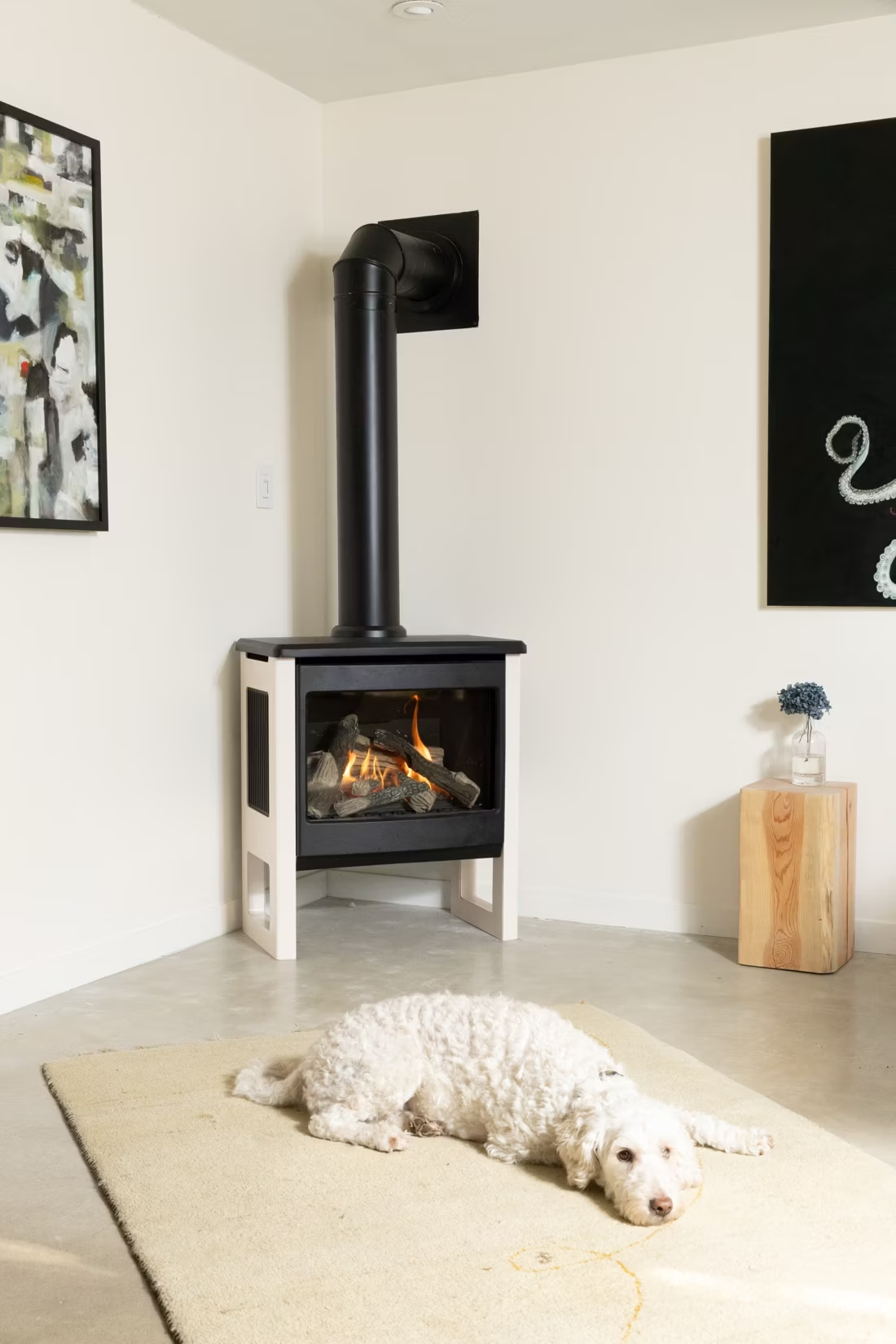
A gas fireplace is a fully built-in unit, framed into a wall—the usual pick for new construction or a full renovation in a Comox Valley home. A gas insert is sized to slide into an existing masonry firebox and uses your current chimney as the vent path, which is why it's the go-to for older Courtenay and Comox homes upgrading from wood. A gas stove is a freestanding, cabinet-style unit that sits on the floor, useful in a room without an existing chimney or in a manufactured home out in one of the rural electoral areas. A dealer walking your actual space will tell you which configuration fits.
Do I need a permit for a gas fireplace in the Comox Valley?
Yes. Whether you're in Courtenay, Comox, Cumberland, or one of the Comox Valley Regional District's electoral areas, you'll need a building permit from the applicable municipal building department, plus sign-off on the gas line from a licensed gas fitter under the CSA B149 installation code. Most local dealers handle the permit application and inspection scheduling as part of the job, which is one of the real advantages of going through a full-service installer instead of a handyman install.
Are vent-free gas fireplaces available here?
No—Canadian gas code requires fireplaces to be vented, so the unvented units sold in parts of the US aren't certified for installation here. Direct-vent is the standard across the Comox Valley: it pulls combustion air from outside and exhausts it back outside through a sealed pipe, so nothing from the burn ends up in your living space. That matters in a region where damp, grey stretches already push indoor humidity up—the last thing a coastal Comox Valley home needs is more moisture and combustion byproducts trapped indoors.
How often does a gas fireplace need to be serviced?
Plan on an annual inspection, ideally in September before the wet season sets in. A technician checks the burner, pilot assembly, gas connections, and venting, and cleans the glass—a much shorter visit than a wood chimney sweep. Expect to pay roughly $150 to $250 CAD for a standard service call from a local gas appliance technician, and keep an eye on units that run daily through the Valley's long, damp heating season, since they see more cumulative hours than a fireplace used only occasionally.
Gas or wood—which makes more sense for a Comox Valley home?
Wood still has a following here—split, dried Douglas fir and paper birch are the local standards—and it works with no electricity at all, which matters during a coastal storm outage. But wood also means WETT inspections for insurance, annual chimney sweeps, and, in some Valley neighbourhoods, keeping an eye on smoke during still, damp evenings when air quality advisories can come into play. Gas skips all of that: instant, thermostat-controlled heat with none of the ash or wood storage. Plenty of Comox Valley homes run both, wood in a rec room or cabin for the ritual and backup heat, gas in the main living space for the day-to-day. If your priority is low-maintenance heat that just works on a wet Tuesday in February, gas is usually the simpler call.
Can a gas fireplace run on a thermostat?
Most modern gas fireplaces can—turn it on and off from the couch with a remote, or set a room temperature and let the fireplace hold the comfort zone for you. If low maintenance matters to your family, this is the feature set that makes gas the convenience pick over wood and pellet.
Why do fireplace quotes vary so much?
Because a fireplace is an iceberg—there's more behind the wall than in front of it. A low quote often covers only the unit; the full scope includes vent pipe, gas line or electrical, framing, and the tile or stone that has to come off and go back on. Make every bidder price the whole job. If a dealer can't speak to the full scope with confidence, that's your signal to keep looking.
Is it worth replacing an old fireplace that still sort of works?
Ask three questions: Is it ugly? Is it drafty? Does it actually work? Most old fireplaces fail at least two. Beyond looks, an old unit leaks air around the damper year-round and—if it's gas with a standing pilot—quietly burns a couple hundred dollars a year. A modern replacement seals the wall, heats the room, and changes how the whole space gets used.
Do I need a permit to install a fireplace?
In most jurisdictions, yes—fireplace and stove installations involve venting, clearances, and often gas or electrical work that gets permitted and inspected. That's a feature, not a hassle: the inspection protects your family and your homeowner's insurance. A professional installer pulls the permit, installs to code, and stands behind the inspection. If someone suggests skipping it, keep looking.
Stove and Fireplace Dealers in Comox Valley
Listings include WhyFire partner dealers, dealers we have verified as authorized for the brands we recommend, and established local businesses that carry hearth products. Every listing shows which one it is. The ones marked Preferred run on WhyFire's software, so they can show you real pricing and book your appointment right here. No manufacturer pays for placement. How we verify dealers →
Bennett Sheet Metal & Heating Ltd.
Hornby Island Co-Op
Natural Gas Service in Comox Valley
Confirm service at your address before planning a gas fireplace—a quick call settles it.
FortisBC (Gas)
Pacific Northern Gas
Get your free Project Guide & Parts List for a gas fireplace in the Comox Valley.
Tell me about your home, whether you're on FortisBC gas or propane, and how you want to use the fireplace, and I'll match you with a trusted local Comox Valley dealer and send a free Project Guide & Parts List—the exact parts, including the vent kit, and the dealer best set up for your project.
Find Your Fireplace →