
Reliable heat for Comox's damp, mild winters.
Comox sits at 60 metres above sea level on the Comox Valley coast, where winter lows average just 1.4°C but the damp marine air makes a house feel colder than the thermometer suggests. I'll match you with a trusted local dealer who knows FortisBC's gas network and what's actually installable on your street.
Every Project Starts From One of These Five Situations
Comfort heat for a coastal climate, not a survival tool.
Comox doesn't see the brutal cold that defines winter in Prince George or Fort McMurray, where subzero stretches run for months. Here, winter lows hover just above freezing and snow is the exception rather than the rule. But the Comox Valley's marine climate brings persistent dampness and grey, wet stretches that make a house feel chilly even when the outdoor reading looks mild, and that's exactly the kind of steady, on-demand comfort heat a gas fireplace is built for.
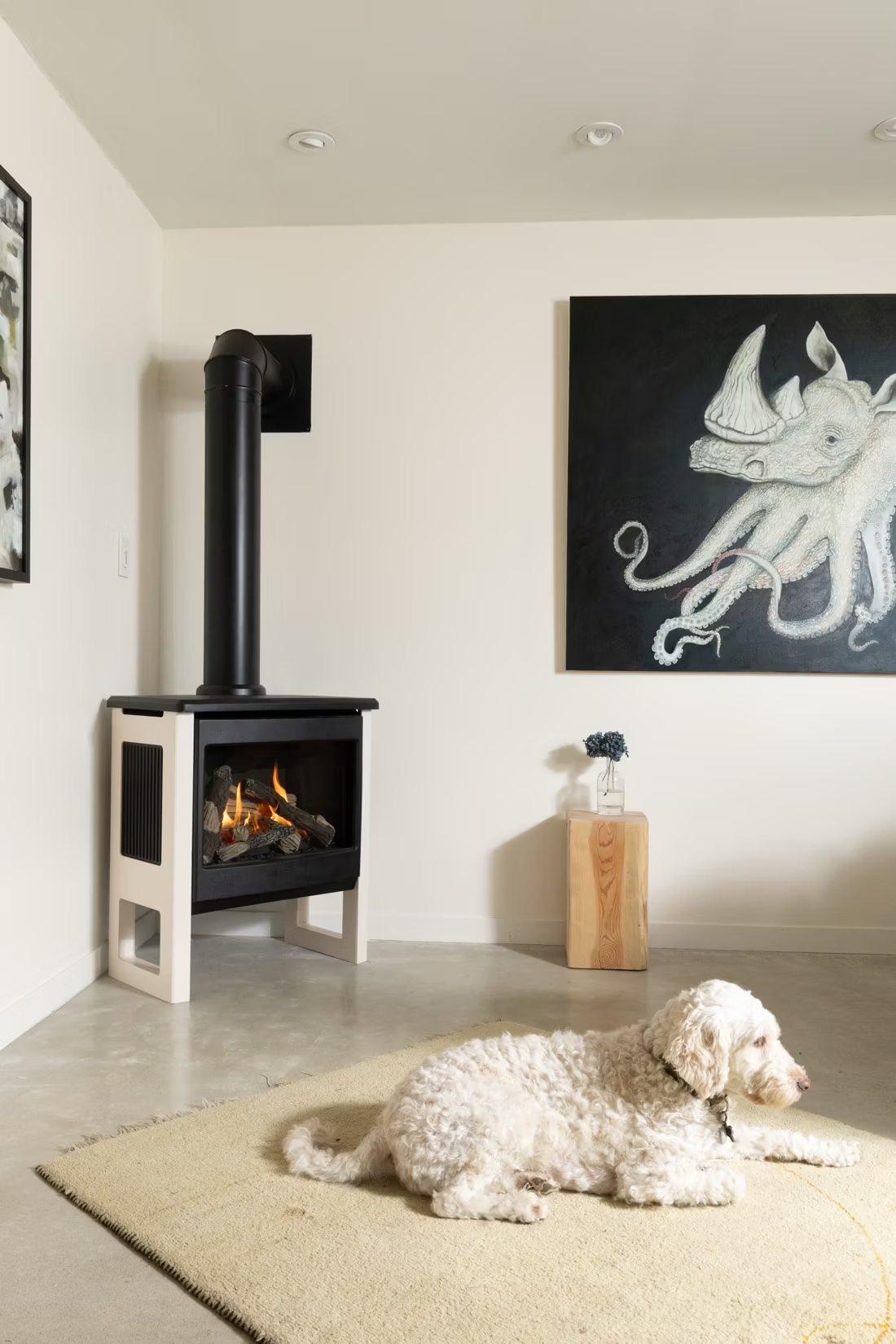
FortisBC (Gas) serves the Comox Valley with a well-established natural gas network, so most homes in town can tie a fireplace directly into existing service rather than dealing with propane tanks or delivery schedules. That matters locally: while Douglas fir, paper birch, lodgepole pine, and western larch are the wood species people still split and burn around the Valley, several regional districts on Vancouver Island run wood-stove exchange programs and require CSA or EPA-certified appliances because interior valleys can see winter inversions and smoke advisories. A direct-vent gas fireplace sidesteps that entirely—instant heat, no particulate output, and nothing to feed or clean up after a wet weekend.
Three steps. No salesperson until you're ready.
Tell us about your project
Your postal code, your situation, and the fuel you're leaning toward—or let the answers point you to one.
See what's actually available
The brands dealers within 100 miles genuinely carry—real options, never a catalog mirage.
Get your dealer & Project Guide
A trusted local dealer, plus the free Project Guide & Parts List that names every component of the job.
Frequently Asked Questions
How much does a gas fireplace installation cost in Comox?
Typical installs run $6,000 to $15,000 CAD. A direct-vent insert going into an existing masonry firebox near an existing FortisBC gas line, common in older Comox homes near downtown or Comox Avenue, lands toward the lower end. A new built-in unit for a renovation or addition, requiring a fresh gas line run and wall or roof venting, pushes toward the top of that range. Homes on the edges of the service area that need a line extension should budget extra on top of the install itself.
Can I convert my existing wood fireplace to gas?
Yes, and it's a common request in the Comox Valley's older housing stock, where original masonry fireboxes were built decades ago to burn Douglas fir or lodgepole pine. A gas insert typically slides into that same firebox with a liner run through the existing chimney. One practical upside: wood appliances here often need a WETT inspection for insurance purposes under CSA B365, while a converted gas unit sidesteps that requirement entirely, though it still needs its own permit and licensed gas-fitter sign-off through the municipal building department.
Do I need natural gas service, or is propane the fallback in Comox?
Most of Comox proper sits within FortisBC (Gas)'s service area, so if your water heater or range already runs on natural gas, adding a fireplace is usually a straightforward tie-in. Properties on the rural fringes of the Comox Valley, or on the smaller islands nearby, are more likely to be outside that network and rely on propane instead. Either fuel works fine for a direct-vent fireplace, and most models your local dealer carries can be configured for one or the other.
Will a gas fireplace still work if the power goes out?
Most models will, which is worth knowing given that Vancouver Island windstorms off the Strait of Georgia periodically knock out BC Hydro service across the Comox Valley. Units with intermittent pilot ignition run on AA battery backup that kicks in automatically when the power drops. Some units, like those from Valor, skip batteries altogether because their pilot generates its own current through the thermocouple. If outage resilience matters to you, ask your dealer which ignition system is on any model you're considering.
What's the difference between a gas fireplace, insert, and stove?
A gas fireplace is a built-in unit framed into a wall, typical for new construction or a full renovation. A gas insert fits inside an existing masonry firebox, which is the common upgrade path in older Comox homes that started out burning Douglas fir or paper birch in an open hearth. A gas stove is freestanding on its own hearth pad, similar in footprint to a wood stove but running off a gas line instead of cordwood. For most existing Comox Valley homes, an insert is the least disruptive option since it reuses the chimney chase that's already there.
Do I need a permit to install a gas fireplace in Comox?
Yes. You'll need a building permit through the municipal building department, plus a separate gas permit tied to licensed gas-fitter work under CSA B365. Most hearth dealers who install in the Comox Valley handle both the permit and the final inspection as part of the project, which saves you from coordinating the paperwork and the trades yourself.
Vented vs. vent-free gas fireplaces—what should I know for Comox?
Direct-vent units pull combustion air from outside and exhaust it back outside through sealed venting, and they're the standard, code-compliant choice across British Columbia. Vent-free units burn into the room and carry strict room-sizing limits. Given that several regional districts on Vancouver Island already push homeowners toward certified, lower-emission appliances through wood-stove exchange programs, most local dealers steer Comox homeowners toward direct-vent gas units for the same reason—cleaner indoor air, no exceptions needed for damp, low-airflow days.
How often does a gas fireplace need to be serviced in Comox?
Plan on an annual check, ideally in late summer or early fall before the wet season sets in and technicians get booked up. A technician checks the burner, pilot assembly, gas connections, and venting, and cleans the glass. It's a lighter job than a wood chimney sweep, but the Comox Valley's damp coastal air can accelerate corrosion on vent components, so skipping the yearly visit is how a small issue turns into an ignition failure on a wet December evening. Expect roughly $150 to $250 CAD for a standard visit.
Gas vs. wood vs. pellet—which makes the most sense for a Comox home?
Given how mild Comox winters run compared to Interior BC or the Prairies, gas tends to win on daily convenience and cleanliness, especially with FortisBC service already reaching most of town. Wood, split from local Douglas fir, paper birch, lodgepole pine, or western larch, still appeals to homeowners who want a heat source that works without electricity during a windstorm outage, and cutting permits through FrontCounter BC are free for most of the year outside summer fire restrictions. Pellet stoves using regional brands like Pinnacle Premium or Princeton Fuel Pellets split the difference, burning cleaner than open wood but still needing power for the auger. Plenty of Comox Valley households run gas in the main living space and keep a certified wood or pellet appliance elsewhere as backup.
Can a gas fireplace run on a thermostat?
Most modern gas fireplaces can—turn it on and off from the couch with a remote, or set a room temperature and let the fireplace hold the comfort zone for you. If low maintenance matters to your family, this is the feature set that makes gas the convenience pick over wood and pellet.
Why do fireplace quotes vary so much?
Because a fireplace is an iceberg—there's more behind the wall than in front of it. A low quote often covers only the unit; the full scope includes vent pipe, gas line or electrical, framing, and the tile or stone that has to come off and go back on. Make every bidder price the whole job. If a dealer can't speak to the full scope with confidence, that's your signal to keep looking.
What's the difference between an insert and a zero-clearance fireplace?
An insert is a fireplace that slides into a pre-existing wood-burning fireplace—if you don't have one, there's nothing to insert it into. A zero-clearance fireplace is built into a framed wall, which makes it the answer for remodels and new construction. Simple test: existing masonry fireplace means insert; blank or framed wall means zero-clearance.
Can I put a TV above my fireplace?
Yes—with an asterisk. Fireplaces are hot and TVs don't like heat. Either put a mantel between them to deflect rising warmth, or choose a fireplace with heat-management technology that creates a cool zone on the wall above—the wall stays around 125 degrees, barely warm, while the room still gets full heat. If you like clean lines and don't want a mantel, heat management is the answer.
Nearby Dealers
Hearth shops serving Comox and the surrounding area. Every listing shows whether it is a WhyFire partner, a dealer we have verified as authorized for the brands we recommend, or a local business carrying hearth products. No manufacturer pays for placement. How we verify dealers →
Bennett Sheet Metal & Heating Ltd.
Hornby Island Co-Op
Natural Gas Service in Comox
Confirm service at your address before planning a gas fireplace—a quick call settles it.
FortisBC (Gas)
Pacific Northern Gas
Get your free Project Guide & Parts List for a Comox gas fireplace.
Tell me about your home and whether you're already on FortisBC gas or need a propane fallback, and I'll match you with a trusted local dealer and send a free Project Guide & Parts List with the exact vent kit and parts your project needs.
Find Your Fireplace →