
Steady, low-maintenance heat for Stone County's Ozark winters.
Clean, hopper-fed heat for Stone County's Ozark foothills—from Mountain View to Blanchard Springs Caverns and the hollows in between. Find the right pellet stove and get matched with a trusted local dealer.
Every Project Starts From One of These Five Situations
Convenience matters in the Ozark foothills.
Stone County is home to about 3,541 residents scattered across the Ozark foothills around Mountain View, Blanchard Springs Caverns, and the White River valley. Winters here are moderate by cold-climate standards—the average winter low sits near 28°F, and the county sees a moderate winter heating season typical of climate zone 4A. That's cooler than the Arkansas Delta but nowhere close to the extremes of a place like International Falls, MN. Most homes in the county still lean on wood heat, cut locally from the oak, hickory, and pine that cover the Ozark-St. Francis National Forests, where a cutting permit runs $10 to $20 per cord during the May-to-October season.
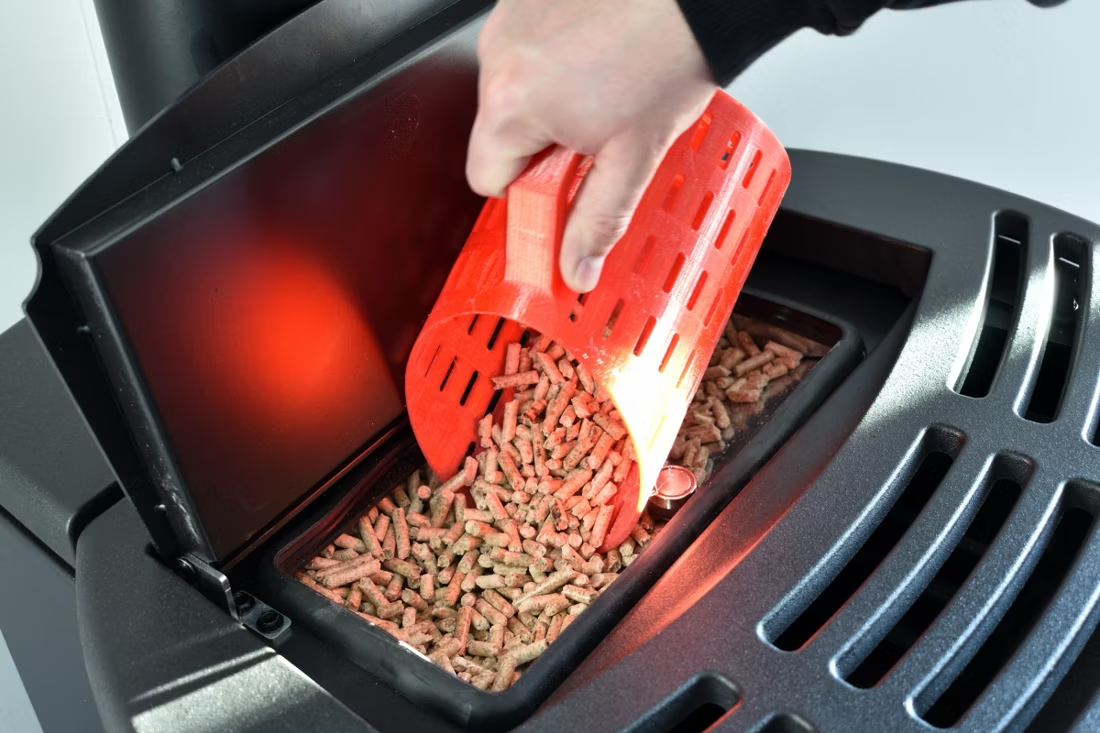
Pellet stoves are a solid, standard option in a county this size, but the retail landscape is thin—there's no big-box hearth showroom in Mountain View, and a broader selection usually means a drive to Batesville or Mountain Home. Regional pellet brands like Lignetics and Indeck Energy Services show up at farm and feed stores here and are typically sold by the bag or delivered by the pallet, which matters when the nearest supplier may be twenty or thirty minutes away. Because a pellet stove relies on an electric auger and blower, it's worth pairing one with a battery backup or generator plan for the ice storms that occasionally knock out power in the Ozark foothills—a wood stove keeps working without electricity, a pellet stove doesn't.
Three steps. No salesperson until you're ready.
Tell us about your project
Your zip code, your situation, and the fuel you're leaning toward—or let the answers point you to one.
See what's actually available
The brands dealers within 100 miles genuinely carry—real options, never a catalog mirage.
Get your dealer & Project Guide
A trusted local dealer, plus the free Project Guide & Parts List that names every component of the job.
Frequently Asked Questions
How much does a pellet stove installation cost in Stone County?
Most pellet stove installations in Stone County run in the $3,000 to $6,500 range, depending on the stove model, whether new venting has to be run through an exterior wall, and whether you're converting an existing masonry fireplace with a pellet insert. Because pellet stoves vent through a small-diameter pipe rather than a full chimney system, installs are often simpler and less expensive than a comparable wood stove project. Installers traveling from Batesville, Mountain Home, or Melbourne may add a modest trip charge for jobs out toward the county's more remote hollows.
What size pellet stove do I need for my home?
Sizing depends on square footage and insulation, but Stone County's moderate winters—an average low near 28°F and a modest winter heating season overall—mean most homes don't need the largest units on the market. A small pellet stove (up to 1,000 sq ft) suits a cabin or single-story home near Blanchard Springs; a medium stove (1,000-1,800 sq ft) covers most main living areas in and around Mountain View. Older farmhouses with poor insulation should size up regardless of square footage. A local dealer can size your space accurately during an in-home visit.
Where can I find a certified pellet stove installer near me in Stone County?
Because Stone County's population is small, most certified NFI installers are based in nearby Batesville, Mountain Home, or Melbourne and cover Mountain View and the surrounding county on a route basis. Ask whether the installer handles both the stove sale and the venting work—pellet stoves need a correctly sized intake/exhaust vent kit, and having one company handle sales and installation keeps warranty coverage simple. Expect a small trip charge for jobs farther out toward the more remote parts of the county.
Pellet stove vs. wood stove—which is right for my Stone County home?
Wood is deeply rooted here—Stone County sits inside the Ozark-St. Francis National Forests, where a cutting permit runs $10 to $20 per cord during the May-to-October season, and oak, hickory, and pine are all abundant and free to cut yourself. Wood stoves also keep working during a power outage, which matters when ice storms take down lines in the foothills. Pellet stoves trade that self-sufficiency for convenience: load the hopper, set the thermostat, and walk away, with far less ash and none of the splitting or stacking. If you already have access to wood and don't mind the labor, wood often wins on cost. If convenience and a cleaner burn matter more, pellet is the better fit—just plan for a generator or battery backup given the outage risk.
Do I need a permit to install a pellet stove in Stone County?
Most jurisdictions require a building permit for a new pellet stove installation, primarily to sign off on the venting and any new electrical circuit for the unit. Check with Stone County's building office before work starts—most local installers handle the permit application as part of the install, so it's rarely something homeowners manage themselves. Stone County has no listed air quality concerns, so there are no burn curtailment periods or emissions restrictions to plan around, unlike some non-attainment counties elsewhere in the country.
What's the best pellet stove for Stone County's climate?
Stone County's winters are moderate—an average low near 28°F and a fairly short, mild heating season overall—so you don't need the extreme-cold-rated units built for places like Duluth, MN. A mid-efficiency pellet stove or insert from a mainstream line will comfortably heat most homes here, and hopper burn times of 12 to 24 hours are more than enough to cover an overnight without a refill. Ask your local dealer about hopper capacity if you want to avoid daily refills during the coldest stretches of January.
Where can I buy pellets in Stone County?
Pellet fuel isn't something you cut yourself the way firewood is, so supply depends on retail access. Regional brands like Lignetics and Indeck Energy Services are common in this part of Arkansas and typically show up at farm and feed stores rather than dedicated hearth shops, given the size of the local market. Many Stone County homeowners buy by the pallet—roughly a ton, in 40-lb bags—rather than one bag at a time, since it's more economical and cuts down on trips when the nearest larger supplier may be in Batesville or Mountain Home. Ask your installer which brands they stock or can order in bulk.
How often does a pellet stove need to be cleaned and serviced?
Plan on cleaning the burn pot and ash pan every few days during regular use, a deeper cleaning of the hopper and auger monthly, and a full professional inspection and cleaning of the venting once a year—typically before burning season starts in the fall. This is lighter maintenance than a wood-burning chimney, but skipping the annual venting inspection is still the most common cause of poor performance or nuisance shutdowns in pellet units.
Will my pellet stove work during a power outage?
No—pellet stoves rely on an electric auger to feed fuel and a blower to distribute heat, so they shut down when the power goes out. That's worth planning for in Stone County, where ice storms occasionally take down power lines in the Ozark foothills for extended periods. A small battery backup or generator sized for the stove's low wattage draw can keep it running through an outage. If backup heat during outages is a top priority, a wood stove—which needs no electricity to operate—may be worth considering alongside or instead of a pellet unit.
Why is my open fireplace making my house colder?
Open fireplaces suck—literally. As the fire burns, it consumes air your furnace already paid to heat and pulls it out through the chimney, so the house is actually colder after the fire goes out than before you lit it. An insert fixes this: it seals the chimney, puts fixed glass across the front, and turns that hole in your house into a real heat source.
How often does a pellet stove need cleaning?
A clean pellet stove is a happy pellet stove. Plan on cleaning the burn pot about once a week when you're burning regularly—ash and clinkers gum up the air holes just like a pellet barbecue. Most pellet stove problems trace back to skipped cleaning that nobody explained up front. Some designs make it easy with a trapdoor burn pot: pull a lever and the gunk drops into the ash pan.
Does a fireplace add value to my home?
On average, a fireplace adds back to the home about the same amount you spent installing it. Add the monthly savings from heating the rooms you actually use instead of the whole house—often hundreds of dollars a year—and the value case is strong before you even count what a fire does for how your family uses the room.
How much should I budget for a fireplace?
For an average home—covering the fireplace, the vent pipe, and basic installation—a budget between $3,900 and $5,500 gives you a lot of options across wood, gas, and pellet. By the time you add finish work, gas line, and electrical, the average complete installation lands between $5,000 and $12,000 all-in. In a remodel or new build, a good rule is to put about 2.5% of the total project cost toward the fireplace.
Stove and Fireplace Dealers in Stone County
Pellet Brands Stocked Around Stone County
Manufacturers will point you to the nearest stocking dealer.
Find your pellet stove in Stone County.
Tell us a bit about your home in Stone County and we'll match you with a trusted local dealer, plus a free Project Guide & Parts List—the exact parts, including the vent kit, for your pellet stove project.
Find Your Fireplace →