
Consistent Warmth Without the Wood Pile—Right Here in Sharp County.
From Ash Flat to Hardy to Cherokee Village, Sharp County winters are mild by national standards—but a thermostatically controlled pellet stove still beats splitting and stacking cordwood. Find the right unit and connect with a trusted local dealer.
Every Project Starts From One of These Five Situations
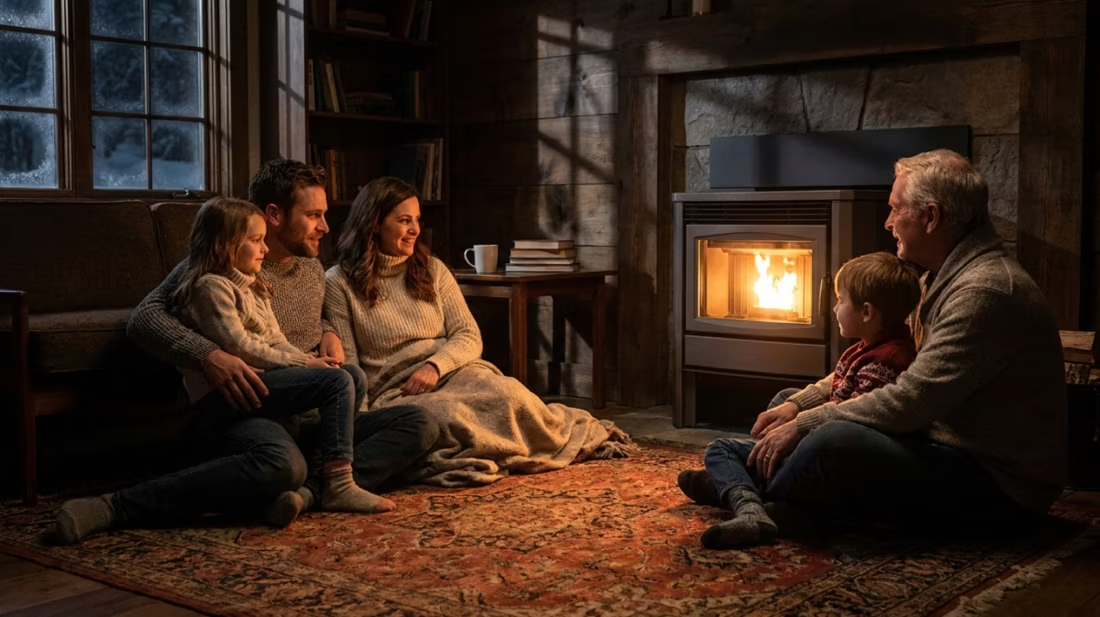
A modern alternative to the woodpile tradition.
Sharp County sits in the Ozark foothills of north-central Arkansas, where oak, hickory, and pine grow thick across the ridges and hollows around Hardy, Evening Shade, and Sidney. Wood heat has deep roots here, and plenty of households still cut their own. But at a Climate Zone 3A designation with a moderate winter heating season and winter lows averaging around 26°F, Sharp County doesn't demand the round-the-clock firebox tending that colder states do—which is exactly the gap a pellet stove fills. It delivers real, radiant heat with a thermostat and an auger instead of a hatchet and a woodshed.
Pellet appliances are common enough in this part of Arkansas that regional supply isn't a concern—bagged fuel from producers like Lignetics and Indeck Energy Services moves through hardware stores and farm supply outlets across the county. For retirees in Cherokee Village who want ambiance without hauling firewood, or for a family in Highland looking for efficient zone heat in a den or bonus room, a pellet stove hits a practical middle ground: cleaner burning than an open wood fireplace, automated enough to set and leave, and still fueled by a byproduct of the same regional timber industry that supplies the county's sawmills.
Three steps. No salesperson until you're ready.
Tell us about your project
Your zip code, your situation, and the fuel you're leaning toward—or let the answers point you to one.
See what's actually available
The brands dealers within 100 miles genuinely carry—real options, never a catalog mirage.
Get your dealer & Project Guide
A trusted local dealer, plus the free Project Guide & Parts List that names every component of the job.
Frequently Asked Questions
How much does a pellet stove installation cost in Sharp County?
A freestanding pellet stove installation in Sharp County typically runs $3,000 to $5,500, depending on the unit, whether a dedicated hearth pad is needed, and whether an electrician needs to add a nearby outlet—pellet stoves require power to run the auger and combustion blower, unlike a wood stove. Installing a pellet insert into an existing masonry fireplace usually falls in a similar range, since the vent kit and liner work is comparable to a wood insert conversion. Rural properties out toward Sidney or Evening Shade may see a modest travel charge added by installers based in Ash Flat or Hardy.
What size pellet stove do I need for a home in Sharp County?
Because Sharp County's winters are relatively mild—a moderate winter heating season by national standards, well short of what a home in Bismarck, ND or Duluth, MN would see—many homeowners here don't need a whole-house pellet system. A small to mid-size stove (rated for 1,000 to 1,800 square feet) is often plenty for supplemental heat in a living room or open floor plan, with central HVAC covering the rest of the house on the coldest nights. Homes using a pellet stove as primary heat, or older farmhouses with poor insulation, should size up and talk through square footage and ceiling height with a local dealer before buying.
Where can I find pellet stove installers near me in Sharp County?
Look for NFI-certified installers, since pellet appliances involve both venting and electrical work that a general handyman isn't trained to handle correctly. Dealers serving the Ash Flat and Hardy area typically cover most of Sharp County, including Cherokee Village and Highland, with a modest travel fee for more remote addresses near the Spring River or out toward the Missouri line. Because pellet stoves need a nearby power outlet in addition to proper venting, it's worth confirming your installer coordinates both the hearth work and any electrical add-on rather than leaving you to schedule a separate electrician.
What's the difference between a pellet stove and a pellet insert?
A pellet stove is a freestanding unit that sits on its own hearth pad and vents through a wall or existing chimney chase—it can go almost anywhere in the house with the right clearances. A pellet insert is built to slide into an existing masonry fireplace opening, which is common in the older homes scattered through Hardy and Evening Shade. If you already have a wood-burning fireplace you rarely use, an insert converts it into an efficient, thermostat-controlled heat source without demolishing the existing masonry. If you're heating a room with no fireplace at all—a den, garage conversion, or new addition—a freestanding stove is the simpler install.
Do I need a permit to install a pellet stove in Sharp County?
Permitting in Sharp County depends on where you live. Incorporated communities like Ash Flat, Hardy, and Cherokee Village maintain their own building codes and typically require a permit for a new hearth appliance and any associated electrical work. In unincorporated parts of the county, requirements are generally lighter, but it's still worth a call to the Sharp County Judge's office or your city hall before installation to confirm what's required for inspections and insurance purposes. Most established hearth dealers in the area handle permitting as part of the installation quote.
What's the best pellet stove for Sharp County's climate?
Given the county's moderate winters—average lows around 26°F rather than the sub-zero nights of the upper Midwest—you don't need the largest, hardest-working stove on the market. Mid-size units from brands commonly stocked by Arkansas hearth dealers, such as Harman, Quadra-Fire, and English/US Stove Company models, run comfortably on bagged pellets from regional suppliers like Lignetics and Indeck Energy Services. A stove with a good ash pan capacity and a quiet auger motor tends to be appreciated most by owners running the unit daily through a typical Ozark winter, which usually runs from late November into February.
How much maintenance does a pellet stove need?
Pellet stoves need more frequent, hands-on maintenance than a wood stove, but each task is quicker. Plan on emptying the ash pan every few days during regular use, cleaning the burn pot weekly to keep the flame pattern even, and vacuuming the hopper and exhaust passages monthly during the burning season. A full professional service—cleaning the venting, checking the auger motor and combustion blower, and inspecting gaskets—is recommended once a year, ideally before Sharp County's burning season ramps up in November. Skipping burn pot cleaning is the most common cause of poor ignition and smoky starts.
Where can I buy pellet fuel in Sharp County?
Bagged pellets from Lignetics and Indeck Energy Services are widely available through hardware stores and farm supply retailers serving the Ash Flat and Hardy area, and most hearth dealers sell fuel directly or can point you to a reliable local source. Buying pellets in bulk before the season starts is common practice, since prices can tick up once cold weather hits demand statewide. Given the humid summers typical of Zone 3A, store bags off the ground and away from moisture—Sharp County's humidity can turn a damp bag of pellets to mush faster than in a drier climate, which hurts burn quality.
Pellet stove vs. wood stove—which makes more sense in Sharp County?
Wood is practically free for anyone in Sharp County with access to oak, hickory, or pine and a chainsaw—a real advantage in a county where cutting your own firewood is still common practice. Wood stoves also keep working during a power outage, which matters when ice storms occasionally knock out rural electric service. Pellet stoves trade that off for convenience: load the hopper, set the thermostat, and walk away, with a cleaner burn and less ash than an open wood fire. Given the county's relatively mild winters, many homeowners land on a pellet stove for everyday, low-effort zone heat and keep a wood stove or fireplace as backup for the occasional hard freeze or outage.
Why is my open fireplace making my house colder?
Open fireplaces suck—literally. As the fire burns, it consumes air your furnace already paid to heat and pulls it out through the chimney, so the house is actually colder after the fire goes out than before you lit it. An insert fixes this: it seals the chimney, puts fixed glass across the front, and turns that hole in your house into a real heat source.
What's the difference between an insert and a zero-clearance fireplace?
An insert is a fireplace that slides into a pre-existing wood-burning fireplace—if you don't have one, there's nothing to insert it into. A zero-clearance fireplace is built into a framed wall, which makes it the answer for remodels and new construction. Simple test: existing masonry fireplace means insert; blank or framed wall means zero-clearance.
How much should I budget for a fireplace?
For an average home—covering the fireplace, the vent pipe, and basic installation—a budget between $3,900 and $5,500 gives you a lot of options across wood, gas, and pellet. By the time you add finish work, gas line, and electrical, the average complete installation lands between $5,000 and $12,000 all-in. In a remodel or new build, a good rule is to put about 2.5% of the total project cost toward the fireplace.
Can I install a fireplace myself?
If you're putting a fire in your house on purpose, it's best to work with an expert. Unless you're genuinely experienced in framing, gas line, vent pipe, and the national code on clearances to combustibles, have a professional do it—and ideally the same company that sells you the fireplace, so warranty, service, and liability all live under one roof.
Stove and Fireplace Dealers in Sharp County
Pellet Brands Stocked Around Sharp County
Manufacturers will point you to the nearest stocking dealer.
Find your pellet stove in Sharp County.
Tell us a bit about your home and we'll match you with a trusted local dealer and send over a free Project Guide & Parts List for your pellet stove project in Sharp County.
Find Your Fireplace →