
Consistent heat, without the wood pile, in Searcy County.
Searcy County's oak-and-hickory hills have always meant wood heat, but a thermostat-controlled pellet stove gets you steady warmth without splitting, stacking, or hauling. Find the right unit and connect with a trusted local dealer.
Every Project Starts From One of These Five Situations
A low-maintenance option in oak-and-hickory country.
Searcy County is small—about 2,232 people scattered across the Ozark hills around Marshall, Leslie, St. Joe, Gilbert, and Big Flat, much of it inside or bordering the Ozark-St. Francis National Forests and the Buffalo National River corridor. With a winter heating season roughly comparable to a moderate Ozark winter and a winter low averaging 26°F, the county's climate is real but not brutal—milder than the deep cold of International Falls, Minnesota, but cold enough that most homes here run a heat source from November through March. The forest cover is dominated by oak, hickory, and pine, and Forest Service permits through the Ozark-St. Francis National Forests ($10-$20 per cord, cutting season May through October) have kept firewood cheap and heat sources close to home for generations.
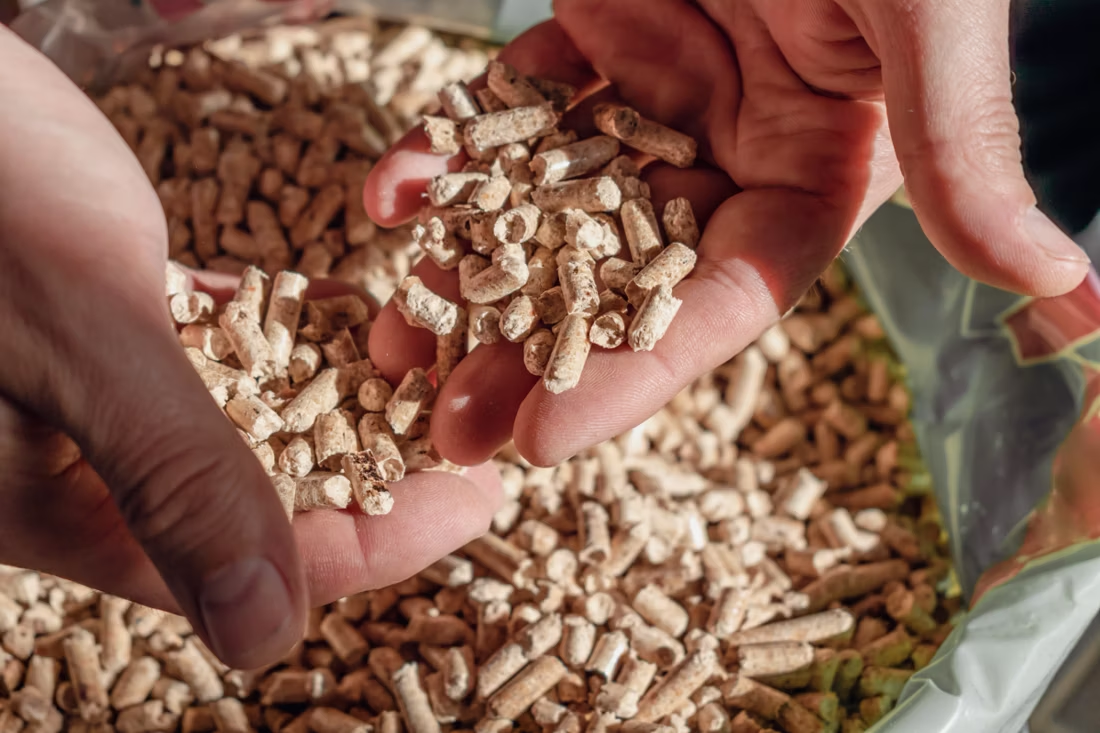
Pellet stoves have found a real niche here as the alternative to that wood-cutting cycle. For homeowners who already burn oak and hickory but want a second, lower-effort heat source—or for a cabin along the Buffalo River that only gets used part-time—a pellet stove loads from a bag instead of a woodpile and holds a set temperature automatically. Regional supply runs through producers like Lignetics and Indeck Energy Services, typically sold through farm and feed stores rather than big-box chains this far off the interstate. With no air quality non-attainment issues or burn curtailment rules in Searcy County, there's no regulatory reason to prefer one fuel over another here—the choice comes down to how much wood handling you want to do.
Three steps. No salesperson until you're ready.
Tell us about your project
Your zip code, your situation, and the fuel you're leaning toward—or let the answers point you to one.
See what's actually available
The brands dealers within 100 miles genuinely carry—real options, never a catalog mirage.
Get your dealer & Project Guide
A trusted local dealer, plus the free Project Guide & Parts List that names every component of the job.
Frequently Asked Questions
How much does a pellet stove installation cost in Searcy County?
Most pellet stove and insert installations in Searcy County run $3,000 to $6,000, depending on whether you're putting a freestanding stove into a simple exterior vent run or fitting an insert into an existing masonry fireplace with a stainless liner. Because most dealers serving this area are based out of Harrison or Mountain Home, homes on the gravel roads out toward Gilbert, Snowball, or Big Flat may see a modest travel charge added to the quote. A local installer will confirm hopper size and vent length with an in-home visit before locking in a firm price.
What size pellet stove do I need for my home?
Sizing depends on square footage, ceiling height, and how well-insulated the house is—a real variable in a county with a lot of older farmhouse-style construction. As a rough guide, smaller stoves (under 1,000 sq ft) suit a single main room or a Buffalo River cabin used seasonally, while medium stoves (1,000-1,800 sq ft) handle most Searcy County homes as a primary or near-primary heat source. Since winter lows here average around 26°F rather than sub-zero territory, most homes don't need the largest units on the market. A local dealer will size your space for free rather than guessing off square footage alone.
Where can I buy wood pellets in or near Searcy County?
Regional brands like Lignetics and Indeck Energy Services show up most often at farm and feed stores across north-central Arkansas, since Searcy County itself doesn't have a big-box retailer. Because the county sits off the interstate pellet-freight routes, prices can move a bit with delivery costs—buying a season's worth of pellets by the ton ahead of cold weather, rather than by the bag as you go, is the common way locals keep costs predictable. Your dealer can point you toward the closest stocked supplier, often in Harrison or Mountain Home.
Will my pellet stove still work if the power goes out?
Not without help. Pellet stoves rely on an electric auger to feed fuel and a blower to move heat, so a power outage stops the stove even with a full hopper. That matters in Searcy County, where ice storms in the Ozark hills can knock out rural power for longer stretches than in town. Some models, including certain Harman units, offer optional battery backup systems that keep the auger and igniter running for a period during an outage. If reliable heat during outages is a priority, many local households pair a pellet stove for everyday convenience with a wood stove or fireplace as true backup—a common setup in this part of the Ozarks.
Pellet stove vs. wood stove—which makes more sense in Searcy County?
Wood is the traditional choice here for good reason: oak, hickory, and pine are abundant, Forest Service cutting permits through the Ozark-St. Francis National Forests run just $10-$20 per cord during the May-to-October season, and a wood stove keeps working through a power outage. A pellet stove trades that self-sufficiency for convenience—no splitting or stacking, consistent heat output, and a hopper that can run a day or more without reloading. For a full-time residence where someone's already comfortable managing a woodpile, wood often wins on cost. For a part-time cabin, an older homeowner who no longer wants to handle cordwood, or a household that wants set-and-forget heat, pellet is usually the better fit.
Do I need a permit to install a pellet stove in Searcy County?
It depends on where you are. Searcy County, like many rural Arkansas counties, does not maintain a countywide building permit office for residential heating appliance installs outside incorporated towns. If you're inside Marshall or Leslie city limits, check with the town office before installing. Outside those boundaries, there's typically no permit step, but that makes it more important—not less—to have an NFI-certified installer follow manufacturer clearance and venting specs, since there's no inspector double-checking the work afterward.
How often does a pellet stove need to be cleaned and serviced?
Plan on emptying and vacuuming the ash pot every few days during regular use, and a deeper cleaning of the burn pot, hopper, and exhaust fan monthly through the heating season. The exterior vent pipe should get a full inspection and cleaning at least once a year—typically late summer before the season starts—since pellet exhaust can build up fly ash and clinker deposits over time. It's lighter maintenance than a wood chimney sweep, but skipping it is still the most common cause of feed jams and reduced heat output.
What's a good pellet stove brand for Searcy County's climate?
Because winter lows here average around 26°F rather than deep sub-zero cold, most mid-size pellet stoves handle the job without needing top-tier BTU output. Brands like Englander (England's Stove Works, out of Tennessee) show up often in this part of the Ozarks and Appalachian foothills for their value pricing, while Harman units are a common upgrade pick for households wanting battery-backup options and longer hopper runtime between reloads. A local dealer can match hopper size and BTU output to your specific square footage rather than defaulting to whatever's easiest to ship.
Pellet stove vs. electric heater—which is right for my home?
Electric space heaters or electric fireplace inserts cost less upfront and install in an afternoon, but they're expensive to run as a primary heat source and typically can't cover more than a single room. A pellet stove costs more to install but delivers real whole-room heat output and lower cost per BTU over a full Ozark winter, provided you're willing to manage fuel bags and periodic cleaning. For supplemental heat in a single bedroom or bonus room, electric can make sense. For heating a main living area through a full Searcy County winter, pellet is the more capable option—just remember both need grid power to run.
What's the difference between an insert and a zero-clearance fireplace?
An insert is a fireplace that slides into a pre-existing wood-burning fireplace—if you don't have one, there's nothing to insert it into. A zero-clearance fireplace is built into a framed wall, which makes it the answer for remodels and new construction. Simple test: existing masonry fireplace means insert; blank or framed wall means zero-clearance.
How often does a pellet stove need cleaning?
A clean pellet stove is a happy pellet stove. Plan on cleaning the burn pot about once a week when you're burning regularly—ash and clinkers gum up the air holes just like a pellet barbecue. Most pellet stove problems trace back to skipped cleaning that nobody explained up front. Some designs make it easy with a trapdoor burn pot: pull a lever and the gunk drops into the ash pan.
Does a fireplace add value to my home?
On average, a fireplace adds back to the home about the same amount you spent installing it. Add the monthly savings from heating the rooms you actually use instead of the whole house—often hundreds of dollars a year—and the value case is strong before you even count what a fire does for how your family uses the room.
Can a fireplace actually lower my heating bill?
Yes—by creating a comfort zone. A furnace heats every square foot of the house just to warm the one room you're in; a gas fireplace on low burns roughly a sixth of the gas a typical furnace does. Set the furnace around 55–60 degrees as a baseline, then heat the rooms your family actually uses. Families who heat this way commonly save $20–$60 a month.
Pellet Brands Stocked Around Searcy County
Manufacturers will point you to the nearest stocking dealer.
Find your pellet stove in Searcy County.
Tell us about your home and we'll match you with the right pellet stove or insert, plus a free Project Guide & Parts List—including the vent kit—and a trusted local dealer to install it.
Find Your Fireplace →