
Steady, thermostat-controlled heat for Perry County's foothill winters.
From Perryville to Bigelow, Casa, and Fourche, a pellet stove gives you hopper-fed, thermostat-controlled heat that starts at the flip of a switch—no splitting oak or hickory required. Find the right unit and connect with a trusted local dealer.
Every Project Starts From One of These Five Situations
Convenience heat for a mild, humid winter.
Perry County sits in the Ouachita Mountain foothills along the Fourche La Fave and Arkansas Rivers, and it's small—just 2,664 people spread across Perryville, Bigelow, Casa, Houston, and Adona, with no incorporated town large enough to support its own hearth shop. The climate here is Zone 3A, mixed-humid, with winter lows that typically sit in the mid-20s to low 30s. That's a world away from the sub-zero nights of a place like International Falls, MN—Perry County doesn't need a stove that can hold a fire for 20 hours at 15 below. It needs something that heats a room fast on a cold, damp February morning and then shuts itself down without anyone tending it.
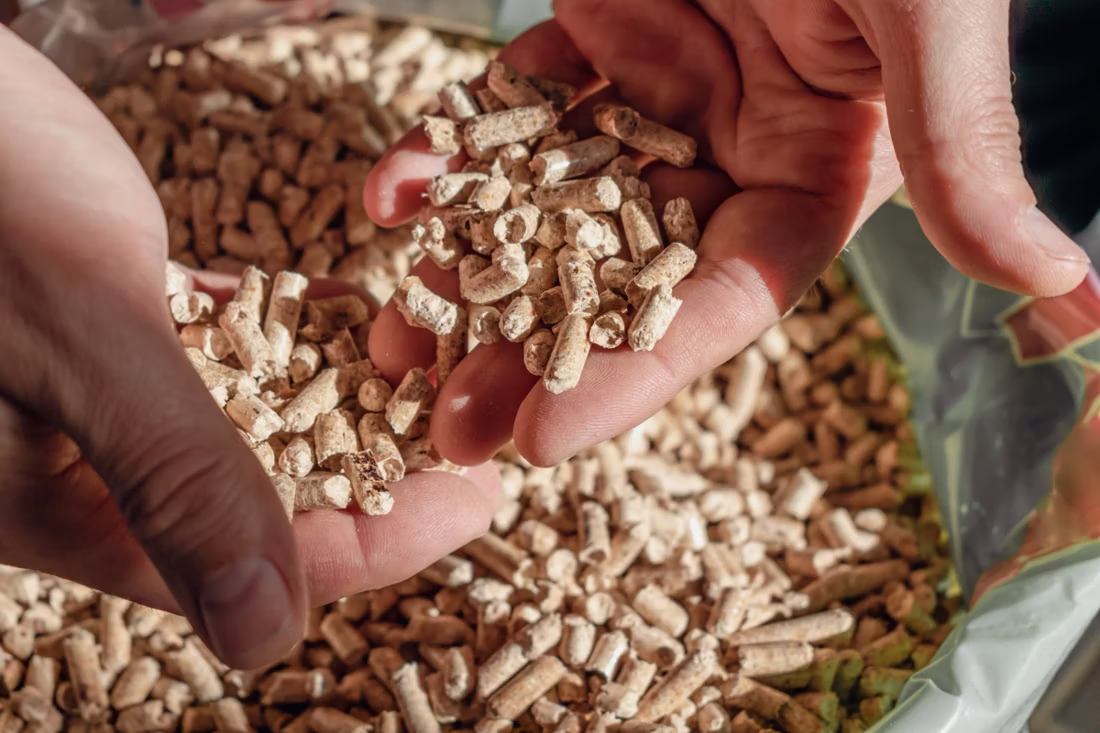
That's exactly where pellet stoves earn their keep. A hopper-fed unit from a brand like Lignetics-supplied pellets, or one sourced through a regional supplier such as Indeck Energy Services, gives you set-it-and-forget-it heat without the wood stacking that oak, hickory, and pine burning households in this county are used to. Perry County has no non-attainment status or wood-smoke restrictions to navigate, so there's nothing standing between you and a straightforward install. The one thing worth planning for: pellet stoves run on electricity to feed the auger and blower, so if you're out along one of the county's more rural stretches, it's worth asking your electric cooperative how often outages run before you commit to pellet as your only heat source.
Three steps. No salesperson until you're ready.
Tell us about your project
Your zip code, your situation, and the fuel you're leaning toward—or let the answers point you to one.
See what's actually available
The brands dealers within 100 miles genuinely carry—real options, never a catalog mirage.
Get your dealer & Project Guide
A trusted local dealer, plus the free Project Guide & Parts List that names every component of the job.
Frequently Asked Questions
How much does a pellet stove installation cost in Perry County?
Nationally, a typical freestanding pellet stove installation runs $3,000 to $6,000 depending on the unit, whether you need new venting through an exterior wall, and any electrical work for a dedicated outlet. A pellet insert going into an existing masonry fireplace tends to land on the lower end since it can use existing structure. Because Perry County doesn't have a hearth dealer based in the county itself, expect quotes to come from installers working out of Conway, Russellville, or the greater Little Rock area, and factor in a possible trip charge for the drive out to Perryville, Bigelow, or Fourche.
What size pellet stove do I need for my home?
Sizing comes down to square footage, ceiling height, and whether the stove is your primary heat or a supplement to central heat. Given Perry County's Zone 3A winters—mild compared to the northern Plains or upper Midwest—most homes here do well with a small to mid-size unit (rated for 1,000 to 1,800 square feet) rather than the largest hopper capacity on the market. Older farmhouses around Adona and Houston with less insulation may need to size up a notch. A local dealer will walk your space and factor in your specific layout before recommending a model.
Where can I find a pellet stove dealer near Perry County?
Because Perry County's population is small and spread thin, there isn't a hearth retailer physically located within the county. Homeowners in Perryville, Bigelow, and Casa typically work with dealers based in Conway or Russellville, both a reasonable drive from most parts of the county. Ask any installer whether they service rural Perry County routinely—some do multiple stops per trip out this way, which can help keep travel charges down. Confirm they're familiar with pellet-specific venting requirements, since that's a different install than a wood stove or gas unit.
What's the difference between a pellet stove and a wood stove for my home?
A wood stove burns split cordwood—oak, hickory, and pine are the common local species—and needs to be loaded and tended by hand every few hours. A pellet stove burns compressed wood pellets fed automatically from a hopper, so it holds a steady temperature with far less daily attention and produces less ash and creosote. The tradeoff is that pellet stoves need electricity to run the feed auger and combustion blower, while a wood stove will keep burning through a power outage. For a rural Perry County property where outages happen, some homeowners keep a wood stove as backup even after installing a pellet unit for daily convenience.
Do I need a permit to install a pellet stove in Perry County?
Perry County is largely unincorporated and rural, and many parts of the county don't have a formal building permit process for a hearth appliance install the way a city like Conway or Little Rock would. That said, installers still follow manufacturer specifications and NFPA 211 clearance and venting standards regardless of whether a permit is pulled, and your homeowners insurance may ask for proof of professional installation. If your property falls within Perryville's city limits, check with the town office before starting work—requirements can differ from the unincorporated county.
What's the best pellet stove for Perry County's climate?
Because winter lows here rarely drop much below the low-to-mid 20s, you don't need the largest-capacity hopper on the market—a mid-size unit with a standard hopper (40-60 lb capacity) will comfortably run a full day or overnight without refilling. What matters more locally is a reliable ignition system and, if you're in a more remote part of the county, a stove that pairs well with a small battery backup or generator hookup in case the power drops during a storm. Ask a local dealer about models with lower standby electrical draw if backup power is a concern for your property.
How often does a pellet stove need to be cleaned and serviced?
Pellet stoves need more frequent light maintenance than a wood stove, but far less heavy chimney work. Plan on emptying the ash pan every few days during regular use, cleaning the burn pot weekly, and having the venting and combustion blower professionally inspected once a year—typically before the season starts in early fall. Skipping the annual venting check is the most common cause of poor burn performance and error codes on pellet units, so it's worth booking with whichever dealer installed the unit.
Where can I buy pellets near Perry County?
Regional brands like Lignetics and Indeck Energy Services supply much of the pellet fuel sold across Arkansas, typically through farm and feed stores, hardware stores, and some hearth dealers. Pellets are usually sold by the 40-lb bag or the ton (a ton is 50 bags), with pricing generally running in the $250-$300 per ton range regionally, though rural delivery out to Perry County communities may carry a delivery surcharge. Buying a season's supply—roughly 2-3 tons for an average home—before cold weather sets in is the common local strategy, since availability can tighten once temperatures drop.
Pellet stove vs. wood stove—which makes more sense for my Perry County home?
Wood stoves work without electricity, which matters if you're in a part of the county where outages run long, and they pair naturally with the oak, hickory, and pine already common in local woodlots. Pellet stoves trade that self-sufficiency for convenience—automatic feed, steady temperature, less daily hands-on work, and cleaner burning with far less ash. Given Perry County's mild Zone 3A winters, most homeowners here aren't relying on either stove to survive an extended cold snap, so the decision usually comes down to whether you'd rather split and stack wood or keep a bag of pellets in the closet. A number of local households end up with one of each—pellet for daily convenience, wood as backup.
Why is a fireplace insert so efficient?
An insert does two things: it seals the chimney completely, so you stop losing air you already paid to heat, and it radiates warmth into the room through the firebox and glass. Most add a heat-exchange fan that pulls cool room air underneath, wraps it around the hot firebox, and pushes it back out warm. Your home is more efficient before you've even lit the first fire.
What's the difference between an insert and a zero-clearance fireplace?
An insert is a fireplace that slides into a pre-existing wood-burning fireplace—if you don't have one, there's nothing to insert it into. A zero-clearance fireplace is built into a framed wall, which makes it the answer for remodels and new construction. Simple test: existing masonry fireplace means insert; blank or framed wall means zero-clearance.
Can I install a fireplace myself?
If you're putting a fire in your house on purpose, it's best to work with an expert. Unless you're genuinely experienced in framing, gas line, vent pipe, and the national code on clearances to combustibles, have a professional do it—and ideally the same company that sells you the fireplace, so warranty, service, and liability all live under one roof.
How much should I budget for a fireplace?
For an average home—covering the fireplace, the vent pipe, and basic installation—a budget between $3,900 and $5,500 gives you a lot of options across wood, gas, and pellet. By the time you add finish work, gas line, and electrical, the average complete installation lands between $5,000 and $12,000 all-in. In a remodel or new build, a good rule is to put about 2.5% of the total project cost toward the fireplace.
Pellet Brands Stocked Around Perry County
Manufacturers will point you to the nearest stocking dealer.
Find your pellet stove in Perry County.
Tell us a bit about your home in Perry County and we'll put together a free Project Guide & Parts List—the right pellet stove or insert, the vent kit it needs, and a trusted local dealer to install it.
Find Your Fireplace →