
Warm evenings for Delta winters and duck camp mornings.
With about 3,358 heating degree days and winter lows that average in the low 30s, Monroe County doesn't need a heating system running around the clock—it needs one that turns on instantly for a cold Grand Prairie morning and shuts off just as easily. I'll match you with a trusted local dealer who knows whether your address sits on a gas main in Clarendon or Brinkley, or needs a propane setup out toward Holly Grove and the Cache River bottoms.
Every Project Starts From One of These Five Situations
Instant heat that fits a mild Delta season.
Monroe County sits in the Arkansas Delta and Grand Prairie region, a landscape of rice fields, soybean ground, and duck-hunting bottomland along the White River and Cache River. With a population under 5,000 spread across Clarendon, Brinkley, and Holly Grove, this is rural country where a lot of households still burn oak, hickory, and pine in a wood stove or an old farmhouse fireplace out of habit or for a hunting camp. But the climate here—Zone 3A, roughly 3,358 heating degree days, winter lows averaging in the low 30s—is a fraction of what a northern heating climate like Duluth, MN or Fargo, ND deals with. The cold snaps are real but short, which is exactly the profile where a gas fireplace shines: heat the moment you need it during a January cold front, off the moment you don't, with none of the daily tending a wood stove demands through a long season.
Gas service in Monroe County is a mix. Clarendon and Brinkley have natural gas mains running through town, typically served by Arkansas Oklahoma Gas Corporation, so a home inside those city limits can often tie a fireplace into an existing line. Once you're out in the unincorporated county—toward Holly Grove, Roe, or the farm roads near the White River National Wildlife Refuge—propane from a local bulk supplier is the standard fuel, either off an existing tank at the house or a new one set for the project. Monroe County also has no air quality non-attainment status and no wood-burning curtailment rules to navigate, so a gas fireplace here is a straightforward, low-hassle upgrade rather than a compliance project.
Three steps. No salesperson until you're ready.
Tell us about your project
Your zip code, your situation, and the fuel you're leaning toward—or let the answers point you to one.
See what's actually available
The brands dealers within 100 miles genuinely carry—real options, never a catalog mirage.
Get your dealer & Project Guide
A trusted local dealer, plus the free Project Guide & Parts List that names every component of the job.
Frequently Asked Questions
How much does a gas fireplace installation cost in Monroe County?
Most gas fireplace and insert projects in this part of the Delta land somewhere between $3,500 and $9,000. A gas insert going into an existing masonry firebox in a Clarendon or Brinkley home with a gas line already on that wall sits toward the low end. A new direct-vent fireplace for a remodel, or a rural property that needs a fresh propane tank set and a longer line run out to the house, pushes toward the top of that range. Homes well outside Brinkley or Clarendon may also see a small travel charge added by an installer based in a larger nearby market like Forrest City or Little Rock.
Can I convert my existing wood fireplace to gas?
Yes, and it's a common request in the older farmhouses around Holly Grove and Clarendon that were originally built with a wood-burning masonry fireplace. A gas insert drops into that existing firebox and vents through a stainless liner run up the current chimney, so you keep the mantel and hearth look but gain a fireplace you can light with a switch. Expect the job to run $3,500 to $7,500 depending on whether the home is on a natural gas main in town or needs to be set up on propane, and whether the existing chimney needs relining work before the insert goes in.
Do I need natural gas, or can I use propane?
Either works fine—most gas fireplace models are configured for one fuel or the other with the correct orifice kit. If you're inside Clarendon or Brinkley, there's a decent chance natural gas already runs to your street through Arkansas Oklahoma Gas Corporation, and tying a fireplace into an existing gas water heater or furnace line is usually the simplest path. Out in the rest of the county—the farm roads, the bottomland near the Cache River, Holly Grove and Roe—there's no gas main, so propane from a regional bulk delivery company is the standard setup, either on an existing tank or a new one sized for the fireplace.
Will my gas fireplace still work if the power goes out?
Most will, which matters in a county where Entergy Arkansas lines run through open farmland exposed to spring thunderstorms and occasional winter ice. Units with intermittent pilot ignition (IPI) carry a battery backup that kicks in automatically so the fireplace still lights on demand with no grid power. Valor fireplaces go further—the pilot assembly generates its own electricity through the thermocouple, so there's nothing to remember to replace. If keeping heat during an outage is a priority for your household, ask your local dealer about the ignition system before you settle on a model.
What's the difference between a gas fireplace, gas insert, and gas stove?
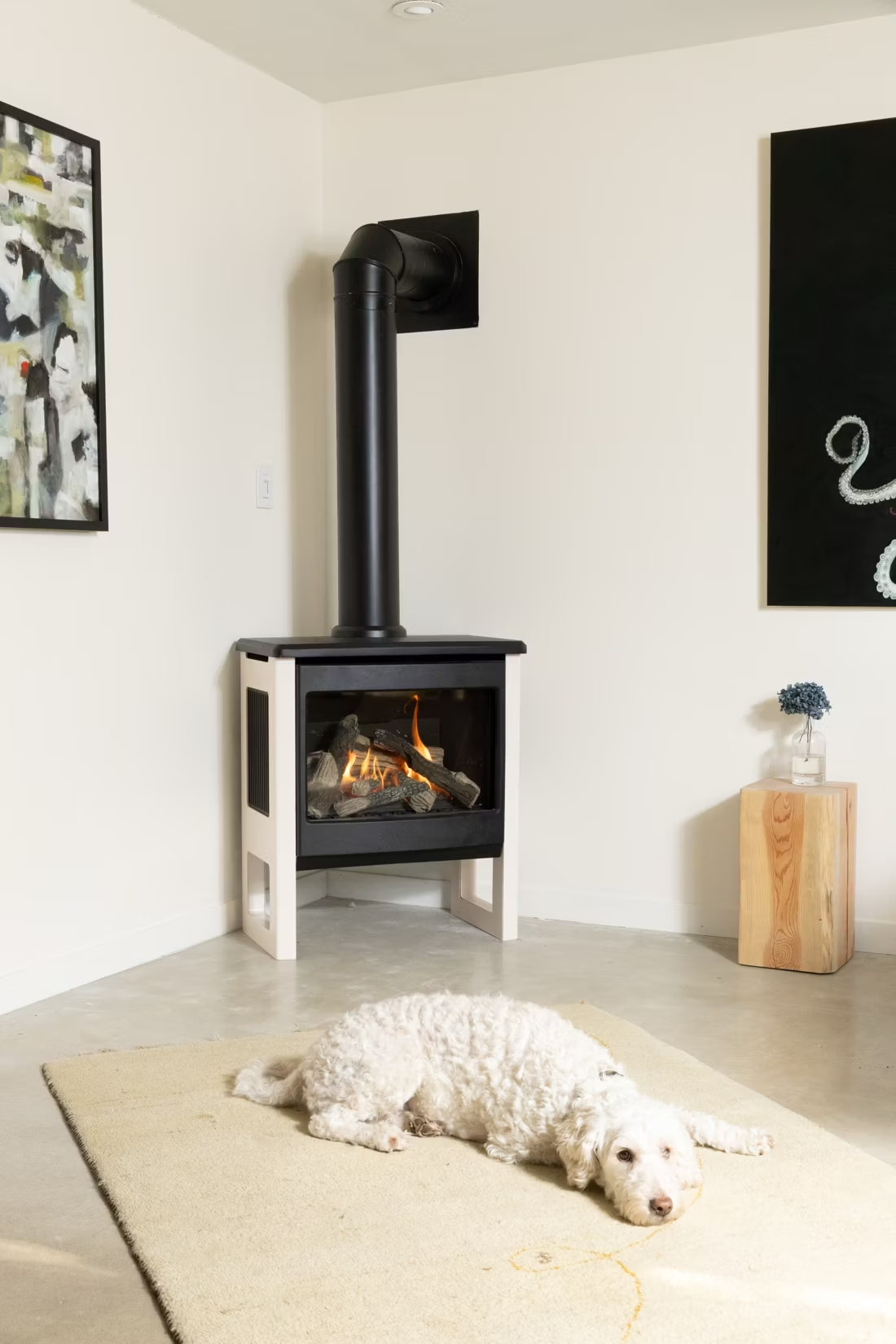
A gas fireplace is a fully built-in unit framed into a wall—the right fit for new construction or a full remodel. A gas insert slides into an existing masonry firebox and uses your current chimney as the vent path, which is the usual route for older Clarendon or Brinkley homes with a wood fireplace they want to modernize. A gas stove is a freestanding, cabinet-style unit that sits on the floor like a wood stove but runs on gas, which works well in a room or a manufactured home with no existing chimney to reuse. A local dealer can look at your space and tell you which one actually fits.
Do I need a permit to install a gas fireplace in Monroe County?
If you're inside Clarendon or Brinkley city limits, you'll pull a building permit and a gas permit through the city, and the gas line work has to be done by a licensed gas-fitter. Monroe County doesn't run a separate countywide building permit office for unincorporated areas, but the propane or gas line connection still needs to be handled by a licensed contractor and inspected before it's put into service. Going through a full-service hearth dealer keeps the gas work, venting, and any required sign-off handled as one job instead of juggling separate trades yourself.
Should I choose a vented or vent-free gas fireplace?
Vented (direct-vent) units pull combustion air from outside and exhaust it back outside through a sealed pipe, so nothing from the fire enters the room. Vent-free units burn directly into the living space and are legal in Arkansas within room-size limits, and they're a common choice in Monroe County for smaller rooms or older homes without an easy vent path to an exterior wall. Since the county has no air quality restrictions to work around, either option is workable here—the choice usually comes down to room size, budget, and whether you want the flexibility to place the fireplace on an interior wall.
How often does a gas fireplace need to be serviced?
Plan on an annual check, ideally before the first cold front rolls through in late fall. A technician checks the burner, pilot assembly, gas connections, and glass—a quick visit, generally $150 to $200 for a standard service call. Because Monroe County's heating season is short and mild compared to a northern climate, most gas fireplaces here run far fewer hours per winter than in a place like Fargo, ND, but an annual look is still worth it, especially for duck camp properties that sit closed up for months and then get used hard during the season.
Gas vs. wood—which makes more sense for a Monroe County home?
Wood has deep roots here—oak, hickory, and pine are plentiful across the county's bottomland, and a lot of hunting camps and older farmhouses still burn a wood stove or fireplace out of tradition and low fuel cost. Gas offers instant, thermostat-style heat with no splitting, hauling, or ash cleanup, which suits Monroe County's short, mild winters where you mostly need heat for a handful of cold snaps rather than a sustained season. Plenty of households here run both: a gas fireplace or insert in the main living area for everyday convenience, and a wood stove at the camp or in a secondary space for backup heat and tradition. If your priority is low-maintenance daily comfort, gas is the easier starting point.
What's the difference between an insert and a zero-clearance fireplace?
An insert is a fireplace that slides into a pre-existing wood-burning fireplace—if you don't have one, there's nothing to insert it into. A zero-clearance fireplace is built into a framed wall, which makes it the answer for remodels and new construction. Simple test: existing masonry fireplace means insert; blank or framed wall means zero-clearance.
Why is a fireplace insert so efficient?
An insert does two things: it seals the chimney completely, so you stop losing air you already paid to heat, and it radiates warmth into the room through the firebox and glass. Most add a heat-exchange fan that pulls cool room air underneath, wraps it around the hot firebox, and pushes it back out warm. Your home is more efficient before you've even lit the first fire.
Can a fireplace actually lower my heating bill?
Yes—by creating a comfort zone. A furnace heats every square foot of the house just to warm the one room you're in; a gas fireplace on low burns roughly a sixth of the gas a typical furnace does. Set the furnace around 55–60 degrees as a baseline, then heat the rooms your family actually uses. Families who heat this way commonly save $20–$60 a month.
What is an in-home preview and do I need one?
It's a visit where a hearth professional measures your space, confirms the model you picked actually works in your home, and walks the specs—framing, gas line, venting, finish work—before anything is ordered. Some details you just can't know until you see the house. Never make a down payment without one; it's the single most-skipped step that burns buyers.
Get your free Project Guide & Parts List for a gas fireplace in Monroe County.
Tell me about your home in Clarendon, Brinkley, Holly Grove, or anywhere else in the county, and I'll match you with a trusted local dealer and send over a free Project Guide & Parts List—the exact equipment, vent kit, and recommended installer for your gas fireplace project, whether you're on a gas main in town or running propane out in the county.
Find Your Fireplace →