
Add electric warmth to any room in Monroe County.
No chimney, no gas line, no venting—just plug in or wire up and go. For the mild Delta winters around Clarendon, Brinkley, and Holly Grove, electric is often all the zone heat a room needs. Find the right unit and connect with a trusted local dealer.
Every Project Starts From One of These Five Situations
Simple heat for a mild Delta winter.
Monroe County sits in the Arkansas Delta along the White River, with Clarendon as the county seat and Brinkley and Holly Grove rounding out the county's small-town footprint—a population under 5,000 spread across mostly flat, agricultural land. Climate zone 3A here means winters are short and comparatively mild: an average winter low around 31°F and roughly 3,358 heating degree days, well under half the heating load of a place like Fargo, ND or Duluth, MN. Most homes lean on central HVAC or propane for the coldest stretches, but that leaves a real gap for the den, the sunroom, or the back bedroom that never quite gets warm enough on its own.
That's where electric fireplaces and inserts do their best work. A plug-in unit needs no chimney, no gas line, and typically no building permit—which matters in a county where a lot of housing stock is older farmhouses and manufactured homes, and where bringing in a full masonry or gas crew for one cold room rarely makes financial sense. Entergy Arkansas serves most of the county's electric accounts, and the grid handles a 1,500-watt heater fine under normal conditions—though winter ice storms in the Delta can and do knock out power for a stretch, which is worth planning around if you're relying on electric as anything more than supplemental heat.
Three steps. No salesperson until you're ready.
Tell us about your project
Your zip code, your situation, and the fuel you're leaning toward—or let the answers point you to one.
See what's actually available
The brands dealers within 100 miles genuinely carry—real options, never a catalog mirage.
Get your dealer & Project Guide
A trusted local dealer, plus the free Project Guide & Parts List that names every component of the job.
Frequently Asked Questions
How much does an electric fireplace or insert installation cost in Monroe County?
Most plug-in electric fireplaces and inserts run $400 to $1,500 installed, with the unit itself often costing more than the labor since there's no venting or gas line to run. A built-in, hardwired unit—say, a wall-mounted linear fireplace in a new living room build—runs higher, typically $1,500 to $2,500, once a licensed electrician sets up a dedicated 20-amp circuit. Because Monroe County has a limited number of local hearth retailers, expect to work with an installer based out of Brinkley, Clarendon, or a nearby larger town like Forrest City or Helena-West Helena, with a modest travel charge factored into rural quotes.
What size electric fireplace or insert do I need?
Electric units are sized for zone heating, not whole-home heat, which suits Monroe County's mild winter profile well. A standard 1,500-watt insert or fireplace comfortably heats a single room in the 300–400 square foot range—a den, a bedroom, a sunroom addition. For an open-concept living/kitchen area, you may want a wider linear unit or two smaller units on separate walls rather than one oversized fireplace, since electric heat output doesn't scale up the way a wood stove or gas unit does. A local dealer can walk through your floor plan and recommend wattage and placement.
Where can I find installers for an electric fireplace near me?
For a simple plug-in unit, no specialized installer is required—most homeowners set it up themselves. For a hardwired, built-in electric fireplace, you'll want a licensed electrician to run a dedicated circuit, and ideally one who has installed hearth appliances before so the unit sits correctly in the wall cavity with proper clearance. Given Monroe County's small population, the nearest hearth specialty retailers are often in Forrest City, Wynne, or Helena-West Helena, with electricians available locally out of Clarendon or Brinkley for the wiring portion of the job.
What's the difference between an electric fireplace, insert, and stove?
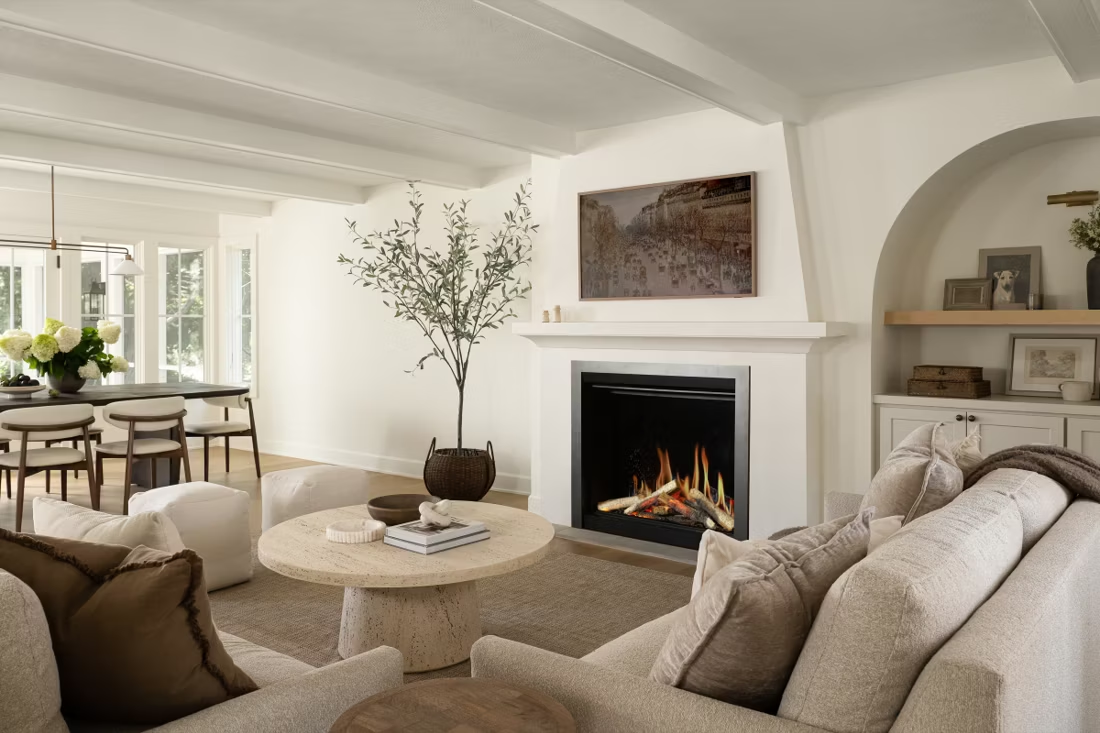
An electric fireplace is typically a built-in or wall-mounted unit designed to look like a framed hearth, often with a linear or traditional firebox-style flame display. An electric insert is sized to slide into an existing masonry fireplace opening, giving an old wood-burning fireplace new life without any chimney work—a popular option for Monroe County's older Delta farmhouses that have a fireplace opening but no working chimney. An electric stove is a freestanding cabinet-style unit that mimics a wood stove's footprint and can sit against any wall with just a standard outlet. All three run on the same basic electric-resistance or infrared heating element; the choice comes down to what fits your room and your existing structure.
Do I need a permit to install an electric fireplace in Monroe County?
A standard plug-in electric fireplace generally doesn't require a permit since it's treated like any other appliance plugged into an existing outlet. A hardwired unit that requires new electrical wiring or a dedicated circuit typically does require an electrical permit, handled through the county or, if you're inside city limits in Clarendon or Brinkley, through the municipal building office. Most licensed electricians pull this permit as a routine part of the job, so it's rarely something the homeowner has to manage directly.
What's the best electric fireplace for Monroe County's climate?
Since Monroe County's winters are mild by national standards—an average low around 31°F and roughly 3,358 heating degree days—most homeowners here are shopping for ambiance and supplemental warmth rather than a primary heat source. Standard 1,500-watt units with LED flame technology and a built-in thermostat, from brands like Dimplex or Napoleon, cover the vast majority of use cases: enough heat to take the chill off a room on a January morning, with realistic flame effects that run year-round without the heater engaged. There's little need for the oversized, high-output units built for northern climates—a mid-size insert or wall unit is typically plenty.
Will my electric fireplace work during a power outage?
No—an electric fireplace is entirely dependent on grid power, and it will not run during an outage regardless of model or brand. This is worth factoring into your plans in Monroe County, where winter ice storms occasionally knock out Entergy Arkansas service in the Delta for a day or more at a stretch. If backup heat during outages matters to you, pair the electric unit with a wood stove, a propane heater, or at minimum a generator large enough to run it. For homes where electric is purely supplemental—heating a den while central HVAC handles the rest of the house—this limitation matters less.
Electric vs. gas—which is right for my home?
Gas fireplaces produce real, substantial heat output and can serve as a legitimate secondary heat source, but they require either a natural gas line or a propane tank, plus venting work and a larger upfront investment. Electric fireplaces cost less to install, need no venting or fuel line, and can go into nearly any room with an outlet—but their heat output tops out around 5,000 BTU equivalent, fine for a single room but not a substitute for central heat. In Monroe County's mild climate, where the heating need is often just
Electric vs. wood—which is right for my home?
Wood heat has deep roots in the Arkansas Delta, with abundant oak, hickory, and pine available from local bottomland timber, and it offers real backup heat during the ice storms that occasionally take down power in Monroe County. Electric fireplaces can't function without grid power, but they require zero maintenance, no wood handling or ash cleanup, and no chimney to inspect—a meaningful advantage for older residents or anyone who wants ambiance without the work. For a primary living space where convenience matters most, electric is often the easier choice; for anyone wanting a genuine outage-proof backup heat source, wood remains hard to beat in this county.
Can I put a TV above my fireplace?
Yes—with an asterisk. Fireplaces are hot and TVs don't like heat. Either put a mantel between them to deflect rising warmth, or choose a fireplace with heat-management technology that creates a cool zone on the wall above—the wall stays around 125 degrees, barely warm, while the room still gets full heat. If you like clean lines and don't want a mantel, heat management is the answer.
Do electric fireplaces actually produce heat?
Yes—most put out around 4,800–5,000 BTUs from a standard outlet, which comfortably warms a bedroom, office, or den as a comfort-zone heater. What they won't do is carry a whole house the way wood, gas, or pellet can. Think of electric as ambiance-first with honest supplemental heat: flames on with no heat in July, flames plus warmth in January.
What is an in-home preview and do I need one?
It's a visit where a hearth professional measures your space, confirms the model you picked actually works in your home, and walks the specs—framing, gas line, venting, finish work—before anything is ordered. Some details you just can't know until you see the house. Never make a down payment without one; it's the single most-skipped step that burns buyers.
Does a fireplace add value to my home?
On average, a fireplace adds back to the home about the same amount you spent installing it. Add the monthly savings from heating the rooms you actually use instead of the whole house—often hundreds of dollars a year—and the value case is strong before you even count what a fire does for how your family uses the room.
Find your electric fireplace in Monroe County.
Tell us a bit about your home and we'll match you with the right electric fireplace, insert, or stove—plus a free Project Guide & Parts List and a trusted local dealer to install it.
Find Your Fireplace →