
Find your electric fireplace in Little River County.
Mild winters, no chimney, no fuel deliveries—electric fireplaces fit the way Little River County actually heats its homes. Get matched with a local dealer who can size and install the right unit for your space.
Every Project Starts From One of These Five Situations
A climate where supplemental heat, not survival heat, does the job.
Little River County sits in Arkansas's climate zone 3A, where winter lows average around 32 degrees and the county has a mild, short heating season—a fraction of what a place like Fargo, ND or Duluth, MN sees in a single season. That's a mild-heating-load climate: homes here need warmth on cold nights and cold mornings, not a fuel source engineered to run around the clock at single-digit temperatures. Electric fireplaces are built for exactly that kind of use, which is part of why they've become a common choice in Ashdown, Foreman, Winthrop, and the smaller communities scattered along the Red River and Millwood Lake.
There's no chimney to build, no gas line to run, and no venting to size—an electric fireplace or insert plugs into a standard outlet (or a dedicated 240V circuit for larger built-ins) and starts producing heat immediately. For homes with existing wood fireplaces that see little use, or for newer construction where owners want ambiance and zone heat without the maintenance of a solid-fuel or gas appliance, electric is a straightforward fit for the county's climate and housing stock. It also works well in rental properties and second homes around Millwood Lake, where low-maintenance heat matters more than raw BTU output.
Three steps. No salesperson until you're ready.
Tell us about your project
Your zip code, your situation, and the fuel you're leaning toward—or let the answers point you to one.
See what's actually available
The brands dealers within 100 miles genuinely carry—real options, never a catalog mirage.
Get your dealer & Project Guide
A trusted local dealer, plus the free Project Guide & Parts List that names every component of the job.
Frequently Asked Questions
How much does an electric fireplace installation cost in Little River County?
Most electric fireplace and insert installations in Little River County run about $400 to $1,200, and that range covers the vast majority of projects. A simple insert that slides into an existing fireplace opening and plugs into a nearby outlet sits at the low end. Built-in wall units or projects that need a new dedicated 240V circuit run by an electrician—common for larger units in Ashdown or newer homes near Millwood Lake—land toward the higher end. Because there's no venting or gas line involved, electric installs are typically the fastest and least invasive hearth project available, often completed in a single day.
Do I need a permit to install an electric fireplace in Little River County?
In most cases, no separate hearth permit is required for a plug-in electric fireplace or insert, since there's no venting, gas line, or structural chimney work involved. If your unit requires a new dedicated circuit—which is common for larger built-in models—an electrician will typically need to pull an electrical permit through the county, which they'll handle as part of the job. Because requirements can vary by municipality within the county, a local dealer will confirm what's needed for your specific installation before work begins.
Will an electric fireplace actually heat my room, or is it just for looks?
Both, depending on the model and how you use it. Most electric fireplaces include a built-in fan heater rated around 4,600–5,000 BTU, enough to comfortably warm a single room in the mild winters typical of Little River County—where lows average around 32 degrees and hard freezes are the exception rather than the rule. Many owners run the flame effect year-round for ambiance and only switch on the heater during the coldest stretches. For homes wanting real supplemental heat in a den, sunroom, or bedroom, electric performs well here; for whole-home primary heat in a larger farmhouse, it's better paired with the existing central system rather than relied on alone.
Can an electric fireplace replace my furnace or central heat?
No—electric fireplaces are designed as supplemental zone heat, not a replacement for central heating. Given Little River County's relatively low heating demand (a mild, short heating season most winters), an electric unit can meaningfully cut furnace runtime in the room where it's installed, but it isn't sized or intended to heat an entire house on its own. Where electric fireplaces do shine locally is in additions, sunrooms, and converted spaces that are awkward or expensive to tie into existing ductwork—a plug-in or hardwired unit solves that problem without any HVAC work at all.
What's the difference between an electric fireplace, insert, and built-in?
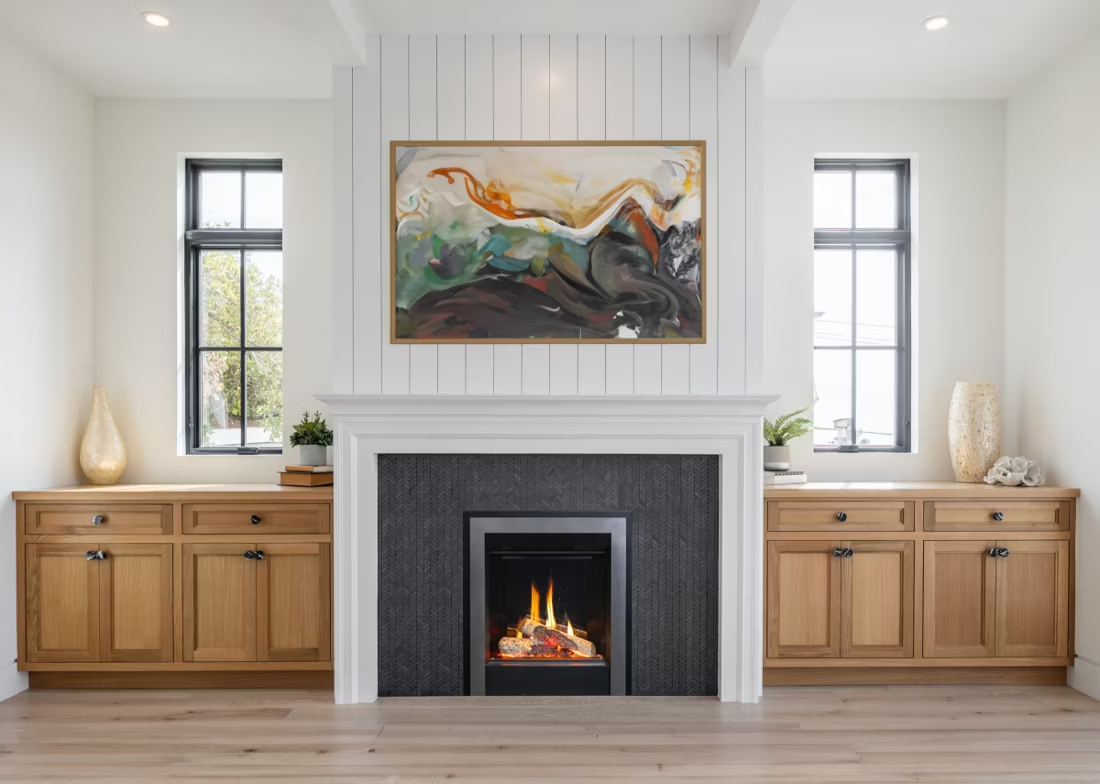
An electric insert is sized to slide into an existing masonry or wood fireplace opening, instantly converting an unused fireplace in an older Ashdown or Foreman home into usable heat and ambiance. A freestanding electric fireplace or stove sits anywhere with an outlet—no existing opening required. A built-in electric fireplace is framed into a wall like a linear feature, often used in new construction or remodels, and typically requires an electrician for a dedicated circuit. For most homeowners here with an existing but unused wood fireplace, an insert is the simplest upgrade; new construction or remodel projects usually lean toward a built-in.
How does an electric fireplace compare to a wood or gas fireplace in this climate?
Wood is still common in Little River County given the abundance of local oak and hickory, and it works well as a backup heat source during ice storms when the power grid is stressed—though that's also its weak point, since wood needs to be split, stored, and tended. Gas offers instant heat without the wood handling but requires either a natural gas line or propane tank and venting work. Electric skips venting, fuel storage, and combustion entirely, which matters most for homeowners who want simplicity over authenticity. In a mild-heating climate like this one, where the heat isn't being asked to carry a home through weeks of subzero cold, that tradeoff often favors electric for secondary rooms and low-maintenance living.
Will my electric fireplace work if the power goes out?
No—electric fireplaces are entirely dependent on grid power, so they won't operate during an outage. This is worth factoring in for rural parts of Little River County where ice storms occasionally knock out power for extended stretches. Homeowners who want a heat source that works independent of the grid typically keep a wood stove or fireplace as backup, using electric for everyday convenience and ambiance rather than emergency heat.
Are pellet stoves a better option than electric for Little River County?
They serve different purposes. Pellet stoves, using regionally available brands like Lignetics, are a solid option for homeowners who want real combustion heat with more automation than a wood stove—hopper-fed, thermostatically controlled, but still dependent on electricity to run the auger and blower. Electric fireplaces skip fuel entirely: no pellets to store or load, no ash to clean, just a plug and a switch. For a mild climate like Little River County's, where heating loads are modest, electric is usually the simpler and lower-maintenance choice unless you specifically want the higher heat output and fire-tending experience a pellet stove provides.
How long does an electric fireplace installation take?
A straightforward insert or plug-in freestanding unit is often installed in a few hours—sometimes on the same visit as delivery. Built-in wall units requiring new electrical work take longer, typically a half-day to a full day once an electrician runs a dedicated circuit. Either way, electric installations in Little River County are generally the fastest hearth projects available, with no curing time for masonry, no chimney inspection, and no gas line pressure testing to schedule around.
Can I put a TV above my fireplace?
Yes—with an asterisk. Fireplaces are hot and TVs don't like heat. Either put a mantel between them to deflect rising warmth, or choose a fireplace with heat-management technology that creates a cool zone on the wall above—the wall stays around 125 degrees, barely warm, while the room still gets full heat. If you like clean lines and don't want a mantel, heat management is the answer.
Do electric fireplaces actually produce heat?
Yes—most put out around 4,800–5,000 BTUs from a standard outlet, which comfortably warms a bedroom, office, or den as a comfort-zone heater. What they won't do is carry a whole house the way wood, gas, or pellet can. Think of electric as ambiance-first with honest supplemental heat: flames on with no heat in July, flames plus warmth in January.
How much should I budget for a fireplace?
For an average home—covering the fireplace, the vent pipe, and basic installation—a budget between $3,900 and $5,500 gives you a lot of options across wood, gas, and pellet. By the time you add finish work, gas line, and electrical, the average complete installation lands between $5,000 and $12,000 all-in. In a remodel or new build, a good rule is to put about 2.5% of the total project cost toward the fireplace.
Can I install a fireplace myself?
If you're putting a fire in your house on purpose, it's best to work with an expert. Unless you're genuinely experienced in framing, gas line, vent pipe, and the national code on clearances to combustibles, have a professional do it—and ideally the same company that sells you the fireplace, so warranty, service, and liability all live under one roof.
Get your Little River County electric fireplace Project Guide & Parts List.
Tell us about your home and we'll match you with a trusted local dealer serving Little River County, plus a free Project Guide & Parts List with the exact parts and recommended installer for your electric fireplace project.
Find Your Fireplace →