
Instant Heat, Built for Lincoln County's Occasional Cold Snaps.
Reliable, clean-burning gas heat for Star City, Gould, and the farms and delta homes in between—sized for a mild climate, ready when an ice storm or cold front rolls through.
Every Project Starts From One of These Five Situations
A supplemental heat source built for short, mild winters.
Lincoln County sits in the Arkansas Delta, where winters are short and generally mild—the average winter low hovers around 33°F and the county has a heating season that's just a fraction of what colder states see. That means most Lincoln County homes lean on central heat pumps or window units for day-to-day comfort, and a gas fireplace fills a different role here than it might in Duluth or Bismarck: it's the appliance you flip on during a January cold snap, a power-outage backup during an ice storm, or the visual centerpiece of a living room in Star City or Gould rather than a primary heat source running all winter.
With a population under 3,000 spread across a mostly rural county, Lincoln County doesn't have the kind of municipal natural gas infrastructure you'd find in a larger city—propane is the standard fuel here, delivered and tanked by regional suppliers rather than piped from a utility. That doesn't change what a gas fireplace can do for your home: instant on-demand heat, no wood to split or haul (even though oak and hickory are plentiful locally), and in many models, the ability to keep running when the power goes out during severe weather—a real consideration in a part of Arkansas that sees its share of ice storms and spring storm systems.
Three steps. No salesperson until you're ready.
Tell us about your project
Your zip code, your situation, and the fuel you're leaning toward—or let the answers point you to one.
See what's actually available
The brands dealers within 100 miles genuinely carry—real options, never a catalog mirage.
Get your dealer & Project Guide
A trusted local dealer, plus the free Project Guide & Parts List that names every component of the job.
Frequently Asked Questions
How much does a gas fireplace installation cost in Lincoln County?
Most gas fireplace and insert installations in Lincoln County run somewhere between $3,500 and $9,000, with the low end covering a propane insert going into an existing masonry fireplace that already has reasonable access, and the higher end covering a new direct-vent fireplace with framing, venting, and a fresh propane line run from the tank. Because there's no widespread natural gas utility in the county, expect the quote to include propane-specific line work, and if you don't already have a tank on the property, factor in the cost of a new propane tank installation and setup through a local supplier.
Can I convert my existing wood fireplace to gas?
Yes, and it's a common upgrade in Lincoln County's older brick farmhouses and Delta-style homes that were built with a wood-burning masonry fireplace decades ago. A gas insert typically installs into that existing firebox, using a stainless liner run up the existing chimney as the vent path, which keeps the cost down compared to building new venting from scratch. Since municipal gas isn't available county-wide, most conversions here run on propane, so your installer will also confirm tank placement and line routing as part of the job.
Is natural gas available in Lincoln County, or is it all propane?
Lincoln County doesn't have widespread natural gas utility service—propane is the standard fuel for gas fireplaces, inserts, and stoves across Star City, Gould, and the rural parts of the county. Regional propane suppliers handle tank installation and seasonal delivery. If your home is already set up with a propane tank for a water heater, range, or furnace, adding a fireplace onto that same system is usually straightforward for your installer.
Will my gas fireplace work during a power outage?
Most modern gas fireplaces will, which matters in a county that sees its share of severe spring weather and occasional winter ice storms. Units with intermittent pilot ignition (IPI) run on a battery backup that kicks in automatically when power drops, so the fireplace lights and operates normally on batteries alone. Valor takes a different approach: their pilot assembly generates its own electricity through the thermocouple, so there are no batteries to check or replace, ever—a detail worth asking about if outage reliability is a priority for your household in Lincoln County.
What's the difference between a gas fireplace, gas insert, and gas stove?
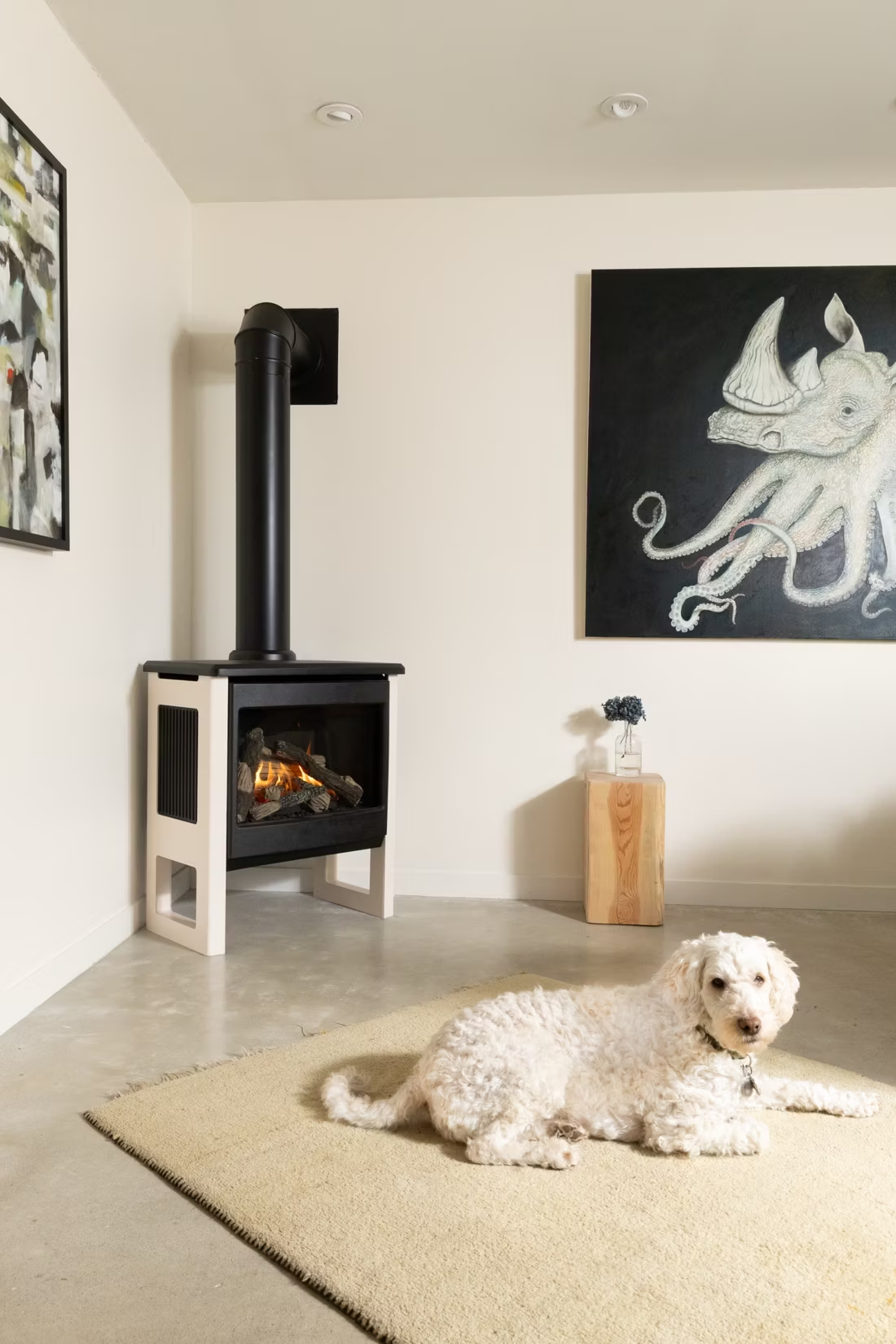
A gas fireplace is a fully built-in unit installed into a wall or framed enclosure, typically chosen for new construction or a full remodel. A gas insert is sized to slide into an existing masonry firebox—the more common route for Lincoln County's older homes with a brick fireplace already in place. A gas stove is a freestanding cabinet-style unit that sits on the floor and vents out through a wall or existing chimney, a good fit for a room without an existing fireplace, such as a den or converted porch. For most homeowners here upgrading an existing hearth, an insert is the simplest and most cost-effective option.
Do I need a permit to install a gas fireplace in Lincoln County?
Lincoln County, like many rural Arkansas counties, doesn't enforce a countywide building permit requirement outside incorporated city limits, but Star City and Gould may require a permit through their respective city halls for gas line and appliance work. Regardless of jurisdiction, the propane line itself should be run and connected by a licensed gas-fitter—that's a safety requirement, not a paperwork formality, and any reputable local installer will handle it as part of the job.
What's the difference between vented and vent-free gas fireplaces?
Vented (direct-vent) gas fireplaces pull combustion air from outside and exhaust the byproducts back outside through a sealed pipe—they're the safest and most universally recommended option regardless of climate. Vent-free units burn fuel directly into the room without external venting; they're legal in Arkansas but come with strict room-sizing rules and oxygen depletion sensors, since they release some combustion byproducts indoors. Given Lincoln County's mild winters and modest heating loads, a vent-free unit can be a reasonable fit for supplemental warmth in a smaller room, but a direct-vent model is still the better call for a primary living space or a larger, tighter home.
How often should my gas fireplace be serviced?
Plan on an annual inspection, ideally before the cooler months arrive in October or November. A technician will check the burner, pilot assembly, gas connections, and any battery backup or electronic ignition components, and clean the glass and interior. This matters even in a mild climate like Lincoln County's, since a unit that only runs occasionally during cold snaps can still develop pilot or ignition issues between uses—an annual check catches that before the first hard freeze rather than during it.
Gas vs. wood—which makes more sense for a Lincoln County home?
Wood is still a natural fit here—oak and hickory are abundant locally, and plenty of Lincoln County households keep a wood-burning stove or fireplace going through the county's short cold stretches. But with a heating season that's genuinely mild and short compared to states further north, many homeowners find that hauling and splitting wood isn't worth it. Gas offers instant on-demand heat with none of the wood handling, and it doubles as reliable backup heat during an ice storm outage. If ambiance and self-sufficiency matter most to you, wood remains a solid choice; if convenience and low-maintenance operation matter more, gas is usually the better fit for how short and mild the season actually is here.
What's the difference between an insert and a zero-clearance fireplace?
An insert is a fireplace that slides into a pre-existing wood-burning fireplace—if you don't have one, there's nothing to insert it into. A zero-clearance fireplace is built into a framed wall, which makes it the answer for remodels and new construction. Simple test: existing masonry fireplace means insert; blank or framed wall means zero-clearance.
Can I put a TV above my fireplace?
Yes—with an asterisk. Fireplaces are hot and TVs don't like heat. Either put a mantel between them to deflect rising warmth, or choose a fireplace with heat-management technology that creates a cool zone on the wall above—the wall stays around 125 degrees, barely warm, while the room still gets full heat. If you like clean lines and don't want a mantel, heat management is the answer.
How much should I budget for a fireplace?
For an average home—covering the fireplace, the vent pipe, and basic installation—a budget between $3,900 and $5,500 gives you a lot of options across wood, gas, and pellet. By the time you add finish work, gas line, and electrical, the average complete installation lands between $5,000 and $12,000 all-in. In a remodel or new build, a good rule is to put about 2.5% of the total project cost toward the fireplace.
Can I install a fireplace myself?
If you're putting a fire in your house on purpose, it's best to work with an expert. Unless you're genuinely experienced in framing, gas line, vent pipe, and the national code on clearances to combustibles, have a professional do it—and ideally the same company that sells you the fireplace, so warranty, service, and liability all live under one roof.
Find your gas fireplace in Lincoln County.
Tell us a bit about your home and we'll match you with the right gas fireplace, insert, or stove—plus a free Project Guide & Parts List and a trusted local dealer to install it.
Find Your Fireplace →