
Find the right electric fireplace for your Lincoln County home.
With winter lows averaging in the low 30s and only about 2,700 heating degree days a year, Lincoln County homes need supplemental warmth and ambiance more than a workhorse furnace replacement. Find the right unit and connect with a trusted local dealer.
Every Project Starts From One of These Five Situations
Mild winters, straightforward heat.
Lincoln County sits in the Arkansas Delta, in climate zone 3A, where winters are short and mild compared to much of the country—an average winter low near 33°F and roughly 2,741 heating degree days a year, a fraction of what a place like Fargo, ND or Minneapolis, MN sees in a single hard winter. For most of the year, homes here need cooling more than heating, which changes the calculus on hearth products. An electric fireplace fits that reality well: it supplies real ambiance and spot heat for the handful of genuinely cold nights each winter, without the commitment of a wood-burning chimney or a gas line run.
With a population under 3,000 spread across towns like Star City and Gould, Lincoln County doesn't have the dense retail base of a metro area, but that's exactly where a trusted local installer matters most—someone who can size the unit correctly, handle the electrical work to code, and make sure the install holds up in an older farmhouse or a newer build alike. Electric units also sidestep the permit complexity that comes with wood cutting or gas line work, which makes them one of the simpler hearth upgrades available to county homeowners.
Three steps. No salesperson until you're ready.
Tell us about your project
Your zip code, your situation, and the fuel you're leaning toward—or let the answers point you to one.
See what's actually available
The brands dealers within 100 miles genuinely carry—real options, never a catalog mirage.
Get your dealer & Project Guide
A trusted local dealer, plus the free Project Guide & Parts List that names every component of the job.
Frequently Asked Questions
How much does an electric fireplace installation cost in Lincoln County?
Electric fireplace installations typically run $400 to $1,200 in Lincoln County, depending on whether you're installing a plug-in unit (no electrician needed) or a built-in model that requires a dedicated 120V or 240V circuit. A simple insert into an existing mantel surround or a wall-mount unit on an existing outlet sits at the low end. A built-in unit requiring new wiring, a dedicated circuit, or a custom mantel surround runs toward the higher end. Because Lincoln County's mild climate means the fireplace is mostly for ambiance and supplemental warmth rather than primary heat, many homeowners opt for the simpler, lower-cost installation path.
Do I need an electrician to install an electric fireplace?
It depends on the unit. Plug-in electric fireplaces and inserts that run on a standard 120V household outlet don't require an electrician—they're designed for straightforward installation. Larger built-in units, especially those recommended to run on a dedicated 240V circuit for maximum heat output, do require a licensed electrician to run new wiring and install a dedicated breaker. A local dealer can tell you which category your chosen unit falls into before you buy, which avoids a surprise electrical bill after the fact.
Will an electric fireplace actually heat my home in Lincoln County?
Most electric fireplaces are designed for supplemental heat in a single room, not whole-home heating—and that's a good match for Lincoln County's climate. With an average winter low around 33°F and roughly 2,741 heating degree days a year, the county sees relatively few nights cold enough to need serious heat output. A properly sized electric unit (most residential models put out 4,000-5,000 BTU, enough for 400-1,000 square feet) can comfortably take the edge off a living room or bedroom on the coldest nights while your central HVAC handles the rest of the house.
What's the difference between an electric fireplace, insert, and stove?
An electric fireplace is typically a built-in unit installed into a wall or framed surround, often as the focal point of a room. An electric insert is sized to slide into an existing wood or gas fireplace opening, converting it to electric without touching the chimney. An electric stove is a freestanding unit styled like a wood stove but with no venting requirements at all. For Lincoln County homes with an existing masonry fireplace that's no longer used, an insert is often the simplest upgrade—no chimney work, no gas line, just a matter of the right electrical connection.
Do I need a permit to install an electric fireplace in Lincoln County?
In most cases, no permit is required for a plug-in electric fireplace or insert, since there's no venting, gas line, or combustion involved. If your installation requires new electrical wiring or a dedicated circuit, that electrical work may need a permit and inspection depending on the scope—a licensed electrician working in the county will know when that applies. This is one of the appeals of electric for Lincoln County homeowners: it's the lowest-friction hearth upgrade available, without the building department involvement that comes with wood stove or gas line installations.
What's the best electric fireplace for a mild climate like Lincoln County's?
Since heat output matters less here than in colder regions, prioritize flame realism and room fit over raw BTU rating. Wall-mount and built-in units with LED flame technology give a convincing fire effect for evening ambiance, and most let you run the flame effect with the heater off—useful for the many Lincoln County evenings that are cool but not cold enough to need supplemental heat. A local dealer can walk you through flame styles and mounting options based on your room and existing mantel or surround.
How does an electric fireplace compare to a wood or gas fireplace here?
Wood fireplaces offer real heat output using local oak, hickory, and pine, but require chimney maintenance, ash cleanup, and a bigger upfront investment. Gas fireplaces deliver instant, consistent heat but need a gas line and venting work. Electric skips both of those requirements entirely—no chimney, no gas line, no combustion byproducts—at the tradeoff of lower maximum heat output. For Lincoln County's mild 2,741-HDD climate, where the fireplace is often about ambiance and taking the chill off rather than heating the whole house through a hard winter, that tradeoff works in electric's favor for a lot of homeowners.
Can I install an electric fireplace myself?
A plug-in electric fireplace or insert can often be a straightforward DIY install if you're comfortable mounting a unit and connecting it to an existing outlet. Built-in units requiring a dedicated circuit or new wiring should go through a licensed electrician, both for safety and because improper wiring can void the manufacturer's warranty. Even for simpler installs, a local dealer can advise on proper clearances and mounting into drywall, brick, or an existing mantel surround before you start.
Are electric fireplaces cheaper to run than gas or wood in Lincoln County?
Running costs depend on usage and local electric rates, but electric fireplaces used as intended—for supplemental heat on cold nights rather than as a primary heat source—tend to cost relatively little to operate in a mild climate like Lincoln County's. Wood requires an upfront investment in a stove and either buying cordwood or cutting your own from local oak, hickory, and pine. Gas requires an ongoing fuel bill plus the cost of a gas line if you don't already have one. Electric has no fuel cost beyond the power bill and no delivery or storage considerations, which is part of why it's a popular low-maintenance choice for a county with a small, spread-out population like Lincoln's.
Can I put a TV above my fireplace?
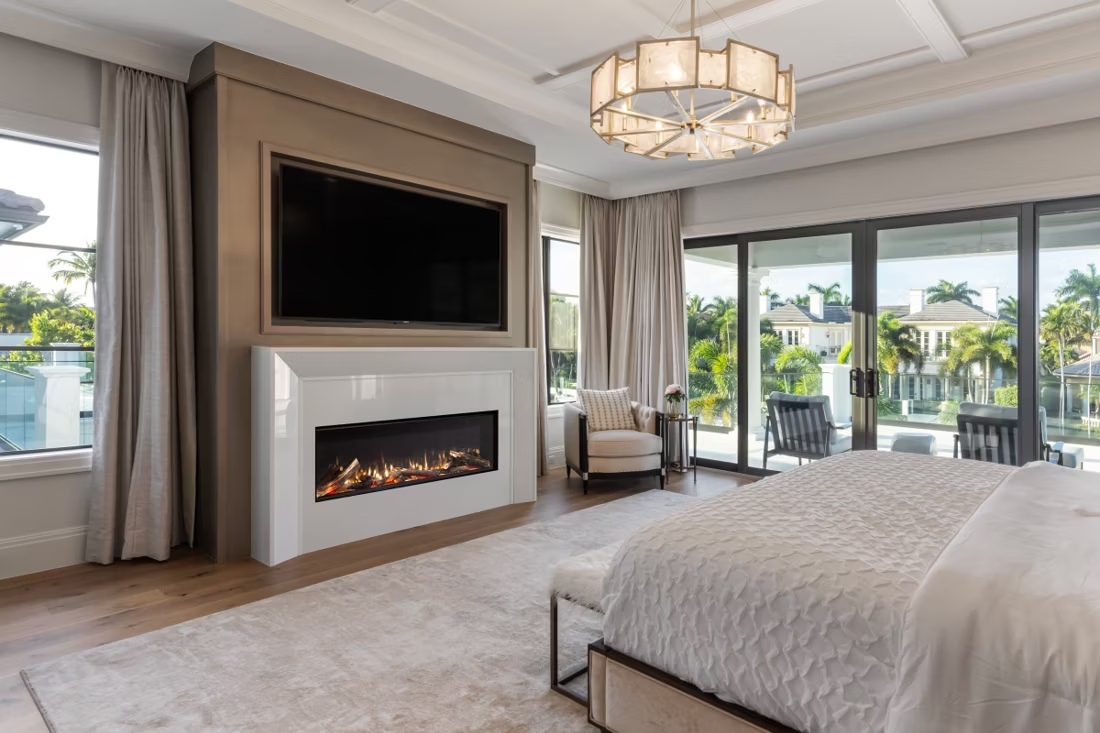
Yes—with an asterisk. Fireplaces are hot and TVs don't like heat. Either put a mantel between them to deflect rising warmth, or choose a fireplace with heat-management technology that creates a cool zone on the wall above—the wall stays around 125 degrees, barely warm, while the room still gets full heat. If you like clean lines and don't want a mantel, heat management is the answer.
Does an electric fireplace need a vent or chimney?
No—that's its superpower. An electric fireplace needs a wall and an outlet, period. No vent pipe, no gas line, no clearances to design around, which is why it works in bedrooms, offices, apartments, and walls where venting a gas or wood unit would be impractical or impossible. Installation is typically the simplest and least expensive of any fireplace type.
Can I install a fireplace myself?
If you're putting a fire in your house on purpose, it's best to work with an expert. Unless you're genuinely experienced in framing, gas line, vent pipe, and the national code on clearances to combustibles, have a professional do it—and ideally the same company that sells you the fireplace, so warranty, service, and liability all live under one roof.
How much should I budget for a fireplace?
For an average home—covering the fireplace, the vent pipe, and basic installation—a budget between $3,900 and $5,500 gives you a lot of options across wood, gas, and pellet. By the time you add finish work, gas line, and electrical, the average complete installation lands between $5,000 and $12,000 all-in. In a remodel or new build, a good rule is to put about 2.5% of the total project cost toward the fireplace.
Find your electric fireplace in Lincoln County.
Tell us a bit about your home and we'll match you with the right electric fireplace or insert, plus a free Project Guide & Parts List with the exact parts and your recommended local Lincoln County dealer.
Find Your Fireplace →