
Find your pellet stove in Lawrence County.
Clean, thermostat-controlled heat for Walnut Ridge, Hoxie, Black Rock, Imboden, and every corner of Lawrence County. Find the right pellet appliance and connect with a trusted local dealer.
Every Project Starts From One of These Five Situations
A modern option rooted in Lawrence County's wood-heating tradition.
Lawrence County sits in the northeast Arkansas foothills, a mostly rural stretch of small towns—Walnut Ridge, Hoxie, Black Rock, Imboden, Portia—spread across a county of about 11,680 people. The climate here (Zone 3A) is mild by national standards: winter lows average around 28°F and the county sees a moderate winter heating season, nowhere near the cold-climate extremes of a place like Duluth or Fargo, but enough to want dependable, even heat through several months of the year. Oak, hickory, and pine cover much of the county, and wood heat has long been a fact of life here—but a growing number of homeowners are choosing pellet stoves and inserts as a cleaner, lower-maintenance way to burn that same regional wood resource.
With no air quality non-attainment concerns or wood-smoke restrictions in Lawrence County, permitting a pellet appliance is generally straightforward compared to counties dealing with inversion or curtailment rules. Bagged hardwood pellets from producers like Lignetics and Indeck Energy Services are distributed through farm and home supply stores across the mid-South, so fuel isn't hard to come by even outside the bigger cities. The tradeoff worth planning for: pellet stoves need electricity to run the auger and blower, and Arkansas winters bring occasional ice storms that knock out power for days—something worth discussing with a local dealer if a pellet stove will be your primary heat source.
Three steps. No salesperson until you're ready.
Tell us about your project
Your zip code, your situation, and the fuel you're leaning toward—or let the answers point you to one.
See what's actually available
The brands dealers within 100 miles genuinely carry—real options, never a catalog mirage.
Get your dealer & Project Guide
A trusted local dealer, plus the free Project Guide & Parts List that names every component of the job.
Frequently Asked Questions
How much does a pellet stove installation cost in Lawrence County?
Pellet stove installations typically run in the range of $3,000 to $6,000 depending on the stove's hopper size and BTU output, whether a hearth pad is required for clearance, and how far the vent pipe has to run through an exterior wall. Because pellet stoves vent through a small-diameter pipe rather than a full masonry chimney, installation is generally simpler and less expensive than a wood stove install. A local dealer can give you a firm number after seeing your room layout and existing wall or floor construction.
What size pellet stove do I need for my home in Lawrence County?
Given Lawrence County's relatively mild winters—average lows around 28°F and a moderate winter heating season—most homes in the county are comfortably served by small to mid-size pellet stoves rated for 1,000 to 1,800 square feet, even as a primary heat source. Larger, drafty farmhouses common in the rural stretches around Portia and Smithville may need a mid-size unit with a bigger hopper for longer unattended burns. A local dealer can size the stove to your square footage, insulation, and ceiling height during an in-home visit—oversizing wastes fuel and undersizing leaves cold spots on the harder-freeze nights.
Where can I find certified pellet stove installers near me?
Look for NFI (National Fireplace Institute)-certified technicians, which most established hearth dealers in the region employ. Because Lawrence County is a smaller, rural market, some homeowners end up working with dealers based in nearby Jonesboro or Batesville who service the wider northeast Arkansas area, including Walnut Ridge, Hoxie, and Black Rock. Ask any installer whether they handle both the appliance sale and the electrical/venting work—pellet stoves need a dedicated outlet near the unit, and having one company handle sale, permit, and install keeps warranty coverage simple.
What's the difference between a pellet stove and a pellet insert?
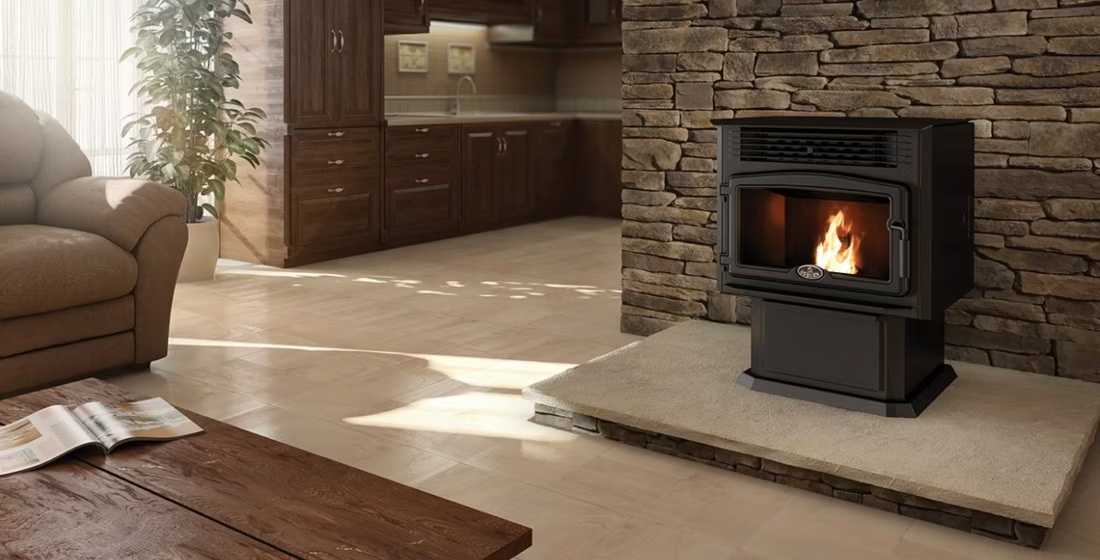
A pellet stove is a freestanding unit that sits on a hearth pad and vents through a wall or existing chimney chase—it can go almost anywhere in a room with the right clearances. A pellet insert is built to slide into an existing masonry fireplace opening, converting an old open wood fireplace into a sealed, thermostat-controlled heat source using the existing chimney as a vent chase. For Lawrence County homes with an older fireplace already in place—common in the county's older farmhouses—an insert is often the simpler retrofit. Homes without an existing fireplace typically go with a freestanding stove instead.
Do I need a permit to install a pellet stove in Lawrence County?
Most pellet stove installations require a building permit through your local city or county building department, along with an electrical inspection since the stove needs a dedicated circuit for the auger and blower. Unlike some western counties dealing with winter inversion rules, Lawrence County has no air quality non-attainment designation, so there are no wood-smoke curtailment periods to work around—pellet stoves are also exempt from that kind of restriction anywhere it exists, since they burn far cleaner than open wood combustion. Most local dealers handle the permit paperwork as part of the installation.
What's the best pellet stove for Lawrence County's climate?
Because winters in Lawrence County are mild by national standards—winter lows averaging around 28°F rather than the sustained single-digit cold of the upper Midwest—most homeowners here don't need the largest, longest-burning units on the market. A standard mid-size pellet stove with a modest hopper (40-60 lb capacity) and automatic thermostat control comfortably handles the occasional hard freeze and the more typical 30s-and-40s stretches that make up most of the heating season. If the stove will double as backup heat during ice-storm power outages, ask your dealer about models compatible with a small battery backup or generator, since the auger and igniter both need electricity to run.
Where can I buy pellet fuel in Lawrence County?
Bagged hardwood pellets are distributed through farm supply and home improvement stores throughout the mid-South, including brands like Lignetics and Indeck Energy Services that produce and ship into the Arkansas market. Buying a season's supply early—before the first cold snap—is worth doing in a county this size, since smaller-town retailers may not restock as quickly as big-box stores in Jonesboro or Batesville once demand picks up in late fall.
How often does a pellet stove need to be cleaned and serviced?
Pellet stoves need more frequent light cleaning than wood stoves but far less heavy chimney maintenance. Plan on emptying and cleaning the ash pot weekly during regular use, cleaning the burn pot and glass every few weeks, and having a full professional inspection and vent cleaning once a year—typically before the season starts. Because pellet stoves vent through a small pipe rather than a full masonry chimney, the annual service is quicker and less expensive than a traditional wood chimney sweep, but skipping it can still lead to auger jams or venting blockages mid-winter.
Pellet stove vs. wood stove—which is right for my Lawrence County home?
Wood stoves burn the oak, hickory, and pine that are abundant across Lawrence County, work without electricity (a real advantage during the ice storms that periodically knock out power here), and offer the lowest fuel cost if you're cutting or buying local cordwood. Pellet stoves trade that off for convenience—load the hopper, set the thermostat, and let it run—plus a cleaner burn, less ash, and no chimney fire risk from creosote buildup. For homes that want set-and-forget heat in the main living space and have reliable power, pellet is usually the easier day-to-day fit. For rural properties where power outages are a real concern, a wood stove or a pellet stove paired with generator backup covers both bases.
What's the difference between an insert and a zero-clearance fireplace?
An insert is a fireplace that slides into a pre-existing wood-burning fireplace—if you don't have one, there's nothing to insert it into. A zero-clearance fireplace is built into a framed wall, which makes it the answer for remodels and new construction. Simple test: existing masonry fireplace means insert; blank or framed wall means zero-clearance.
Why is a fireplace insert so efficient?
An insert does two things: it seals the chimney completely, so you stop losing air you already paid to heat, and it radiates warmth into the room through the firebox and glass. Most add a heat-exchange fan that pulls cool room air underneath, wraps it around the hot firebox, and pushes it back out warm. Your home is more efficient before you've even lit the first fire.
Can a fireplace actually lower my heating bill?
Yes—by creating a comfort zone. A furnace heats every square foot of the house just to warm the one room you're in; a gas fireplace on low burns roughly a sixth of the gas a typical furnace does. Set the furnace around 55–60 degrees as a baseline, then heat the rooms your family actually uses. Families who heat this way commonly save $20–$60 a month.
What is an in-home preview and do I need one?
It's a visit where a hearth professional measures your space, confirms the model you picked actually works in your home, and walks the specs—framing, gas line, venting, finish work—before anything is ordered. Some details you just can't know until you see the house. Never make a down payment without one; it's the single most-skipped step that burns buyers.
Stove and Fireplace Dealers in Lawrence County
Pellet Brands Stocked Around Lawrence County
Manufacturers will point you to the nearest stocking dealer.
Find your pellet stove in Lawrence County.
Tell us a bit about your home and we'll match you with a trusted local dealer and a free Project Guide & Parts List—the exact parts, vent kit, and installation plan for your pellet stove or insert in Lawrence County.
Find Your Fireplace →