
Thermostat-easy heat for Izard County's Ozark winters.
Consistent, automated heat for the White River hills of Izard County—from Melbourne to Calico Rock to Horseshoe Bend. Find the right pellet stove or insert, and connect with a trusted local dealer who can size and install it correctly.
Every Project Starts From One of These Five Situations
Convenient heat for a county built on hardwood forests.
Izard County sits in the Ozark foothills of north-central Arkansas, with the White River cutting through it and roughly 8,400 residents spread across small towns like Melbourne, Calico Rock, Horseshoe Bend, and Guion. The climate here (zone 4A) is milder than the northern tier—average winter lows sit around 24°F and the county's overall winter heating load is a fraction of what a place like Fargo, ND sees. Still, that translates to roughly four to five months a year, November through March, where a home needs reliable, consistent heat, and the oak, hickory, and pine that cover the surrounding hills have shaped how people here have always heated their homes.
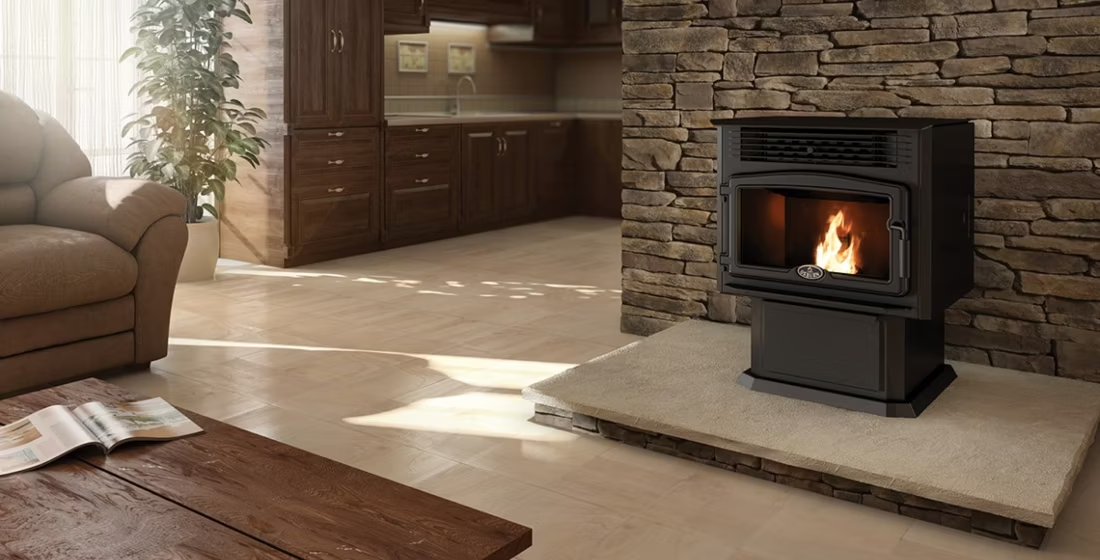
For homeowners who like the idea of wood heat without splitting, stacking, or feeding a stove every few hours, pellet stoves have become the practical middle ground in Izard County. There's no air quality curtailment here to worry about—burning restrictions simply aren't a factor the way they are in Western non-attainment counties—so the appeal of pellet isn't regulatory, it's convenience: load a hopper, set a thermostat, and let the auger do the work. Regional brands like Lignetics and Indeck Energy Services, both of which draw on Southern pine and hardwood feedstock, are the pellet fuel most local dealers stock and recommend.
Three steps. No salesperson until you're ready.
Tell us about your project
Your zip code, your situation, and the fuel you're leaning toward—or let the answers point you to one.
See what's actually available
The brands dealers within 100 miles genuinely carry—real options, never a catalog mirage.
Get your dealer & Project Guide
A trusted local dealer, plus the free Project Guide & Parts List that names every component of the job.
Frequently Asked Questions
How much does a pellet stove installation cost in Izard County?
Most pellet stove installations run in the neighborhood of $3,000 to $6,500 in a county like Izard, with the spread depending on the unit itself, whether you're venting through an exterior wall (the simplest and most common setup for pellet units) or adapting an existing masonry chimney, and whether a hearth pad or floor protection is needed for code clearance. Because pellet stoves vent through a small-diameter PL pipe rather than a full masonry chimney, installs are generally more affordable and faster than a comparable wood stove project. Rural delivery from Melbourne or Calico Rock to more outlying parts of the county can add a modest travel charge—worth asking about up front.
Will my pellet stove work if the power goes out?
Not without backup power. Pellet stoves rely on an electric auger to feed fuel and a blower to distribute heat, so a power outage stops the stove even with a full hopper. That matters in Izard County, where ice storms are a real seasonal risk on the rural lines served by North Arkansas Electric Cooperative. Most local dealers recommend pairing a pellet stove with a small battery backup or inverter generator sized for the stove's low wattage draw—enough to keep the unit running through a multi-hour outage. If uninterrupted heat during storm-related outages is a priority, some homeowners choose to keep a wood-burning option as backup alongside the pellet stove.
What size pellet stove do I need for my home?
Sizing depends on square footage, ceiling height, and how well-insulated the home is—and older farmhouses common throughout the Izard County hills, with their higher ceilings and less modern insulation, often need a step up from what square footage alone would suggest. As a rough guide: smaller units (under 1,000 sq ft rated) suit a single large room or a well-sealed cabin, mid-size units (1,000–1,800 sq ft) cover most main living areas, and larger units handle open floor plans or whole-home heating in better-insulated homes. Because the county's climate is milder than the northern tier, homeowners here can often run a smaller unit than someone in a colder climate zone would need for the same square footage—a local dealer can confirm sizing with an in-home look at your layout.
Where do I get pellets, and how much should I store?
Pellets are sold in 40-pound bags, typically stacked on pallets of 50 bags (a ton), and most Izard County dealers who sell pellet stoves also sell fuel or can point you to a supplier who carries Lignetics or Indeck Energy Services pellets—both brands milled from Southern pine and hardwood feedstock similar to what grows locally. A dry, mouse-proof storage space—a garage corner, a covered porch, or a basement—is really the only requirement; pellets don't need the seasoning or covered woodshed a cordwood supply does. Most full-time pellet stove users go through 2 to 3 tons per heating season in this climate zone, so buying a season's worth in fall avoids scrambling for fuel mid-winter, especially given the drive times between some outlying parts of the county and the nearest supplier.
Do I need a permit to install a pellet stove in Izard County?
Most jurisdictions require a building permit for a new solid-fuel appliance installation, and Izard County is no exception—the process runs through the county building office out of the courthouse in Melbourne. In practice, most local dealers handle the permit application as part of the installation, since they're already pulling the manufacturer's specs and clearance documentation the inspector needs. Pellet stove installs tend to move through permitting faster than wood stove installs because the venting (a small PL vent through an exterior wall) is simpler to inspect than a full masonry chimney.
How much maintenance does a pellet stove actually need?
Less than a wood stove, but it's not zero-maintenance. Plan on emptying the ash pot every few days during heavy use, wiping the glass weekly, and vacuuming the burn pot and hopper area periodically to keep the auger feeding smoothly. Most manufacturers also call for an annual professional service—checking the auger motor, gaskets, and exhaust fan, and doing a deeper cleaning of the venting—typically before the heating season starts each fall. Local dealers who sell pellet stoves in Izard County generally offer this service, and it's worth scheduling before the first cold snap rather than waiting until a January storm knocks your unit offline.
Pellet stove or wood stove—which makes more sense here?
Izard County's oak and hickory forests mean self-cut firewood is genuinely abundant and inexpensive for anyone with the equipment and time to process it, and there's no air quality restriction here limiting when you can burn—unlike counties dealing with winter inversions or non-attainment status. That makes wood a strong option if you want the lowest fuel cost and don't mind the labor, or if you want heat that works with the power out. Pellet stoves trade that lower fuel cost for convenience: no splitting or stacking, more even heat output, less ash, and thermostat control. For a lot of Izard County homeowners, especially those who work off-farm or aren't set up to process their own wood, pellet is the easier day-to-day choice—with a wood stove or fireplace kept as backup where power reliability is a concern.
What pellet stove brands are actually available through local dealers?
For fuel, Lignetics and Indeck Energy Services are the two regional pellet brands most consistently stocked by dealers serving Izard County, both producing pellets from Southern pine and hardwood mill residue. For the stoves themselves, expect local dealers to carry established names like Harman, England's Stove Works (built in Arkansas, notably), and Quadra-Fire—England's in particular has a strong presence across the state given its in-state manufacturing. Availability varies by dealer, so it's worth confirming what's actually in stock and installable near you rather than shopping by brand name alone.
Is there a best time of year to install a pellet stove in Izard County?
Late summer through early fall (August through October) is the ideal window—dealers have more installation availability before the winter rush, and you'll want the unit running and any kinks worked out before temperatures start dropping toward that 24°F average low. Installing in the dead of a cold snap isn't impossible, but scheduling gets tighter and you may be without supplemental heat during the wait. It's also worth checking with your installer about current federal efficiency tax credits for biomass-fueled appliances meeting certain efficiency thresholds—many qualifying pellet stoves are eligible, which can offset part of the installation cost.
Why is a fireplace insert so efficient?
An insert does two things: it seals the chimney completely, so you stop losing air you already paid to heat, and it radiates warmth into the room through the firebox and glass. Most add a heat-exchange fan that pulls cool room air underneath, wraps it around the hot firebox, and pushes it back out warm. Your home is more efficient before you've even lit the first fire.
How often does a pellet stove need cleaning?
A clean pellet stove is a happy pellet stove. Plan on cleaning the burn pot about once a week when you're burning regularly—ash and clinkers gum up the air holes just like a pellet barbecue. Most pellet stove problems trace back to skipped cleaning that nobody explained up front. Some designs make it easy with a trapdoor burn pot: pull a lever and the gunk drops into the ash pan.
How much should I budget for a fireplace?
For an average home—covering the fireplace, the vent pipe, and basic installation—a budget between $3,900 and $5,500 gives you a lot of options across wood, gas, and pellet. By the time you add finish work, gas line, and electrical, the average complete installation lands between $5,000 and $12,000 all-in. In a remodel or new build, a good rule is to put about 2.5% of the total project cost toward the fireplace.
Can a fireplace actually lower my heating bill?
Yes—by creating a comfort zone. A furnace heats every square foot of the house just to warm the one room you're in; a gas fireplace on low burns roughly a sixth of the gas a typical furnace does. Set the furnace around 55–60 degrees as a baseline, then heat the rooms your family actually uses. Families who heat this way commonly save $20–$60 a month.
Stove and Fireplace Dealers in Izard County
Pellet Brands Stocked Around Izard County
Manufacturers will point you to the nearest stocking dealer.
Find your pellet stove in Izard County.
Tell us a bit about your home and we'll match you with a trusted local dealer and send over a free Project Guide & Parts List—a plan for your pellet stove project in Izard County with the exact parts, including the vent kit, and the dealer we recommend for your area.
Find Your Fireplace →